






By Staff Reporters | May 13, 2026
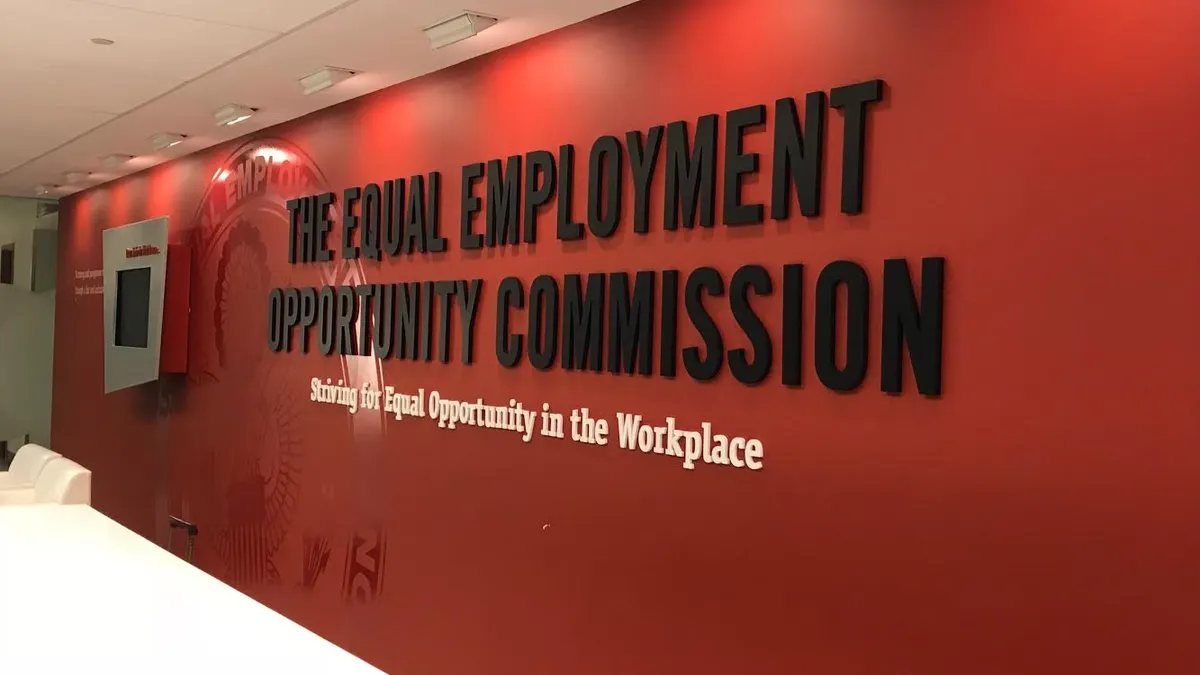
The U.S. Equal Employment Opportunity Commission (EEOC) has officially filed a lawsuit against ATG, a construction and industrial services firm, alleging that the company fostered a hostile work environment characterized by persistent national origin discrimination. The federal agency claims that an American employee was systematically targeted, mocked, and ultimately terminated after reporting harassment related to his inability to speak Spanish fluently in a predominantly Spanish-speaking workplace.
This litigation marks a significant moment in the EEOC’s evolving enforcement strategy. Under the current leadership of Chair Andrea Lucas, the agency has increasingly prioritized “reverse bias” claims—legal actions protecting majority-group members or those perceived to be outside the dominant demographic of a specific worksite—as well as cases involving national origin discrimination against American-born workers.
The Core Allegations: A Hostile Environment
The lawsuit, filed in the U.S. District Court for the District of New Mexico, details a pattern of harassment that allegedly began after the victim, a Hispanic American whose family has resided in the United States for generations, received a temporary promotion.
According to court filings, the victim was subjected to daily derogatory remarks from his co-workers, who frequently derided him for his lack of fluency in Spanish. The harassment allegedly extended beyond verbal abuse; the employee reported that his tools were repeatedly stolen or hidden, a common tactic used to impede the productivity and professional standing of workers in industrial settings.

The EEOC asserts that the workplace culture at the New Mexico site was heavily skewed toward Spanish-speaking employees. While ATG maintained an official policy requiring that directives be translated for English-speaking staff, the reality on the ground was starkly different. Interviews conducted during the EEOC investigation revealed that directives were rarely translated, effectively excluding English-speaking employees from critical work discussions and safety briefings. This exclusionary environment, the agency argues, formed the foundation for the broader hostile work environment that the victim was forced to endure.
Chronology of Events
The breakdown of the employment relationship appears to have been a swift escalation of unaddressed grievances.
- Initial Promotion: The victim is promoted to a temporary position, which triggers a wave of resentment and daily harassment from his Spanish-speaking peers.
- The First Complaint: The victim approaches his direct supervisor to report the ongoing harassment and the theft of his tools. The supervisor allegedly fails to take any corrective action, effectively signaling that the behavior is permissible.
- Escalation: Finding no relief from his direct supervisor, the employee takes the initiative to escalate his complaint to a higher-level supervisor.
- The Termination: The day after reporting the issue to the second supervisor, the employee is fired by his original direct supervisor.
- Post-Termination Discrepancies: ATG attempts to justify the firing by citing a safety violation—specifically, that the employee was caught nearly falling asleep while supporting a 100-pound beam. However, the employee denies these allegations. Crucially, the company’s internal termination paperwork lists the reason for dismissal as “other” and mentions “arguing with crews and almost starting a fight,” with no mention of the alleged safety violation involving the beam.
Supporting Data and Legal Arguments
The EEOC’s case hinges on the inconsistency of the employer’s stated reasons for termination. During the conciliation process, ATG submitted a position statement claiming the employee was a safety risk. However, the EEOC noted that the company’s internal write-up regarding the alleged sleeping incident was never signed by the employee, and the official termination documentation contradicts the narrative presented in the legal defense.
Mary Jo O’Neill, regional attorney for the EEOC’s Phoenix district office, emphasized that the burden of responsibility lies squarely with the employer. “Employers have a legal duty to prevent and stop all harassment based on national origin, including harassment of American workers,” O’Neill stated. “Employers are required to investigate any complaints of national origin harassment and to take prompt action to stop the harassment.”
The lawsuit posits that the failure to investigate the worker’s complaints, combined with the retaliatory nature of his termination, constitutes a clear violation of Title VII of the Civil Rights Act of 1964.

Official Responses and Agency Stance
The EEOC’s aggressive posture in this case reflects a broader shift in federal oversight. Chair Andrea Lucas has been vocal about the agency’s commitment to protecting all workers, regardless of their background or national origin.
“Discrimination against American workers is unconscionable,” Lucas said in a public release. “The EEOC is here to protect all workers from anti-American bias. Nothing justifies illegal national origin discrimination, and we will vigorously enforce federal laws to restore dignity to the American worker.”
The agency’s decision to file the lawsuit came only after the parties were unable to reach a resolution through the standard conciliation process. By taking the case to federal court, the EEOC is signaling that it is prepared to litigate matters where an employer appears to have disregarded federal mandates for a safe, non-discriminatory workplace.
The Broader Implications for DEI and Workplace Culture
This case arrives at a time of intense national scrutiny regarding Diversity, Equity, and Inclusion (DEI) initiatives. Critics of certain DEI frameworks have long argued that such programs can inadvertently create environments where minority-status individuals—or those who do not fit the established cultural or linguistic demographic of a workplace—are marginalized.
1. Linguistic Discrimination
The case highlights a growing issue in industrial and construction sectors: language-based isolation. When a majority of a workforce shares a primary language that is not the primary language of the region or the company’s official communication, English-speaking employees can become effectively siloed. Employers are learning that ignoring these linguistic barriers is not merely a communication failure; it is a potential liability that can lead to claims of a hostile work environment.

2. The Risk of Retaliation
The timing of the termination—the day after the employee complained to a higher-level supervisor—is a "red flag" in labor law. Even if an employer believes they have a valid reason for termination, the timing often suggests retaliation. Companies are being cautioned that internal investigation processes must be robust, documented, and clearly separated from the individuals who are the subject of the complaints.
3. The Shift in EEOC Enforcement
Under the current administration, the EEOC is actively seeking cases that challenge the traditional narrative of employment discrimination. By highlighting "reverse bias" and discrimination against American workers, the agency is attempting to demonstrate a neutral, non-partisan approach to civil rights enforcement. This trend suggests that legal departments and HR managers must audit their policies to ensure they are protecting all employees from harassment, regardless of their demographic category.
4. Documentation is Paramount
The discrepancy between the company’s internal termination paperwork (which cited “arguing with crews”) and their legal position statement (which cited a “safety violation”) is a cautionary tale for management. Inconsistent documentation is often the death knell for a company’s defense in court. The EEOC’s focus on the unsigned, unsubstantiated nature of the safety write-up demonstrates that investigators will look past the company’s official narrative to find the underlying truth.
Conclusion
The lawsuit against ATG serves as a stark reminder that the protection of workers against harassment is not optional. As the legal battle unfolds in the U.S. District Court for the District of New Mexico, the outcome will likely serve as a benchmark for how federal courts handle cases where national origin and language barriers intersect with allegations of retaliation.
For employers, the message is clear: the failure to foster an inclusive environment—and the failure to address employee complaints regarding that environment—carries severe legal and financial risks. As the EEOC continues its trend of aggressive enforcement, organizations must ensure that their HR practices are transparent, consistent, and strictly compliant with federal anti-discrimination laws.