




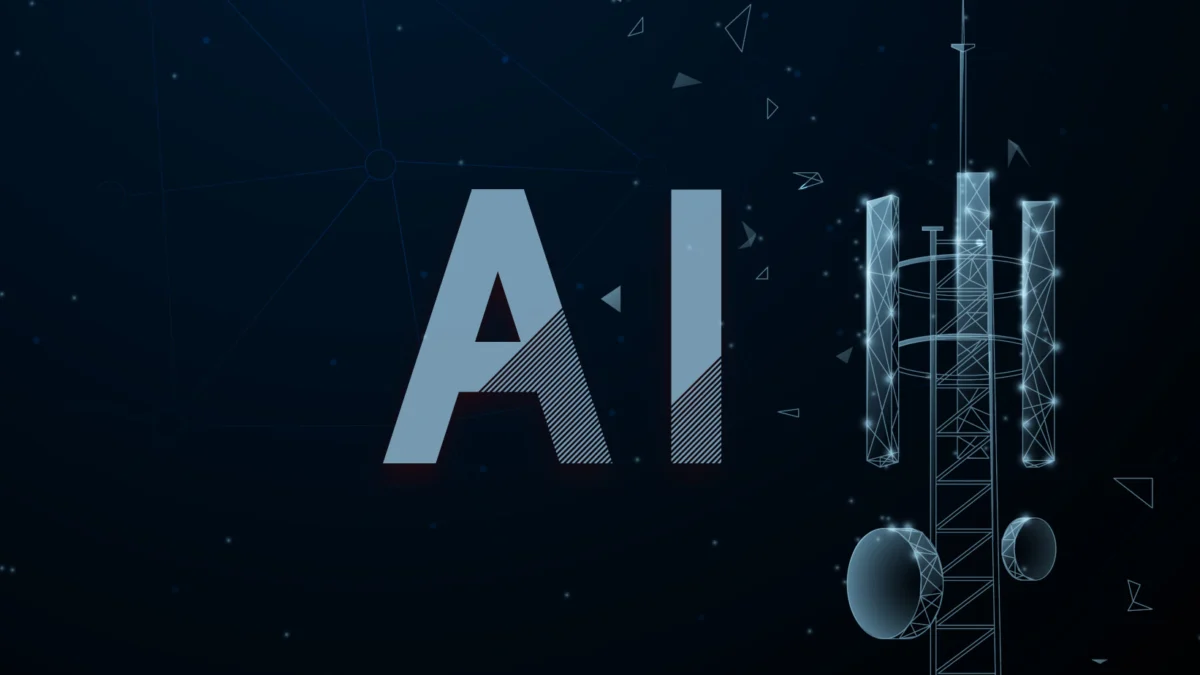
The telecommunications landscape is currently undergoing a structural metamorphosis. At the heart of this shift is the "AI RAN"—a term that has become both a buzzword and a source of profound industry confusion. Does it mean AI for the Radio Access Network (RAN), AI on the RAN, or AI in the RAN?
At a recent Connect (X) panel moderated by Joe Madden of Mobile Experts, industry leaders from T-Mobile, Nokia, and Nvidia gathered to cut through the semantic noise. While the consensus on the destination—a future where intelligent networks facilitate a new era of physical AI—is robust, the path to get there remains a theater of debate, specifically regarding the underlying compute architecture required to support such a vision.
Main Facts: Defining the AI RAN Paradigm
The panel identified two primary categories for AI RAN, which serve as the foundation for current strategic planning. The first is the use of AI to optimize internal telco workloads, effectively making the network self-healing and more efficient. The second, and arguably more transformative, is the deployment of edge computing capabilities to support commercial AI applications running atop the network.
Mobile Experts reports that early field trials are already yielding impressive results, with capacity boosts in the RAN—particularly in the uplink—ranging between 20% and 30%. This is critical, as AI-driven traffic patterns are placing unprecedented pressure on network infrastructure. On the commercial side, the panel argued that "Edge Computing 2.0" is finally shedding its reputation as a failed promise, driven by tangible demand from enterprise use cases that require the low-latency processing that only an AI-native network can provide.
Chronology of Development: From Connectivity to Kinetic Intelligence
To understand the current pivot, one must look at the recent trajectory of infrastructure investment. T-Mobile has spent the last several years aggressively building out its 5G standalone network. This foundational work has allowed the carrier to transition from providing simple "best effort" connectivity to offering "secured, outcome-based" experiences.
The timeline of this transition is evident in existing deployments:
- Early Phase: Implementation of basic 5G features for specialized events, such as ticketless entry at Formula 1 races and automated ball-strike systems in Major League Baseball.
- Intermediate Phase: Prioritized connectivity for first responders, demonstrating the reliability of a programmable network.
- Current Phase: The shift toward "Physical AI." T-Mobile is now focusing on supporting autonomous systems like humanoid robots (in collaboration with Figure) and sidewalk delivery wagons (with Serve Robotics).
This evolution marks a shift from informational AI—chatbots and LLMs—to kinetic AI, where the tokens generated are tied to physical movement and environmental interaction. T-Mobile’s strategy, as articulated by Salim Kouidri, is to treat these "kinetic tokens" as proximity-sensitive data that must be processed as close to the physical event as possible.
The Architectural Debate: CPU vs. GPU
Perhaps the most significant friction point identified during the discussion was the hardware dilemma. As Joe Madden noted, the industry has a historical tendency to stage "wars" between competing technologies. The current conflict centers on the suitability of CPUs versus GPUs for modern RAN workloads.
Kanika Atri of Nvidia argued that the industry’s frame of reference is outdated. "The x86 era was about virtualization," she noted. "The GPU conversation is about workload-specific acceleration." Her stance is that the RAN, which has historically relied on static, stochastic parameters, is fundamentally ill-equipped for the complexities of modern, 64-TR (Transmit/Receive) or 256-TR configurations.
Nvidia’s position is clear: complex AI models—especially those involving multi-modal inputs from cameras and sensors—require GPU acceleration to meet the stringent latency requirements of physical AI.
Conversely, Aji Ed of Nokia offered a more pragmatic, architectural perspective. He cautioned against binary thinking. "It’s not about CPU versus GPU," Ed stated. "It’s about having the right compute available in the right places." Nokia advocates for a hybrid compute model, suggesting that while CPUs can manage certain inferencing tasks today, the architecture must remain flexible enough to incorporate GPUs as the complexity of the workloads scales.
Supporting Data: The Latency Equation
One of the panel’s most enlightening contributions was the re-evaluation of latency. Kanika Atri pointed out that in most AI-enabled network applications, "network latency" is often a red herring.
- The Breakdown: Network latency typically accounts for less than 5% to 10% of the total round-trip time.
- The Bottleneck: Compute latency accounts for the remaining 90%.
This realization fundamentally changes the deployment strategy. It implies that simply having a "fast network" is insufficient; the compute capacity must be strategically located to minimize the processing time of the AI model.
The demonstration of "Maggie," the delivery robot, serves as a primary case study. By hosting the robot’s voice pipeline on the AI RAN edge rather than on the device itself, T-Mobile proved that seamless interaction is possible without overburdening the device’s battery or cost structure. However, the panelists agreed that this is not a universal solution. Live translation services, for instance, can reside in the network core, whereas autonomous vehicle navigation requires extreme proximity to the edge.
Official Responses and Strategic Perspectives
T-Mobile’s Vision (Salim Kouidri)
Kouidri emphasized the Total Cost of Ownership (TCO) benefits of a programmable network. By utilizing a single, flexible infrastructure to serve diverse use cases—from robotics to first-responder support—T-Mobile hopes to avoid the fragmentation of building separate, specialized networks for each vertical.
Nokia’s Flexibility (Aji Ed)
Nokia is positioning itself as the architect of the hybrid model. Their focus is on "future-proofing," ensuring that cell sites can be upgraded with hardware as needed. Ed emphasized "ecosystem co-creation," noting that the industry currently suffers from a "chicken-and-egg" dilemma where compute availability and use-case demand are locked in a feedback loop.
Nvidia’s Acceleration (Kanika Atri)
Nvidia maintains that the industry needs an "action bias." Atri compared the current state of RAN to building a house: one must "plumb" the foundation for future floors. The current RAN is the first floor, but the foundation must support future "ISAC" (Integrated Sensing and Communication) and 6G sensing applications.
Implications for the Industry: The "Super Cycle"
The panel concluded that while the technological path is becoming clearer, the transition to an AI-native wireless era faces significant headwinds that are not strictly technical.
- Policy and Zoning: As Kouidri noted, local zoning and permitting processes are currently the primary bottlenecks to the physical deployment of AI-ready edge infrastructure. If policy does not evolve at the speed of innovation, the vision of pervasive physical AI will remain largely academic.
- Spectrum Availability: The massive data throughput required by physical AI necessitates more spectrum, both in the uplink and downlink. Without regulatory support for expanded spectrum, the network will struggle to handle the sheer volume of kinetic tokens generated by these new applications.
- Monetization Mindset: Perhaps the most daunting implication is the industry’s long-standing stagnation in monetization. The panel suggested that telcos must stop viewing themselves as "dumb pipes" and start betting on the value-add of AI-driven, outcome-based experiences.
Whether these developments coalesce into a true "super cycle" for the wireless industry remains to be seen. However, the discourse at Connect (X) makes one thing clear: the days of static, rigid radio networks are numbered. The future of wireless will be defined by software-defined, GPU-accelerated, and geographically distributed intelligence, fundamentally shifting the role of the carrier from a provider of connectivity to an enabler of physical autonomy.