





By [Your Name/Journalistic Desk]
The silent, heavy weight of the earth has always been the primary adversary of the underground miner. While modern technology—ranging from autonomous drilling rigs to sophisticated seismic monitoring systems—has revolutionized mineral extraction, the fundamental risk remains unchanged: the structural instability of the earth itself. Among the myriad hazards found in deep-level operations, "Fall of Ground" (FOG) remains the most pervasive and deadly, serving as a constant reminder of the volatile environment in which mining personnel operate.
The Anatomy of an Invisible Threat: Defining Fall of Ground
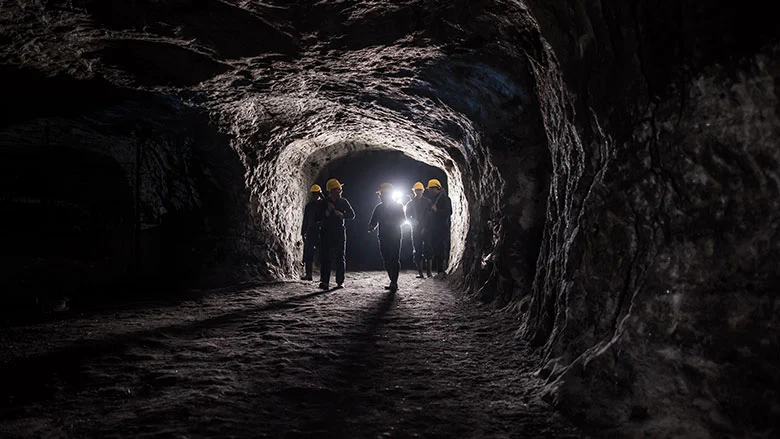
Underground mining is a feat of engineering that requires the constant manipulation of the earth’s crust. By creating voids—tunnels, shafts, and stopes—to extract valuable minerals, miners fundamentally alter the stress distribution of the surrounding rock mass.
"Fall of Ground" is the technical term for the uncontrolled movement of rock or mineral from the roof, sidewalls, or face of an excavation. These incidents range in severity from the shedding of small, localized rock fragments to catastrophic, multi-ton collapses that can render entire sections of a mine inaccessible. Whether occurring in coal, metal, or stone mines, the physics remains the same: the rock mass, once stable under tectonic pressure, finds a new, often unstable equilibrium once disturbed by human excavation.
A Chronology of Risk: The Evolution of Ground Control
The history of mining is essentially a history of learning to hold up the sky.
- The Early Era (Pre-1900s): Ground control relied almost entirely on timber support systems. Miners utilized "props" and "caps" based on visual inspection and auditory cues—listening for the "groaning" of the rock—to predict imminent failures.
- The Industrialization of Support (1900s–1970s): The introduction of rock bolting changed the industry. By pinning together layers of rock to create a "beam" of reinforced strata, miners could support the roof more effectively. This era saw the standardization of systematic support patterns.
- The Modern Era (1980s–Present): With the advent of computational geomechanics, engineers began modeling stress distribution before the first blast is even fired. However, despite these advancements, FOG incidents continue to plague the industry, often occurring in areas deemed "safe" by initial geological surveys.
Supporting Data: The Statistics of Instability
Data from international safety agencies indicates that FOG is consistently one of the top three causes of fatalities in underground mining operations. While exact numbers fluctuate by region, the trend remains stubborn.
In many jurisdictions, ground falls account for approximately 30% to 40% of all underground mining fatalities. This data suggests that while we have mastered the ability to extract minerals at greater depths—sometimes exceeding 3,000 meters—our ability to predict the microscopic fracturing of rock remains imperfect. The cost of these incidents is not merely human; the economic impact involves the loss of equipment, the suspension of production, and the massive financial liability of rehabilitation efforts.
The Triad of Failure: Major Causes of FOG
Ground falls are rarely the result of a single event; they are usually the culmination of three distinct categories of factors:
1. Geological Conditions
Nature is not uniform. Variations in rock strength, the presence of hidden faults, fractures, or "joints" within the rock mass, and the presence of groundwater can all weaken the structural integrity of a tunnel roof. When a miner cuts through a geological anomaly that was not identified during the exploration phase, the risk of a sudden collapse increases exponentially.
2. Mining-Induced Stress
As a void is created, the surrounding rock must redistribute the immense load of the overlying strata. This often results in "stress concentration" at the corners of a tunnel or at the face of the excavation. If the rate of mining is too fast, the rock mass may not have time to adjust, leading to a "burst" or a sudden collapse.
3. Human and Operational Factors
Human error—ranging from improper installation of support bolts to failure to follow the support plan—remains a critical variable. Furthermore, the practice of "over-blasting" can shatter the rock around the tunnel, creating a weakened zone that is prone to collapse even if the initial support pattern was correctly designed.
The Frontline Defense: Prevention and Control
Effective ground control is not a static task; it is a dynamic, multi-layered process that begins before the first tunnel is driven.
Scaling: The First Line of Defense
Scaling is the process of removing loose or "drummy" rock from the roof and walls after a blast. Whether performed manually with a scaling bar or mechanically with a high-reach scaling vehicle, this practice is non-negotiable. It addresses the immediate risk of small, loose fragments that can cause severe injury to workers or damage to machinery.
Engineered Support Systems
Modern mining utilizes a "primary and secondary" support strategy.
- Primary Support: Rock bolts (friction or resin-anchored) and wire mesh are installed immediately after excavation to "lock" the immediate roof into the stable rock above.
- Secondary Support: In areas of high stress or poor ground quality, secondary support such as cable bolts, steel arches, or shotcrete (sprayed concrete) is applied to provide long-term reinforcement.
The Role of Instrumentation
Sensors, including multi-point borehole extensometers and micro-seismic monitoring arrays, act as the "nervous system" of the mine. They detect minute movements in the rock mass, providing real-time data that allows management to evacuate an area long before a collapse occurs.
Official Perspectives: A Global Safety Mandate
Industry leaders and government regulators emphasize that ground control is a shared responsibility. According to regulatory frameworks in major mining nations, the "Duty of Care" rests with both the operator and the individual worker.
"Safety in mining is not just about the technology we buy; it is about the culture we cultivate," notes Harshvardhan Singh, an Assistant Manager (Equipment Service) at Zawar Mines, India. "We are operating in an environment that is fundamentally hostile to human presence. Every piece of equipment, from our haulage vehicles to our drills, must be maintained to ensure that the operator has the safest possible environment to do their work. When it comes to ground stability, there is no room for shortcuts."
The Implications: Moving Toward "Zero Harm"
The mining industry is currently transitioning toward a "Zero Harm" philosophy. The implications for the future of underground mining are clear:
- Automation: By removing humans from the face of the mine and utilizing remote-controlled or autonomous machines for drilling and scaling, the risk of FOG-related injury is drastically reduced.
- Digital Twins: Future mines will rely on "digital twins"—virtual replicas of the mine that update in real-time with geological data, allowing for predictive analytics that can identify high-risk zones before they are entered.
- Standardized Training: As technology becomes more complex, the need for standardized, high-level training for miners becomes even more critical. Understanding the "why" behind ground support is just as important as the "how."
Conclusion: A Vigilant Future
Fall of Ground remains a formidable opponent, but it is not an invincible one. Through a combination of rigorous geological modeling, advanced mechanical support systems, and a culture of unwavering vigilance, the mining industry is steadily reducing the frequency and severity of these incidents.
The goal remains clear: to ensure that every miner who descends into the depths of the earth returns to the surface at the end of their shift. As we push deeper into the earth in search of the resources that power our modern world, the commitment to ground control must remain the bedrock of mining operations everywhere.
Disclaimer: This article is intended for educational purposes regarding mining safety protocols. For site-specific safety plans, please consult your company’s geological department and local mining regulatory authority.