





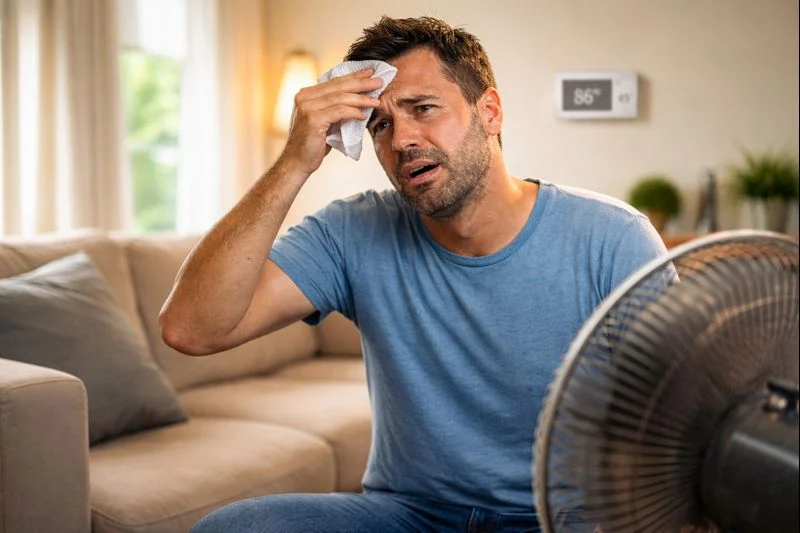
For homeowners in North Ridgeville, Ohio, the HVAC system is more than just a convenience—it is a vital lifeline. Between the sweltering, high-humidity summer days and the bone-chilling, sub-zero winter nights, a malfunctioning heating or cooling unit is not merely a nuisance; it is a potential threat to property, health, and safety.
Understanding when a mechanical glitch crosses the threshold into an "emergency" is a critical skill for any homeowner. While some issues can wait for a standard service appointment, others demand immediate, round-the-clock intervention. This guide explores the anatomy of an HVAC crisis, the risks of inaction, and why professional intervention is the only safe path forward.
Defining the HVAC Emergency: More Than Just Discomfort
An HVAC emergency is defined as any malfunction that compromises the structural integrity of your home, the safety of its inhabitants, or the basic habitability of the living space. While a minor rattle or a slightly inefficient cycle may be an "urgent repair," a true emergency is defined by an immediate risk.
In North Ridgeville, where extreme temperature fluctuations are the norm, a complete system failure during peak weather seasons can cause indoor temperatures to reach dangerous levels in as little as a few hours. When your home is no longer able to provide a safe, climate-controlled environment, you are officially in an emergency situation.
Chronology of a Crisis: How Minor Glitches Escalate
Most homeowners believe that HVAC failures happen instantly, but in reality, most emergencies follow a predictable, if often ignored, trajectory:
- The Warning Phase: The system begins to show "soft" symptoms—unusual sounds, a slight increase in humidity, or a furnace that cycles more frequently than usual.
- The Degradation Phase: Efficiency drops, leading to higher energy bills. Homeowners often mistake this for normal wear and tear.
- The Breaking Point: A critical component, such as the blower motor, the compressor, or the heat exchanger, suffers a catastrophic failure.
- The Emergency State: The system shuts down entirely, or worse, begins to exhibit hazardous behavior like emitting smoke, gas odors, or electrical sparks.
Recognizing the transition from the "Warning Phase" to the "Emergency State" is the difference between a routine maintenance call and an expensive, late-night system replacement.
Supporting Data: The Hidden Dangers of Neglect
Ignoring a failing HVAC system is not just a gamble with your budget; it is a gamble with your physical safety. The implications of delayed service are well-documented:
- Carbon Monoxide (CO) Poisoning: Faulty heat exchangers in gas furnaces are a leading cause of CO leaks. Because CO is odorless and colorless, it is often called the "silent killer."
- Fire Hazards: Electrical shorts in failing motors or frayed wiring within the unit are common sources of residential electrical fires.
- Property Damage: In winter, a total furnace failure can lead to frozen and burst pipes. The resulting water damage often costs thousands of dollars more than the repair of the furnace itself.
- Health Hazards: For the elderly, infants, and those with respiratory conditions, prolonged exposure to extreme heat or cold can trigger medical emergencies, including heatstroke or hypothermia.
Essential Scenarios: When to Call for Immediate Help
To help homeowners distinguish between "annoyance" and "emergency," we have categorized the most critical scenarios.
1. The Winter Freeze: No Heat
In North Ridgeville, a furnace failure in January is a life-safety issue. If your home cannot maintain a temperature above 60°F, you are at risk of freezing pipes and severe discomfort. If your furnace blows cold air or simply refuses to ignite, do not wait for the morning.
2. The Summer Scorcher: No Air Conditioning
When outdoor temperatures climb into the 90s, indoor humidity can become stifling. For vulnerable populations, this is not just uncomfortable; it is a medical risk. If your AC system is blowing warm air or has stopped circulating entirely during a heat advisory, this constitutes an emergency.
3. The Olfactory Warning: Burning or Gas Smells
- Burning/Electrical Smells: This often indicates an overheating motor or melting wire insulation. Action: Shut the system off at the breaker immediately and call a technician.
- Gas Smells: If you detect the "rotten egg" smell of mercaptan, evacuate the home immediately. Do not touch light switches or use the phone until you are outside. Call the utility company and emergency services.
4. Mechanical Violence: Loud Noises
If your system begins to bang, screech, or grind, it is sending a final distress signal. These sounds usually indicate that a part is coming loose or a bearing is seizing. Running the system in this state can lead to a "total loss" of the unit, turning a $300 repair into a $6,000 replacement.
5. Refrigerant Leaks and Ice Buildup
Ice on the evaporator coil or the refrigerant lines is a major red flag. It indicates that the system is struggling to absorb heat, usually due to a leak or a severely clogged filter. Ignoring ice buildup will eventually burn out the compressor—the most expensive component in the system.
Official Perspective: The Role of Professional Maintenance
Industry experts and manufacturers consistently emphasize that the vast majority of emergency calls could be avoided through a rigorous, twice-yearly maintenance schedule.
"We see the same patterns every year," says a senior technician at Climate-Tech. "Homeowners treat their HVAC system like a lightbulb—they expect it to work until it burns out. But an HVAC system is a complex mechanical assembly. When we perform a tune-up, we aren’t just cleaning filters; we are identifying the ‘Warning Phase’ symptoms before they become an emergency. We find the frayed wire, the low refrigerant, and the strained motor months before they result in a 2:00 AM emergency call."
The Danger of DIY "Band-Aid" Fixes
When a system fails at midnight, the temptation to "fix it yourself" is strong. However, tampering with high-voltage electrical components or pressurized gas lines is dangerous and often counterproductive.
Why DIY can make it worse:
- Warranty Voiding: Many manufacturers explicitly state that DIY repairs or tampering will void the system’s warranty, leaving you responsible for the full cost of future repairs.
- Safety Risks: Without the proper diagnostic tools, you may accidentally bypass safety shut-offs, creating a fire or carbon monoxide risk.
- Increased Damage: Misdiagnosing a problem can lead to "parts swapping," where you spend money on components that aren’t broken, while the actual issue continues to damage the system.
The Emergency Service Protocol: What to Expect
When you engage a professional for an emergency service call in North Ridgeville, the process should be transparent and structured to minimize downtime:
- Immediate Triage: The service dispatcher will ask specific questions to assess the risk level—are there infants in the house? Is there a smell of gas? Is there smoke?
- Safety Assessment: Upon arrival, the technician’s first priority is to secure the area and ensure the environment is safe (e.g., ensuring there are no gas leaks or electrical hazards).
- Diagnostic Testing: Using advanced equipment, the technician isolates the failure point.
- Repair or Mitigation: The technician will perform the necessary repair. If the part is not in stock, they will provide a temporary mitigation strategy to restore basic function until the permanent fix can be completed.
- Preventative Advice: A professional will always explain why the failure happened and offer steps to ensure it doesn’t recur.
Conclusion: Prioritizing Your Home’s Climate
In the climate of North Ridgeville, your HVAC system is the heartbeat of your home. Recognizing the difference between a routine repair and a true emergency is vital to protecting your family’s safety and your financial investment.
Don’t wait for a total system collapse to take action. If you hear a strange grinding noise, notice a spike in your energy bills, or experience an inconsistent temperature, treat it as a warning. By maintaining your system and knowing exactly when to call for 24/7 professional support, you can ensure that your home remains a sanctuary, regardless of the weather outside.
For those in the North Ridgeville area, Climate-Tech provides the 24/7 emergency support required to handle these crises with precision and professionalism. Your comfort is not just an expectation—it is a commitment.