Main Facts: A Paradigm Shift in Aerospace Production
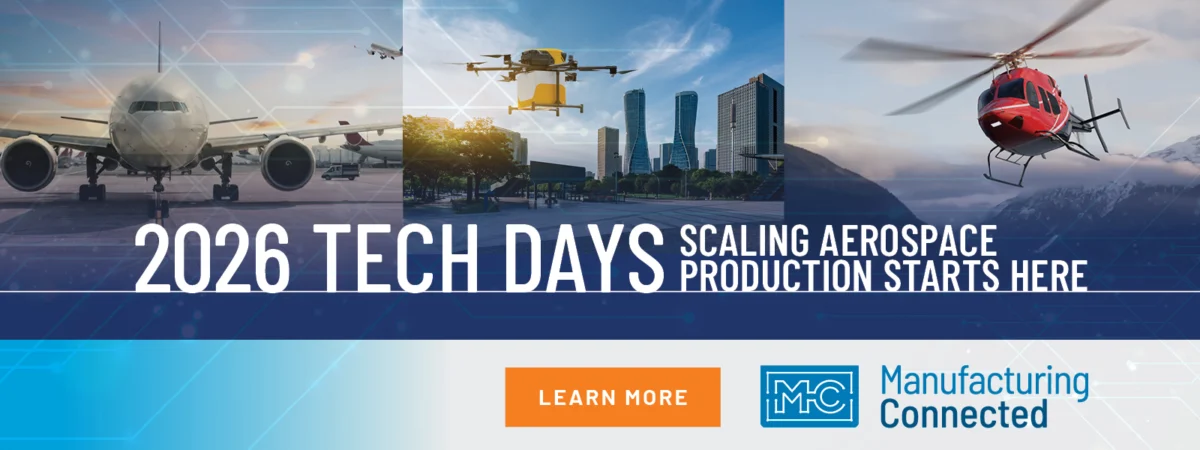
The aerospace industry stands at a critical historical juncture. As next-generation commercial aircraft programs, defense initiatives, and advanced air mobility (AAM) concepts transition from drawing boards to reality, the sector faces an unprecedented challenge: scaling production speeds to levels the industry has never witnessed before. To address this urgent demand, Manufacturing Connected, in collaboration with Modern Machine Shop, is hosting MC Tech Days: Materials & Processes for High-Rate Aerospace Manufacturing.
Scheduled for Wednesday, April 22, this free, virtual half-day workshop is specifically engineered to help the global aerospace supply chain adapt, evolve, and remain competitive in an increasingly demanding marketplace.
For decades, aerospace manufacturing has been defined by high-precision, low-volume craftsmanship. Building an aircraft was akin to building a custom skyscraper—meticulously engineered, highly manual, and exceptionally time-consuming. However, market dynamics have fundamentally shifted. Surging commercial travel demand, combined with the imperative to replace aging fleets with fuel-efficient, sustainable aircraft, has created backlogs stretching for years. Traditional manufacturing methodologies can no longer keep pace.
To bridge this widening gap, the upcoming virtual event will bring together industry-leading experts, materials scientists, and advanced manufacturing technologists to explore the cutting-edge innovations required to meet changing production demands. Sponsored by industry heavyweights Toray Group and Composites One, and presented alongside leading trade publications including Additive Manufacturing Media, Products Finishing, and CompositesWorld, the workshop aims to redefine what is possible on the factory floor.
Chronology: The Evolution Toward High-Rate Manufacturing
To understand why high-rate manufacturing has become the paramount focus of the aerospace sector today, it is essential to examine the chronological progression of aerospace production over the past century.
Era 1: The Riveted Aluminum Age (Mid-20th Century)
For the better part of the aviation age, aircraft were constructed primarily from aluminum alloys, fastened together with millions of rivets. While structurally sound, this method was inherently labor-intensive. Production lines moved at a slow, deliberate pace, measured in units per year rather than units per month.
Era 2: The Introduction of Composites (Late 20th to Early 21st Century)
The introduction of carbon-fiber-reinforced polymers (CFRP) revolutionized aircraft design. Materials like those developed by Toray Group allowed engineers to build lighter, stronger, and more aerodynamic structures. However, early composite manufacturing processes—such as traditional autoclave curing—were notoriously slow and bottlenecked production. Baking massive fuselage sections in giant ovens required hours, limiting manufacturing throughput.
Era 3: The Post-Pandemic Production Crunch (2020–Present)
Following the disruptions of the early 2020s, aerospace original equipment manufacturers (OEMs) faced a paradox: order books filled up rapidly as global travel rebounded, but supply chains remained fractured, and skilled labor shortages persisted. OEMs realized that incremental improvements in assembly lines would not suffice. The industry required a wholesale transformation toward true high-rate manufacturing (HRM), leveraging automation, advanced digital twins, out-of-autoclave (OOA) materials, and rapid deposition technologies.
The launch of initiatives like MC Tech Days on April 22 represents the current phase of this chronology—where knowledge sharing, cross-sector collaboration, and rapid adoption of digital and material sciences are no longer optional, but matters of corporate survival.
Supporting Data: The Numbers Driving the High-Rate Revolution
The push for high-rate aerospace manufacturing is not merely a theoretical exercise; it is backed by compelling economic and operational data.
Production Backlog Realities: Major commercial OEMs currently maintain backlogs totaling over 6,000 aircraft, representing years of baseline production. Translating this backlog into delivered aircraft requires a radical compression of cycle times.
Material Evolution: According to market research in composite materials, the global aerospace composites market is projected to expand significantly over the next decade, driven heavily by demand for lighter structures in both narrowbody commercial jets and electric vertical takeoff and landing (eVTOL) vehicles. Out-of-autoclave (OOA) processing and rapid-cure resins can reduce component cure times by upwards of 50% to 70%, breaking historical thermal bottlenecks.
Automation and Additive Integration: Industry data indicates that factories implementing automated fiber placement (AFP), automated tape laying (ATL), and industrial 3D printing for tooling and end-use parts experience a reduction in assembly labor hours of up to 40%.
Supply Chain Vulnerability: Over 70% of aerospace manufacturing delays originate within tier-2 and tier-3 suppliers who struggle to scale operations alongside OEM rate increases. Workshops like MC Tech Days are strategically designed to target these exact segments, providing actionable insights to smaller and mid-sized manufacturers.
Official Responses and Industry Perspectives
Industry leaders and event partners emphasize that transitioning to high-rate aerospace manufacturing requires a collaborative ecosystem approach. No single company—whether a raw material supplier, a machine tool builder, or a tier-1 integrator—can solve the throughput puzzle alone.
"Next-generation aircraft programs are eyeing production speeds the industry has never seen before," notes the organizing team behind Manufacturing Connected. "The aerospace supply chain cannot rely on legacy processes to meet tomorrow’s delivery schedules. We are bringing together the brightest minds in materials science and advanced machining to provide a roadmap for survival and growth."
Sponsors such as the Toray Group, a pioneer in advanced carbon fibers and composite materials, have consistently stressed that high-rate manufacturing begins at the molecular level. Developing resin systems that cure faster at lower temperatures, or thermoplastic composites that can be reshaped rapidly without traditional chemical curing cycles, is fundamental to increasing line rates.
Similarly, Composites One has highlighted the critical role of process optimization and material handling in high-volume environments. As parts transition from hand-layup techniques to automated infusion and automated deposition, suppliers must adapt their distribution, technical support, and quality assurance frameworks to support continuous-flow manufacturing lines.
Editorial leadership from Modern Machine Shop and its sister publications further underscores the convergence of traditional subtractive machining, advanced additive manufacturing, and automated finishing processes. Achieving high-rate production means eliminating downtime between machining centers, utilizing intelligent tool-path generation, and implementing real-time quality monitoring systems that catch defects before parts reach final assembly.
Implications: What High-Rate Manufacturing Means for the Future of Aerospace
The successful pivot toward high-rate aerospace manufacturing carries profound implications for every stakeholder in the global aviation ecosystem.
1. Economic Viability and Competitiveness
For suppliers, the ability to produce parts at higher rates without sacrificing the rigorous quality standards demanded by the aerospace sector will determine who wins multi-year contracts. Companies that fail to modernize their manufacturing processes risk being priced out or overwhelmed by competitors who embrace automation and advanced materials.
2. Sustainability and Environmental Impact
Paradoxically, accelerating production can align with sustainability goals. Next-generation aircraft are being designed with ultra-efficient aerodynamics and lightweight composite structures to reduce fuel burn and carbon emissions. Furthermore, high-rate manufacturing techniques that minimize material waste—such as advanced additive manufacturing and near-net-shape processing—significantly reduce the environmental footprint of the manufacturing process itself.
3. Workforce Transformation
High-rate manufacturing does not eliminate jobs; it transforms them. As repetitive manual tasks like hand-layup, manual deburring, and routine inspections are automated, the demand for skilled technicians, robotics programmers, data analysts, and advanced materials engineers skyrockets. Educational initiatives and virtual workshops like MC Tech Days play a vital role in upskilling the existing workforce to manage digitalized, high-speed factory floors.
4. The Rise of Advanced Air Mobility (AAM)
While commercial aviation creates the baseline demand for high-rate production, the emerging Advanced Air Mobility sector—comprising urban air taxis, cargo drones, and regional electric aircraft—demands automotive-like production volumes. Companies in this space cannot afford to build aircraft over the course of months. They require production lines that can turn out vehicles daily. The innovations born from high-rate aerospace manufacturing will serve as the backbone of the AAM revolution.
Conclusion and How to Participate
The transition to high-rate manufacturing is no longer a distant horizon; it is an immediate operational imperative. The future belongs to those organizations that can successfully harmonize advanced materials, automation, precision machining, and digital connectivity.
Industry professionals, supply chain leaders, engineers, and manufacturing executives are invited to attend MC Tech Days: Materials & Processes for High-Rate Aerospace Manufacturing on Wednesday, April 22. This free, virtual half-day workshop offers a unique platform to gain actionable strategies, connect with subject matter experts, and prepare for the unprecedented production speeds of tomorrow.
To view the complete agenda, meet the presenters, and secure your complimentary registration, visit the official event portal at https://www.mfgconnected.com/kc/tech-days/high-rate-aerospace. Don’t get left behind as the aerospace industry accelerates into its next great era.