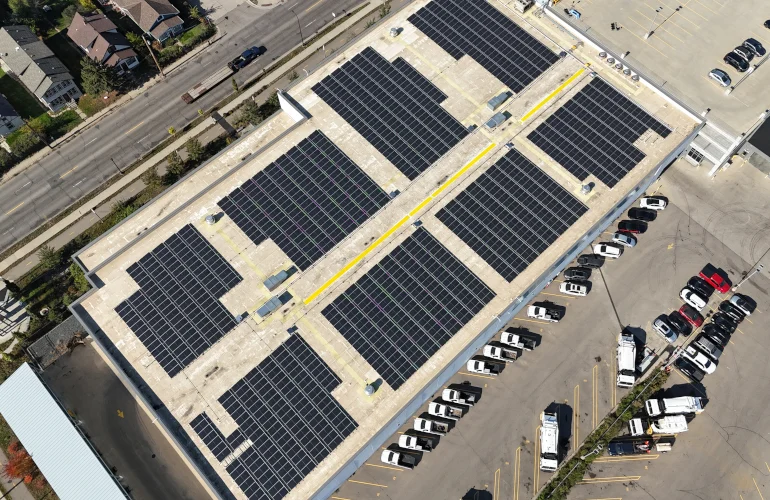
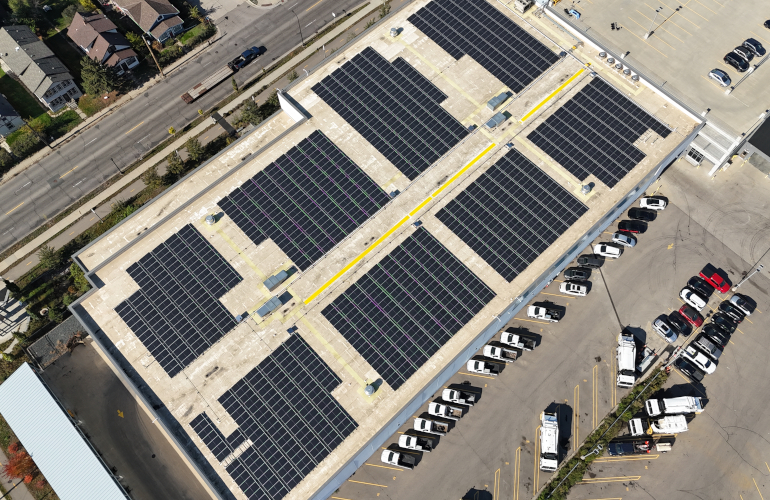
MINNEAPOLIS — In a significant step toward urban sustainability and equitable energy access, the City of Minneapolis has officially unveiled a new 704-kilowatt (kW) community solar garden perched atop the city-owned Eastside Maintenance Facility. Designed specifically to benefit low- and moderate-income (LMI) residents, the project represents a collaborative triumph between municipal authorities, local non-profits, and renewable energy developers.
By utilizing underutilized municipal roof space to generate clean electricity, the initiative provides tangible financial relief to households traditionally locked out of the traditional solar market. As the city continues to navigate the dual challenges of economic affordability and climate change, this project serves as a blueprint for how urban centers can democratize the green transition.
Main Facts
The newly operational community solar garden is a localized renewable energy generation system strategically positioned to maximize urban space while directly serving vulnerable populations.
- System Capacity: The rooftop installation boasts a robust 704-kW capacity, making it one of the more substantial municipal-backed community solar arrays in the region.
- Location: The project is mounted on the roof of the city-owned Eastside Maintenance Facility, optimizing unused industrial infrastructure for clean energy production.
- Target Demographics: The solar garden is exclusively dedicated to serving low- and moderate-income (LMI) subscribers, directly addressing the energy burden faced by these households.
- Current Enrollment: The installation currently provides power to 100 LMI subscribers, with approximately 25 subscription spots still open for eligible residents.
- Financial Savings: Participating subscribers are projected to save an average of approximately $25 per month on their monthly utility bills, offering meaningful, recurring relief from energy costs.
- Key Stakeholders: The project was developed through a partnership between the Minnesota Renewable Energy Society (MRES) and Greenway Solar.
- Municipal Funding: The City of Minneapolis contributed a $150,000 grant to the initiative via its established Green Cost Share Program.
Chronology of the Project
The realization of the Eastside Maintenance Facility community solar garden is the result of years of planning, policy alignment, and collaborative execution between municipal leaders and clean energy advocates.
Phase 1: Policy Foundation and Municipal Commitment
Long before panels were mounted on the Eastside facility, the City of Minneapolis laid the groundwork through aggressive climate frameworks, such as the Minneapolis Climate Action Plan and subsequent environmental equity mandates. Recognizing that rooftop space on municipal buildings represented a largely untapped resource for public good, the city authorized programs like the Green Cost Share Program. This fund was explicitly designed to inject municipal capital into projects that reduce carbon emissions while extending the benefits of renewable energy to historically underserved communities.
Phase 2: Partnership and Engineering
As funding mechanisms fell into place, the Minnesota Renewable Energy Society (MRES) and Greenway Solar stepped forward to spearhead the development. Engineering assessments identified the Eastside Maintenance Facility as an ideal candidate due to its structural capacity, lack of shading, and strategic location. Coordinating closely with city engineers, the development team designed a 704-kW system that could safely integrate with the local grid while maximizing energy harvest throughout Minnesota’s distinct seasonal cycles.
Phase 3: Construction and Commissioning
Physical construction of the array transformed the industrial roof into a decentralized power plant. The installation of high-efficiency photovoltaic modules, inverters, and mounting hardware proceeded steadily. Following rigorous safety inspections and grid-interconnection approvals from local utility providers, the system achieved commercial operation.
Phase 4: Subscriber Enrollment and Launch
With the system generating power, attention shifted to community outreach. MRES and local community partners began onboarding LMI subscribers. To date, the project has successfully enrolled 100 households. The initiative has now entered its active phase, delivering its first wave of monthly utility bill savings while keeping a remaining pool of 25 subscription slots open for qualifying applicants.
Supporting Data and Economic Impact
Understanding the true value of the Eastside Maintenance Facility community solar garden requires examining the intersection of energy economics, municipal finance, and urban demographics in Minneapolis.
The Mathematics of Energy Burden
Low- and moderate-income households frequently suffer from a disproportionately high "energy burden"—the percentage of gross household income spent on utility bills. According to urban energy studies, LMI households can spend up to three times more of their income on energy compared to higher-income counterparts, often living in older housing stock with substandard insulation and inefficient appliances.
While rooftop solar has boomed across the United States over the past decade, traditional installations have largely remained out of reach for renters, apartment dwellers, and lower-income homeowners who lack the upfront capital for installation or do not own the roofs over their heads. Community solar bridges this gap by allowing multiple subscribers to buy or lease a portion of a shared off-site or shared-roof array, receiving credit on their electric bills for the power generated.
Financial Breakdown of the Eastside Project
- City Investment: $150,000 via the Green Cost Share Program. This targeted municipal investment catalyzed a much larger private and non-profit development effort, demonstrating the multiplier effect of smart public spending.
- Direct Household Savings: $25 per month per subscriber. While a $25 monthly reduction—amounting to $300 annually—may appear modest at first glance, it represents a vital financial cushion for households operating on tight budgets. For families living paycheck to paycheck, this savings can cover essential groceries, prescription medications, or public transit passes.
- System Scale: At 704 kW, the installation generates a substantial volume of renewable kilowatt-hours annually, significantly displacing fossil-fuel-generated electricity on the local grid and reducing municipal carbon emissions in alignment with city-wide environmental targets.
Official Responses and Stakeholder Perspectives
The unveiling of the project has drawn praise from municipal leaders, non-profit directors, and renewable energy advocates alike, all of whom emphasize the dual focus on environmental stewardship and social equity.
Municipal Leadership on Equity
City officials have framed the project not merely as an environmental initiative, but as a core component of economic justice in Minneapolis. By leveraging city-owned assets—such as the roof of a municipal maintenance facility—the city is actively democratizing the energy grid.
"Our climate goals cannot be achieved in a vacuum, nor can they leave our most vulnerable communities behind," noted municipal representatives involved with the Green Cost Share Program. "When we invest in solar infrastructure that directly lowers utility bills for low- and moderate-income residents, we are tackling climate change and economic hardship simultaneously."
The Role of Non-Profits and Developers
The Minnesota Renewable Energy Society (MRES) and Greenway Solar played instrumental roles in transforming policy concepts into operational reality. Representatives from MRES highlighted the importance of grassroots partnerships in scaling solar access.
"Community solar is the most effective tool we have to ensure that every resident, regardless of their housing status or income level, can participate in and benefit from the clean energy transition," an MRES spokesperson stated. "Working alongside Greenway Solar and the City of Minneapolis, we have proven that innovative financing and community-focused design can overcome historical barriers to solar adoption."
Greenway Solar engineers emphasized the technical success of utilizing municipal rooftops. "Industrial and municipal rooftops represent vast, unshaded acreage in urban centers," project engineers noted. "By outfitting the Eastside Maintenance Facility with cutting-edge photovoltaic technology, we have turned a passive municipal building into an active, community-serving energy generator."
Implications for the Future of Urban Renewable Energy
The success of the 704-kW community solar garden on the Eastside Maintenance Facility carries profound implications for Minneapolis and other metropolitan areas grappling with climate action and socio-economic equity.
A Blueprint for Municipal Asset Utilization
Cities across the United States own vast portfolios of real estate, including maintenance yards, water treatment plants, community centers, and parking structures. These large, flat roofs are often structurally engineered to support heavy equipment, making them prime locations for commercial-scale solar installations.
The Minneapolis model demonstrates how municipalities can use their own real estate footprint to drive community-wide social benefits. By partnering with non-profits and specialized solar developers, cities can bypass the bureaucratic hurdles of private land acquisition and immediately channel clean energy to the neighborhoods that need it most.
Scaling LMI Solar Access
As renewable energy targets become more aggressive at both the state and federal levels, the pressure to ensure equitable distribution of benefits will only intensify. Projects like the Eastside facility prove that LMI-focused community solar is not just a theoretical concept, but an achievable, operational reality.
With 25 subscription spots still remaining, MRES and city officials are actively working to fill the final vacancies through community outreach, localized workshops, and partnerships with local social service agencies. For interested residents, the process is streamlined, offering a seamless transition to clean energy without requiring any physical modifications to their homes.
Long-Term Vision for Minneapolis
Looking ahead, the lessons learned from the Eastside Maintenance Facility project are expected to inform future rounds of the Green Cost Share Program and broader municipal infrastructure planning. As battery storage technology improves and grid modernization efforts progress, future iterations of municipal solar gardens could potentially incorporate resilient backup power capabilities, offering local shelters or community hubs protection against grid outages exacerbated by extreme weather events.
Ultimately, the Minneapolis community solar garden stands as a testament to what can be achieved when municipal vision, non-profit dedication, and engineering expertise converge. By placing clean energy directly into the hands of low- and moderate-income residents, Minneapolis is illuminating a path toward a more sustainable, equitable, and resilient urban future.