Despite the persistent geopolitical volatility emanating from the Middle East and the lingering shadow of sticky inflation, the United States economy has displayed a remarkable degree of structural fortitude. Recent data from ICIS indicates that the American industrial and services landscape is not merely surviving but actively expanding, marking one of the most broad-based growth phases in recent history. As we navigate the latter half of the decade, the U.S. economy remains defined by a dichotomy: robust, AI-driven corporate investment paired with the stubborn, high-interest-rate realities that continue to throttle the housing market and automotive affordability.
Main Facts: A Broad-Based Expansion
The most compelling narrative emerging from the latest sectoral data is the depth of the current economic expansion. In September, output rose across 66% of the 155 sectors monitored by industry analysts—the widest share of growth recorded in over three and a half years. This is not a recovery concentrated in a single vertical; rather, it is a multi-front advancement.
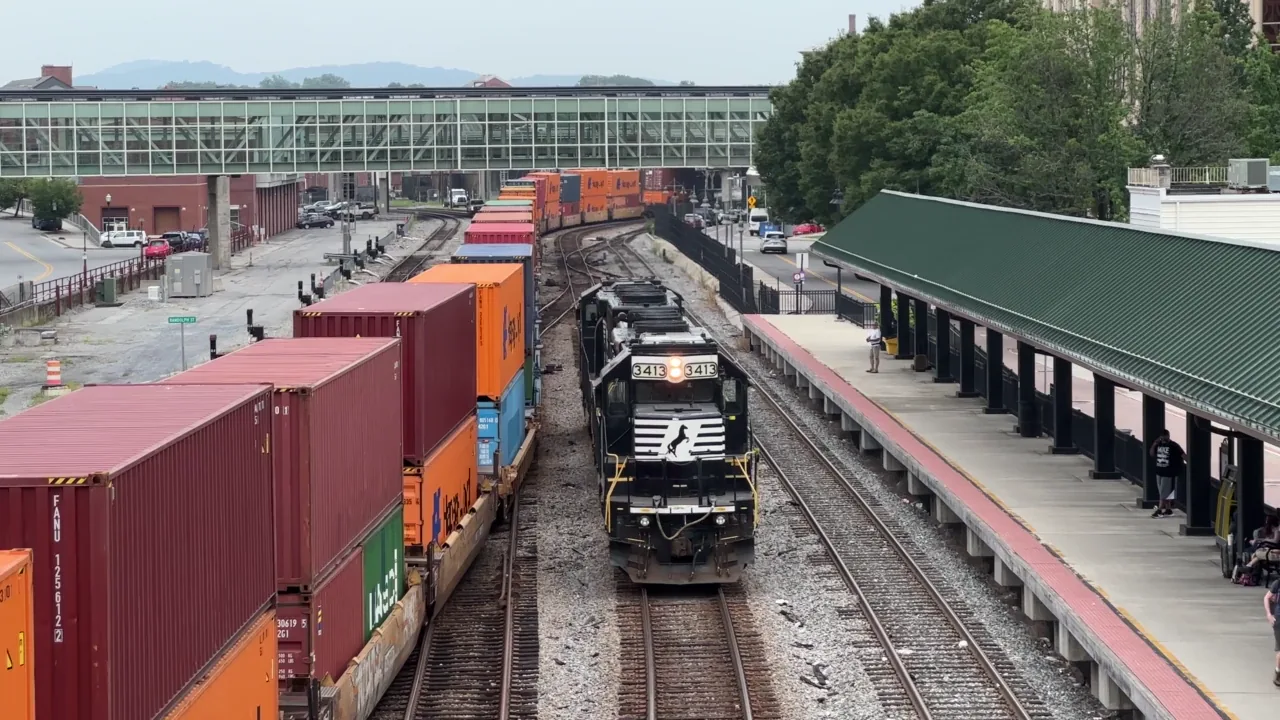
The transportation, utilities, and information/communications sectors are currently leading the charge. These are the "connective tissues" of the modern economy, and their expansion suggests that the flow of goods and data remains unencumbered despite global supply chain jitters. Following closely are the goods-producing sectors, while finance, insurance, and real estate—often the first to buckle under interest rate pressure—have posted surprisingly solid gains. High-frequency indicators further corroborate this, suggesting that the momentum generated in late summer successfully carried into October.
Crucially, the labor market reflects this industrial health. Employment has increased across half of the tracked sectors, signaling that the supply-side of the economy is holding up remarkably well. While households are beginning to show caution, they have not yet reported a material collapse in affordability, though businesses are increasingly vocal about the potential for energy cost volatility stemming from the ongoing Middle East conflict.
Chronology: The Path of Resilience
To understand the current state of the U.S. economy, one must look at the trajectory of the last few years.
- 2022-2023: The economy faced the dual shock of post-pandemic inflationary surges and the rapid normalization of interest rates. Inflation peaked at 8.0% in 2022, forcing the Federal Reserve into a cycle of aggressive tightening.
- 2024: The "soft landing" narrative took hold. Despite higher borrowing costs, the economy avoided recession, largely due to a shift in spending patterns and the early adoption of AI-related capital expenditures.
- 2025-2026: We are currently in a phase of consolidation. Inflation, while cooling from the highs of 2022, remains elevated at an expected 3.3% for 2026. The economy has stabilized into a "new normal" characterized by higher-for-longer interest rates.
- 2027-2028 (Projected): Forecasts indicate a steady GDP growth rate of 2.4%, with a gradual cooling of inflationary pressures and potential relief in interest rates by late 2027.
Supporting Data: PMIs and Economic Vitality
The Institute for Supply Management (ISM) reports serve as the "gold standard" for gauging industrial sentiment, and the latest figures paint a picture of sustained, if moderate, growth.

Manufacturing and Services
The September ISM Manufacturing Purchasing Managers Index (PMI) posted a reading of 54.5. Any figure above 50 indicates expansion, and this marked the ninth consecutive month of growth. With 12 of 18 industries reporting expansion, the manufacturing base is proving resilient. Production, new orders, and order backlogs were all in positive territory, suggesting that the "industrial renaissance" supported by domestic reshoring is real.
Equally significant is the Services sector, which accounts for the lion’s share of the U.S. GDP. The ISM Services PMI sat at 54.9 in September, marking 27 consecutive months of expansion. This sustained growth confirms that consumer demand, while shifting, has not evaporated.
The Investment Shift
Perhaps the most significant structural change in the economy is the transition from consumer-led growth to business-led investment. Capital goods orders are on the rise, driven by an unprecedented wave of spending on Artificial Intelligence infrastructure. This is not just a tech-sector phenomenon; it is a fundamental reconfiguration of the U.S. productive base. Productivity-enhancing projects, long delayed during the uncertainty of the early 2020s, are finally moving forward. This shift is expected to provide a floor for GDP growth, projecting a steady 2.3% for both 2025 and 2026.
Official Responses and Macroeconomic Outlook
The Federal Reserve finds itself in a precarious position. While the economy is growing, inflation remains above the 2.0% target. Economists suggest that the combination of large fiscal deficits, geopolitical energy risks, and strong credit demand will keep the 10-year Treasury yield at levels significantly higher than those seen during the "cheap money" era of the 2010s.
The consensus among analysts is that while upward pressure on inflation from energy and trade tariffs is beginning to fade, the "last mile" of returning to 2.0% will be slow. Consequently, interest rates are expected to remain elevated. This policy stance is deliberate, intended to balance the need for price stability with the necessity of maintaining the current expansionary momentum.
Implications: The Divided Economy
Despite the headline resilience, the economy is currently a tale of two realities.

The Housing Crisis
Housing is the primary victim of the current interest rate environment. With 30-year fixed mortgage rates hovering around 7.5%, the "lock-in" effect—where homeowners refuse to move because they would lose their sub-3% rates—has caused a severe inventory shortage. Housing starts in September fell 7.4% year-on-year to 1.22 million units. Analysts believe that until mortgage rates dip below the 6.0% threshold, the housing market will continue to struggle. The demographic demand is there, but the financial accessibility is not.
The Automotive and Retail Sector
The automotive industry experienced a third-quarter pullback. After a strong second quarter, the confluence of high auto loan rates and elevated vehicle prices has dampened consumer enthusiasm. Sales are expected to reach 16.2 million units this year, a respectable figure that is slowly climbing back toward the 2018 peak of 17.3 million.
Retail sales, conversely, show a "bifurcated" consumer. Affluent households, supported by healthy balance sheets and moderate debt burdens, continue to spend. Meanwhile, lower-income households are facing a material squeeze from inflation. However, overall spending remains surprisingly buoyant, preventing a broad economic contraction.
Global Interdependencies
The U.S. does not exist in a vacuum. Manufacturing PMIs across the Americas are mixed; Canada and Mexico are showing positive trends, while Brazil remains cautious. In Asia, the buildout of AI infrastructure is acting as a massive growth catalyst for Japan, South Korea, and China, creating a global virtuous cycle of technology investment that benefits the U.S. export market.
Conclusion: The Road Ahead
The United States economy is currently navigating a period of profound transition. It has successfully decoupled from the immediate post-pandemic volatility but is now tethered to a more complex set of challenges: geopolitical risk, structural inflation, and the cost of capital.
Yet, the data from ICIS and other leading indicators suggest that the American economy is remarkably adaptable. The pivot toward capital-intensive, AI-driven investment suggests a long-term commitment to productivity that will likely pay dividends through 2028. While the housing market remains a drag and the automotive sector faces a long road to recovery, the underlying pillars of the economy—broad-based industrial output and a resilient labor market—remain firm. As we look toward the next two years, the U.S. economy appears poised for a steady, if cautious, expansion, provided the global energy landscape remains manageable and the Federal Reserve maintains its delicate balancing act.