WASHINGTON — In an era defined by extreme weather volatility, fluctuating utility markets, and mounting regulatory pressure to decarbonize, commercial real estate operators and facility managers face a defining challenge: how to maintain optimal building comfort while aggressively driving down energy consumption and operational costs. For many enterprises, energy has transitioned from a routine, fixed utility overhead to a volatile line item that directly impacts corporate profitability and environmental, social, and governance (ESG) scoring.
Yet, a pervasive structural paradox plagues the commercial sector. While the financial and environmental imperatives for rigorous sustainability have never been more pronounced, a vast majority of commercial facilities still operate without dedicated internal energy managers. Furthermore, they lack the sophisticated, automated infrastructure required to execute a dynamic, data-driven strategic energy management (SEM) program.
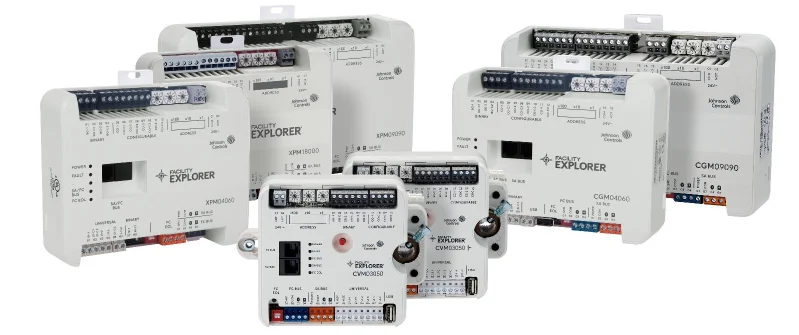
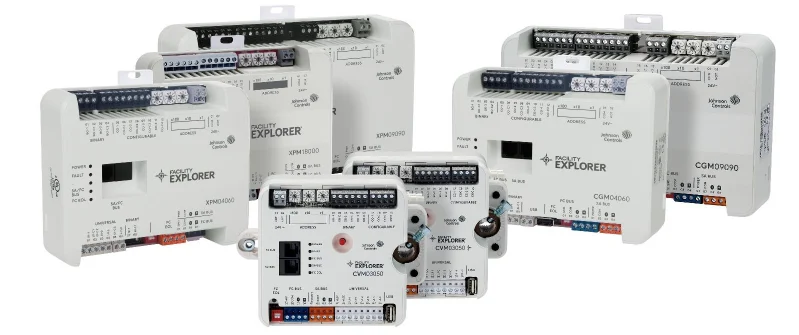
Enter Building Automation Solutions (BAS), a premier systems integrator and certified automated building solutions (ABCS) provider. Armed with cutting-edge hardware integrations from industry giants like Johnson Controls and Wattmaster Controls, alongside advanced diagnostic platforms such as SkySpark analytics, BAS is redefining how commercial real estate and industrial facilities approach resource optimization.
Main Facts: The Modern Imperative of Strategic Energy Management
At its core, professional energy management is no longer merely about turning off the lights when leaving a room or conducting a cursory review of monthly utility statements. In the modern commercial landscape, it is a sophisticated, multi-disciplinary practice that blends mechanical engineering, data science, financial forecasting, and automated systems integration.
Defining Energy Management
Energy management encompasses the systematic tracking, analysis, and reduction of an organization’s overall energy consumption. On a foundational level, this involves reactive measures: auditing utility bills, retrofitting legacy lighting with LEDs, or upgrading manual thermostats to programmable digital controls for heating, ventilation, and air conditioning (HVAC) systems—which typically account for over 40% of a commercial building’s total energy consumption.
However, advanced energy management is inherently proactive. It involves complex financial modeling across diverse asset classes, real-time telemetry, predictive maintenance, and multi-year capital planning. As an organization’s energy program evolves from basic conservation to forward-looking strategic management, the level of technological sophistication must scale accordingly.
Modern enterprise energy management relies heavily on cloud-based analytic software platforms, such as SkySpark. These platforms ingest thousands of data points per second from building management systems (BMS), turning raw operational data into actionable intelligence. This empowers executive leadership to align energy strategies directly with overarching business objectives and capital expenditure budgets.
The Value Proposition: Beyond Short-Term Savings
The return on investment (ROI) for comprehensive energy management extends far beyond immediate utility bill reductions. Organizations that implement robust energy management frameworks typically realize a cascading array of benefits:
- Direct Operational Cost Reduction: By eliminating energy waste and optimizing equipment run-times, facilities consistently slash their monthly utility expenditures by double-digit percentages.
- Enhanced Equipment Lifespan: Continuous monitoring and automated fault detection prevent mechanical systems from overworking, thereby reducing wear-and-tear and deferring costly capital replacements.
- Improved Indoor Environmental Quality (IEQ): Modern HVAC optimization ensures precise temperature, humidity, and ventilation control, which has been directly linked to enhanced occupant health, comfort, and workplace productivity.
- Corporate Social Responsibility (CSR) and ESG Compliance: As investors and consumers increasingly prioritize sustainability, verified reductions in greenhouse gas (GHG) emissions bolster a company’s public profile and help meet stringent municipal carbon mandates.
- Future-Proofed Capital Planning: Granular energy data allows facilities to model future consumption trends accurately, avoiding nasty budget surprises and ensuring compliance with emerging energy codes.
Chronology: The Evolution of Commercial Building Efficiency
To understand the current state of building automation and energy consulting, it is necessary to examine how the relationship between commercial real estate and energy consumption has evolved over the past several decades.
Era 1: The Reactive Paradigm (Pre-1990s)
For much of the 20th century, commercial buildings operated on rudimentary mechanical systems. Thermostats were largely analog, pneumatic controls dictated airflow, and energy management was virtually non-existent outside of manual shutdowns performed by building superintendents. Utility prices were relatively stable, and environmental impacts were rarely factored into real estate valuations. Energy was treated as an endless, cheap commodity.
Era 2: The Rise of Digital Automation (1990s – 2000s)
The introduction of Direct Digital Control (DDC) systems revolutionized the facilities management sector. For the first time, building operators could view temperatures and equipment statuses on centralized computer screens. However, these early Building Management Systems (BMS) were often siloed, proprietary, and notoriously difficult to integrate across different manufacturing brands. Data was largely archived rather than analyzed, leading to the phenomenon of "data-rich but information-poor" facilities.
Era 3: The Big Data and Analytics Revolution (2010s – Present)
The proliferation of Internet of Things (IoT) sensors, cloud computing, and advanced data analytics platforms fundamentally transformed the industry. Software solutions emerged not just to control equipment, but to think for it. Platforms capable of automated fault detection and diagnostics (FDD)—such as SkySpark—entered the market. Energy management shifted from a manual, reactive chore into an automated, predictive science capable of uncovering hidden inefficiencies that human operators could never manually detect.
Era 4: The Decarbonization and Incentive Era (Today and Beyond)
Today, commercial energy management operates under the shadow of climate change legislation and aggressive corporate net-zero commitments. Municipalities across the country are enacting strict building performance standards (such as New York City’s Local Law 97 or Washington D.C.’s Building Energy Performance Standards), levying heavy fines on carbon-heavy real estate. Simultaneously, federal legislation—including the Inflation Reduction Act (IRA)—has unlocked unprecedented pools of capital, tax incentives, and utility rebates for energy efficiency upgrades, making strategic engineering consultation an absolute financial necessity.
Supporting Data: The Hidden Costs of Inefficiency
The arguments for adopting advanced energy management are underscored by compelling data from industry analysts, governmental agencies, and engineering firms:

- The 30% Waste Factor: According to the U.S. Environmental Protection Agency (EPA) Energy Star program, roughly 30% of the energy consumed in commercial buildings is wasted. This structural inefficiency represents billions of dollars in preventable operational expenditures annually across the domestic real estate market.
- HVAC Dominance: The Department of Energy estimates that HVAC systems account for approximately 43% of commercial energy use. Because HVAC components are mechanically complex and prone to operational drift—such as simultaneous heating and cooling, degraded dampers, or fouled coils—they represent the single largest target for automated efficiency gains.
- The Analytics ROI: Case studies involving automated fault detection and diagnostics (FDD) software like SkySpark demonstrate that continuous commissioning can uncover energy savings ranging from 10% to 20% within the first year of deployment, often with simple payback periods of under 18 months—even before factoring in utility rebates.
- The Incentive Gap: Billions of dollars in utility rebates, tax credits, and municipal grants go unclaimed each year simply because commercial property owners lack the engineering resources to navigate complex application processes and baseline measurement requirements.
Official Responses and Industry Perspectives
As the market grapples with these complex demands, industry leaders are increasingly speaking out on the necessity of bridging the gap between advanced technology and practical execution.
"Energy management is more important than ever as businesses look to cut costs, control energy, and improve corporate social responsibility," notes technical leadership at Building Automation Solutions (BAS). "Unfortunately, many commercial facilities and businesses do not have their own energy manager or lack automated solutions to carry out a strategic energy management program."
This operational deficit leaves countless organizations exposed to volatile energy markets and unexpected mechanical failures. However, certified integration partners are stepping in to bridge this expertise gap.
"As a certified provider of Johnson and Wattmaster Controls, BAS has the expertise to tackle any HVAC or efficiency upgrade," company representatives emphasize. Crucially, technical execution is paired with financial navigation: "…our energy engineers secure the best incentives and rebates for a given project."
By combining high-end hardware deployment with sophisticated software analytics, BAS provides a turnkey bridge for organizations that lack dedicated in-house sustainability teams.
Implications: How BAS Delivers Comprehensive Energy Solutions
For commercial real estate owners, corporate facility directors, and industrial plant managers, partnering with an experienced automated building solutions provider changes the fundamental equation of property management.
Leveraging Advanced Hardware and Software
BAS stands at the forefront of this technological shift as a certified automated building solutions (ABCS) provider of Johnson Controls, alongside being a trusted deployment partner for Wattmaster Controls. This vendor-certified expertise ensures that legacy and modern mechanical assets can be seamlessly integrated into a unified, coherent control architecture.
However, hardware is only half the equation. By deploying advanced data analytic software such as SkySpark, BAS equips clients with the capability to look beneath the surface of their daily operations. SkySpark automatically analyzes data from building systems to identify anomalies, faults, and optimization opportunities—answering not just what is happening, but why it is happening and where energy is being wasted.
In-House Engineering and Financial Optimization
What separates a standard mechanical contractor from a strategic energy consultant is the depth of analytical and financial engineering. BAS maintains an elite team of in-house engineers capable of designing, modeling, and executing sophisticated energy management programs tailored to the unique operational profiles of individual clients.
This engineering capability translates directly into tangible financial benefits:
- Pinpointing Deficiencies: Automated software tools allow BAS engineers to isolate specific mechanical failures, sensor calibration errors, and control sequence loops that drive up utility bills.
- Targeting High-ROI Conservation Projects: Rather than guessing which upgrades will yield the best returns, BAS utilizes hard data to target energy conservation measures (ECMs) that guarantee the highest possible payback.
- Unlocking Maximum Incentives and Rebates: Navigating utility rebate programs and government incentive structures can be notoriously bureaucratic. BAS energy engineers handle the complex verification, measurement, and documentation required to secure top-tier financial incentives, significantly lowering the net capital cost of major upgrades.
- Predictive Budgeting: By analyzing historical consumption patterns and real-time telemetry, BAS software assists organizations in crafting highly accurate energy budgets and accurately predicting future resource consumption, shielding them from market volatility.
Conclusion: Taking the Next Step
In today’s hyper-competitive commercial environment, ignoring building efficiency is no longer a viable business strategy. As energy codes tighten, utility rates rise, and corporate stakeholders demand verifiable sustainability metrics, organizations must transition from reactive troubleshooting to proactive, data-driven energy management.
You do not need to navigate this complex transition alone. Whether your facility requires a comprehensive HVAC overhaul, a state-of-the-art building automation system upgrade, or expert guidance in capturing lucrative energy rebates, Building Automation Solutions possesses the technology, the hardware partnerships, and the in-house engineering acumen to deliver results.
For more information about building automation solutions, comprehensive energy management, and expert energy consulting services, contact the team at BAS today and take control of your organization’s energy future.