



As industrial and commercial facilities grow increasingly reliant on complex power distribution networks, the oversight of electrical infrastructure has transformed from a routine housekeeping task into a critical operational necessity. For decades, the hidden vulnerabilities of aging electrical equipment went unaddressed until catastrophic failures occurred.
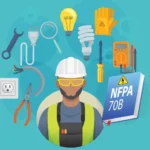
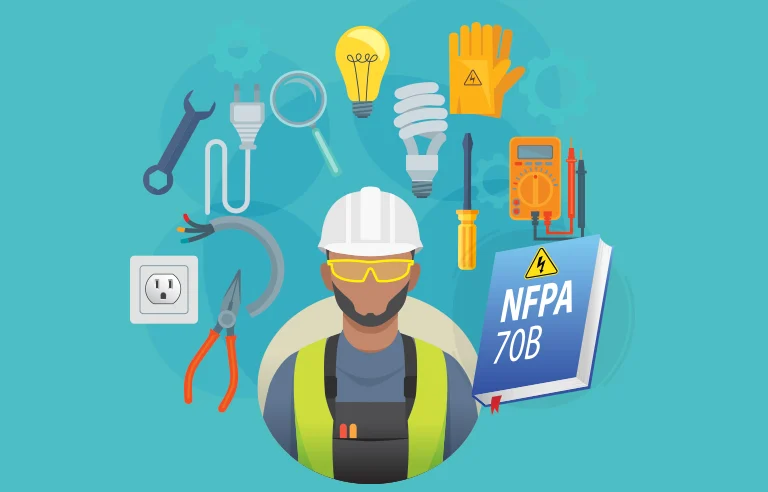
To bridge this critical safety gap, the National Fire Protection Association (NFPA) established NFPA 70B: Standard for Electrical Equipment Maintenance. Recently transitioning from a collection of recommended guidelines to a mandatory consensus standard, NFPA 70B places equipment maintenance front and center in the broader conversation surrounding worker protection and facility management.
This comprehensive review explores the evolution of NFPA 70B, examines the core responsibilities placed upon facility owners and safety professionals, and details how proactive maintenance protocols safeguard both personnel and bottom lines.
1. Main Facts: Demystifying NFPA 70B and the Maintenance Imperative
At its core, NFPA 70B was created to address what safety experts characterize as a historically overlooked element of protecting workers from electrical hazards: preventative and predictive maintenance.
While many organizations are intimately familiar with NFPA 70E—the standard for electrical safety in the workplace that governs safe work practices, personal protective equipment (PPE), and energized work permits—fewer have integrated NFPA 70B into their operational DNA.
Derek Vigstol, an electrical safety consultant for Louisville, Kentucky-based training provider e-Hazard, notes that mentioning the word "maintenance" in training classes often yields blank stares from facility personnel.
"We start to use electrical equipment, and over time, you start to see a degradation in the equipment itself," Vigstol explained during a recent Safety+Health webinar. "And it starts this sort of failure curve."
Understanding the Degradation Curve
Electrical systems do not fail overnight. Consider two distinct scenarios: a severely frayed extension cord versus an industrial equipment enclosure missing critical mounting screws. These present vastly different hazards and demand entirely different mitigation strategies. NFPA 70B addresses the full spectrum of these issues by establishing systematic criteria for:
- Routine and advanced visual inspections
- Precision cleaning and lubrication
- Thermal, mechanical, and electrical diagnostic testing
- Strict maintenance intervals determined by equipment type and operating environment
According to Paul Zoubek, a certified safety professional and president of San Diego-based Zoubek Consulting LLC, equipment that is not serviced in accordance with NFPA 70B—or the explicit specifications provided by the original equipment manufacturer (OEM)—fails to meet the "normal operating condition" threshold required by companion standards like NFPA 70E.
2. Chronology: The Evolution from Recommendation to Mandate
The regulatory and operational landscape surrounding electrical maintenance has undergone a profound shift over the past several years, turning advisory best practices into enforceable requirements.
The Timeline of Change
- Decades Past: Electrical maintenance was largely treated as a reactive measure. Equipment was run to failure, or serviced only when operational hiccups interfered with production, leaving personnel exposed to hidden arc-flash and shock risks.
- The 2023 Transition: In a landmark move, the NFPA transitioned 70B from a recommended practice to a full standard. In standard NFPA terminology, "recommended practices" use advisory language (such as "should"), whereas formal standards introduce mandatory provisions utilizing the legal term "shall."
- The December Revision: Building upon the 2023 baseline, the NFPA implemented critical revisions in December, refining the standard’s scope, clarifying compliance expectations, and tightening the integration between maintenance protocols and overall safety management systems.
- Present Day: Facilities face mounting pressure from insurance providers, regulatory bodies, and industry consensus groups to operationalize the standard. While federal enforcement mechanisms continue to evolve, safety advocates predict that OSHA incident investigators will increasingly point to "lack of maintenance" as a root cause or aggravating factor in workplace electrical accidents.
3. Supporting Data and Practical Implementation
Transitioning an electrical maintenance program from concept to reality requires moving beyond static paperwork. A recurring pitfall, according to Paul Zoubek, is that organizations often draft comprehensive electrical safety programs that ultimately "sit in a Dropbox folder or gather dust on a safety manager’s bookshelf" without ever accounting for equipment maintenance.
Building a Predictive Maintenance Framework
Under NFPA 70B, an electrical maintenance program must be deeply synchronized with an organization’s overarching electrical safety program. Employers should aim to operate within the predictive zone of the equipment failure curve. Predictive maintenance utilizes diagnostic data to forecast when a component is likely to degrade, allowing maintenance teams to intervene safely before a catastrophic fault occurs.
Warning Signs to Monitor
Facility workers and maintenance personnel must be trained to recognize early indicators of electrical distress. Key warning signs include:
- Evidence of excess heat, discoloration, or scorching on enclosures and terminations.
- Unusual burning odors originating from electrical rooms or equipment housings.
- Audible anomalies, such as humming, buzzing, or clicking noises from transformers and switchgear.
- The presence of foreign substances, excessive dust, debris, or moisture stains on or near electrical assemblies.
- Crimped, dented, corroded, or physically loose mechanical components and wiring connections.
The Role of the EMP Coordinator
A vital requirement introduced and emphasized within NFPA 70B is the formal designation of an Electrical Maintenance Program (EMP) Coordinator.
"That’s a real important role to have because it’s not just, Hey, we got this document sitting on the shelf," Vigstol emphasizes. "We now have somebody who’s actively involved in making sure that the document is getting rolled out and followed, that it’s doing what it’s supposed to do, and who is responsible for making sure that the fixes get put into place if we notice something isn’t actually working."
4. Official Responses and Legal Responsibilities
As NFPA 70B gains traction across industrial sectors, questions surrounding legal liability and enforcement have taken center stage. Who ultimately bears the burden of ensuring that complex electrical assets are properly maintained?
Defining Ownership and Accountability
The text of NFPA 70B is explicit: the equipment owner shall implement and document an electrical maintenance program that directs all maintenance activities for the designated assets.
This creates unique compliance challenges in commercial leasing arrangements. "It’s important to note that the owner of the electrical equipment is responsible for its maintenance," Zoubek points out. "So, if an organization is leasing a facility, the owner or landlord may have this responsibility, or there may be lease stipulations that delegate that duty to the lessee. In either case, each party shouldn’t pass the buck to the other party and assume it’s not their responsibility."
The Reach of the AHJ (Authority Having Jurisdiction)
Because NFPA 70B is a consensus standard, its provisions can be—and frequently are—incorporated by reference into federal, state, and local building and safety codes.
The NFPA defines an Authority Having Jurisdiction (AHJ) as any organization, office, or individual responsible for enforcing the requirements of a code or standard, or for approving equipment, materials, an installation, or a procedure. Common examples of AHJs include:
- Municipal building and electrical inspectors
- State and federal safety regulators (such as OSHA compliance officers)
- Insurance underwriting and property loss prevention inspection departments
- Government and military base commanding officers
5. Implications: Beyond Basic Compliance
While some organizations view safety standards purely as regulatory hurdles to be cleared, industry experts stress that implementing NFPA 70B offers profound operational advantages that extend far beyond avoiding fines.
The Regulatory Nexus
Federal standards, such as OSHA 1910.303 (General Requirements for Electrical Systems), explicitly mandate that electrical equipment must be free from recognized hazards capable of causing death or serious physical harm to employees. Furthermore, OSHA Subpart S outlines extensive workspace dimensions and maintenance criteria to ensure worker safety.
Derek Vigstol warns that while there may not currently be an "electrical maintenance SEAL Team 6" dropping from the ceiling to check on facility compliance, the regulatory enforcement environment is shifting.
"I anticipate a future OSHA incident report will show lack of maintenance as a direct amplifier of the injury," Vigstol predicts, "and then the floodgates are going to open on enforcement of this standard."
The Bottom-Line Benefits of Proactive Maintenance
Ultimately, embracing NFPA 70B creates a synergistic safety culture. A robust, written electrical maintenance program does not exist in a vacuum; it ensures seamless compliance with NFPA 70E, OSHA regulations, and industry best practices.
By systematically inspecting, testing, and servicing electrical distribution assets, organizations achieve a triple win:
- Drastically Reduced Arc-Flash and Shock Risks: Protecting personnel from catastrophic electrical failures.
- Optimized Equipment Longevity: Preventing premature component degradation and extending the operational lifecycle of expensive capital assets.
- Minimized Unplanned Downtime: Replacing emergency reactive repairs with planned, cost-effective maintenance windows that protect productivity and profitability.
As facilities continue to modernize, the integration of NFPA 70B into daily operations is no longer optional for forward-thinking organizations—it is the bedrock of a resilient, safe, and legally compliant workplace.