By Global Trade & Logistics Desk
Published October 31, 2026
Main Facts
U.S. Customs and Border Protection (CBP) officers at the Otay Mesa port of entry in California intercepted a commercial tractor-trailer hauling nearly 1,600 pounds of methamphetamine disguised among a routine shipment of fresh green tomatillos. The illicit cargo, crossing the border from Mexico on October 14, carried an estimated street value of approximately $2.5 million.
While federal agents successfully seized the narcotics before they could enter domestic distribution networks, the incident has once again placed a harsh spotlight on the vulnerabilities inherent in cross-border supply chains. Drug cartels and illicit trafficking rings routinely exploit the sheer volume of legitimate commercial freight moving between Mexico and the United States, utilizing perishable agricultural goods—which demand rapid inspection and clearance to prevent spoilage—as camouflage for high-value contraband.
In response to the discovery, federal immigration authorities swiftly took administrative action against the commercial driver operating the vehicle. Citing Section 212(a)(2)(C)(i) of the Immigration and Nationality Act, officials revoked the motorist’s visa. This specific legal provision empowers the federal government to bar or remove individuals when authorities have reasonable grounds to believe they have participated in, or knowingly assisted, conspired, or colluded with illicit drug traffickers. Crucially, this administrative penalty can be levied independently of a formal criminal conviction, raising complex questions regarding driver culpability, coercion, and corporate accountability in cross-border logistics.
Chronology of Events
The seizure is part of an ongoing, multi-agency crackdown on transnational smuggling networks operating along the Southwest border. A structured timeline details how the operation unfolded:
- October 14: A commercial tractor-trailer entering the United States from Mexico arrives at the Otay Mesa port of entry in California. Manifested as a routine cargo load of fresh green tomatillos destined for an American market, the vehicle is flagged for a secondary inspection.
- October 14 (Secondary Screening): During a rigorous physical examination of the trailer, CBP Office of Field Operations officers uncover multiple hidden packages mixed directly within the produce crates. Field tests confirm the substance is methamphetamine, totaling approximately 1,600 pounds.
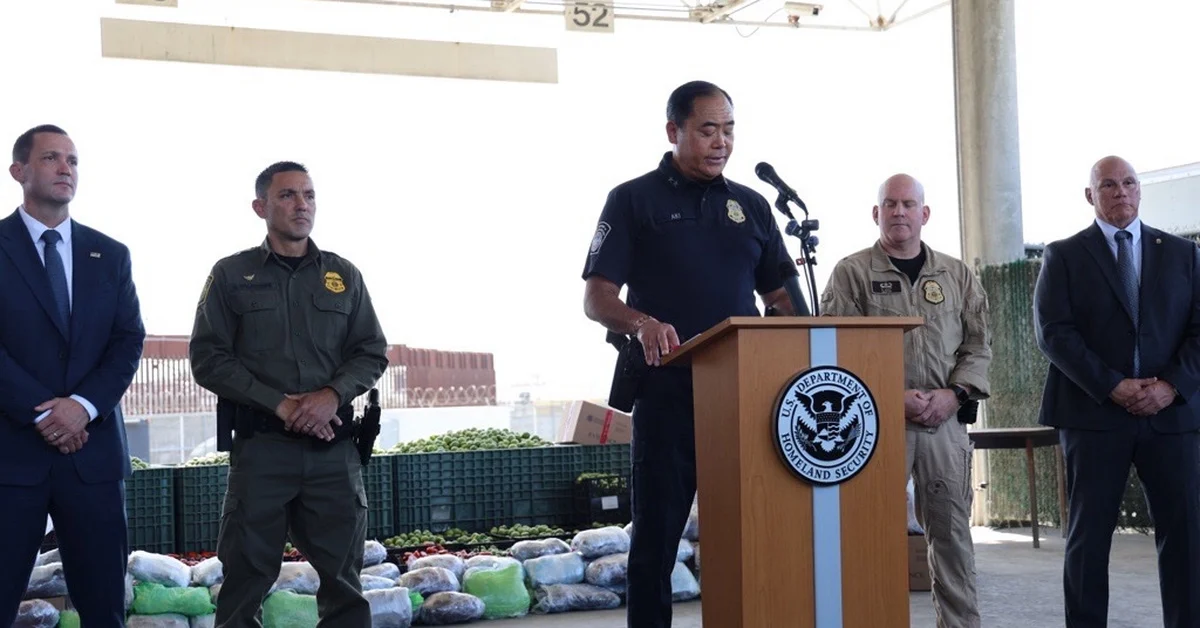
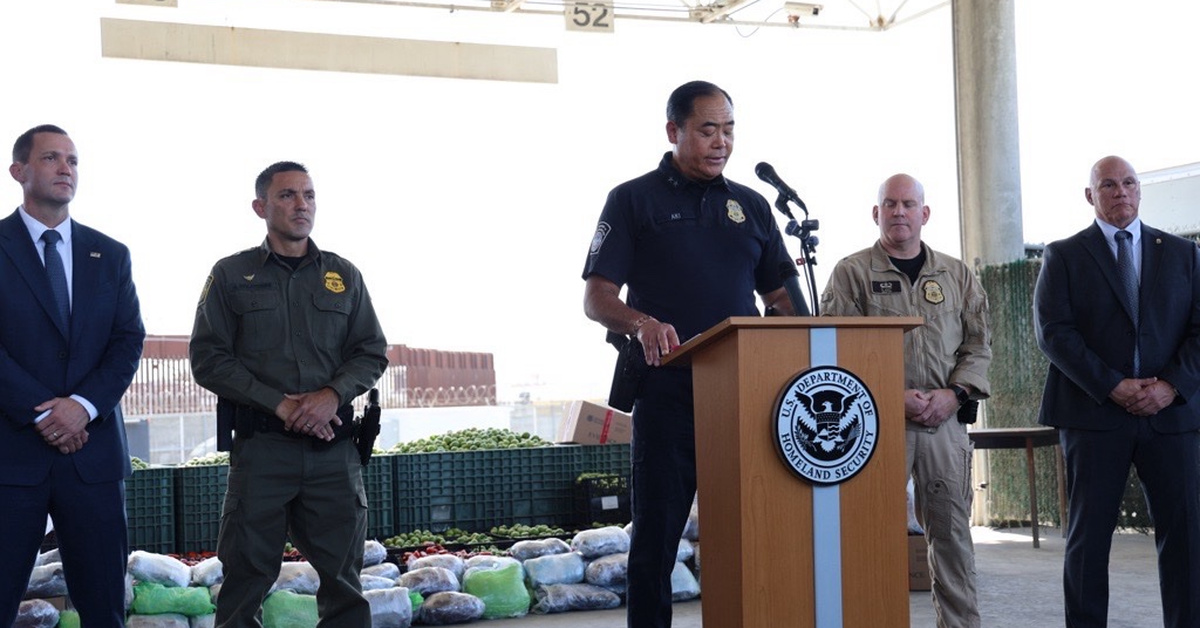
- October 16: Federal agencies—including CBP’s Office of Field Operations, Border Patrol, Air and Marine Operations, and Homeland Security Investigations (HSI)—jointly announce the $2.5 million bust during a local media briefing.
- Mid-October: Parallel federal investigations unfold, including immigration enforcement actions. Authorities officially serve the truck driver with a visa cancellation under Section 212(a)(2)(C)(i) of the Immigration and Nationality Act.
- Late October: FreightWaves and other industry logistics watchdogs press federal agencies for additional operational details, including the specific motor carrier identity, concealment methodologies, and whether formal criminal charges have been filed against the driver. As of late October, investigations remain strictly confidential, leaving carrier liability and driver awareness unresolved.
Supporting Data and Comparative Analysis
The Otay Mesa tomatillo bust is not an isolated incident; rather, it underscores a broader surge in sophisticated commercial drug-smuggling attempts utilizing heavy freight infrastructure. Just weeks prior to the California seizure, CBP officers stationed at the Laredo World Trade Bridge in Texas intercepted an even larger narcotics shipment concealed within an industrial salt load.
Key Seizure Metrics: Otay Mesa vs. Laredo World Trade Bridge
| Metric | Otay Mesa Port of Entry (California) | Laredo World Trade Bridge (Texas) |
|---|---|---|
| Date of Interception | Mid-October 2026 | Early October 2026 |
| Commodity Type | Fresh Green Tomatillos (Produce) | Industrial Salt (Bulk Cargo) |
| Narcotic Type | Methamphetamine | Methamphetamine |
| Seizure Weight | ~1,600 pounds | ~3,396 pounds |
| Estimated Street Value | $2.5 million | $30.4 million |
| Implied Value per Pound | ~$1,560 per pound | ~$8,900 per pound |
The stark variance in the calculated valuation per pound between the two seizures highlights regional pricing discrepancies and variations in drug purity or localized market demand. The San Diego-area street value estimated by authorities for the Otay Mesa load breaks down to roughly $1,560 per pound, whereas the Laredo seizure carried an implied value approaching $8,900 per pound.
Trade analysts point out that perishable agricultural shipments like tomatillos present unique challenges for border enforcement. Because produce degrades rapidly under heat and delays, primary and secondary screening protocols must balance strict anti-smuggling enforcement with the economic imperative of keeping perishable food supply chains moving efficiently. Transnational cartels appear to calculate that the sheer volume of cross-border agricultural traffic provides a statistical shield against comprehensive physical audits.
Official Responses and Investigative Stance
Despite the high-profile nature of the announcement, federal agencies have maintained a tight lid on operational particulars. During the joint press conference on October 16, representatives from the Office of Field Operations, Border Patrol, Air and Marine Operations, and Homeland Security Investigations highlighted inter-agency cooperation but declined to elaborate on several crucial aspects of the case.
When contacted by industry media for follow-up, CBP representatives withheld specific details regarding:
- The Trigger for Inspection: The agency declined to state whether the truck was flagged via intelligence-led targeting, random selection, canine units, or non-intrusive imaging technology (such as X-ray or gamma-ray systems).
- Concealment Techniques: Investigators refused to describe how the 1,600 pounds of methamphetamine were physically integrated into the palletized tomatillo crates to evade initial visual and manual checks.
- Carrier Identification: Authorities have not publicly named the motor carrier, logistics broker, or shipper associated with the cross-border move.
Furthermore, the legal status of the truck driver remains ambiguous. While immigration authorities exercised their authority to cancel the motorist’s visa based on reasonable belief of collusion with drug traffickers, CBP has not clarified whether the driver was formally arrested, taken into criminal custody by Homeland Security Investigations, or released back across the border. Federal officials cited ongoing investigative confidentiality to justify the withholding of criminal indictments or arrest records.
This regulatory gray area—where an individual faces severe administrative penalties (visa revocation) without an immediate public disclosure of criminal charges—underscores the complex legal mechanisms federal agencies use to disrupt supply chain infiltration. Under U.S. immigration law, the government does not require a criminal conviction to strip an individual of legal entry privileges if there is substantiated cause to link them to international drug trafficking networks.
Implications for the Freight and Logistics Industry
For the broader freight, trucking, and supply chain management sectors, the Otay Mesa seizure serves as an urgent wake-up call regarding carrier accountability, cargo security, and the persistent threat of freight fraud.
1. The Weaponization of Unknowing Carriers
A recurring nightmare for legitimate motor carriers and independent owner-operators is becoming an unwitting mule for drug cartels. Recent enforcement actions across the United States have documented sophisticated criminal rings that hijack motor carrier identities, falsify brokerage credentials, or coerce drivers into hauling tainted loads. While the legal status of the Otay Mesa driver remains undetermined, the reality is that bad actors frequently exploit third-party logistics networks to distance themselves from physical cargo custody.
2. Heightened Compliance and Vetting Requirements
As federal agencies ramp up border inspections and leverage advanced data analytics to catch contraband, logistics companies face mounting pressure to implement airtight compliance programs. Industry experts stress that vetting cross-border partners requires more than just checking basic authority numbers; it demands end-to-end chain-of-custody documentation, rigorous driver identification protocols, and real-time shipment visibility.
Upcoming industry forums, such as the Brokerage Compliance Symposium scheduled ahead of the Future of Freight Festival (F3) in Chattanooga, Tennessee, are focusing heavily on these exact exposures. Legal and operational experts are zeroing in on how freight brokers and motor carriers can navigate escalating fraud exposure, tightening Federal Motor Carrier Safety Administration (FMCSA) rules, and severe insurance liabilities tied to cargo security failures.
3. The Balance Between Border Efficiency and Security
For supply chain professionals, incidents like the Otay Mesa meth bust illustrate the delicate balancing act managed by CBP. Every additional layer of physical inspection required to root out hidden narcotics introduces friction, dwell time, and potential spoilage risks for legitimate agricultural importers. As cartels continue to adapt their smuggling methods—shifting seamlessly from industrial salt loads in Texas to fresh produce in California—the freight industry must partner closely with federal regulators to deploy smarter, tech-enabled screening solutions that do not grind cross-border commerce to a halt.
Ultimately, until motor carriers, shippers, and customs authorities establish impenetrable verification checkpoints throughout the entire lifecycle of a cross-border load, commercial freight will remain a primary target in the ongoing war against transnational drug cartels.