




WATERTOWN, SD — For the men and women who maintain the backbone of modern connectivity, the most perilous part of the job often doesn’t involve a harness, a carabiner, or a vertical ascent. Instead, it occurs on the asphalt long before they reach the base of a communications tower.
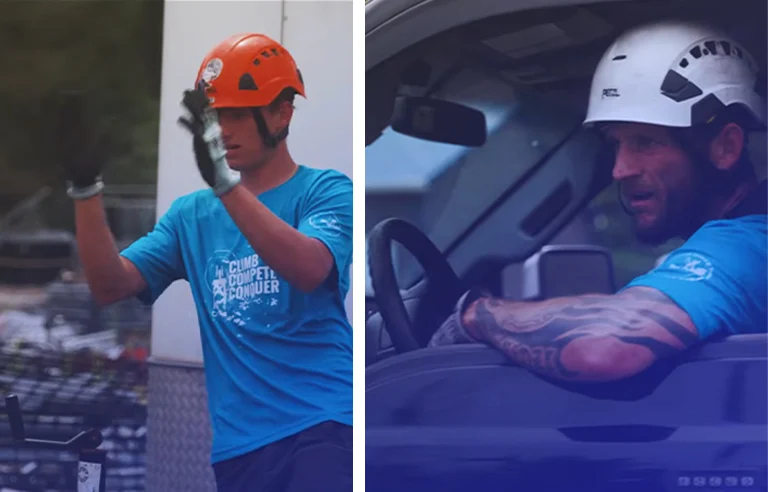
In a renewed push to curb preventable workplace accidents, NATE: The Communications Infrastructure Contractors Association has released a new installment of its acclaimed "Climber Connection" video series. The latest episode shifts the focus from structural integrity to vehicular safety, featuring insights from Cameron Swanson, Vice President of Operations at Ontivity. The central message is clear: the safety culture that defines the tower industry must extend to the driver’s seat.
The Hidden Hazards of the Daily Commute
For communication tower technicians, the "office" is mobile. Teams often travel hundreds of miles between sites, frequently hauling heavy trailers loaded with rigging equipment, generators, and specialized tools. This reality creates a unique risk profile that combines the fatigue of long-haul driving with the technical demands of maneuvering heavy machinery in rugged, often off-road environments.
"Making sure that we stay honed in and don’t allow ourselves to become complacent is critical," Swanson stated during the video discussion with host Sean Gilhooley.
Complacency, according to safety experts, is the silent killer in industrial transportation. When a worker travels the same route repeatedly or handles the same vehicle daily, the brain naturally shifts into a state of "autopilot." In this state, reaction times plummet, and the ability to anticipate hazards—such as a sudden change in traffic or a mechanical failure—is severely compromised.
Chronology of the Safety Shift
The communication infrastructure industry has undergone a massive transformation over the past decade. As 5G deployment accelerates and rural connectivity projects expand, the sheer volume of technicians on the road has surged.
- The Early Era: Historically, safety training was siloed. Companies focused heavily on fall protection, RF (radio frequency) exposure, and rigging. Driving was often viewed as a secondary concern, treated as a routine activity rather than a high-risk task.
- The Rise of Fleet Data: Over the last five years, industry data began to show a troubling trend: an increasing number of incidents occurring in parking lots, on highways, and at ingress/egress points of job sites.
- The Institutional Pivot: Organizations like NATE began integrating "Defensive Driving" into their broader safety curriculum. This culminated in the Climber Connection series, which aims to standardize safety behaviors across the sector.
- The Current Landscape: The release of the latest NATE video marks a strategic pivot toward holistic safety. By acknowledging that a tower tech’s day begins the moment they turn the ignition, NATE is attempting to bridge the gap between "climbing safety" and "commuting safety."
The Mechanics of Defensive Driving
In the video, Swanson offers a pragmatic breakdown of how technicians can mitigate risk. His advice centers on three pillars: focus, communication, and ego-management.
The Dangers of Multitasking
Swanson is unequivocal regarding mobile device usage. "Keep your attention focused on operating your vehicle and refrain from texting or multitasking," he urges. In a heavy-duty truck—especially one towing a trailer—the weight and length of the vehicle mean that stopping distances are significantly increased. A split-second glance at a smartphone can be the difference between a controlled stop and a catastrophic rear-end collision.
The "Spotter" Mandate
One of the most common site-related accidents involves backing up. Construction sites are chaotic environments, often featuring uneven terrain, other heavy equipment, and blind spots created by trailers. Swanson emphasizes that "pro" status is no excuse for bypassing standard safety protocols.
"I understand we have a lot of pros when it comes to backing a trailer, but thinking that you’re a pro and trying to tackle something thinking that you’re doing good can oftentimes lead to disaster," Swanson said. "Set your ego aside. Ask for some help."
The use of a spotter is not a sign of incompetence; it is a fundamental safety procedure. A spotter provides a second set of eyes, ensuring that the driver is aware of hazards that are physically impossible to see from the cab.
Supporting Data and Industry Context
While specific accident statistics for tower technicians are often aggregated under "construction" or "transportation," industry reports indicate that motor vehicle incidents are a leading cause of workplace fatalities across all high-risk technical sectors.
According to the National Institute for Occupational Safety and Health (NIOSH), motor vehicle crashes are the leading cause of work-related death in the United States. For companies like Ontivity, the economic and human cost of these accidents is a primary motivator for investing in continuous training.
The NATE video highlights that the weight of the equipment being towed increases the mechanical strain on the vehicle. Tire blowouts, braking system failures, and trailer sway are common risks that technicians must be trained to recognize. By encouraging pre-trip inspections—checking tire pressure, hitch security, and lighting—the industry hopes to reduce the frequency of mechanical-related roadside incidents.
Official Responses and Industry Leadership
NATE’s decision to prioritize this message reflects a broader trend in the communications industry: the adoption of "Zero Harm" initiatives.
"At the end of the day, the most important job isn’t climbing a tower; it’s getting home," host Sean Gilhooley remarked during the discussion. This sentiment resonates with a workforce that is increasingly vocal about mental health and physical wellbeing.
Industry leaders argue that safety must be a cultural value, not just a regulatory requirement. When a respected leader like Swanson speaks on the importance of checking one’s ego, it creates a "psychological safety net" for younger technicians. If a veteran with years of experience admits to needing a spotter, it gives permission for the rest of the crew to follow suit without fear of judgment.
Implications for the Future
The implications of this initiative are far-reaching. As the demand for connectivity infrastructure continues to grow, the industry is seeing a influx of new, younger workers. Establishing these safety habits early is critical to long-term industry health.
1. Training Integration
Expect to see more companies integrating the NATE "Climber Connection" videos into their onboarding and quarterly safety refreshers. By using these videos as discussion starters, supervisors can facilitate peer-to-peer learning.
2. Policy Revisions
Many companies are moving toward "no-phone" policies that go beyond state laws. Some firms are even implementing telematics—onboard monitoring systems that track harsh braking, rapid acceleration, and distracted driving—to provide objective feedback to drivers.
3. A Holistic Definition of "Workplace"
The legal and safety definition of a "workplace" is expanding. Employers are increasingly acknowledging that the commute is an extension of the workday. This shift will likely lead to better-maintained fleets and more rigorous vetting of driver qualifications.
Conclusion: Safety as a Foundation
The NATE video is more than just a training tool; it is a call to action. By framing road safety as a professional skill on par with splicing fiber or installing antennas, the industry is working to eliminate the preventable tragedies that occur before the real work even begins.
"Every text you ignore, every time you slow down, every decision to use a spotter or drive defensively, it all adds up," Gilhooley concluded. "Safety doesn’t just happen on a tower. It starts the moment you put that truck in drive."
As the communications industry continues to expand, the message remains clear: the infrastructure of the future is built on the foundation of the people who maintain it. Keeping those people safe—on the road and on the tower—remains the industry’s most critical objective. For those interested in viewing the full conversation and utilizing these resources, NATE’s official website and YouTube channel serve as the primary hub for the ongoing "Climber Connection" series, offering a roadmap for a safer, more vigilant workforce.