





In the modern manufacturing landscape, the promise of "smart factories" and the integration of Artificial Intelligence (AI) often collide with a stubborn, silent barrier: the inability to effectively move data from the factory floor to the boardroom. While organizations invest billions in sophisticated analytics platforms and cloud computing, many remain stalled at the starting line. The reason? A failure to prioritize a fundamental, non-negotiable requirement: enterprise-grade industrial connectivity.
As manufacturers scramble to digitize, they are discovering that the primary obstacle to success isn’t a lack of computing power or sophisticated algorithms, but rather a lack of clean, harmonized, and accessible data. Without a robust connectivity foundation, digital transformation efforts are akin to building a skyscraper on shifting sand.
Main Facts: The Connectivity Gap
The central premise of the latest industrial research is that connectivity is not merely a technical utility—it is the strategic bedrock of operational excellence. Industrial environments are uniquely complex; they are heterogeneous, time-sensitive, and filled with a mixture of legacy machinery and modern automation.
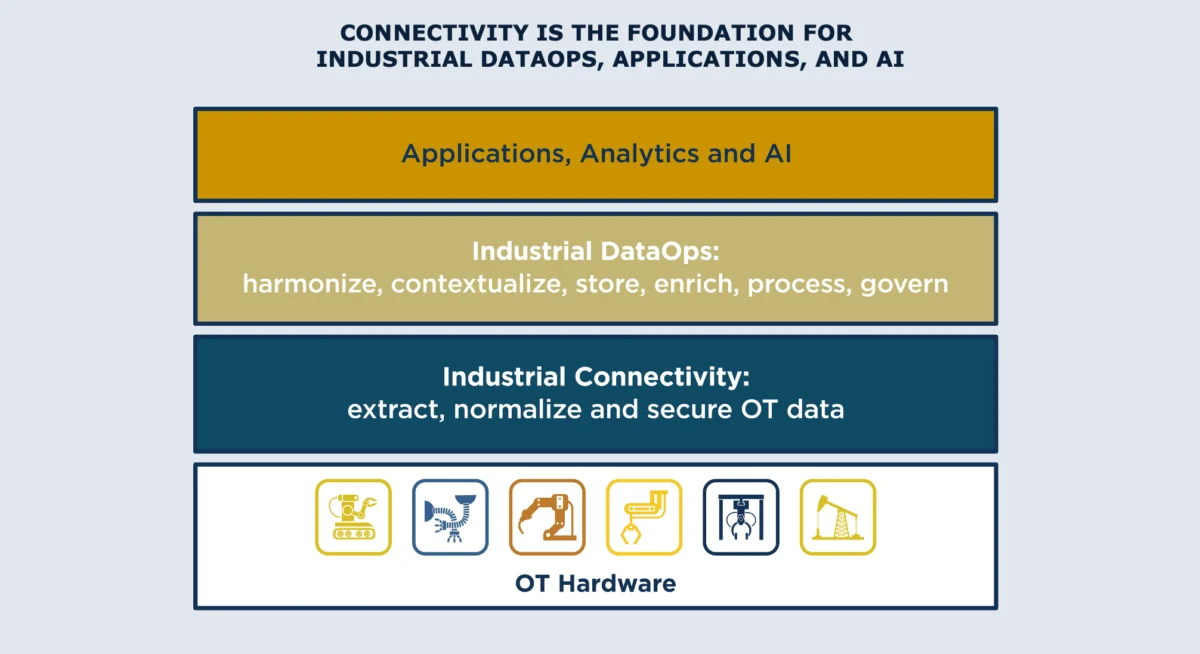
The core challenge lies in the "Tower of Babel" effect within the plant. Automation systems, sensors, and robotics often speak different "languages," utilizing proprietary protocols that are rarely designed to communicate with higher-level IT systems. To succeed, manufacturers must implement a connectivity layer that acts as a translator, normalizing, organizing, and securing disparate data streams—whether they are time-series, parametric, or unstructured.
By establishing this layer, companies move from "data silos" to a unified data infrastructure. This transition is essential for any business hoping to leverage AI for predictive maintenance, supply chain optimization, or real-time process control.
Chronology: From Isolated Assets to Unified Ecosystems
The evolution of industrial connectivity has progressed through three distinct phases, each defining the maturity of the modern manufacturer:
- The Era of Isolation (Pre-2010): Production assets were largely "dark." Data existed only at the machine level, used locally by operators for immediate tasks. Connectivity was restricted to proprietary, point-to-point connections.
- The Integration Phase (2010–2020): As "Industry 4.0" emerged, companies began attempting to bridge the IT/OT (Information Technology/Operations Technology) gap. This was characterized by custom-coded middleware and brittle, manual integration efforts that proved difficult to maintain and scale.
- The Enterprise-Grade Standard (2020–Present): Today, industry leaders are shifting toward scalable, vendor-agnostic industrial connectivity software. The current focus is on building a standardized, secure infrastructure that serves the entire enterprise—from the edge to the cloud—allowing data to flow seamlessly across organizational boundaries.
Supporting Data: Why Reliability and Context Matter
Research indicates that the "data gap" is the primary reason why AI and predictive analytics projects fail. According to industry surveys, the lack of accessible, normalized data is the number one challenge cited by engineers and data scientists in the manufacturing sector.
- Latency Requirements: OT systems often require sub-millisecond response times. Connectivity solutions that cannot handle these speeds are disqualified from mission-critical applications.
- The Scale Problem: A typical manufacturing site may house thousands of devices. An enterprise-grade solution must not only handle the current volume but must also offer a path for easy replication across dozens of global facilities.
- The "Context" Multiplier: Raw data without context is noise. Industrial connectivity is no longer just about moving bits; it is about providing metadata—tagging data with location, equipment state, and process parameters—so that an AI model or an offline analyst can understand exactly what they are looking at without manual verification.
Official Perspectives: The Shift Toward Velotic (formerly Kepware/PTC)
As the industry matures, the role of specialized providers has become critical. Organizations like Velotic (formerly PTC/Kepware) have positioned themselves as the standard-bearers for this connectivity infrastructure. By focusing on deep protocol support and enterprise-wide management, these providers allow manufacturers to focus on their core competency—production—rather than the intricacies of industrial communication protocols.

Industry experts emphasize that selecting a provider is a long-term marriage. A vendor must offer more than just a software license; they must provide a robust ecosystem of partners, a track record of reliability, and a clear roadmap for how their technology will evolve alongside the Industrial Internet of Things (IIoT).
Strategic Implications: Building for the Future
For the C-suite and plant managers alike, the decision to invest in an enterprise-grade connectivity platform is a strategic pivot. It requires a shift in mindset:
1. Connectivity as a Corporate Standard
Connectivity should not be a "project-based" decision. When individual departments or sites choose their own connectivity solutions, the result is a fragmented, unmanageable infrastructure. The most successful organizations establish a company-wide standard that is mandated for all new capital projects and modernization efforts.
2. The Edge-to-Cloud Continuum
With the rise of Industrial Edge computing, connectivity is no longer just a "data gateway" to the cloud. Modern solutions must reside closer to the machine, ensuring that data is processed, filtered, and contextualized at the source. This reduces bandwidth costs, minimizes latency, and ensures that sensitive operational data remains secure within the plant perimeter.

3. Change Management and Organizational Readiness
The human element is often overlooked. Implementing a new connectivity framework is as much about people as it is about software. It requires governance, specialized training, and a clear definition of who owns the data. Organizations that fail to align their internal processes with their new digital capabilities often find that the technology works, but the people do not.
4. Preparing for the AI-Driven Future
AI is only as good as the data it is fed. If an organization’s connectivity foundation is shaky, its AI initiatives will inevitably yield "garbage in, garbage out" results. By standardizing the data pipeline today, companies are effectively "future-proofing" their operations, ensuring they can plug in the next generation of generative AI, digital twins, and autonomous control systems without needing to re-engineer their entire data architecture.
Conclusion: A Non-Negotiable Foundation
In the race toward digital transformation, there are no shortcuts. The manufacturers who emerge as leaders in the coming decade will be those who recognize that connectivity is not a luxury, but the fundamental plumbing of the modern digital enterprise.
By prioritizing an enterprise-grade approach, normalizing data from legacy and modern assets alike, and enforcing a standard across the organization, manufacturers can finally unlock the intelligence hidden within their operations. The journey is long and requires a commitment to ongoing governance and education, but for those who succeed, the rewards—higher efficiency, reduced downtime, and unprecedented agility—are transformative.

For those seeking to deep-dive into the specific criteria for selecting a connectivity partner, the full research provided by industry experts at Velotic offers a comprehensive rubric for evaluation, from security protocols to long-term scalability metrics.