






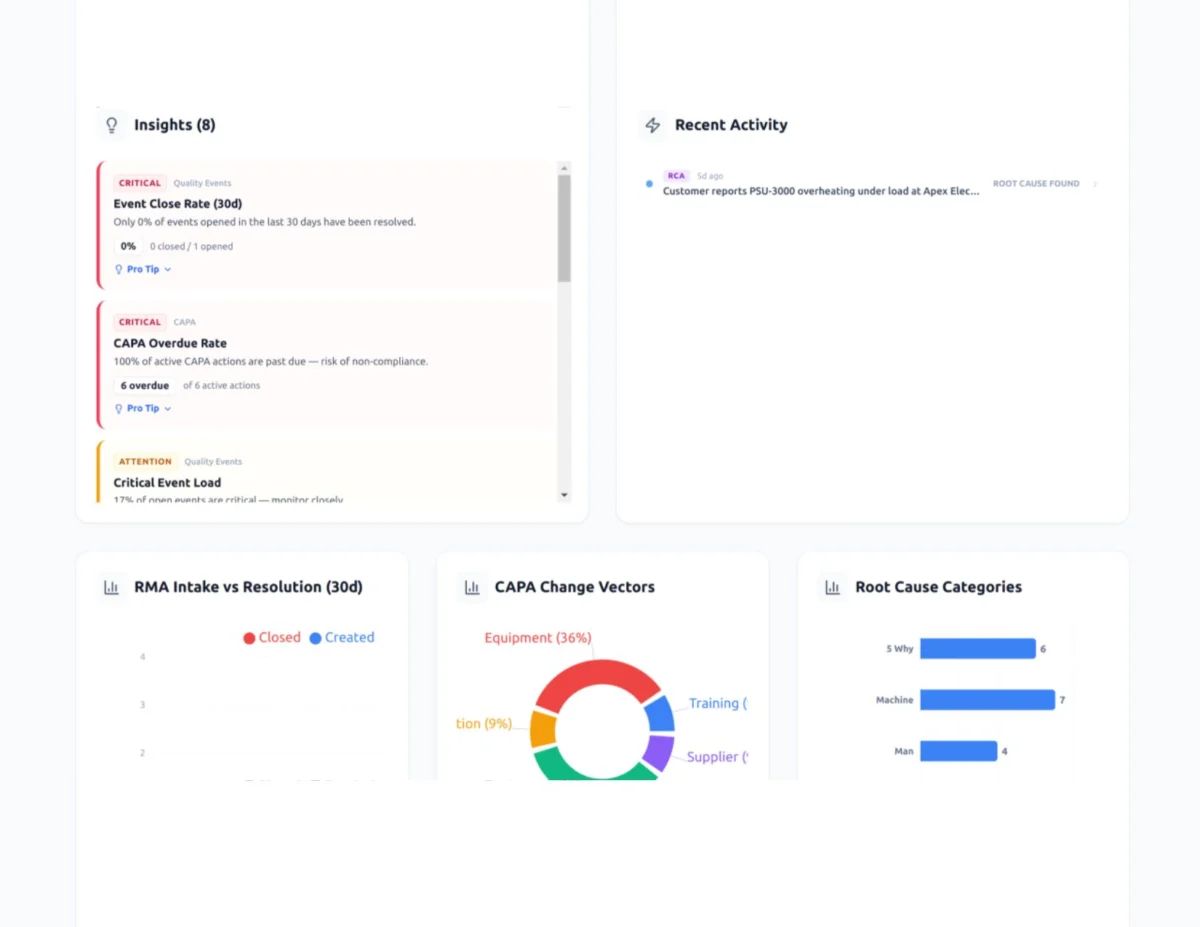
In the high-stakes world of regulated manufacturing, the "compliance gap" is a silent killer of productivity and safety. Despite rigorous Root Cause Analysis (RCA) and Corrective and Preventative Action (CAPA) frameworks, audits frequently uncover recurring issues. Why do organizations, despite their best efforts and substantial investment in quality management systems, find themselves fighting the same fires repeatedly?
MetaFloor AI, a nascent yet ambitious technology firm, posits that the answer lies not in a lack of effort, but in a structural failure to capture and reuse causal data. By introducing "Typed Causal Governance," the company aims to move beyond traditional, static document-based workflows, offering an AI-driven platform that treats process intelligence as a living, codified asset.
The Core Problem: The Failure of Static Compliance
For decades, manufacturing excellence has been defined by documentation. When a process deviation occurs, engineers are trained to document the event, analyze the cause, and implement a fix. However, this information often resides in isolated reports, siloed PDF files, or fragmented internal databases. When a similar incident occurs six months later, the institutional knowledge—the "why" and "how" of the previous resolution—is often inaccessible or forgotten.
MetaFloor AI argues that standards-bound operational work is not fundamentally a documentation problem; it is a problem of preserving valid causal structures under conditions of uncertainty, coordination friction, and partial visibility. Without a system that can synthesize these causal links across disparate events, organizations are perpetually reinventing the wheel, leading to audit failures and operational inefficiencies.
Chronology: From Concept to Causal Engine
The journey of MetaFloor AI began long before its official launch in the autumn of 2025. Recognizing the systemic inefficiencies in regulated manufacturing, the founding team spent several months in deep dialogue with operators and quality engineers across various sectors.
- Pre-2025 (Validation Phase): The founders spent months conducting ethnographic research and technical validation within regulated manufacturing environments. They sought to understand the "pain points" of quality professionals who were burdened by paperwork but lacking actionable insights.
- Autumn 2025 (Founding): MetaFloor AI was officially incorporated, bringing together a team with deep roots in AI, autonomous systems, and manufacturing operations.
- Early 2026 (Platform Development): The team developed their core proprietary technology, focusing on the integration of causal graphs with Large Language Model (LLM) interfaces.
- April 2026 (Market Entry): The company launched its self-serve platform, designed to allow immediate adoption by manufacturing teams without the heavy burden of legacy software integration.
The Technological Leap: Typed Causal Governance
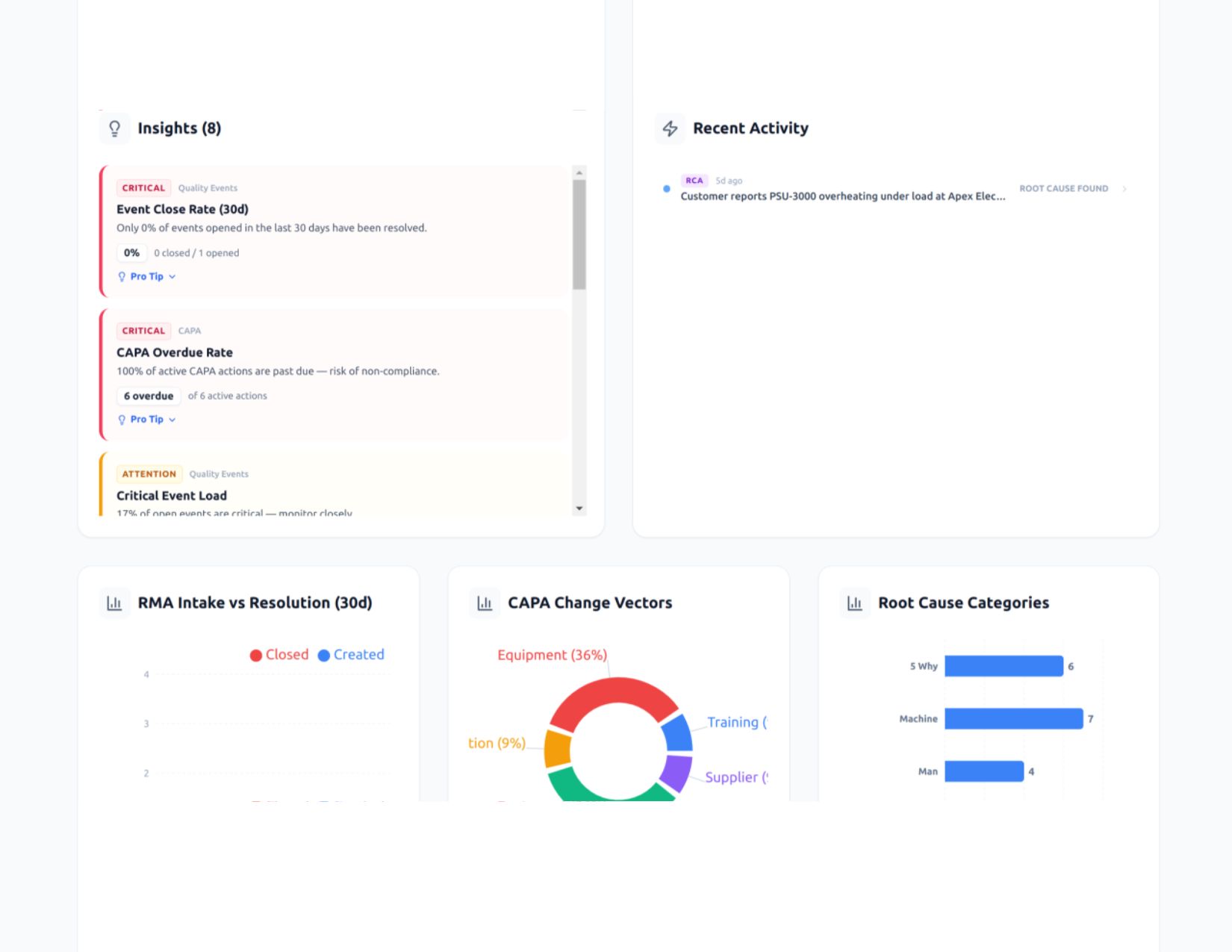
At the heart of the MetaFloor AI offering is a framework they term "Typed Causal Governance." Unlike standard workflow software that simply moves a ticket from "open" to "closed," the MetaFloor platform constructs a semantic graph of the manufacturing environment.
Codifying Institutional Knowledge
The system captures the "who, what, where, and why" of every process deviation. When a user logs an incident, the AI doesn’t just store the text; it categorizes the causal dependencies. By building a knowledge base that grows with every entry, the system becomes an intelligent assistant for continuous improvement (CI) professionals.
Automation Under Uncertainty
One of the most significant challenges in manufacturing is determining when a case is truly "closed." Often, human error or incomplete data leads to a premature sign-off. MetaFloor’s causal graph approach provides a mathematical and logic-based check on these processes. By mapping dependencies, the system can alert engineers when a corrective action is insufficient or when a proposed resolution ignores a known failure mode from a previous, similar event.

Supporting Data and Target Markets
MetaFloor AI has strategically targeted industries where the cost of failure is astronomical. Their initial focus includes:
- Electronics: Highly complex supply chains and sensitive production environments make this a natural testing ground for process intelligence.
- Aerospace & Defense (A&D): Where traceability is not just a preference but a legal mandate.
- Automotive: A sector defined by rapid innovation and extreme pressure to minimize product recalls.
- Medical Devices: A highly regulated environment where safety and documentation precision are paramount.
The company anticipates an 80% "fit" for these sectors once a model is trained on a small sample of customer data. By leveraging industry-specific workflows, the system minimizes the onboarding time and maximizes the relevance of the insights provided to the user.
Professional Profiles: The Minds Behind the Machine
The credibility of MetaFloor AI rests heavily on its leadership team, which combines entrepreneurial experience with deep technical rigor:
- Anup Mehta (CEO and Commercial Leader): A serial entrepreneur with a proven track record. Previously the founder of DeepEdge and Clarice Technologies, Mehta brings a wealth of experience in scaling technology ventures.
- Sridhar Perepa (COO): With a career spanning electronics, life sciences, transportation, and aeronautics, Perepa provides the essential domain expertise required to navigate the complexities of regulated manufacturing.
- Arun CS Kumar (Head of AI and Product): A PhD in AI and computer vision, Kumar’s background in perception engineering for autonomous driving is the secret sauce behind the platform’s ability to "see" and "reason" through complex process causalities.
Market Approach: Frictionless Adoption
One of the most disruptive aspects of MetaFloor AI is its market entry strategy. Eschewing the traditional, high-cost enterprise software sales model (which often involves months of integration and consulting), MetaFloor has opted for a self-serve, product-led growth model.

The pricing structure is intentionally transparent and accessible:
- Pricing: $499 per month for a manager seat, which includes the full suite of three system layers and 100 events per month.
- Incentives: The second user seat is provided free of charge, encouraging collaborative adoption and reducing the barrier to entry for smaller teams.
- Onboarding: The platform is designed to be "value-additive from day one." By simply logging an incident and uploading past RCA reports, the user begins the process of training their own internal causal model.
Implications for the Industry
The shift towards AI-augmented governance represents a significant turning point for the manufacturing sector.
Closing the Loop
The primary implication of MetaFloor AI’s technology is the "closure of the loop." For years, manufacturers have struggled with the "check" and "act" phases of the PDCA (Plan-Do-Check-Act) cycle. MetaFloor ensures that the "Act" phase is informed by the "Check" phase of previous iterations.
Empowering the Human Expert
Rather than replacing the quality engineer, MetaFloor empowers them. By offloading the burden of data synthesis and pattern recognition, the platform allows engineers to focus on higher-level strategic improvements. The AI acts as a "second brain" that remembers every incident, every mistake, and every successful resolution that has ever occurred in the factory.

The Future of Compliance
As regulators and industry bodies begin to adopt AI-ready standards, platforms like MetaFloor will likely become the gold standard for compliance. If a company can prove that their decisions are backed by a verifiable causal graph—rather than just a series of signed PDF forms—the audit process could shift from a grueling manual verification to a streamlined, automated review.
Conclusion: A Breakthrough in Process Intelligence
Closing the loop on process compliance is notoriously difficult, yet MetaFloor AI has introduced a compelling, technology-forward solution. By combining deep causal analysis with a user-friendly, low-friction business model, the company is well-positioned to disrupt the static landscape of quality management.
As the manufacturing world grapples with increasing complexity, the ability to store, retrieve, and act upon codified institutional knowledge will separate the leaders from the laggards. MetaFloor AI is not merely building a software tool; they are constructing the foundational layer for the next generation of intelligent, self-correcting manufacturing operations. For quality engineers and operational excellence professionals, this represents a welcome evolution in the quest for zero-defect production.