





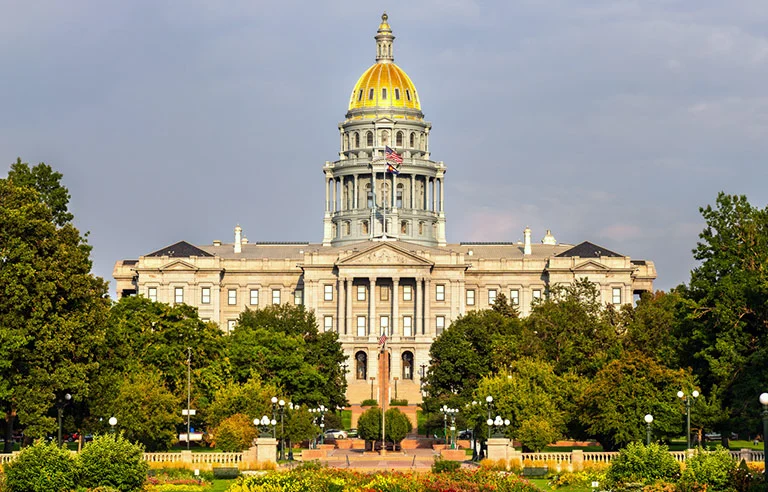
DENVER — In a move that highlights the growing trend of states asserting legislative autonomy over labor protections, the Colorado House of Representatives has advanced a landmark bill designed to safeguard state workplace safety standards against potential federal deregulation.
House Bill 26-1054, which cleared the House on May 5, serves as a preemptive legal shield. Should federal authorities choose to repeal or revoke key provisions of the Occupational Safety and Health Act (OSH Act) of 1970, the bill ensures that Colorado’s workers would not be left in a regulatory vacuum. By empowering the state’s attorney general to codify these protections at the local level, Colorado is positioning itself as a firewall against shifting federal priorities.
The Legislative Core: What H.B. 26-1054 Proposes
At its heart, H.B. 26-1054 is a contingency plan. The legislation specifically targets the potential erosion of the OSH Act, which has served as the bedrock of American industrial safety for over half a century. Most notably, the bill seeks to preserve the "General Duty Clause"—a cornerstone of federal labor law that requires employers to provide a workplace "free from recognized hazards that are causing or are likely to cause death or serious physical harm" to their employees.
Under the current version of the bill, should the federal government rescind these protections on or after September 1, 2025, the Colorado Attorney General would be granted the authority to immediately adopt and replace those federal requirements with state-level mandates. This mechanism ensures that the standard of care for Colorado’s workforce remains consistent, regardless of the political or regulatory climate in Washington, D.C.
A Chronology of the Bill’s Evolution
The path of H.B. 26-1054 has been marked by significant internal revisions, reflecting the complexities of balancing state-level authority with existing regulatory frameworks.
The Initial Proposal
When first introduced by Representatives Manny Rutinel (D-Commerce City) and Elizabeth Velasco (D-Glenwood Springs), the bill was considerably broader in scope. The original draft sought to incorporate the Federal Mine Safety and Health Act of 1977 alongside the OSH Act. Proponents argued that mine safety is a critical concern in a state with a rich history of extraction industries. However, following discussions with stakeholders and legislative committee feedback, the provision regarding mine safety was excised to streamline the bill and focus specifically on general workplace standards.
Administrative Realignment
A secondary, equally critical adjustment involved the assignment of administrative authority. The original draft of the bill intended to empower the Colorado Division of Labor Standards and Statistics with the mandate to enforce these "no-regression" safety policies. Legislators ultimately pivoted, shifting this power to the Attorney General. Supporters of this change argue that vesting this authority in the Attorney General’s office provides a more robust legal foundation for challenging federal rollbacks and ensuring that standards are not weakened by shifting political winds within state administrative agencies.
The Floor Vote
Following these amendments, the bill gained sufficient traction to clear the House floor on May 5. It has since been transmitted to the Senate Committee of the Whole, where it faces further scrutiny as it moves toward a final vote in the upper chamber.
Supporting Data: Why States Are Taking Action
The move to codify federal standards into state law is not occurring in a vacuum. It is part of a broader, national conversation regarding the durability of administrative law.
The Regulatory Landscape
For decades, the OSH Act has provided a uniform baseline for safety across the United States. However, recent trends toward deregulation have prompted labor advocates to worry that federal protections could be undermined by executive orders or shifts in judicial interpretation of agency authority. By moving to mirror federal statutes, Colorado is essentially creating a "state-level insurance policy."
The "Illinois Precedent"
Colorado is not acting in isolation. In August, Illinois Governor J.B. Pritzker signed into law a similar measure aimed at fending off potential federal rollbacks of worker safety regulations. The Illinois law, which served as a blueprint for the legislative strategy seen in Denver, signaled to other states that legislative autonomy is a viable path to maintaining labor protections. Data from the Bureau of Labor Statistics indicates that states with stronger, more localized oversight often see more consistent adherence to reporting requirements, suggesting that state-based enforcement could potentially enhance, rather than just maintain, safety outcomes.
Official Responses and Political Implications
The legislation has sparked a robust debate among stakeholders, pitting labor advocates against business groups who fear the administrative burden of a dual-track regulatory system.
The Case for Stability
Representatives Rutinel and Velasco have framed the bill as a matter of "economic and physical stability." Their argument is that employers and employees alike benefit from a predictable regulatory environment. If a company knows that the safety standards they are currently following will remain the law of the land in Colorado, regardless of what happens in D.C., they can engage in long-term capital planning for safety infrastructure and training without the fear of sudden, disruptive regulatory shifts.
Industry Concerns
On the other side of the aisle, some industry groups have expressed concerns regarding the "General Duty Clause" provision. Opponents argue that the clause is inherently vague, and by allowing the Attorney General to essentially rewrite or adopt these standards, the state could be creating a pathway for unpredictable and overly litigious enforcement actions. They contend that workplace safety should remain a federal prerogative to ensure a level playing field for businesses competing across state lines.
The Attorney General’s Role
The shift of authority to the Attorney General’s office has also raised questions regarding the separation of powers. By granting the AG the power to effectively "create" regulation by adopting federal standards, critics worry about the potential for executive overreach. However, supporters maintain that in the event of a federal collapse of labor protections, the state must have an agile mechanism to act quickly to prevent workplace tragedies.
Implications for the Future of Labor Law
The passage of H.B. 26-1054, if successful, would mark a significant shift in the federal-state relationship regarding labor.
A New Era of State-Level Protections
If Colorado follows Illinois’ lead, it is likely that other states will follow suit. We may be entering an era where "workplace safety" is no longer a monolith managed from Washington, but a patchwork of state-level protections that vary in intensity. For multinational corporations operating in Colorado, this means they must remain vigilant about state-specific compliance, as the "General Duty Clause" could eventually be interpreted differently by state-level enforcement agencies than by federal OSHA inspectors.
The Risk of Regulatory Fragmentation
While labor advocates celebrate the move as a victory for worker safety, economists warn of the risk of "regulatory fragmentation." If every state adopts its own version of the OSH Act, the cost of compliance for interstate businesses could rise, potentially complicating labor relations and safety reporting. Furthermore, if states start to deviate from federal standards, it could lead to "regulatory arbitrage," where companies move operations to states with less stringent interpretations of the law, creating a race to the bottom that the legislation is specifically trying to prevent.
Conclusion: The Path Ahead
As H.B. 26-1054 moves through the Senate Committee of the Whole, all eyes remain on the Colorado legislature. The outcome will serve as a bellwether for how blue states plan to handle the potential rollback of federal administrative power.
The bill is not merely a technical adjustment to state law; it is a fundamental statement about the role of the state in protecting its workforce. Whether the bill ultimately passes as written or undergoes further modifications, it has already achieved one of its primary goals: bringing the future of worker safety to the forefront of the legislative agenda.
In the coming weeks, as the Senate debates the merits of the proposal, the tension between maintaining federal uniformity and ensuring state-level protections will continue to define the discourse. For the workers of Colorado, the outcome of this legislative session will determine whether their safety rights are tied to the shifting tides of federal politics or anchored firmly in the law of their own state. Regardless of the outcome, the legislative path of H.B. 26-1054 proves that the fight for workplace safety is increasingly being waged in state houses across the country, as local lawmakers take the lead in ensuring that the standards of 1970 do not vanish in the 2020s.