




In the rapidly evolving landscape of industrial automation, the ability to handle high-mix, high-volume production is the new "gold standard." However, for years, the promise of flexible manufacturing has been hampered by the rigid nature of traditional robotics. Engineers have long grappled with the "programming bottleneck"—the requirement to manually teach robots every SKU variation, adjust templates for every shift in product dimensions, and endure lengthy calibration cycles.
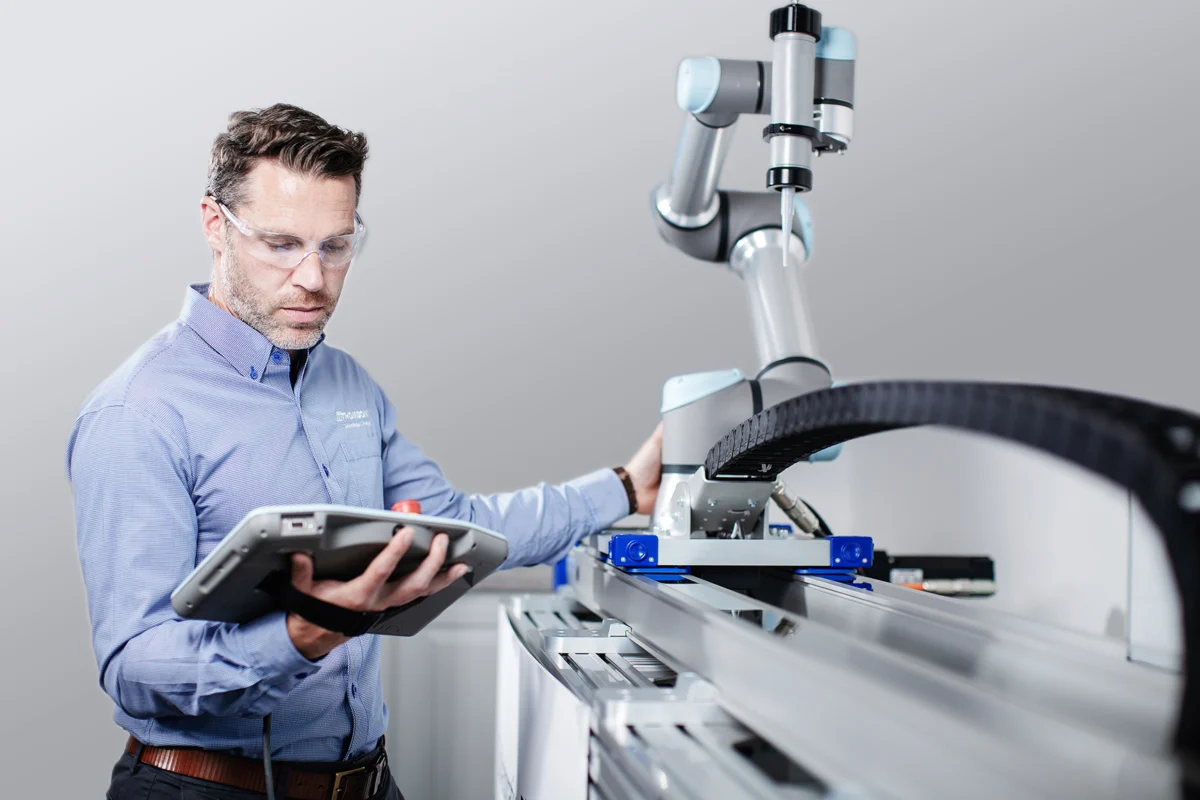
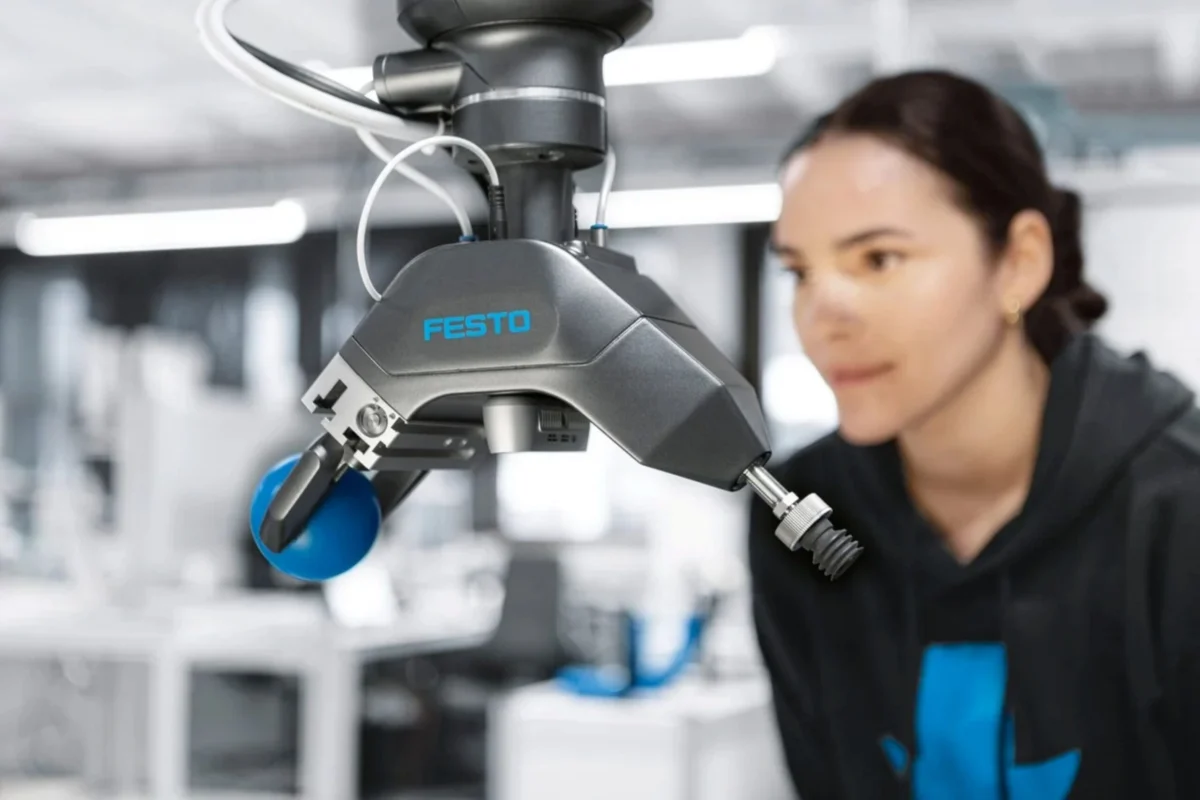
Festo, a global leader in automation technology, has officially addressed these pain points with the launch of GripperAI. This sophisticated, AI-driven software layer is designed to transform robotic cells into autonomous, self-optimizing systems. By decoupling the vision-processing and motion-planning intelligence from the robot’s native controller, Festo is enabling a shift toward truly agile manufacturing environments.
The Core Innovation: Intelligence at the Edge
At the heart of the GripperAI system is its ability to operate locally within the robotic cell. Running on a standard industrial PC connected to a 3D vision system, the software functions as the "brain" of the operation. Unlike legacy systems that rely on pre-defined templates or CAD-based object recognition, GripperAI employs machine learning to identify objects in real-time.
Breaking the Programming Bottleneck
Traditionally, integrating a robot for varied products required significant upfront engineering:
- Template Loading: Operators had to manually swap software templates every time a product line changed.
- Custom Integration: Each new SKU often necessitated bespoke programming and "teaching" the robot the exact coordinate points for picking.
- High Costs: These integration requirements meant that only high-volume, static lines were cost-effective to automate.
GripperAI eliminates these hurdles. Because the system calculates a gripping point based on the live 3D feed, it does not require a library of known parts. Whether the item is a small consumer electronic or a heavy, uniquely shaped box, the system identifies the optimal grasp point autonomously. If a pick fails, the system does not trigger an alarm or a line stop; it intelligently recalculates the trajectory and retries, ensuring continuous operation without human intervention.
Chronology: From Concept to Industrial Reality
The development of GripperAI represents a multi-year effort by Festo to bridge the gap between academic AI research and the harsh realities of the factory floor.
- Phase 1: Identifying the High-Mix Challenge. Festo’s R&D teams observed that the primary obstacle to widespread cobot and robot adoption in distribution centers was the sheer diversity of product packaging.
- Phase 2: Developing Robot-Agnostic Architecture. A critical design decision was to keep the software independent of the robot brand. Festo recognized that manufacturers often have a "mixed fleet" of robots (e.g., FANUC, ABB, KUKA, and Universal Robots). By creating a middleware solution, Festo ensured that GripperAI could communicate with virtually any path-control system.
- Phase 3: Pilot Implementation with Würth Group. The system underwent rigorous stress testing at the Würth Group’s central distribution hub in Germany. Facing an explosion in SKU counts and the ergonomic strain of manual sorting, Würth utilized GripperAI to manage a wide spectrum of inventory—ranging from tiny USB sticks to 44 lb (20 kg) industrial packages.
- Phase 4: Global Launch. Following the success of the pilot, Festo has moved to integrate GripperAI into its standard product portfolio, offering it as a scalable solution for global logistics and manufacturing firms.
Supporting Data and Technical Specifications
The technical flexibility of GripperAI is perhaps its most compelling feature for systems integrators. By maintaining a consistent software architecture regardless of the vision hardware employed, Festo has significantly lowered the "barrier to entry" for facilities with varying budgets.
Hardware Versatility
Many AI-vision systems require high-end, proprietary sensors. Festo’s architecture is different. Facilities can select 3D cameras based on their specific application needs:
- Budget-Conscious Applications: For standard cardboard boxes or uniform geometry, lower-cost 3D cameras are sufficient.
- High-Precision Requirements: For complex, reflective, or irregularly shaped objects, the software can support higher-resolution, specialized imaging hardware.
Operational Metrics
- Payload Handling: The system is capable of managing products up to 20 kg (44 lb), making it suitable for both light assembly and heavy-duty logistics.
- System Compatibility: The software supports a wide array of end-effectors, including vacuum grippers and mechanical fingers, allowing the robot to perform a "tool change" based on the object identified by the AI.
- Integration Time: Because the system uses a standard calibration routine (robot base to camera frame), setup times are reduced from weeks to days.
Implications for the Future of Manufacturing
The introduction of GripperAI is not merely a product update; it signals a broader shift in how factories view the "life cycle" of an automation project.

The End of "Static" Automation
For decades, automation was synonymous with rigidity. If a company changed its packaging, it required an expensive re-tooling of the line. With GripperAI, the automation becomes "fluid." This allows manufacturers to pivot rapidly in response to market trends, seasonal demand spikes, or supply chain shifts.
Ergonomics and Labor Optimization
As seen in the Würth Group deployment, the primary driver for implementing AI-driven robotics is often human welfare. High-speed picking, particularly of heavy or awkward items, is a primary cause of repetitive strain injuries in distribution centers. By offloading these tasks to an intelligent robot, companies can move human workers to roles that require higher cognitive function, problem-solving, and quality oversight.
Democratization of Automation
By making the software robot-agnostic and hardware-flexible, Festo is democratizing advanced automation. Smaller and mid-sized enterprises (SMEs) that previously could not justify the cost of custom-programmed AI robotics can now leverage modular, plug-and-play solutions. This creates a more level playing field in the manufacturing sector, where agility—not just scale—is the primary competitive advantage.
Official Perspective: The Path Forward
In recent discussions regarding the software’s release, Festo engineers emphasized that the "black box" approach to AI is outdated. Instead, GripperAI is designed to be transparent and manageable for plant floor engineers.
"The goal," notes a spokesperson from Festo, "is to remove the complexity that prevents adoption. If an automation system requires a Ph.D. in computer science to maintain, it isn’t ready for the factory floor. GripperAI provides the intelligence of machine learning with the reliability of industrial-grade engineering."
The company maintains that the future of robotics lies in "collaborative autonomy." The robot should not just follow a path; it should understand the intent of the task. By calculating the grip point, identifying the appropriate tool, and verifying the success of the action, the software creates a closed-loop system that mirrors human dexterity.
Conclusion
Festo’s GripperAI represents a critical milestone in the maturation of industrial AI. By solving the three pillars of automation failure—integration cost, programming complexity, and hardware rigidity—Festo has provided a pathway for the "Smart Factory" to become a reality for more than just the largest automotive OEMs.
As global supply chains continue to face volatility and labor shortages, the ability to deploy flexible, intelligent, and brand-agnostic automation will no longer be a luxury; it will be a prerequisite for survival. With the release of GripperAI, Festo has ensured that the next generation of industrial robots will be defined not by the code that drives them, but by the intelligence that allows them to adapt to an ever-changing world.
For engineers and logistics managers looking to future-proof their operations, the message from Festo is clear: the future of handling is autonomous, and it is ready to be deployed today. For further technical specifications and implementation guides, stakeholders are encouraged to visit festo.com.