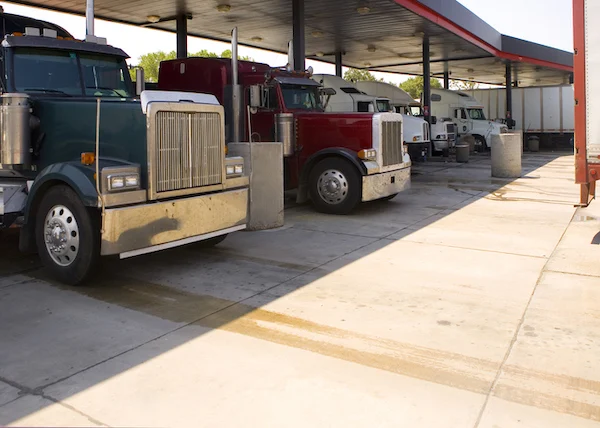
For logistics managers, fleet operators, and consumers across the United States, the weekly report from the Department of Energy’s Energy Information Administration (EIA) has become a barometer of economic anxiety. In the latest data release, the national average price per gallon of diesel fuel saw a modest retreat, offering a brief moment of respite in what has otherwise been a summer of relentless, high-stakes volatility.
While the decrease is statistically significant, industry experts caution that the broader trend remains characterized by deep instability. As global geopolitical tensions simmer and domestic supply chains continue to grapple with inflationary pressures, the downward tick in fuel costs—only the second such occurrence in the last two months—serves as a reminder of how fragile the current energy landscape truly is.
Main Facts: The Latest Market Snapshot
For the week of August 31, the national average price for diesel fuel clocked in at $5.599 per gallon, reflecting a decline of 5.3 cents. While any relief at the pump is welcomed by the trucking industry—the lifeblood of the American economy—this decline follows a punishing two-week stretch of increases. In the week of August 24, prices surged by 19.8 cents to reach $5.662, preceded by a near-identical hike of 19.7 cents during the week of August 17, which brought the average to $5.454.
The oscillation in pricing highlights the hypersensitivity of the diesel market. Unlike gasoline, which is primarily driven by consumer demand and seasonal travel habits, diesel prices are intrinsically linked to industrial productivity, global shipping volumes, and the heating oil market. As we approach the autumn months, the interplay between these sectors is expected to heighten, making price stability increasingly elusive.
A Chronology of Volatility: Tracking the Summer Trends
To understand the current state of diesel fuel pricing, one must look back at the tumultuous journey of the last three months. The market has been defined by sharp, jagged movements that have left supply chain planners struggling to manage operational budgets.
The Mid-Summer Spike
The volatility began in earnest in mid-July. For the week of July 13, the national average saw a massive $1.058 increase, climbing to $4.796 per gallon. This was a critical turning point, marking the first weekly increase after a long period of stagnation. The momentum accelerated rapidly; by the week of July 20, the average jumped another 33.8 cents to reach $5.134. According to EIA records, this increase was the third-highest weekly jump on record since the agency began tracking such data, matching a historic peak seen in June 2008.
The Brief Cooling Period
Prior to that mid-July spike, the market had experienced a notable, albeit short-lived, cooling phase. Throughout June, prices were on a consistent downward trajectory. During the week of June 22, the national average dropped 22.7 cents to $4.832, officially breaking a 14-week stretch where prices remained stubbornly above the $5.00-per-gallon threshold. This descent continued through the week of June 29 (a 16.4-cent drop) and the week of July 6 (a 9-cent drop), providing a false sense of security that the worst of the inflationary pressure had passed.
The Spring Correction
The spring season was characterized by the "steepest decline" narrative. During the week of June 1, prices fell 17.3 cents to $5.350. This followed a significant 20.5-cent drop in late April, the largest weekly decline recorded in over three years. However, these gains were rapidly erased as global market conditions shifted, proving that any relief in diesel pricing is often contingent upon factors far removed from domestic refinery capacity.
Supporting Data: Crude Oil and Macroeconomic Pressures
The relationship between diesel and West Texas Intermediate (WTI) crude oil remains the primary driver of these fluctuations. On the New York Mercantile Exchange (NYMEX), WTI crude is currently trading at $88.38 per barrel. This is a marked increase from the $82.31 reading recorded just one week prior. When crude prices rise, the cost of refined distillates—of which diesel is a primary component—inevitably follows.

On an annual basis, the divergence is stark. The national average price per gallon is currently up $1.865 compared to this time last year. While this figure is slightly lower than the $1.944 annual increase reported for the week of August 24, the year-over-year delta underscores the persistent nature of high fuel costs. The market is currently grappling with a "supply-constrained" environment, where refinery margins remain tight and global inventory levels are struggling to keep pace with industrial demand.
Geopolitical Implications: The Shadow of Conflict
The EIA data does not exist in a vacuum; it is deeply influenced by international events. Analysts have pointed to the recent joint military initiatives involving the United States and Israel as a significant factor in the current energy premium. These actions, aimed at curbing Iran’s nuclear development program, have introduced a "geopolitical risk premium" into the price of crude oil.
When military tensions rise in the Middle East, the global market tends to price in the risk of supply disruptions. Even if the physical flow of oil remains uninterrupted, the perception of instability acts as a floor for prices. Because Iran is a major player in the global oil market, any policy or military action that threatens its export capacity—or causes the market to fear an escalation in regional conflict—creates immediate upward pressure on prices. For the American consumer, this translates to higher costs at the pump, as global markets react to the shifting sands of foreign policy in real-time.
Implications for the Supply Chain and Beyond
The current pricing environment creates a "cascading cost" effect. Unlike the passenger vehicle market, where a shift to electric vehicles (EVs) is steadily gaining momentum, the heavy-duty trucking and logistics sector remains almost entirely dependent on diesel.
The Cost-Push Inflation
When diesel prices remain elevated, the cost of transporting virtually all consumer goods increases. From produce and retail merchandise to industrial raw materials, the "last mile" of delivery becomes significantly more expensive. Fleet operators, often working on razor-thin margins, have little choice but to pass these costs on to the end consumer. This is a primary driver of the "cost-push" inflation that has been plaguing the broader economy.
Operational Adaptation
Many logistics companies have responded by implementing fuel surcharges, renegotiating shipping contracts, and investing in route optimization software to minimize idle time and fuel consumption. However, these are temporary mitigations. Long-term stability requires a more predictable energy pricing model, which remains elusive given the current volatility of crude markets.
The Consumer Impact
For the average American, the price of diesel is a hidden tax. Even those who do not own diesel-powered vehicles feel the sting at the grocery store and the pharmacy. The correlation between the EIA’s weekly report and the Consumer Price Index (CPI) is strong; as transport costs rise, the cost of goods sold (COGS) follows.
Conclusion: Looking Ahead
As we look toward the remainder of the year, the market outlook remains cautious. The decline in the week of August 31, while mathematically favorable, does not signal the start of a long-term downward trend. Instead, it highlights the erratic nature of a market caught between geopolitical tensions, refinery capacity constraints, and a global energy demand that refuses to soften.
The EIA data serves as a sobering reminder: the energy sector is perhaps the most critical indicator of economic health. Until there is a sustained, long-term stabilization in the price of crude oil and a reduction in the geopolitical premiums that currently dictate market behavior, fleets and consumers alike must prepare for continued turbulence. The goal for policy makers and industry leaders remains clear: to transition toward a more resilient energy infrastructure that is less susceptible to the sudden shocks of global volatility. For now, however, the industry remains in a "wait-and-see" mode, watching the weekly EIA reports with the knowledge that the next spike could be just one headline away.