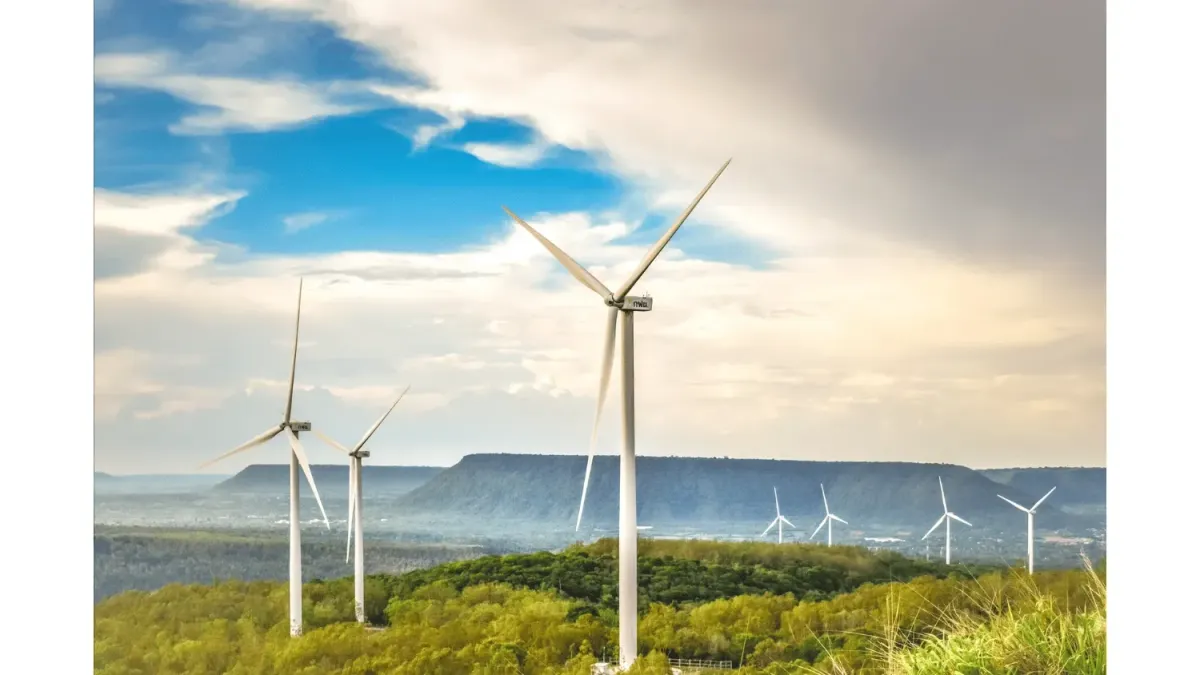
LONDON — As global energy markets pivot decisively toward renewable sources, wind power has graduated from a speculative alternative to a cornerstone of modern baseload generation. Yet, while gigawatt-scale wind farms continue to rise across offshore expanses and remote terrestrial ridges, a silent operational bottleneck persists high above the ground inside the nacelle, tower, and hub.
For decades, the engineering narrative of wind turbines has focused almost exclusively on structural integrity, fatigue life, reliability, mass, energy capture, and capital cost. Mechanical engineers have optimized airfoils, refined generator magnetics, and pushed the boundaries of composite materials to extract every possible kilowatt-hour from the wind. However, as these assets age and transition into mid-life operational phases, a critical truth has emerged in the industry: a wind turbine can be mechanically flawless on paper and still be a failure in the field.
The safety and efficiency of wind turbine maintenance are largely determined long before a technician ever sets foot on a platform or dons a fall-protection harness. They are baked into the core architecture of the machine during the initial mechanical design phase.
Main Facts: The Intersection of Mechanical Design and Field Safety
Wind turbine maintenance is far from a monolithic task; it is a complex, multidisciplinary orchestration of routine inspections, targeted lubrication, heavy component overhauls, bolt tensioning, and complex mechanical adjustments. Historically, the industry has relied on technician competence, rigorous training—such as Global Wind Organisation (GWO) certifications—and strict safety protocols to manage the risks inherent in working at height, handling heavy loads, and managing hazardous energies.
Yet, relying solely on human adaptability to overcome poor machine design is no longer viable. Inside the cramped confines of a wind turbine nacelle, component positioning, access geometry, lifting provisions, tool clearances, and energy-isolation features dictate whether a technician can operate with a stable posture, controlled loads, and predictable isolation.
When a filter is tucked behind a tangle of rigid pipework, or a high-torque fastener is positioned just outside an ergonomic reach zone, a routine 10-minute filter change transforms into a prolonged, physically punishing ordeal. When technicians are forced to work while wearing bulky personal protective equipment (PPE), carrying heavy torque tools, and navigating strict spatial limits, design oversights manifest as ergonomic hazards, extended downtime, increased operational expenditures (OpEx), and elevated safety risks. Consequently, industry leaders are arguing that maintainability must be elevated to a primary design property—evaluated side-by-side with strength, mass, and reliability.
Chronology: The Evolution of Wind Turbine Maintainability
To understand how the wind industry arrived at its current focus on design-stage ergonomics, it is helpful to trace the evolution of turbine maintenance strategies over the past three decades.
Phase One: The Pioneering Era (Late 20th Century)
In the early days of modern commercial wind energy, turbines were relatively small—typically ranging from 500 kilowatts to 1.5 megawatts. Maintenance was largely reactive. Machines were simple, and when a mechanical component failed, technicians improvised solutions on-site using basic tools and whatever rigging space was available. Design considerations focused primarily on getting the machine to generate power; ergonomics and service access were secondary thoughts at best.
Phase Two: The Scaling Up (2000–2015)
As the industry scaled rapidly, turbine capacities jumped to 2 MW, 3 MW, and beyond. Nacelles grew larger, housing gearboxes, massive generators, and complex hydraulic pitch systems. However, spatial constraints within towers and hubs tightened relative to the sheer size of the internal components. Maintenance strategies shifted from purely reactive models to scheduled preventive maintenance (PM) programs. Despite this shift, service access remained an afterthought. Technicians routinely faced extreme physical constraints, leading to a rise in repetitive strain injuries, near misses, and prolonged asset downtime.
Phase Three: The Data-Driven and Human-Centric Era (Present Day)
Today, with offshore wind platforms scaling past 15 MW and onshore turbines pushing 6 MW+, the economic stakes of downtime have skyrocketed. A single day of lost generation on a massive offshore array can cost hundreds of thousands of dollars. Simultaneously, advanced data analytics, condition-based monitoring (CBM), and predictive maintenance have transformed how operators schedule interventions.
Crucially, this era has seen the integration of digital human modelling (DHM), virtual reality (VR) prototyping, and strict human-factors engineering into the CAD pipelines of leading original equipment manufacturers (OEMs). Maintainability is no longer viewed as a service-department problem, but as an indispensable engineering key performance indicator (KPI).
Supporting Data: The Hidden Costs of Poor Maintainability
While precise financial metrics regarding design-induced maintenance delays are heavily guarded by OEMs, industry data and operational feedback from independent service providers (ISPs) highlight the profound impact of maintainability on lifecycle economics.
- Downtime Multipliers: According to operational case studies from major European wind portfolios, tasks plagued by poor tool clearance or cumbersome removal paths take 30% to 50% longer to complete than equivalent tasks designed with clear access corridors.
- Ergonomic Strain: Studies by occupational health bodies in renewable energy indicate that up to 42% of technician-reported musculoskeletal discomfort in wind energy is directly traceable to awkward working postures necessitated by tight nacelle clearances and poorly placed maintenance interfaces.
- The Training-Design Gap: GWO-certified training programs successfully prepare thousands of technicians annually for working at height and manual handling. However, field audits suggest that up to 60% of physical interventions require technicians to temporarily bypass standard ergonomic postures due to physical obstructions built directly into the machine architecture.
- Modularity Impact: Data from offshore wind farms reveal that nacelles featuring modular drivetrain and auxiliary system layouts experience a 25% reduction in mean time to repair (MTTR) compared to monolithic, tightly packed legacy designs.
Official Responses and Industry Perspectives
As the pressure mounts to reduce the Levelized Cost of Energy (LCOE) while simultaneously improving workforce safety, engineering leaders and safety experts are speaking out on the necessity of human-centric design.
Dr. Elena Vance, a senior lecturer in mechanical engineering and human-factors specialist, emphasizes that digital tools must be used more critically during the development phase:
"For too long, CAD validation has meant checking whether a component fits inside a virtual housing. That is packaging, not design for maintainability. If a technician cannot reach a fastener with a torque wrench while wearing a full safety harness, that CAD model has failed the human test. We must simulate the technician, the tool, and the clearance envelope simultaneously."
Marcus Thorne, a veteran wind turbine technician and safety auditor, highlights the disconnect between the drawing board and the real-world operating environment:
"Engineers sitting in clean offices often underestimate what it’s like inside a tower swaying in a 15-meter-per-second wind. When you’re strapped in, cold, and trying to guide a 50-kilogram pump past a structural web with two inches of clearance, every poor design decision comes back to haunt you. We don’t need more workarounds; we need machines built around how humans actually move."
Industry coalitions, including renewable energy standard bodies, are increasingly incorporating maintainability checklists into international design standards, urging OEMs to treat service technicians as primary end-users of the machinery.
Implications: Translating Human Factors into Mechanical Performance
To resolve these persistent operational challenges, mechanical engineering teams must fundamentally alter their approach to the design process. Several key operational pillars define this paradigm shift:
1. Designing Around the Technician’s Working Envelope
A component may be mechanically sound, but if it requires contortionist body positions to service, it introduces operational risk. Mechanical designers must evaluate service access using realistic human dimensions equipped with full PPE. Standing spaces, reachable attachment points, and unobstructed tool clearances must be prioritized to eliminate the need for overreaching, awkward body angles, and improvised handling.
2. Eliminating Uncontrolled Handling of Heavy Components
Wind turbines are packed with heavy, awkward items—motors, pumps, brake assemblies, and hydraulic units—that demand precise handling. Engineers can eliminate uncontrolled handling risks by embedding lifting points, hoist paths, and removable interfaces directly into the equipment from day one. Load paths must be engineered to remain completely controlled from their installed position to a stable landing zone, sparing technicians from having to manually support or guide excessive weight.
3. Managing Stored Mechanical Energy Safely
Gravity loads, high-pressure hydraulics, tensioned springs, and restrained rotating assemblies represent latent hazards during maintenance. Mechanical locking features must be highly visible, easily accessible, and unambiguous in their operating state. Furthermore, hydraulic systems must feature bleeding points that allow residual pressure to be safely relieved and verified before any component disassembly begins.
4. Treating Fasteners and Interfaces as Service Features
Bolted joints and hydraulic fittings are recurring interaction points. A bolt that is correctly sized for structural fatigue may still fail in service if there is inadequate reaction space for a torque tool or no stable footing for the technician. Designing for modularity—where failed assemblies can be swapped as complete, pre-tested modules and repaired off-site in controlled workshop conditions—drastically minimizes exposure time inside the turbine.
5. Leveraging Field Data and Physical Prototyping
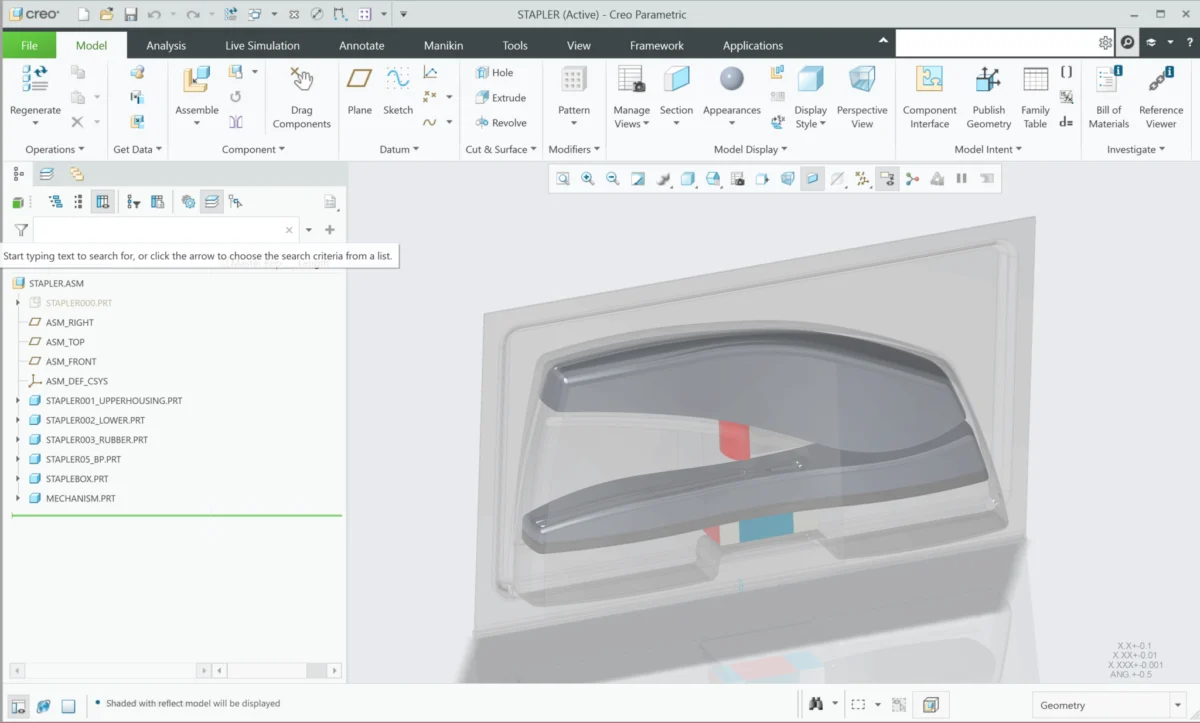
Digital human modeling, tool envelope simulations, and removal-path analyses must become standard validation steps before serial production begins. However, digital models cannot entirely replace physical mock-ups. For high-frequency or high-consequence service tasks, building full-scale physical mock-ups allows engineering teams to catch visibility, hand-access, and posture flaws that clean CAD environments frequently mask.
Conclusion
Wind turbine maintainability is not an auxiliary service consideration; it is a vital metric of mechanical performance. A wind turbine that captures energy with high efficiency but demands punishing, hazardous, and prolonged maintenance interventions carries an invisible engineering flaw that will compound over decades of operation.
By integrating human factors, realistic access envelopes, controlled lifting paths, and intuitive energy-isolation features directly into the mechanical design phase, engineers can bridge the gap between theoretical efficiency and operational reality. When design teams build machinery that actively supports the safe, efficient methods technicians are trained to execute, the result is a safer workforce, minimized downtime, and a more resilient, sustainable future for global wind power.