By Industrial Technology & Manufacturing Insights Desk
In the modern manufacturing landscape, plant floors are saturated with sophisticated software ecosystems. Enterprises invest heavily in Manufacturing Execution Systems (MES), Enterprise Resource Planning (ERP), Quality Management Systems (QMS), Computerized Maintenance Management Systems (CMMS), and Laboratory Information Management Systems (LIMS). These systems excel at tracking baseline production, logging final outcomes, and archiving compliance data after the dust has settled.
Yet, a critical vulnerability persists in the industrial sector: the chaotic, unmeasured interim between the moment an anomaly is detected and the moment it is formally resolved.
When a sudden machine fault, material shortage, or quality deviation occurs, how do frontline teams respond? More importantly, do they respond consistently, effectively, and measurably? According to veteran manufacturing technology integrator IPG, the vast majority of companies simply do not know.
To address this systemic blind spot, IPG has officially launched BackStaff, a pioneering software solution designed to govern, measure, and optimize how organizations handle unexpected operational events. Built on nearly three decades of hands-on integration experience, BackStaff introduces a novel operational paradigm known as Operational Response Excellence (ORE).
Main Facts: What is BackStaff and Operational Response Excellence?
At its core, BackStaff is an agile, lightweight software platform that operates as an adjunct to core systems of record. Rather than replacing heavy ERP or MES infrastructure, BackStaff sits alongside them—deployable either as a responsive screen sidebar or as a native mobile application available via the Apple App Store and Google Play.
The platform is anchored in Luis Golcher’s vision of Operational Response Excellence. Golcher, the owner and leader of IPG, realized after thirty years of deploying manufacturing systems that while companies have mastered production management, they have completely ignored response management.
To operationalize this definition, IPG established an eight-part architectural framework that breaks down the messy reality of crisis management into distinct, traceable, and measurable elements:
Notification: Instantly alerting the right personnel when an anomaly occurs.
Routing: Ensuring signals reach the appropriate department or work cell based on predefined logic.
Escalation: Dynamically bumping unresolved or high-impact issues up the chain of command.
Assessment: Rapidly evaluating the severity, context, and immediate impact of the event.
Coordination: Serving as the central nexus where cross-functional teams synchronize their efforts.
Execution and Evidence: Gathering proof, telemetry, and actions taken to resolve the issue.
Documentation: Compiling a chronological, unalterable timeline of who did what and why.
Knowledge Capture: Archiving the resolution path to ensure future learning and knowledge reuse.
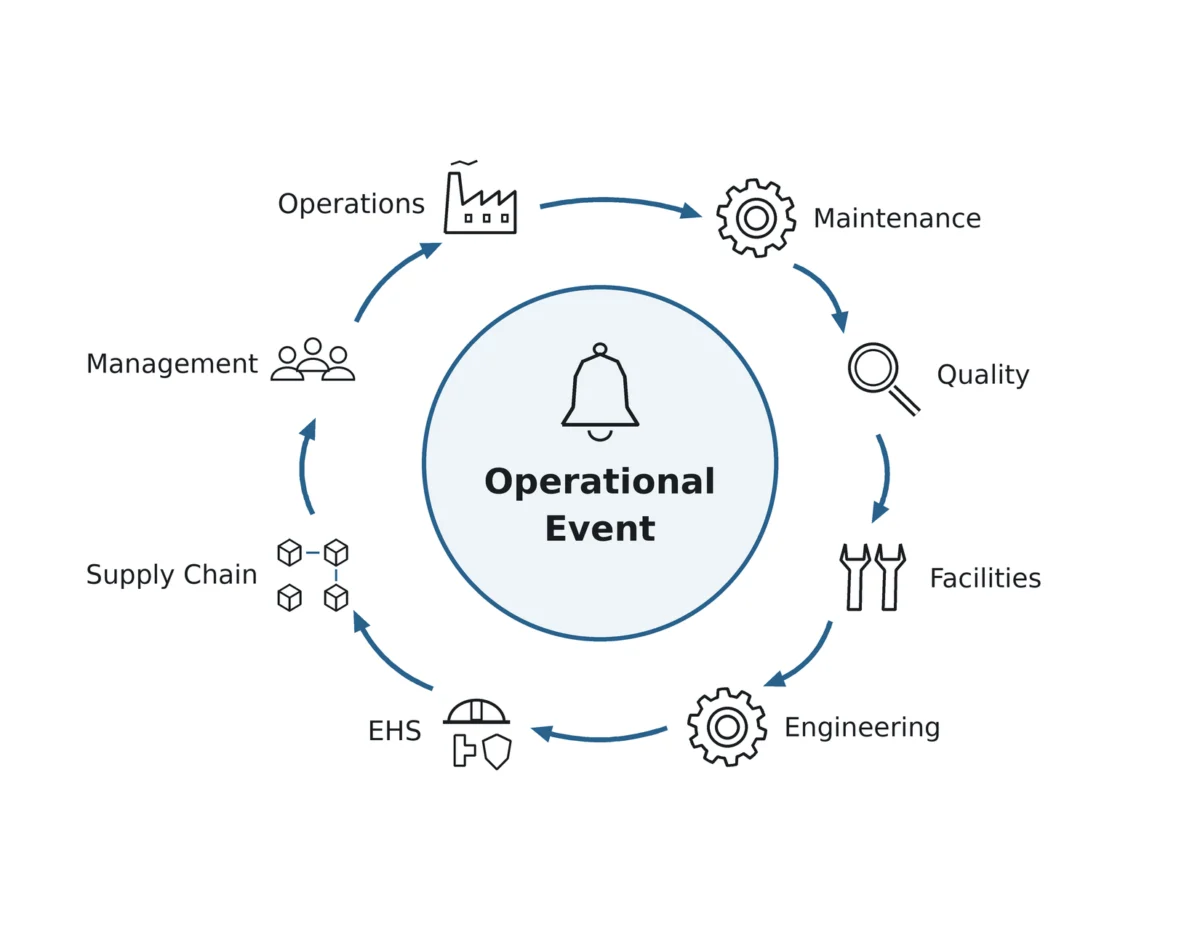
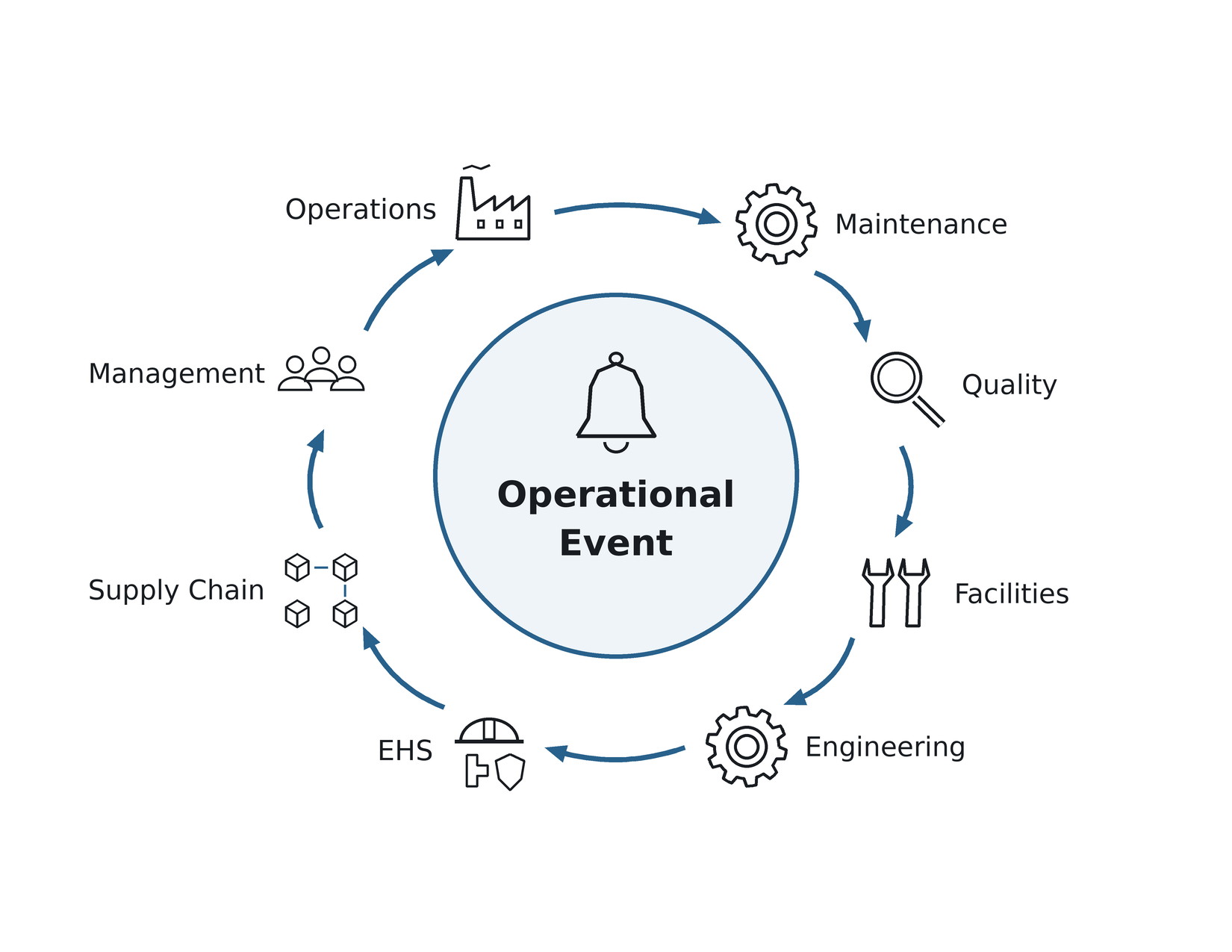
Crucially, these eight components do not need to occur in a linear sequence. Complex plant anomalies often require parallel workflows, iterative problem-solving, and occasional backtracking. By isolating these actions into dedicated digital channels, BackStaff transforms ad-hoc chaos into a structured, highly visible process.
Chronology: The Evolution of an Industrial Gap
To understand why BackStaff is entering the market now, it is helpful to examine the historical evolution of plant-floor technology and the chronic gap in incident management.
Phase 1: The Era of Siloed Systems and Ad-Hoc Recovery (1990s–2010s)
For decades, manufacturing automation focused heavily on data collection and automated control. SCADA systems flashed alarms; PLCs halted production lines. However, the human response to these triggers remained entirely analog and fragmented. Plant personnel relied on a patchwork of impromptu communication tools: walkie-talkies, landline phones, overhead PA systems, hastily scribbled shift logs, and sticky notes.
Phase 2: The Collaboration Tool Boom (2010s–Present)
As digital transformation accelerated, factories traded walkie-talkies for enterprise chat applications like Microsoft Teams, Slack, and digital ticketing systems. While these tools improved reachability, they introduced a new set of problems. Constant interruptions, fragmented threads, and a lack of structured accountability meant that operational responses remained deeply unstructured. Discussions happened in chat rooms, but actionable metrics, root-cause tracking, and formal audit trails were lost in the digital ether.
Phase 3: The Birth of BackStaff and ORE (2020s and Beyond)
Recognizing that existing software solutions only recorded what happened rather than how well the organization reacted, IPG leveraged its decades of integration experience in Latin America and beyond to conceptualize a dedicated response architecture. Drawing on real-world customer pain points, IPG engineered BackStaff to fill the exact gap between event detection and final system logging. Initial pilot customers have already integrated the software into their daily shifts, proving its viability in high-pressure, mission-critical operational environments.
Supporting Data: Answering the Unanswerable Operational Questions
Most industrial operations leadership teams pride themselves on key performance indicators (KPIs) like Overall Equipment Effectiveness (OEE), throughput, yield, and scrap rates. Yet, when probed about their incident response capabilities, executives face a wall of uncertainty.
According to IPG, organizations typically struggle to answer fundamental questions regarding their operational events:
Who specifically responded to the anomaly, and were they the most qualified personnel?
When was the notification acknowledged, and how long did the triage phase take?
How much labor, time, and capital were consumed during the recovery process?
Did the response fit the event? Was the reaction an over-escalation that wasted resources, or an under-response that allowed a minor fault to cascade into a major stoppage?
What was the rationale behind critical decisions made under pressure?
What were the long-term learnings, and has the organization successfully archived the knowledge to prevent recurrence?
Without a dedicated tool like BackStaff, answering these questions requires tedious, subjective forensic analysis of fragmented email chains and chat logs. BackStaff automates the collection of these metrics, turning operational resilience into a quantifiable, improvable science.
Official Responses and Strategic Architecture
IPG emphasizes that BackStaff is not designed to disrupt or replace existing enterprise frameworks. It maintains strict jurisdictional boundaries, operating exclusively within the domain of ORE while seamlessly interfacing with existing systems of record.
The Integration Ecosystem
Inputs: BackStaff ingests event triggers manually from frontline operators or automatically via API connections from MES, SCADA, LIMS, CMMS, and EHS (Environment, Health, and Safety) platforms.
Core Processing: Once triggered, the system prompts the user to assign an owner (with intelligent system suggestions) and attach rich-context data—such as photos, error logs, or diagnostic files.
Outputs: Upon resolution, BackStaff pushes a clean, structured summary back into systems of record (like a QMS non-conformance report or a CMMS work order history), ensuring compliance databases remain pristine and uncluttered by messy conversational noise.
"Event detection is common—there are plenty of notification systems on the market," notes the development team behind BackStaff. "However, the other seven capabilities of response management are rarely cultivated. Generating an independent response record alongside the outcome record gives companies unprecedented visibility into their organizational strengths and weaknesses."
Furthermore, BackStaff acts as a powerful force multiplier for existing methodologies like Lean Manufacturing and Six Sigma. By providing precise time-stamped logs of every operational disruption, continuous improvement teams gain hyper-accurate data for root-cause analysis (such as "5 Whys" or Fishbone diagrams).
Implications: Business Value and Future Outlook
The commercial and operational implications of adopting Operational Response Excellence through BackStaff are profound. For industrial enterprises operating on razor-thin margins, every minute of unplanned downtime carries a heavy financial penalty.
Key Business Benefits:
Shortened Disruption Duration: By optimizing routing, escalation, and coordination, plants can slash the time it takes to bring stalled lines back online.
Reduced Operational Impact: Faster, more targeted interventions prevent minor anomalies from cascading into catastrophic equipment failures or massive quality recalls.
Consistent Execution: Standardization ensures that whether a shift is run by a veteran crew or a newly onboarded team, the protocol for handling crises remains uniform and effective.
Institutional Knowledge Reuse: By capturing the rationale and resolution steps of past events in a searchable repository, companies break down silos and prevent recurring errors.
New Response KPIs: Leaders can finally track metrics such as Mean Time to Acknowledge (MTTA), Mean Time to Assign (MTTA), and Cross-Functional Coordination Efficiency.
Industry Outlook
As manufacturing environments grow increasingly complex, automated, and interconnected, human response coordination remains the ultimate wild card. Tools that bridge the gap between heavy enterprise databases and agile frontline communication are poised to define the next generation of smart manufacturing.
With initial deployments already proving successful in the field, IPG’s BackStaff offers a compelling blueprint for organizations striving to move beyond merely recording disasters—and toward actively mastering their response to them.