MUNICH / BOSTON — In the modern industrial ecosystem, 3D engineering data has evolved far beyond its origins as a digital blueprint for product designers. Today, it serves as the foundational language of the enterprise, driving downstream manufacturing, powering field service operations, and acting as the digital backbone for high-value corporate assets like digital twins and Artificial Intelligence (AI) initiatives.
However, as the demand to democratize this complex data accelerates across the entire value chain, engineering and IT leaders face a monumental architectural dilemma: Should they purchase commercial off-the-shelf (COTS) software, or build custom, proprietary internal applications?
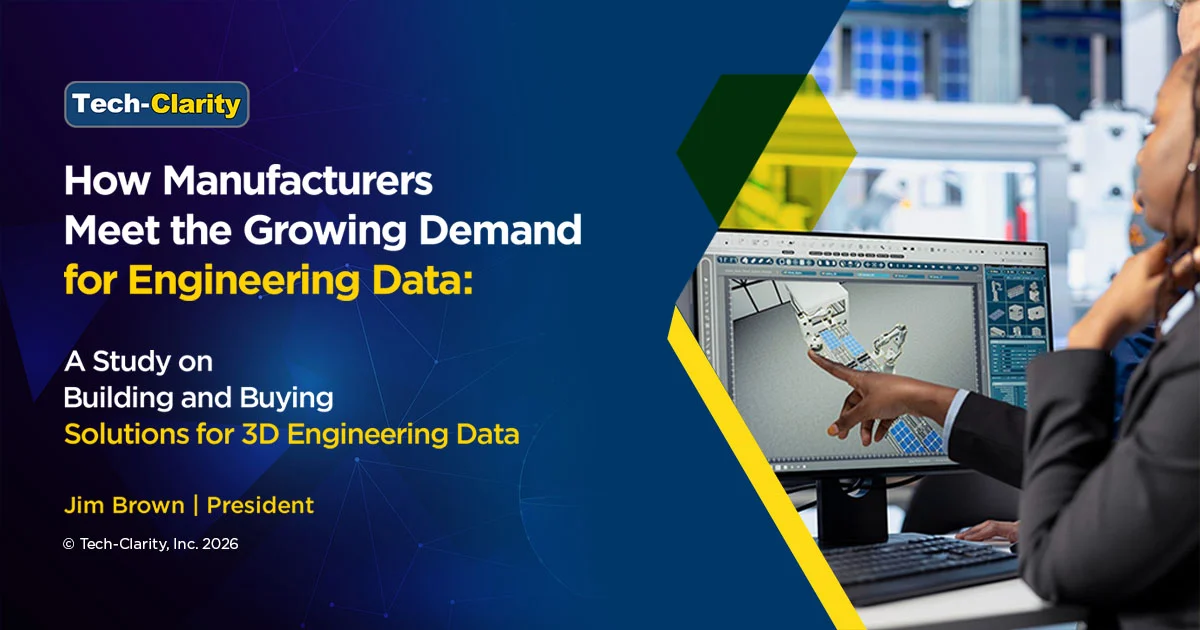
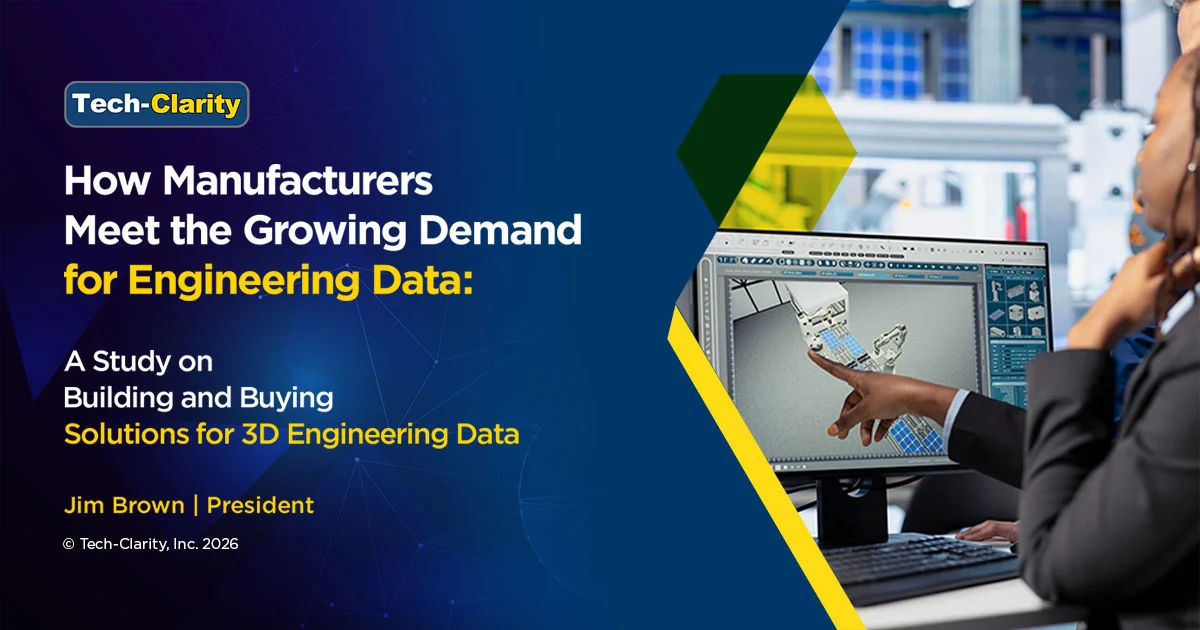
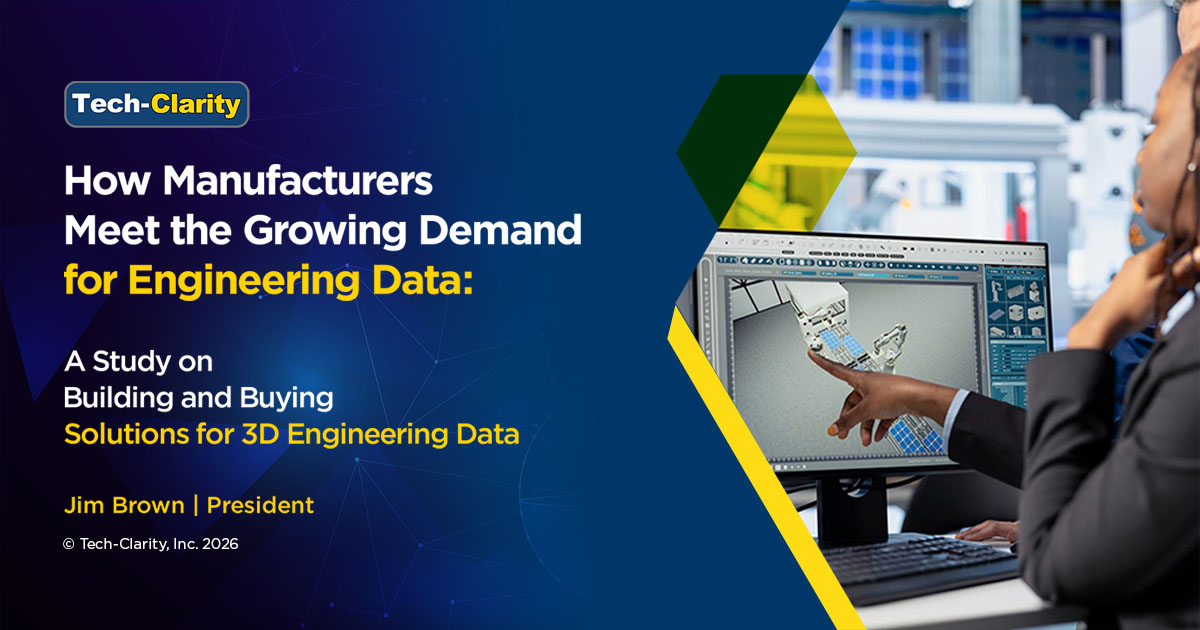
A comprehensive new research study titled "Meeting the Demand for 3D Engineering Data," published by industry analysts Tech-Clarity in collaboration with Tech Soft 3D, sheds light on this pressing dilemma. Surveying 15 large manufacturing corporations, the research reveals that the enterprise approach to 3D software is rarely a rigid "build-or-buy" binary. Instead, modern organizations are relying on a dynamic, highly nuanced hybrid strategy that balances commercial acquisition with bespoke in-house development.
Main Facts: The Strategic Imperative of 3D Data
At the heart of the Tech-Clarity research is a stark reality: the corporate appetite for 3D engineering data is surging, and not a single enterprise reported a decline in demand.
- Universal Growth: More than two-thirds of surveyed manufacturing organizations report that the internal need to access, distribute, and leverage 3D data is actively growing. The remaining respondents state that demand has remained consistently high. Zero companies reported a drop in demand.
- The Hybrid Standard: The industry has decisively moved away from all-or-nothing procurement models. On average, surveyed enterprises acquire 78% of their 3D-related solutions commercially (buy) while developing the remaining 22% internally (build).
- The Rise of AI: Emerging technologies, particularly generative AI and machine learning initiatives, are fundamentally altering the software landscape. AI is simultaneously increasing the demand for clean 3D data streams while lowering the barrier to entry for developing custom internal applications.
- The Core Dilemma: Despite a strong general preference for purchasing commercial solutions, many companies find that off-the-shelf software cannot adequately address unique proprietary workflows, forcing a tactical reliance on custom builds.
Chronology: How 3D Data Moved from Design Desks to Enterprise-Wide Assets
To understand how enterprises arrived at today’s hybrid software strategies, it is helpful to trace the historical evolution of computer-aided design (CAD) and simulation data within the industrial sector.
Phase I: The Isolated Island of Design (Late 20th Century)
For decades following the mainstream adoption of CAD, 3D data was strictly siloed within engineering and product development departments. Software tools were complex, hardware-intensive, and operated by specialized draftsmen and mechanical engineers. The primary goal was purely geometric creation—building digital representations of physical parts. Data sharing outside the engineering department was largely restricted to flat 2D drawings, PDFs, or physical prototypes.
Phase II: The Digital Thread and Downstream Integration (2010s)
As digital transformation took hold of the manufacturing sector, organizations recognized that locking 3D data inside engineering silos created massive operational bottlenecks. Enterprises began searching for ways to extend the value of CAD and simulation data across the entire product lifecycle (PLM) and supply chain. Procurement, manufacturing floor operations, technical publications, and sales teams all began demanding direct access to lightweight 3D visualizations to accelerate time-to-market and reduce costly errors.
Phase III: The Strategic Asset and Digital Twin Era (Present Day)
Today, 3D engineering data is no longer viewed merely as a product design file, but as a strategic business asset. Driven by the rise of Internet of Things (IoT) sensors, predictive maintenance models, and complex digital twins, enterprises require real-time 3D data integration across enterprise resource planning (ERP) and customer relationship management (CRM) systems. Concurrently, the explosive growth of artificial intelligence has positioned 3D engineering models as crucial training and operational data sets, multiplying the software integration challenges facing IT and engineering leaders.
Supporting Data: Inside the Numbers
The Tech-Clarity study provides granular quantitative insights into how large manufacturers resource, fund, and deploy their 3D software application stacks.
Sourcing Balances: Build vs. Buy Ratios
While the aggregate industry average rests at roughly 80% bought and 20% built, individual corporate strategies vary widely based on organizational maturity, proprietary software requirements, and IT bandwidth:
- The Commercial Majority: The vast majority of surveyed companies cluster neatly around an 80/20 or 75/25 split, heavily favoring commercial off-the-shelf software whenever a viable market product exists.
- The Custom Innovators: A subset of forward-thinking manufacturers report building up to 40% of their own 3D solutions. These firms typically operate in highly specialized industries where standard commercial tools fail to meet advanced mathematical or geometric visualization requirements.
- The Commercial Purists: Conversely, a small minority of companies categorize internal application building as "very rare," relying almost exclusively on commercial ecosystems to maintain long-term software maintainability.
Shifting Tides Over Time
Interestingly, the balance between building and buying is not static. Longitudinal data from the study demonstrates that enterprise philosophies shift dynamically over multi-year cycles:
- Case A: One enterprise participant noted that their historical approach was roughly 75% built and 25% bought during earlier architectural phases. Over time, as commercial software matured, their strategy completely inverted to a 75% bought and 25% built model.
- Case B: Conversely, another major manufacturer reported an opposing trajectory. Their non-commercial, custom-built software footprint expanded from 10% to approximately 30% over a three-to-four-year span because commercial software failed to evolve quickly enough to match their increasingly sophisticated operational requirements.
Official Perspectives and Industry Insights
Engineering leaders and enterprise architects contributing to the research emphasized that managing 3D data requires specialized expertise that should never be underestimated. Because CAD and simulation files are built on complex mathematical representations and rich underlying metadata, treating them like standard office documents or flat imagery is a recipe for failure.

"Engineering data, including 3D CAD and simulation data, is profoundly complex. Whether an organization chooses to build or buy, it is critical that they do not start from scratch and reinvent the wheel," noted the study’s findings.
Experts stress that companies embarking on custom internal builds must seek out robust software development kits (SDKs), pre-existing components, and established building blocks. Leveraging tools that natively understand how CAD geometries function ensures that internal developers do not inadvertently compromise data integrity or introduce rendering inaccuracies.
Furthermore, industry analysts highlight the disruptive influence of AI—specifically the rise of "vibe coding" and accessible AI-assisted development tools. While AI makes it significantly easier for less experienced or non-traditional developers to spin up applications that access and share 3D data, experts caution that generating valid, high-fidelity 3D data from scratch remains an intricate engineering challenge.
Implications for Engineering and IT Leaders
The comprehensive findings from Tech-Clarity and Tech Soft 3D carry profound implications for Chief Information Officers (CIOs), Chief Technology Officers (CTOs), and engineering executives navigating the next decade of industrial software deployment.
1. Abandon the False Binary
Organizations must stop viewing software acquisition through a rigid "build vs. buy" lens. The most resilient manufacturing enterprises operate comfortably in a hybrid environment. Leaders should default to commercial solutions when robust, scalable options exist, but maintain internal development capabilities for differentiating workflows.
2. Factor in the True Cost of Scaling
When evaluating whether to build custom internal applications, decision-makers often underestimate the long-term total cost of ownership (TCO). Beyond initial development hours, teams must account for ongoing maintenance, software updates, CAD format migrations, and the hidden costs of enterprise scaling.

3. Safeguard Intellectual Property (IP)
As 3D engineering datasets are increasingly shared across extended supply chains, cloud environments, and AI training pipelines, security is paramount. Companies must carefully evaluate whether building or buying solutions exposes sensitive proprietary data or risks intellectual property leakage.
4. Partner with Domain Experts
Whether acquiring commercial software or assembling custom internal tools leveraging APIs, organizations must forge alliances with trusted technological partners. Proven, scalable applications equipped with robust multi-format CAD and simulation APIs prevent technical debt and ensure long-term operational resilience.
For industry professionals seeking the complete data sets, comprehensive charts, and extended enterprise case studies, the full research report—"Meeting the Demand for 3D Engineering Data"—is available via registration on the Tech Soft 3D and Tech-Clarity portals.