Main Facts
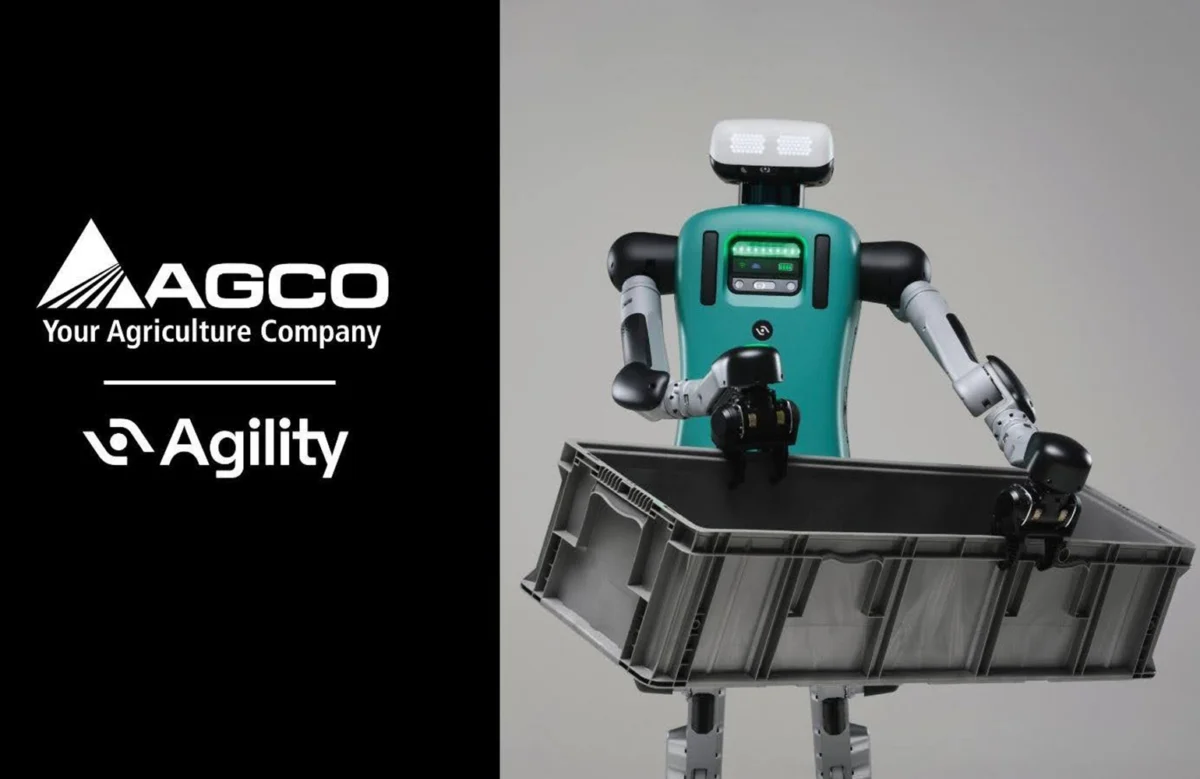
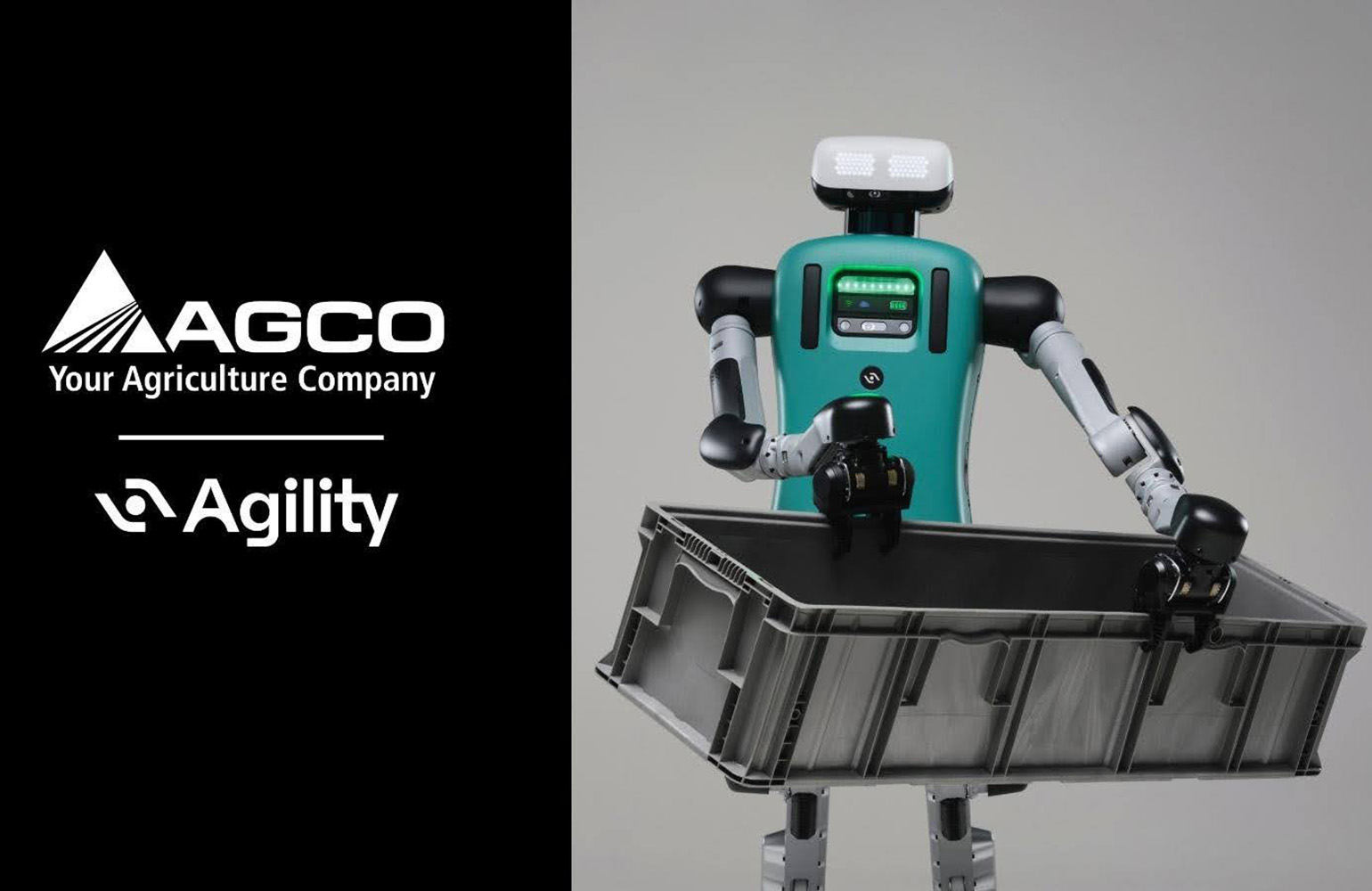
The landscape of modern manufacturing is undergoing a profound transformation, driven by rapid advancements in artificial intelligence and physical robotics. In a landmark commercial agreement, agricultural equipment titan AGCO and humanoid robotics pioneer Agility Robotics have announced a strategic partnership to integrate Agility’s flagship humanoid robot, Digit, into AGCO’s manufacturing operations.
The initial U.S. pilot program is slated to kick off in 2027 at AGCO’s prominent production facility located in Hesston, Kansas. This deployment represents a critical step in AGCO’s broader corporate vision to construct flexible, intelligent, and highly resilient smart factories. Rather than replacing human workers, the initiative is designed to position AI and humanoid robotics as collaborative "teammates" capable of managing strenuous, repetitive, and potentially hazardous material handling tasks.
The initial rollout will see Digit deployed on critical assembly and production workflows. Specifically, the humanoid robots will handle parts sorting, component stacking, and the intelligent placement and management of storage totes. By absorbing these physically demanding jobs, the deployment aims to significantly enhance ergonomic safety on the factory floor while freeing human employees to concentrate on higher-value, skill-driven tasks that require human creativity, problem-solving, and advanced operational oversight.
This major industrial deployment coincides with a period of intense momentum for Agility Robotics. The Salem, Oregon-based robotics firm recently unveiled the latest iteration of its hardware platform, Digit 5, featuring redesigned legs, ultra-fast charging battery technology, and enhanced safety architecture. Simultaneously, Agility is preparing to transition into a publicly traded entity through a previously announced merger with a special purpose acquisition company (SPAC), Churchill Capital Corp XI, targeting a public listing on Nasdaq under the ticker symbol "AGLT" by the fourth quarter of 2026.
Chronology of Events and Strategic Milestones
The integration of Agility Robotics’ humanoid technology into AGCO’s manufacturing ecosystem is the result of years of technological evolution, iterative hardware development, and strategic corporate positioning.
- Foundation and Early Development: Agility Robotics spun out of academic research, establishing itself as a leader in legged locomotion and dynamic robot control. Over the years, the company shifted its focus from lower-body research platforms to a commercially viable bipedal humanoid specifically engineered for logistics, warehousing, and manufacturing environments.
- Expansion of Enterprise Pilots: As Digit matured, Agility secured strategic testing and deployment partnerships with a roster of global logistics and manufacturing giants. Companies such as Toyota, GXO Logistics, and Schaeffler began evaluating the humanoid’s capabilities in real-world supply chain settings, validating the platform’s reliability and ease of integration.
- The Introduction of Agility Arc: To facilitate seamless fleet management, Agility deployed its cloud-based software platform, Agility Arc. This ecosystem allowed enterprises to integrate bipedal automation into existing workflows without requiring costly, disruptive facility retrofits or complex infrastructure overhauls.
- September 2026 — Digit 5 Launch: Agility Robotics announced the rollout of Digit 5. This next-generation humanoid introduced critical engineering upgrades, including completely redesigned legs for improved stability, advanced battery systems developed in partnership with ultra-fast charging innovators like Nyobolt, and a reinforced safety architecture designed to operate safely in close proximity to human workers. In the same timeframe, the company confirmed it was exploring diversified form factors, including wheeled robotic solutions, to meet broader customer demands.
- Late 2026 — Move Toward Public Markets: Agility advanced its plans to merge with Churchill Capital Corp XI. The business combination was structured to take the company public in the fourth quarter of 2026 under the Nasdaq ticker "AGLT," providing the capital necessary to scale manufacturing and accelerate commercial deployments.
- The AGCO Partnership and 2027 Roadmap: AGCO and Agility Robotics finalized their commercial agreement. The partnership establishes a firm timeline for the Hesston, Kansas, pilot program, which is scheduled to commence in 2027, marking a major milestone for humanoid robotics deployment within heavy machinery manufacturing.
Supporting Data and Industry Context
The deployment at AGCO’s Hesston facility does not occur in a vacuum; it is part of a broader industrial trend toward human-centric automation. AGCO, headquartered in Duluth, Georgia, is a recognized global leader in the design, manufacture, and distribution of agricultural machinery and precision farming technology. Operating under powerhouse brands such as Fendt, Massey Ferguson, PTx, and Valtra, AGCO produces high-performance equipment and smart farming systems aimed at helping farmers sustainably feed a growing global population.
To maintain its leadership position in agricultural innovation, AGCO must ensure that its own production lines remain as advanced as the smart machinery it sells. Manufacturing large agricultural implements involves heavy lifting, repetitive parts sorting, and complex material logistics—environments traditionally characterized by high physical strain on workers.
Agility’s Digit is uniquely suited to bridge this operational gap. Unlike traditional industrial robotic arms—which are bolted to fixed locations and require predictable, highly structured environments—Digit is a mobile humanoid capable of navigating spaces designed for human beings. Utilizing advanced physical AI, Digit continuously learns and adapts to evolving workflows.
Furthermore, the integration process is streamlined by the Agility Arc cloud platform. By utilizing cloud-based fleet management, enterprises can scale their robot deployments rapidly. This software-driven approach minimizes integration friction, allowing industrial facilities to adopt advanced automation without incurring the prohibitive costs associated with redesigning factory layouts or retrofitting material handling infrastructure.
AGCO’s decision to bring Digit into the Hesston plant also highlights the rapid validation of Agility’s commercial strategy. By securing validation from industrial heavyweights like Toyota, GXO Logistics, Schaeffler, and now AGCO, Agility Robotics has positioned its hardware as a robust, enterprise-grade tool rather than a mere research novelty.
Official Responses and Stakeholder Perspectives
Leadership from both organizations emphasized the strategic, long-term nature of the partnership, framing the deployment not as a labor-replacement strategy, but as a method of workforce augmentation and operational resilience.
Thomas Enghof, Director of Manufacturing Technology at AGCO, underscored the philosophical approach driving the collaboration:
"This strategic relationship views humanoid robotics and AI as essential ‘teammates’ in building flexible, intelligent factories. They unlock automation in complex, human-centric workflows, augmenting human capabilities by absorbing repetitive, strenuous, or hazardous tasks. By pairing human ingenuity with robust robotic engineering and strict safety governance, we create resilient manufacturing systems that empower the workforce and deliver measurable business value."
Daniel Diez, Chief Business Officer of Agility Robotics, echoed this sentiment, pointing to AGCO’s legacy of agricultural innovation as an ideal testing ground for advanced physical AI:
"We’re excited to work alongside AGCO as they continue to lead the way in agricultural innovation. By introducing Agility’s Digit humanoid robots into AGCO’s operations, we have an opportunity to strengthen manufacturing processes, support employees in demanding tasks, and demonstrate how advanced robotics can create measurable impact across modern production environments."
Industry analysts note that these statements reflect a broader maturation in the robotics sector. Companies are increasingly prioritizing safety governance, ergonomic relief, and seamless human-robot collaboration to combat ongoing labor shortages in manufacturing and logistics sectors.
Implications for the Future of Manufacturing and Logistics
The AGCO and Agility Robotics partnership carries significant implications for the future of industrial automation, labor dynamics, and the broader humanoid robotics market.
1. The Maturation of Humanoid Robotics
For years, humanoid robots were viewed as technological demonstrations confined to research laboratories. The commercial agreement between AGCO and Agility signals that humanoids have crossed the chasm into real-world industrial utility. By focusing on practical, unglamorous tasks—such as sorting parts, stacking components, and moving storage totes—humanoids are proving their economic viability in everyday manufacturing workflows.
2. Ergonomic Relief and Workforce Empowerment
Labor shortages and the physical toll of heavy industrial manufacturing remain pressing challenges for global enterprises. By deploying Digit to handle strenuous and hazardous movements, companies like AGCO can significantly reduce workplace injuries and repetitive strain disorders. This allows human workers to pivot toward supervisory, problem-solving, and technical roles, elevating the overall skill profile of the manufacturing workforce.
3. Financial Markets and the SPAC Milestone
Agility Robotics’ impending public debut via its merger with Churchill Capital Corp XI ($textAGLT$) will provide the financial fuel required to scale production, refine hardware iterations like Digit 5, and expand customer deployments. The success of this public listing will serve as a bellwether for investor appetite in the physical AI and humanoid robotics sectors, potentially unlocking substantial capital for competing startups in the space.
4. Setting a Precedent for Heavy Industry
While humanoids have seen early traction in light logistics and automotive warehousing, heavy machinery manufacturing presents unique challenges due to the sheer scale of components and the complexity of Hesston-style production floors. If the 2027 pilot at AGCO proves successful, it will establish a powerful deployment blueprint for other heavy equipment manufacturers, energy companies, and industrial giants looking to build the factories of the future.