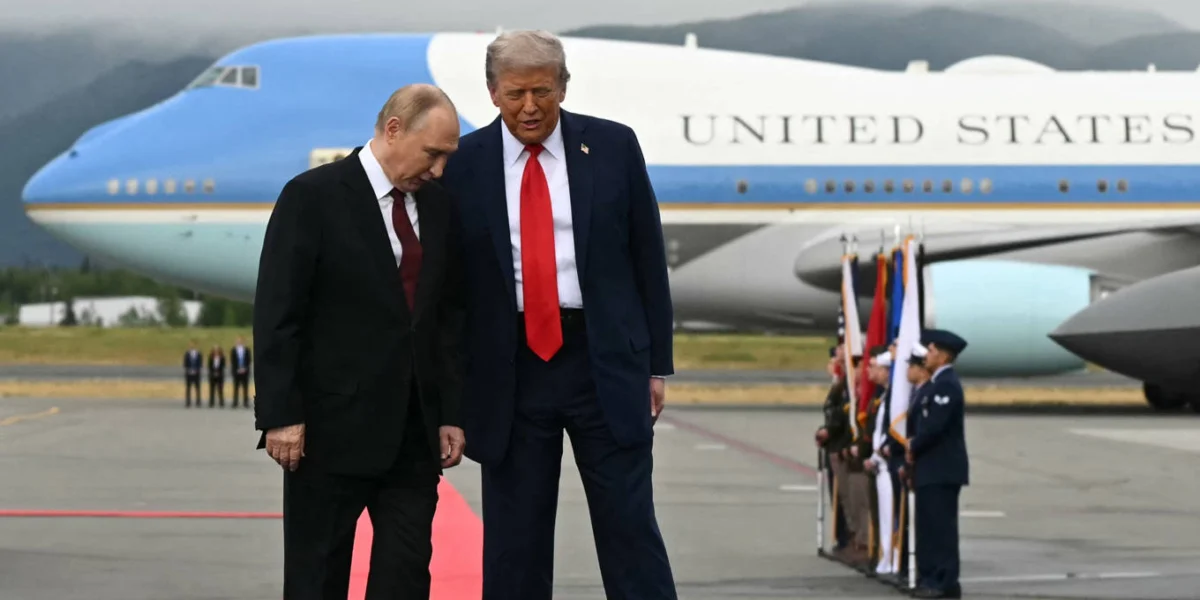
By Carl Bildt
Stockholm — October 21, 2026
Introduction and Main Facts
As the geopolitical lexicon of the mid-2020s evolves, few terms have gained as much currency as the "middle power." Traditionally invoked to describe nations that wield significant regional influence and diplomatic leverage—yet lack the systemic hegemony of a global superpower—the classification is undergoing a profound conceptual stress test.
Writing from Stockholm, veteran statesman and analyst Carl Bildt posits that the traditional bipolar or unipolar frameworks governing international relations are no longer adequate. While the United States remains an undeniably formidable global actor, and the Russian Federation continues to command vast conventional arsenals alongside the world’s largest nuclear stockpile, both nations find their global status increasingly defined by structural failure, strategic constraint, and self-limiting overreach.
Stripping away the rhetoric of exceptionalism, a provocative reality emerges: both Washington and Moscow may now belong to the same broad, pragmatic grouping of middle powers that includes nations traditionally viewed as regional heavyweights, such as Canada, Brazil, and India.
This transformation does not imply an overnight collapse of military might or economic output. Rather, it speaks to a fundamental loss of system-shaping capacity. Neither the United States nor Russia can unilaterally dictate the terms of global governance, resolve major regional conflicts on their own preferred terms, or insulate themselves from the complex, multipolar dependencies that define the contemporary international order.
Chronology of Decline: How We Reached the Post-Superpower Era
To understand how the world’s foremost Cold War antagonists—and subsequent post-Cold War protagonists—have descended into the analytical category of middle powers, it is necessary to examine the historical trajectory of their respective strategic contractions.
1. The Post-Cold War Apex (1991–2008)
Following the dissolution of the Soviet Union in December 1991, the United States stood alone as the undisputed global hyperpower. Its economic model, cultural exports, and military reach set the parameters for globalization. Russia, meanwhile, endured a chaotic decade of economic collapse and political retrenchment, temporarily exiting the stage of high-stakes global management.
2. The First Cracks in American Primacy (2008–2016)
The 2008 global financial crisis exposed structural vulnerabilities in the American economic model. Concurrently, the protracted and strategically ambiguous military campaigns in Iraq and Afghanistan demonstrated the severe limits of hard power in achieving enduring political outcomes. During this period, Russia—emboldened by high global energy prices—began a concerted campaign to restore its status as a revisionist power, culminating in the 2008 Russo-Georgian War and the 2014 annexation of Crimea.
3. The Paralysis of Domestic Polarization (2016–2020)
Both nations turned inward, though for different reasons. The United States experienced severe political polarization, questioning its traditional alliances, abandoning multilateral trade pacts, and demonstrating erratic policy shifts from one presidential administration to the next. Russia faced intensifying Western economic sanctions and systemic economic stagnation, binding its long-term economic future ever closer to raw material exports and junior-partner status vis-à-vis China.
4. The Great Realignment (2022–2026)
The full-scale invasion of Ukraine in February 2022 served as a historical watershed. For Russia, the conflict exposed profound conventional military deficiencies, severed its economic integration with the West, and reduced its foreign policy to a desperate reliance on secondary suppliers like North Korea and Iran. For the United States, managing the protracted conflict—while simultaneously attempting to deter a rising China in the Indo-Pacific—revealed severe industrial capacity bottlenecks, supply chain vulnerabilities, and a growing reluctance among Global South nations to automatically align with Western-led sanctions and diplomatic campaigns.
Supporting Data and Geopolitical Metrics
The classification of the United States and Russia as functional middle powers is supported by a fundamental reassessment of traditional metrics of national power: economic sovereignty, diplomatic pull, and strategic autonomy.
- Economic Share of Global GDP: In purchasing power parity (PPP) terms, the combined share of the G7 economies has steadily declined relative to the expanding economies of the Global South. While the U.S. economy remains robust at roughly 15% of global nominal GDP, its capacity to write international trade rules without reciprocal concessions has evaporated. Russia, representing less than 2% of global nominal GDP, possesses an economy roughly comparable in size to that of Spain or South Korea, heavily reliant on hydrocarbon exports to Asian markets at discounted rates.
- Diplomatic Alignment and the Global South: Recent United Nations General Assembly votes regarding sovereignty disputes and international law demonstrate that neither Washington nor Moscow commands automatic majorities among developing nations. States such as India, Brazil, South Africa, and Indonesia routinely pursue transactional, multi-aligned foreign policies, refusing to choose sides in great power competitions—a hallmark behavior of middle-power diplomacy.
- Industrial and Defense Constraints: The ongoing conflict in Eastern Europe has laid bare the hollowed-out state of Western defense industrial bases, revealing that neither NATO nor the U.S. can easily sustain prolonged high-intensity conventional warfare without severe supply strains. Concurrently, Russia’s depletion of modern armor, precision munitions, and professional military personnel has transformed its armed forces from a global power projection machine into a regional land-war specialist.
Official Responses and Diplomatic Reactions
The proposition that the world’s premier nuclear states are effectively operating as elevated middle powers has generated intense debate among foreign policy establishments in Washington, Moscow, and key international capitals.
In Washington, mainstream defense analysts and Department of State officials vigorously reject the middle-power label, pointing to the unrivaled reach of the U.S. financial system, global alliance networks (such as NATO and the Quad), and technological dominance in artificial intelligence and biotechnology. However, realists and reform-minded strategists within the foreign policy community concede that the U.S. suffers from "imperial overstretch." Privately, policymakers acknowledge that domestic political dysfunction has crippled Washington’s ability to act as a reliable, long-term architect of global order.
In Moscow, official state rhetoric continues to project the image of an ascendant Eurasian superpower capable of dictating terms to a fractured West. Russian Ministry of Foreign Affairs briefings frequently emphasize Moscow’s role as the leader of a non-Western majority, pointing to groupings like BRICS as evidence of global multipolarity. Yet, foreign policy elites are increasingly cognizant of their asymmetrical dependence on Beijing, frequently expressing quiet anxiety over becoming a junior economic and strategic satellite to China.
Meanwhile, traditional middle powers—such as Canada, India, and Brazil—view this analytical shift with a mixture of validation and caution. Indian diplomats emphasize that the democratization of international relations creates unprecedented room for strategic autonomy. Brazilian officials argue that the paralysis of traditional superpowers creates a vital vacuum for middle-power coalitions to broker international consensus on issues ranging from climate change to digital governance.
Implications for the Future of Global Order
If the paradigm shift articulated by Carl Bildt takes root, the consequences for international security, trade, and diplomacy will be profound.
- The Rise of Transactional Multilateralism: In a world where the U.S. and Russia operate under severe domestic and external constraints, institutional bodies like the United Nations Security Council will likely remain deadlocked. Global governance will increasingly shift toward ad-hoc, issue-specific coalitions of middle powers that negotiate flexible agreements without relying on superpower patronage.
- The Consolidation of the Bipolar-Multipolar Paradox: While a distinct bipolar competition persists between the United States and China for technological and systemic dominance, Russia occupies a diminished tier, and the U.S. itself must increasingly bargain, compromise, and share influence with assertive regional actors.
- Redefining Deterrence and Security: As traditional nuclear superpowers find their escalatory dominance checked by mutual vulnerabilities and economic interdependencies, regional security architectures will rely less on security guarantees from Washington or Moscow and more on localized balance-of-power dynamics.
Conclusion
The realization that the United States and Russia share characteristics with middle powers like Canada, Brazil, and India is not necessarily an elegy for the collapse of order; rather, it is a necessary awakening to empirical reality. As Stockholm and other global capitals adjust to this flatlining of exceptionalism, the international community must prepare for a more fluid, decentralized, and unpredictable century—one where influence is no longer measured by the possession of doomsday arsenals alone, but by the agility, resilience, and diplomatic dexterity to navigate a truly multipolar world.