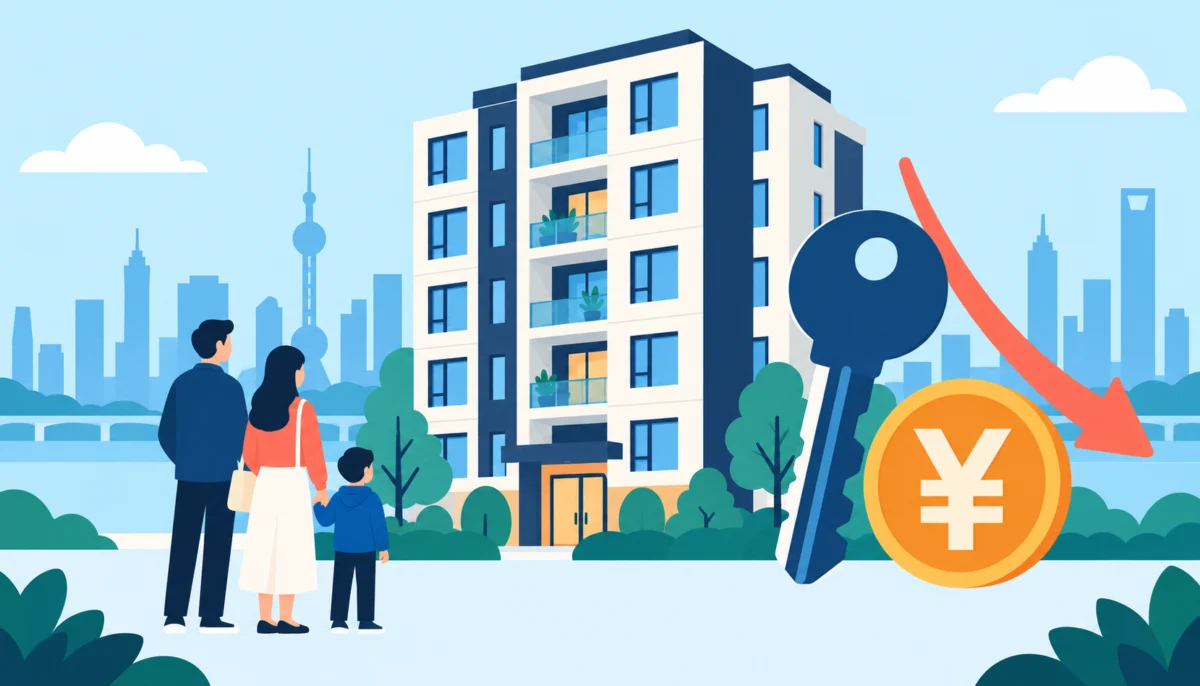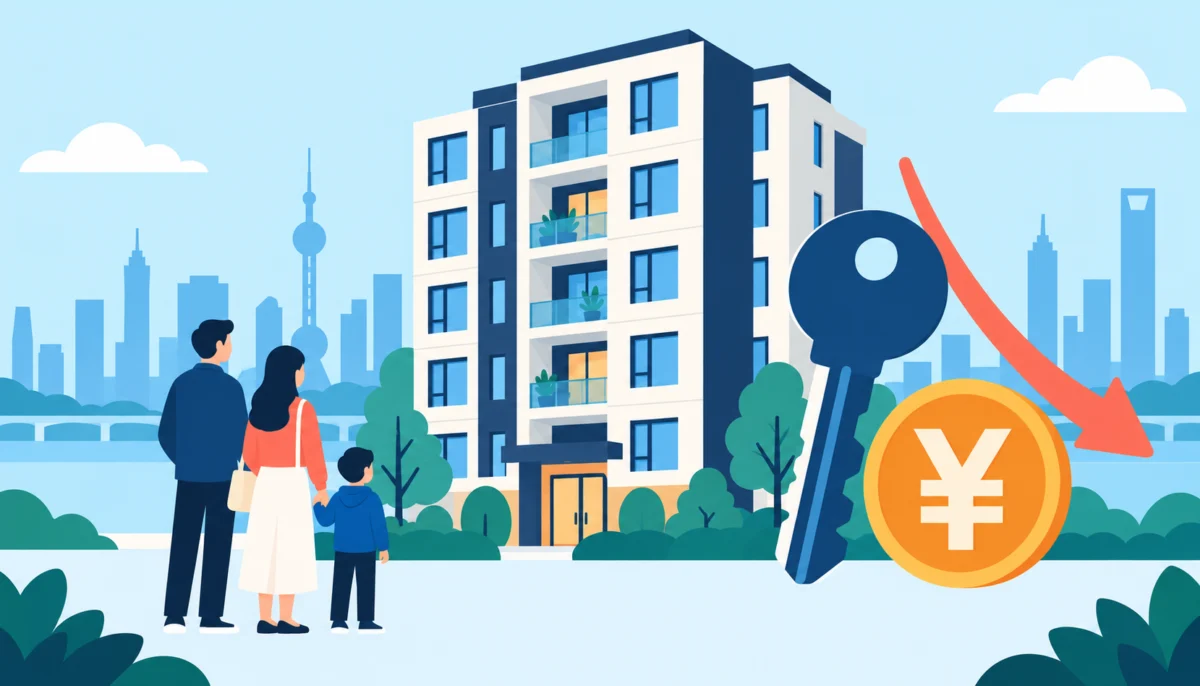
In a decisive move to stabilize the nation’s cooling property market, Chinese authorities have unveiled a targeted mortgage interest subsidy program. Beginning October 1, 2026, the central government will provide direct fiscal support to households purchasing their first homes, effectively lowering the cost of borrowing for millions of prospective buyers. The policy, coordinated by the Ministry of Finance, the People’s Bank of China (PBOC), and the National Financial Regulatory Administration, represents a shift toward direct household support rather than broad-based industry bailouts.
The program allows eligible homebuyers to receive an annualized subsidy of one percentage point on the principal of their commercial mortgage for a duration of up to five years. By offloading a portion of the interest burden onto the state, Beijing aims to lower the barrier to entry for first-time buyers, hoping to stimulate transaction volumes in a sector that has been plagued by declining investment and waning consumer confidence for years.
The Chronology of Intervention
The road to this policy announcement was paved by a persistent downturn in property indicators. Throughout 2026, data from the National Bureau of Statistics painted a bleak picture:
- January–August 2026: Property development investment contracted by 19.9% year-on-year.
- Mid-September 2026: Official reports confirmed a 13.0% decline in the value of new commercial property sales and a 21.0% drop in total developer funding.
- September 29, 2026: Following months of industry lobbying and internal policy deliberation, the three major financial regulators issued the "Joint Notice on Mortgage Interest Subsidy for First-Home Purchases," officially authorizing the fiscal support mechanism.
Defining the Boundaries: Who Qualifies?
The policy is characterized by strict eligibility criteria designed to ensure that state support is funneled toward the "剛需" (rigid demand) segment of the market—those buying modest homes for personal use rather than speculative investment.
Eligibility Criteria
To qualify for the subsidy, borrowers must adhere to the following stipulations:
- First-Home Status: The mortgage must be for a primary residence. Refinancing existing debt is explicitly excluded.
- Size Constraints: The property must measure no more than 120 square meters.
- Price Caps: The total purchase price must not exceed 1.5 million yuan.
- Principal Limitations: The subsidy is capped at a maximum of 1 million yuan of principal per household.
- Window of Opportunity: The program is limited to new commercial mortgages issued within a one-year window starting October 1, 2026.
This targeted approach means the policy’s effectiveness will vary significantly by geography. In Tier-1 cities like Beijing or Shanghai, where property prices frequently exceed 1.5 million yuan for a 120-square-meter unit, the reach of the policy may be limited. Conversely, in lower-tier cities where prices are lower, the subsidy could cover a much larger percentage of the available housing stock, potentially driving a more pronounced uptick in sales.
Supporting Data and Financial Mechanics
The fiscal burden is shared between the central and local governments, with the center covering 90% of the costs and local authorities responsible for the remaining 10%. Banks act as the administrative arm, verifying eligibility and automatically deducting the subsidy from monthly interest payments.
Calculating the Relief
While the subsidy provides a tangible reduction in monthly outgoings, analysts caution against viewing it as a panacea. For a mortgage with 1 million yuan of eligible principal, an annualized subsidy of one percentage point equates to a saving of 10,000 yuan annually, or approximately 833 yuan per month. For a 600,000 yuan mortgage, the saving is 6,000 yuan per year, or 500 yuan per month.
However, these figures assume a static principal balance. As borrowers pay down their debt over the five-year support period, the actual subsidy amount will decrease. Furthermore, the subsidy does not lower the total principal obligation or the required down payment, nor does it address the underlying anxieties regarding employment stability and long-term property appreciation that currently weigh on consumer sentiment.
Official and Industry Responses
The government’s decision to involve the Ministry of Finance suggests a pivot from monetary policy—which has been consistently eased with little effect—to fiscal policy, which puts cash directly into the hands of households.
For developers, the reaction is one of cautious optimism. While the move is welcome, industry leaders emphasize that the benefit is contingent on the "sell-through" rate. If consumers remain hesitant due to fears of incomplete construction or further price declines, a subsidy of 800 yuan per month may not be sufficient to bridge the gap. For banks, the policy adds an administrative layer of complexity, requiring robust internal controls to manage the interest deductions and ensure accurate reconciliation with government coffers.
Implications for the Property Ecosystem
For Developers: A Test of Liquidity
The critical question for developers is whether the subsidy-induced sales will translate into usable cash. In the current regulatory environment, proceeds from home sales are often locked in escrow accounts to ensure project completion. Consequently, an increase in sales volume does not automatically equate to an improvement in a parent company’s ability to service its offshore bonds or pay down existing corporate debt. Analysts must look past the "sales growth" headlines and track actual cash flow reaching the corporate level.
For Banks: Managing Long-Term Risk
Banks face a dual challenge. First, they must manage the operational burden of the subsidy program. Second, they must maintain prudent underwriting standards. A subsidized interest rate might mask a borrower’s underlying financial fragility. The true test of a loan’s health will arrive after the five-year subsidy period ends. If a borrower has not experienced an improvement in income, they may face a "payment shock" when the full contractual interest rate resumes, potentially leading to a spike in non-performing loans (NPLs) in the early 2030s.
For the Macroeconomy and Sovereign Risk
From a sovereign perspective, the cost of the program is scalable but carries risks. If 1 million households participate, the annual cost would be roughly 10 billion yuan. While this is a manageable figure for the national budget, it represents an ongoing commitment. If the property market fails to recover despite this intervention, the government may face pressure to extend or expand the program, creating long-term fiscal liabilities.
Analyst’s Perspective: Separating Signal from Noise
The success of this policy should not be judged by the number of mortgage approvals alone. Instead, market participants should focus on three key metrics:
- Inventory Velocity: Does the subsidy successfully clear the "eligible" stock of 120-square-meter homes, or does it merely lead to a reshuffling of demand?
- Cash Conversion: What percentage of revenue from these sales is released from escrow for general corporate purposes, and how much is tied to project delivery?
- Supplier Payment Cycles: Are the developers who benefit from increased sales using those funds to pay down arrears to contractors and material suppliers?
Ultimately, the mortgage subsidy is a surgical tool designed to stimulate the bottom of the housing market. It addresses the "affordability" pillar of the crisis but does not directly address the "confidence" pillar. For the policy to be deemed a success, it must do more than just lower monthly payments; it must foster a sustainable environment where developers can deliver homes and households can commit to 30-year debt obligations with a reasonable expectation of future financial stability.
The coming quarters will be the definitive test. Investors, lenders, and policymakers alike should await concrete data on transaction volumes, the pace of fiscal budget execution, and, most importantly, the stabilization of developer balance sheets before concluding that the long-awaited recovery of the Chinese property market is truly underway.