





Main Facts
As the international community accelerates toward a net-zero emissions future, the race to secure critical transition minerals has intensified dramatically. According to projections by the International Energy Agency (IEA), global demand for critical minerals is slated to triple by 2030 and quadruple by 2040. However, this high-stakes scramble is occurring against a backdrop of mounting tension between consumer nations seeking rapid market access and resource-rich developing countries fighting to escape the historical "resource curse."
To retain control over their reserves, promote domestic value addition, and meet broader economic development objectives, many Global South nations have begun implementing aggressive export bans on critical raw materials. Indonesia, a pioneer in this policy space, has sought to leverage its vast nickel reserves—a core component of electric vehicle (EV) batteries—by requiring domestic processing.
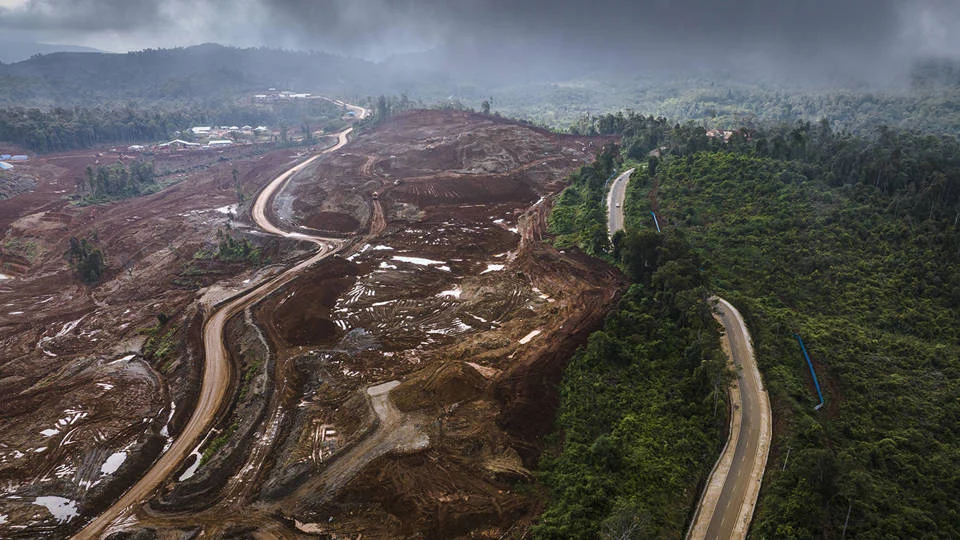
Yet, the Indonesian experience demonstrates that downstream industrialization is far from a panacea. While extraction and smelting have generated localized economic growth in provinces like Central, South, and Southeast Sulawesi, they have often failed to contribute meaningfully to the national economy as a whole. More critically, the rapid transformation of marginal environments into industrial hubs—a process known as "frontier-making"—has given birth to new "sacrifice zones." These regions bear the severe environmental degradation and social disruption of mining, often without receiving equitable shares of the financial benefits.
Concurrently, a massive chasm has emerged between high-minded global sustainability frameworks and bilateral trade realities. While institutions like the United Nations, the African Union, and the Association of Southeast Asian Nations (ASEAN) have established rigorous principles prioritizing justice, equity, and local community welfare, consumer economies routinely sideline these commitments. Bilateral trade pacts often prioritize unencumbered resource access over stringent ecological safeguards, perpetuating double standards that leave vulnerable populations exposed.
To bridge this gap, experts and policymakers argue that resource-rich nations must look beyond fragmented domestic policies. The definitive solution lies in consolidating Global South policy and advocacy networks, facilitating cross-border learning, and mobilizing transnational civil society to enforce accountability where domestic governance falls short.
Chronology of the Transition Mineral Boom and Global Advocacy
- 2000s–2010s: African nations begin pioneering regional resource governance frameworks, culminating in milestones such as the African Union’s Africa Mining Vision, aimed at ensuring transparent and sustainable mineral exploitation.
- 2020: Indonesia enacts a sweeping ban on the export of raw nickel ore, forcing foreign investors to build domestic smelters and sparking a global rush for downstream industrialization capabilities.
- September 2024: The United Nations Secretary-General’s Panel on Critical Energy Transition Minerals releases its landmark guiding principles, emphasizing that the green transition must be rooted in justice, equity, and local community benefits.
- October 12–14, 2026: The Intergovernmental Forum on Mining, Minerals, Metals, and Sustainable Development (IGF) holds its annual meeting in Geneva, Switzerland, operating under the core theme of "Interdependence" while grappling with fierce geopolitical and economic competition over supply chains.
- Late 2024–2025: Civil society organizations and international NGOs—including WALHI, Friends of the Earth Japan, Mighty Earth, and Climate Rights International—ramp up coordinated pressure campaigns targeting major EV and battery manufacturers over environmental and human rights abuses at Indonesian nickel projects like Sorowako and Weda Bay.
- 2025: Publish What You Pay Indonesia raises alarm bells regarding the country’s nickel governance at the OECD Forum on Responsible Mineral Supply Chains in Paris, prompting a renewed domestic reckoning over regulatory enforcement.
- 2026: Pressured by international investors and civil society scrutiny, Indonesian authorities—in collaboration with organizations like WRI Indonesia—begin preparing comprehensive Environmental, Social, and Governance (ESG) guidelines to align local mining regulations with strict global supply-chain standards.
Supporting Data and Economic Realities
The economic and ecological dynamics governing the critical minerals sector are underscored by stark quantitative projections and empirical findings:
- Demand Trajectory: The IEA projects that global demand for critical minerals—including lithium, cobalt, nickel, graphite, and rare earth elements—will triple by 2030 and quadruple by 2040 under sustainable development scenarios.
- The Downstream Dilemma in Indonesia: While Indonesia’s nickel downstreaming strategy attracted billions of dollars in foreign direct investment, analyses by institutions such as the Economic and Social Research Institute (LPEM FEB UI) reveal that these investments have failed to contribute proportionally to the wider national economy, remaining largely sequestered within specific provincial enclaves.
- Transnational Coalition Power: Efforts spearheaded by organizations like WALHI and Friends of the Earth Japan successfully united more than 100 civil society organizations to challenge corporate accountability standards at major industrial extraction sites.
- Regulatory Alignment Gaps: Assessments conducted by Indonesian ministries in partnership with environmental research groups highlighted significant policy disconnects, demonstrating that existing domestic regulatory frameworks frequently fall short of international benchmarks set by bodies like the Initiative for Responsible Mining Assurance (IRMA) and the Organisation for Economic Co-operation and Development (OECD).
Official Responses and Institutional Perspectives
The Global South Perspective
Policymakers across mineral-rich nations increasingly recognize that cooperation is vital to avoiding a destructive "race to the bottom." Platforms such as the Natural Resource Governance Institute’s South–South Transition Minerals Learning Platform have become critical conduits for dialogue. Government officials from Indonesia, Chile, Zambia, and the Democratic Republic of the Congo regularly exchange insights through this mechanism.
Rather than adopting a rigid, one-size-fits-all model, these nations are learning to tailor their policies to their unique commodities, political economies, and positions within global value chains. Leaders emphasize that resource sovereignty cannot be achieved through isolationism or export bans alone; it requires robust institutional frameworks that safeguard local populations from the ecological fallout of industrialization.
Civil Society and Transnational Advocacy
When domestic regulatory bodies prove captured or incapable of holding multinational corporations accountable, civil society actors have demonstrated a capacity to bypass national borders. By partnering with international advocacy networks, local groups can weaponize reputational risk against corporate shareholders.
For instance, when human rights and environmental abuses were flagged at the Sorowako nickel project in Indonesia, local NGOs did not rely solely on Jakarta for recourse. Instead, they mobilized foreign networks to pressure international investors—including Vale, Sumitomo Metal Mining, and Mitsui & Co.—directly. This outside pressure proved instrumental in forcing corporate behavioral shifts where local government oversight had stalled.
Consumer Nations and Bilateral Trade Pressures
In contrast to the rigorous multi-stakeholder frameworks championed by developing nations and the UN, consumer blocs often prioritize expediency. A prominent example is the ongoing negotiation of the European Union–Indonesia Comprehensive Economic Partnership Agreement (CEPA). Critics point out a stark regulatory double standard: while the EU enforces stringent sustainability and anti-deforestation standards for agricultural imports like palm oil, its due diligence requirements for critical industrial minerals such as nickel have historically lagged behind. This uneven treatment exposes host communities to severe environmental degradation for the sake of securing rapid technological supply chains.
Implications for the Future of Global Mineral Governance
The trajectory of the critical minerals boom carries profound implications for international development, climate action, and geopolitical stability.
1. The Death of the "One-Size-Fits-All" Approach
The lessons learned from Indonesia’s nickel experiment and Latin America’s lithium extraction indicate that downstream industrialization cannot simply be copy-pasted across different geographies. Policymakers must account for local ecological capacities, labor rights, and indigenous land claims. Without differentiated strategies tailored to regional realities, green industrialization risks replicating the extractive exploitation of the past under a new guise.
2. The Rise of Transcalar Accountability
The success of transnational advocacy networks—linking grassroots organizations in Yogyakarta or Sulawesi with shareholders in Tokyo, Geneva, and Brussels—signals a permanent shift in corporate accountability. Multinationals can no longer hide behind lax domestic enforcement in developing countries. Global supply-chain transparency laws, investor ESG mandates, and activist pressure mean that human rights abuses and environmental degradation in remote mining towns will inevitably reverberate in the boardrooms of global financial capitals.
3. Institutionalizing South–South Cooperation
To truly harness the potential of the green transition, Global South nations must institutionalize their policy and advocacy networks. Expanding platforms like the South–South Transition Minerals Learning Platform will enable producer countries to negotiate from a position of collective strength. By harmonizing sustainability standards across regional blocs—drawing on the frameworks of the African Union, ASEAN, and international bodies—developing economies can establish a unified front against exploitation.
Conclusion
The annual meetings of organizations like the IGF provide a vital diagnostic space, but declarations alone will not reform the global mining complex. The essential building blocks for a just, equitable, and sustainable critical minerals regime are already taking shape through the deliberate consolidation of Global South policy networks and transnational advocacy. By uniting legislative wisdom, grassroots resistance, and international solidarity, mineral-producing countries can ensure that the minerals powering the future do not come at the permanent expense of the communities that unearth them.