As the manufacturing sector accelerates toward a future defined by autonomous systems and predictive analytics, a critical question looms over the factory floor: Where does the human fit into an increasingly algorithmic ecosystem? With 25.7% of Consumer Packaged Goods (CPG) companies identifying workforce resistance as the primary barrier to scaling Artificial Intelligence, the industry is at an inflection point.
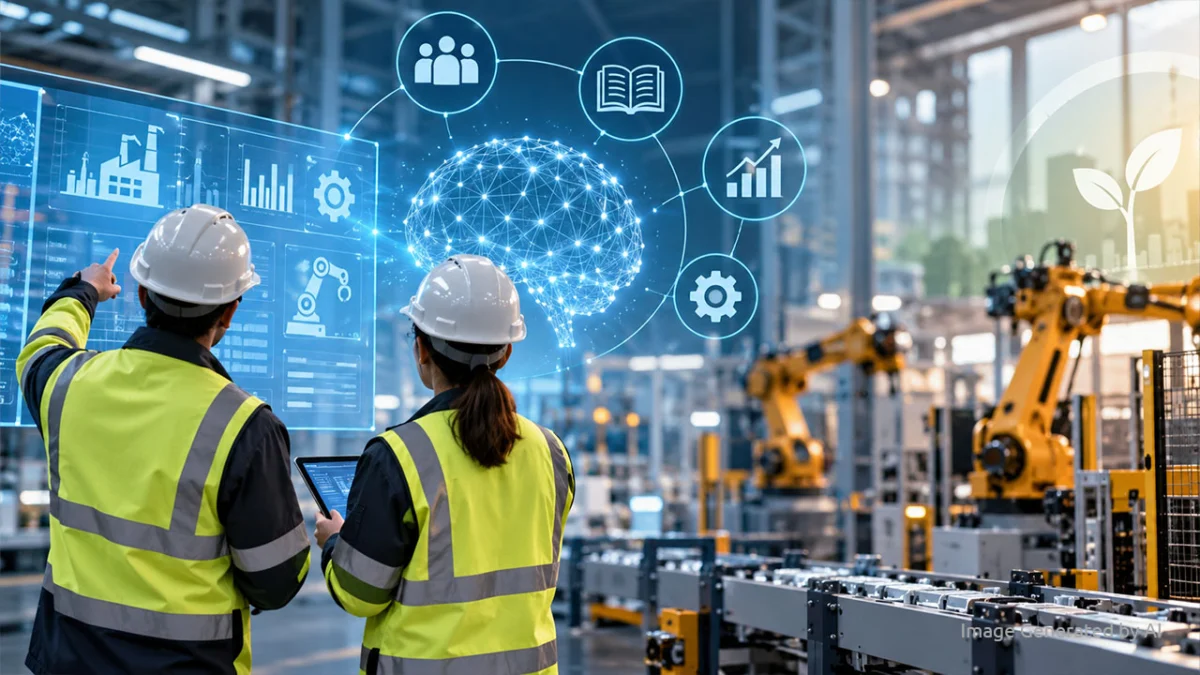
During the "From AI Pilots to Profit: Unlocking Manufacturing’s Hidden Data Advantage" session at the Industrial AI Summit 2026, industry leaders Neil Smith of Schneider Electric and Andrew Waycott of TwinThread addressed the industry’s most pressing concerns. The consensus? The future of manufacturing is not "lights-out" automation, but rather a "human-in-the-loop" model that prioritizes workforce augmentation, tribal knowledge preservation, and shared accountability.
The Core Mandate: Human-Centered AI as an ROI Engine
The traditional view of industrial ROI—often measured strictly through output increases or cost reduction—is being challenged by a more nuanced metric: "ROI + The Person."
The Actuation Loop and Strategic Oversight
Andrew Waycott, President and Co-founder of TwinThread, argues that industrial AI is only as powerful as the experts who wield it. "We are measuring how effectively we scale the knowledge of top engineers and operators," Waycott explains. In the TwinThread philosophy, the system does not act in a vacuum. When process drift occurs, the AI provides actionable recommendations, which the human operator must then approve, modify, or reject. This process creates a self-reinforcing feedback loop where the system learns from human domain expertise, effectively turning the worker into the primary driver of ROI.
Capability as an Asset
Neil Smith, Segment President of Consumer Packaged Goods at Schneider Electric, echoes this sentiment, framing workforce engagement as a prerequisite for success. In their recent white paper, Beyond the Hype: Practical AI for Competitive Consumer Goods Manufacturing, Schneider Electric emphasizes that AI must function as decision support rather than an autonomous replacement. By automating routine decision-making, AI frees workers to handle complex, creative, and strategic tasks, ultimately boosting both productivity and job satisfaction.
Chronology of an Industrial Transformation
The evolution of the shop floor is moving from reactive maintenance to intelligent, human-led orchestration. The timeline of this integration typically follows a four-stage arc:
- Data Harmonization: Establishing the baseline of "clean" data where historical operator actions define initial setpoints.
- The Feedback Phase: Operators engage with AI recommendations, and the system learns from their inputs, bridging the gap between theoretical models and real-world conditions.
- Knowledge Transfer: The systemic capture of "tribal knowledge," where years of veteran experience are digitized into accessible workflows for younger, digital-native employees.
- Scaling and Autonomy: The transition to agentic AI, which manages environmental complexities, allowing the workforce to shift focus toward high-value judgment calls and innovation.
Bridging the Expertise Gap: Veterans and Digital Natives
One of the most persistent anxieties in modern manufacturing is the "knowledge drain" caused by the retirement of seasoned veterans. As experienced experts exit the workforce, there is a risk that decades of nuance will vanish.
The Role of AI in Knowledge Preservation
Waycott identifies AI as the ideal bridge. "Tribal knowledge shouldn’t be held by a handful of experts," he notes. By embedding operational expertise into digital workflows, TwinThread’s platform ensures that critical plant knowledge remains secure and accessible to new recruits.
Lowering the Barrier to Entry
For the younger generation—digital natives who expect intuitive, tech-forward environments—AI serves as a catalyst for professional development. Neil Smith points out that while AI handles the complexity of routine tasks, it also lowers the entry barrier for new engineers. By acting as a mentorship-at-scale mechanism, AI helps transfer decades of operational experience to the next generation, ensuring that the plant remains competitive even as the workforce profile shifts.
Defining Accountability: Who Owns the Failure?
A common, albeit daunting, question posed to experts is: When an AI system acts without a human in the loop and causes a failure, who is to blame?
The answer provided by Waycott is not a search for a scapegoat, but an analysis of systemic architecture. A robust manufacturing environment requires shared safeguards:
- Data Engineers: Must guarantee the integrity and reliability of the data pipeline.
- Model Providers: Must establish automated "guardrails" and thresholds that trigger alerts when a failure is imminent.
- Operators: Must possess the training and diagnostic tools to identify anomalies and intervene before a process is disrupted.
Accountability is thus a distributed responsibility, embedded into the very workflow that connects the human to the machine.
Overcoming Cultural Resistance: Change Management Strategies
With over a quarter of CPG firms struggling with cultural resistance, the "human factor" is clearly the most significant hurdle to adoption. If operators feel threatened by technology, the implementation will fail regardless of how sophisticated the model is.
Engagement as the Antidote to Fear
Smith emphasizes that AI is not an IT project; it is a cultural evolution. To move past resistance, manufacturers should:
- Early Involvement: Engage operations and maintenance teams at the design stage, not the deployment stage.
- Focus on Augmentation: Communicate that AI is a tool to assist, not a replacement for, the human worker.
- Integrated Investment: Pair platform deployment with an equal financial commitment to change management and workforce training.
Implications: The "Lighthouse" Factory Model
Perhaps the most compelling evidence for this human-centric approach is found in Schneider Electric’s Wuhan Lighthouse factory. Often cited as a global model for talent and technology, the facility provides a blueprint for what is possible when AI is used to empower—not replace—the workforce.
Quantifiable Gains
The impact on the Wuhan facility was transformative:
- Workforce Readiness: Jumped from 20% to 76%.
- Upskilling: 56% of employees successfully transitioned to higher-value roles.
- Operational Agility: New product introduction cycles were slashed by 66.7%, dropping lead times from 36 months to 12.
- Retention: Technician turnover plummeted from 48% to 6%.
Crucially, the factory did not reduce its head count. Instead, it increased output and efficiency while significantly improving the quality of work life. The "balance" between AI and employee redundancy, therefore, is not a trade-off but a symbiosis. By using AI to automate the mundane, manufacturers can create a more resilient, capable, and satisfied workforce.
Conclusion: The Path Forward
The 2026 Industrial AI Summit made one thing clear: the future of manufacturing is not about choosing between machines and people. It is about the deliberate integration of both.
As manufacturers navigate the complexities of digital transformation, the companies that succeed will be those that treat human capability as a core asset rather than an external cost. By prioritizing transparency, investing in the workforce, and maintaining a strict "human-in-the-loop" framework, the industry can move beyond the hype and unlock a truly sustainable data advantage.
The question is no longer whether AI will transform the factory floor, but how effectively we can design that transformation to elevate the people who power it.
This article is based on insights from the Industrial AI Summit 2026. The session, "From AI Pilots to Profit: Unlocking Manufacturing’s Hidden Data Advantage," featured expert commentary from Neil Smith (Schneider Electric), Andrew Waycott (TwinThread), and François Coulloudon (TEEPTRAK Groupe), moderated by Kevin O’Donovan.