By Rebecca Jeffrey | Published in Air Cargo News
Main Facts
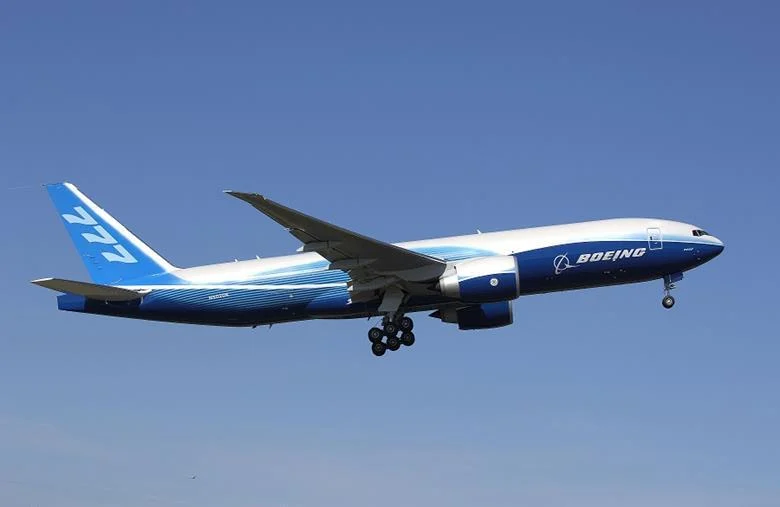
Boeing’s premier widebody cargo aircraft, the 777 Freighter (777F), continues to enjoy robust market health and sustained commercial momentum. Fresh data published by the U.S. aerospace manufacturer indicates strong ongoing demand, further bolstered by a landmark regulatory decision. The Federal Aviation Administration (FAA) recently granted Boeing a crucial emissions exemption, effectively clearing the path for the continued production, sale, and delivery of the 777F beyond its previously anticipated cutoff date at the end of 2027.
This regulatory reprieve ensures that the aircraft can remain a cornerstone of global air cargo fleets as carriers navigate an evolving and capacity-constrained marketplace. According to year-to-date figures for 2026, Boeing has secured six new 777F orders, maintaining steady production lines alongside an unfilled order backlog of 38 aircraft. Moreover, delivery metrics highlight consistent factory output, with 20 units handed over to international cargo operators so far this year.
By bridging the production timeline between the legacy 777F framework and the next-generation 777-8F, Boeing has managed to alleviate widespread industry anxieties regarding a looming widebody freighter supply shortage.
Chronology of Events and Orders
The sustained popularity of the 777F is best understood through a chronological examination of its recent order book and pivotal regulatory developments:

- December 2025: Anticipating upcoming environmental compliance hurdles, Boeing officially files an application with the FAA requesting an emissions exemption. The manufacturer specifies a target approval date of May 1 to secure the aircraft’s regulatory future past 2027.
- February 2026: Boeing releases its full-year 2025 financial and operational data, confirming a stellar preceding 12 months that saw 15 firm 777F orders and 35 aircraft deliveries.
- June 2026: Mid-year order momentum accelerates as both China Airlines and China Southern Cargo commit to the platform, each placing firm orders for two 777Fs.
- September 16, 2026: The FAA publishes its formal decision document, granting Boeing an emissions exemption that covers up to 35 additional 777F airplanes through January 1, 2031.
- September 2026: Ethiopian Airlines Group capitalizes on the market confidence generated by the FAA announcement. The carrier officially orders two 777Fs as part of a larger, milestone acquisition that also includes eight next-generation Boeing 777-8Fs, validating market speculation that had anticipated a total order of up to 10 widebody freighters.
- October 2026: Delivery metrics display continued operational rhythm. Major logistics and cargo players—specifically FedEx and Air China Cargo—each take formal delivery of one 777F unit, keeping the annualized delivery tally on track to match or approach previous high-water marks.
Supporting Data and Production Metrics
A detailed breakdown of Boeing’s production and delivery telemetry underscores the structural strength of the 777F program:
- 2026 Order Intake: Six firm orders secured year-to-date, led by commitments from China Airlines, China Southern Cargo, and Ethiopian Airlines.
- 2026 Delivery Volume: 20 aircraft successfully delivered to global operators over the first three quarters of the year, including recent handovers to FedEx and Air China Cargo.
- Backlog Status: A remaining unfilled order book totaling 38 aircraft ensures stable production visibility for the immediate future.
- Comparative Year-on-Year Performance: In 2025, Boeing successfully closed out the fiscal year with 15 firm 777F orders and an impressive 35 aircraft deliveries, demonstrating consistent manufacturing cadence.
- The Exemption Parameters: The FAA’s September 16 ruling takes effect on January 1, 2028. It permits the issuance of initial Certificates of Airworthiness for up to 35 777F airframes through January 1, 2031 (unless superseded or rescinded earlier).
Official Regulatory Responses and Industry Reactions
The decision by the FAA to grant the emissions exemption was met with immense relief across the global aviation and air cargo sectors. Without this regulatory intervention, the 777F would have faced immediate regulatory obsolescence by January 1, 2028, as the aircraft does not strictly meet newer, stringent fuel-efficiency and emissions thresholds designed to curb global carbon footprints.
In its official decision document published in mid-September, the FAA outlined the precise scope of the allowance:
"This exemption goes into effect on January 1, 2028, and applies to issuance of the first certificates of airworthiness for up to thirty-five 777F airplanes through January 1, 2031, unless sooner superseded or rescinded."
Industry analysts have noted that the ruling strikes a pragmatic balance between environmental progression and economic reality. Aviation regulators recognized that forcing an abrupt halt to 777F production before successor models were fully online and mass-produced could severely destabilize global supply chains. For airlines heavily invested in twin-engine widebody operations, the regulatory clearance provides vital operational certainty.

Implications for the Global Air Cargo Market
The convergence of steady orders, consistent delivery numbers, and the FAA’s emissions exemption carries profound strategic implications for the wider air cargo industry:
1. Averting a Widebody Capacity Crunch
For months, industry stakeholders voiced concerns regarding a potential supply bottleneck in the heavy air cargo sector. With older freighter fleets facing retirement and baseline demand for cross-border e-commerce and general cargo remaining elevated, any premature shutdown of 777F production would have severely constricted capacity. The FAA’s allowance for up to 35 additional compliant airframes guarantees that operators can continue expanding or modernizing their fleets without facing an acute equipment shortage.
2. Bridging the Gap to Next-Generation Technology
While the aviation industry is firmly committed to long-term decarbonization and the adoption of advanced, ultra-fuel-efficient platforms like the Boeing 777-8F, research, development, and certification timelines can be unpredictable. The 777F exemption acts as a vital bridge, enabling Boeing to sustain its manufacturing footprint and fulfill customer demands smoothly while the 777-8F matures and ramps up to commercial scale.
3. Sustained Confidence Among Flag Carriers and Integrators
The willingness of major international carriers—such as Ethiopian Airlines, China Airlines, and China Southern—to continue placing multi-million-dollar orders for the 777F demonstrates enduring trust in the platform’s operating economics, payload capacity, and range capabilities. Furthermore, ongoing inventory absorption by express network giants like FedEx and Air China Cargo signals that the aircraft remains a profitable and reliable workhorse for both express parcel networks and scheduled heavy freight operations.
Ultimately, Boeing’s ability to navigate environmental regulations while maintaining a healthy order book solidifies the 777F’s legacy as one of the most successful widebody cargo programs in aviation history.