




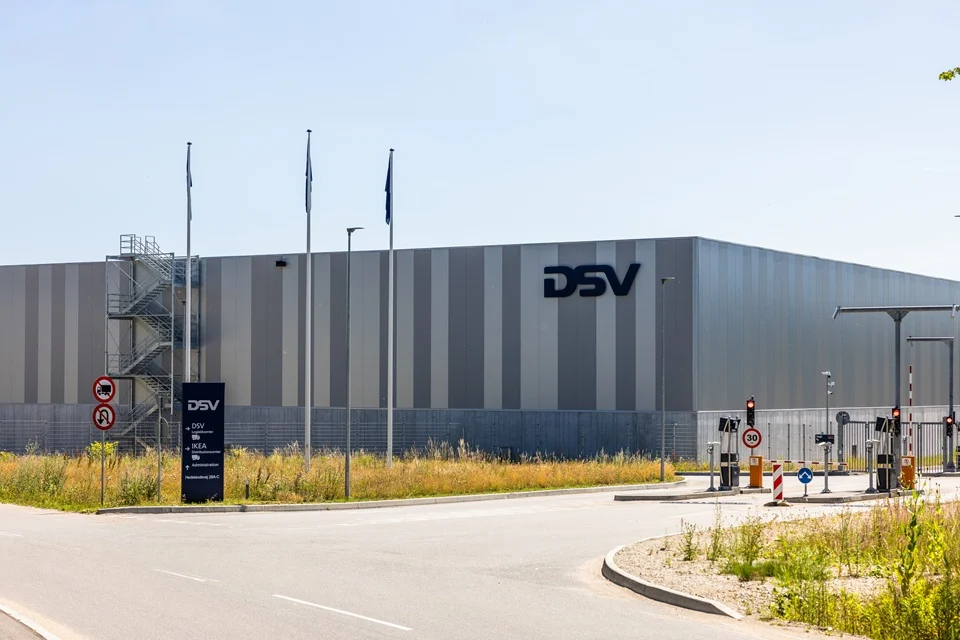
At its recent Capital Markets Day, global logistics powerhouse DSV provided a comprehensive roadmap for its future, highlighting a strategic pivot in airfreight operations and a significant shift in its technological infrastructure. As the industry faces a confluence of volatile geopolitical conditions, capacity constraints, and shifting trade patterns, DSV’s leadership outlined how the integration of DB Schenker and the adoption of proprietary AI-driven systems will define the company’s trajectory through 2030.
The State of Global Airfreight: Steady Growth Amidst Structural Shifts
Frank Sobotka, head of DSV’s Air and Sea division, presented an outlook for the air cargo sector that is characterized by cautious optimism. According to DSV’s projections, global airfreight demand is expected to grow by approximately 3% this year, aligning closely with global GDP growth forecasts. While this does not represent the explosive, "super-high" growth rates seen during the pandemic-era logistics crunch, it indicates a stable, healthy recovery for the sector.
Drivers of Demand: High-Tech and E-commerce
The primary engine behind this demand remains the robust performance of the high-tech, cloud computing, and semiconductor sectors. As global industries accelerate their digital transformation and the demand for AI hardware surges, airfreight has become the preferred mode of transport for these high-value, time-sensitive goods.
However, the e-commerce landscape is undergoing a geographic redistribution. Sobotka noted that the ending of the "de minimis" duty exemption in the United States during the first quarter of last year has fundamentally altered trade flows. Historically, the transpacific corridor dominated e-commerce volumes. Now, growth is dispersing across Europe, Latin America, the Middle East, and Africa, as shippers seek to circumvent new regulatory hurdles and optimize their supply chains to maintain margin parity.
The Capacity Crunch: A Looming Supply Challenge
A critical concern raised during the presentation was the stagnation in freighter capacity. Sobotka issued a stark warning: "There is hardly any full-freighter capacity coming in."
The Manufacturer Bottleneck
The logistics industry had pinned its hopes on next-generation freighter programs, specifically the Airbus A350F and the Boeing 777-8F. However, significant delays in these manufacturing timelines have left a vacuum in the market. While passenger travel remains high, ensuring a steady supply of bellyhold capacity, Sobotka emphasized that bellyhold space is not a panacea.
"To move larger volumes, you also need larger freighters," Sobotka explained. "This capacity is quite limited due to the fact that the manufacturers cannot satisfy the market."
For a company like DSV, which operates its own charter freighter network—handling approximately 10% of its total air cargo volumes—this lack of large-scale freighter availability represents a significant operational challenge. Without the ability to scale up through new, more efficient, and larger aircraft, the industry may face capacity constraints during peak seasons, driving up costs for shippers.
Geopolitics and the Fuel Price Equation
Beyond structural capacity, DSV identified geopolitical uncertainty as a primary risk factor. The ongoing conflicts in the Middle East have introduced significant volatility into the fuel market. Because fuel costs can account for 40% to 50% of an aircraft’s total operating expenses—depending on the specific trade lane—any sudden spike in oil prices ripples immediately through the supply chain.
DSV is closely monitoring these developments, as fuel surcharges remain the most volatile component of their service offerings. The company is actively working to mitigate these risks through network optimization and the strategic deployment of its charter network to provide more stable capacity and pricing for its key accounts.
The Digital Transformation: From CargoWise to Tango
Perhaps the most significant announcement regarding DSV’s operational strategy was the formal confirmation that the company will migrate away from CargoWise, a system that has served as the backbone of its operations for the past 15 years.
Why Tango?
In a move that signals a desire for complete operational autonomy, DSV is transitioning to "Tango," a proprietary transport management system (TMS) inherited through its acquisition of DB Schenker. The rationale is clear: DSV wants a system that is not dependent on a third-party vendor. By owning the IP, DSV believes it can tailor the software to its unique requirements, scale it more efficiently, and leverage it as a competitive differentiator.
Currently, 25% of DSV’s global volumes are already processed through Tango. The goal is to scale this across the entire organization, with the internal objective of making the system "even more productive than CargoWise ever was."
The AI Revolution: Enhancing Productivity and Customer Experience
DSV’s technological roadmap is heavily weighted toward Artificial Intelligence. The company is moving beyond simple process automation, aiming to integrate AI into every facet of the customer journey.
Key AI Use Cases:
- Instant Spot Quoting: Enhancing the speed and accuracy of pricing to allow for instant customer engagement in a high-pressure, competitive market.
- Workflow Automation: Reducing manual administrative burdens to improve data quality and free up human staff for higher-value tasks.
- Predictive Logistics: Utilizing AI to provide shipment updates, predictive ETAs, and enhanced tracking, which significantly improves the customer experience.
- Customer Support: Implementing AI-powered bots and automated support systems to resolve standard queries, ensuring 24/7 service availability.
This digital overhaul is not merely an IT project; it is a financial imperative. DSV expects that the shift to Tango, combined with the integration of AI, will be a major driver of future profitability.
Financial Implications and Future Synergy Targets
The integration of DB Schenker is a cornerstone of DSV’s long-term financial strategy. The company has set an ambitious target: by 2030, it aims to generate an additional Dkr9bn in savings, building on top of the Dkr9bn already anticipated from initial takeover synergies.
The Breakdown of Future Savings:
- Dkr6bn from Digitalization: This massive figure is expected to be achieved by leveraging AI and completing the migration to the Tango and Star TMS systems.
- Dkr3bn from Network Optimization: This will focus on the consolidation of road and logistics facilities, eliminating redundancies created by the combination of the two massive networks.
In its most recent quarterly results, DSV showcased the early success of this strategy. The acquisition of Schenker has already begun to yield benefits, while the sustained demand for technology and semiconductor shipments has provided a much-needed boost to its airfreight performance.
Implications: A New Era for Freight Forwarders
DSV’s Capital Markets Day provided a glimpse into the future of the global freight forwarding industry. The era of relying on off-the-shelf software solutions is waning for the largest players. By moving toward proprietary systems like Tango and doubling down on AI, DSV is positioning itself as a "tech-forward" logistics firm rather than a traditional freight forwarder.
The dual challenge of capacity constraints and geopolitical instability will continue to test the industry. However, by diversifying its trade lanes and aggressively pursuing internal efficiencies through digitalization, DSV is betting that it can outpace the market growth rate. As the company continues to absorb the vast operations of DB Schenker, the industry will be watching closely to see if this pivot to internal systems and AI will indeed create the "unbeatable" productivity and customer value that leadership envisions for 2030.
For shippers, these changes suggest a future where logistics is faster, more transparent, and more predictable—provided the underlying capacity issues in the airfreight market can be solved by the manufacturing sector. For now, DSV remains firmly on its path of expansion, digital sovereignty, and operational excellence.