WASHINGTON — In the wake of one of the most devastating industrial accidents in recent memory, federal safety officials are issuing an urgent, nationwide reminder to chemical facility and industrial plant operators: equipment integrity must be restored immediately upon the discovery of deficiencies.
The Chemical Safety and Hazard Investigation Board (CSB) is pressing forward with its rigorous, ongoing probe into a catastrophic tank failure that claimed multiple lives and left others permanently altered. The disaster, which unfolded at the Nippon Dynawave Packaging Co. LLC pulp and paper mill located in Longview, Washington, has laid bare a terrifying intersection of ignored warnings, deferred maintenance, and the immense destructive potential inherent in heavy industrial manufacturing.
As investigators pore over metallurgical data, maintenance logs, and operational timelines, the tragedy has sparked a broader national conversation regarding corporate accountability, regulatory oversight, and the ethical obligation of industrial employers to prioritize human life over continuous production.
Main Facts of the Disaster
The catastrophic sequence of events began on the morning of May 26, shaking the Pacific Northwest industrial community and sending shockwaves through the American manufacturing sector. The incident occurred at the sprawling Nippon Dynawave Packaging Co. LLC facility in Longview, Washington—a prominent hub for pulp and paper production.
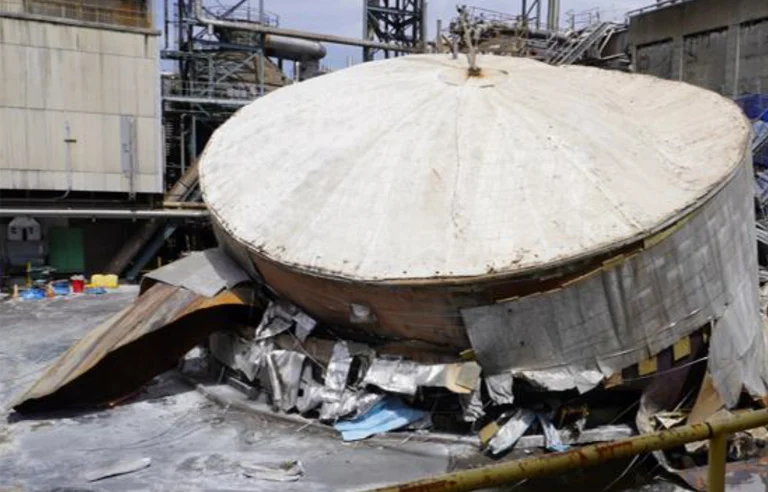
Without warning, an atmospheric storage tank structural failure occurred, violently breaching its containment walls and unleashing an estimated 900,000 gallons of a volatile, intensely hazardous substance known in the industry as "white liquor."
According to official incident documentation compiled by the Washington State Department of Ecology, white liquor is a highly corrosive, alkaline solution traditionally manufactured from a mixture of sodium hydroxide and sodium sulfide. The fluid possesses a staggering pH level of approximately 14—a rating directly comparable to industrial-strength lye. Contact with a substance of this alkalinity does not merely irritate skin; it causes immediate, devastating chemical burns, rapid tissue destruction, and poses grave systemic threats to human anatomy upon contact or inhalation of associated vapors.
The physical release was swift and overwhelming. The wall of caustic fluid swept through the operational area, tragically resulting in the deaths of 11 workers. An additional three individuals sustained severe, life-altering injuries, requiring intensive emergency medical intervention and long-term hospitalization. The sheer volume of the release also presented an immediate environmental hazard, threatening local ecosystems and demanding rapid containment and neutralization efforts by emergency response teams.
Chronology of Neglect: A Timeline to Catastrophe
Perhaps the most troubling aspect of the Longview disaster, as revealed by preliminary federal investigations, is that the catastrophic tank failure was not an unforeseeable "black swan" event. Rather, it was the culmination of months of documented warnings that were allegedly overlooked, dismissed, or deprioritized.
Pre-Incident Inspections and Warnings
- July (Approximately 10 Months Prior to the Incident): An external inspection of the doomed atmospheric storage tank was conducted. The findings were unambiguous: inspectors discovered "significant thinning below the minimum safe thickness in the lower regions of the tank." This metric indicates that the physical steel walls of the vessel had degraded past the structural threshold required to safely withstand the hydrostatic pressure of its contents.
- October (2025): Additional evaluations and monitoring reaffirmed the earlier troubling conclusions. The tank was demonstrably degrading, yet it continued to house hundreds of thousands of gallons of hazardous chemical solutions.
- February: A subsequent review of the tank’s condition again arrived at the exact same conclusion—the vessel was suffering from critical structural thinning.
Despite these repeated, glaring red flags flashing across a span of nearly a year, federal investigators report that Nippon Dynawave failed to take decisive corrective action. The company reportedly did not conduct a thorough internal inspection, failed to execute necessary structural repairs or plate replacements, and—most critically—refused to remove the compromised tank from active service. Instead, operations continued as normal, placing workers in the shadow of an industrial ticking time bomb.
Supporting Data and Technical Analysis
To fully comprehend the magnitude of the Longview incident, one must examine the engineering principles governing atmospheric storage tanks and the specific properties of the chemicals they hold.
The Engineering Perspective
During press briefings and official releases, CSB Investigator-in-Charge Drew Sahli defined the core engineering threshold at the heart of the disaster. "The minimum safe thickness is the amount of material necessary for an atmospheric storage tank to safely contain its contents," Sahli explained.
In industrial settings, tanks are engineered with a specific corrosion allowance—extra metal thickness built in to account for the gradual wearing away of the walls by aggressive chemical agents over time. However, once metal loss exceeds this calculated safety margin, the structural integrity of the vessel becomes compromised. Without immediate remediation, such as welding reinforcement plates, applying internal protective coatings, or completely replacing the compromised shell courses, the tank loses its ability to resist hoop stress generated by the liquid volume.
Chemical Hazards of White Liquor
The fluid contained within the failed vessel—white liquor—plays a vital role in the Kraft paper pulping process, where it is used to dissolve lignin and separate wood fibers. However, its chemical makeup makes it exceptionally dangerous:
- Sodium Hydroxide (Caustic Soda): Causes severe liquefactive necrosis in human tissue, breaking down proteins and fats in skin and flesh, leading to deep, slow-healing chemical burns.
- Sodium Sulfide: Hydrolyzes to form toxic hydrogen sulfide-related compounds, presenting both inhalation hazards and systemic toxicity risks.
- Extreme pH (14): At the absolute maximum end of the alkalinity scale, capable of rapidly degrading organic matter and destroying protective barriers.
When 900,000 gallons of this boiling or near-boiling caustic slurry are suddenly introduced to an open environment, it instantly vaporizes into hazardous mists and surges outward as an unstoppable wave, overwhelming personal protective equipment and trapping workers in its path.
Official Responses and Regulatory Scrutiny
The disaster has drawn intense scrutiny from federal safety watchdogs, state environmental regulators, and labor advocates alike. The Chemical Safety Board, an independent federal agency charged with investigating industrial chemical accidents, has made it clear that this incident represents a systemic failure of safety management systems.
"Our investigation is examining why the tank remained in service without either being repaired or operated under reduced conditions," stated CSB Supervisory Investigator Mark Wingard. This line of inquiry points directly to operational decision-making. In standard engineering practice, when a tank is found to have structural deficiencies but immediate repair is impossible, standard protocol dictates derating the tank—lowering the liquid level to reduce internal pressure—or taking it offline entirely until safety can be verified.
The CSB has emphasized that the investigation remains active and comprehensive. Investigators are reviewing corporate safety policies, maintenance records, communication logs between plant management and inspection contractors, and historical training documentation.
"Complete findings, analyses and recommendations, if appropriate, will be detailed in the CSB’s final investigation report," the agency noted in a statement. Once finalized, these recommendations could form the basis for stricter regulatory mandates regarding mandatory inspection intervals, mandatory de-commissioning triggers for degraded vessels, and enhanced enforcement mechanisms across the pulp, paper, and broader chemical processing industries.
Broader Implications for Industrial Safety
The tragedy at Nippon Dynawave Packaging Co. LLC serves as a grim watershed moment for American manufacturing, carrying profound implications for plant operators, safety professionals, and regulatory bodies nationwide.
A Clarion Call for Cultural Shifts in Safety
The central takeaway from the CSB’s preliminary findings is the dangerous disconnect between identifying a hazard and acting upon it. Inspections are only as valuable as the response they trigger. Simply generating reports of wall thinning, corrosion, or structural fatigue does nothing to protect workers if those reports are left to gather dust in administrative filing cabinets while production schedules take precedence.
Industrial safety experts note that companies must foster a robust "safety culture"—an organizational environment where workers and engineers feel empowered to halt operations when imminent hazards are detected, without fear of economic retaliation or production pressure.
Economic Pressures vs. Worker Safety
In capital-intensive industries like pulp and paper manufacturing, taking a major storage vessel offline can result in significant financial downtime. A temporary or permanent mill shutdown to replace tank panels or reroute chemical lines disrupts supply chains and impacts quarterly revenue. However, the Longview disaster demonstrates that the true cost of deferred maintenance is infinitely higher, measured not in dollars and cents, but in human lives, shattered families, and irreversible trauma.
Anticipated Regulatory Reform
As the CSB continues its multi-month investigation, labor unions and industrial safety coalitions are already utilizing the incident to lobby for tighter federal oversight. Calls are mounting for:
- Mandatory Compliance Enforcement: Transforming industry "guidelines" regarding atmospheric storage tank inspections into strictly enforced regulatory standards with severe penalties for non-compliance.
- Whistleblower Protections: Enhancing legal safeguards for plant personnel who report unaddressed structural defects to regulatory authorities like OSHA or the CSB.
- Transparent Reporting: Requiring industrial facilities to publicly register the status and age of high-hazard chemical storage vessels, enabling local emergency planners to better prepare for worst-case scenarios.
Conclusion
The ghosts of the eleven workers lost on May 26 in Longview, Washington, loom large over the industrial landscape. As chemical facility operators nationwide review their own maintenance logs in the wake of the CSB’s urgent warnings, the core message remains undeniable: equipment integrity is not merely a box to be checked on a compliance form—it is the literal foundation upon which worker survival depends. Until corporations universally adopt a zero-tolerance policy toward known structural defects, tragedies like the Nippon Dynawave disaster will remain a haunting reminder of the devastating price of inaction.