By: Building Automation Systems Editorial Desk
Published: Facility Management & Building Automation Insights
Main Facts: The New Standard in Indoor Air Quality
The paradigm of commercial and institutional facility management has fundamentally shifted. As the global community moves beyond the acute phases of the COVID-19 pandemic, building operators, facility managers, and mechanical engineers continue to grapple with the "new normal" of indoor air quality (IAQ) management. Among the myriad strategies deployed to safeguard occupants—ranging from increased outdoor air ventilation rates to ultraviolet germicidal irradiation (UVGI)—enhanced mechanical air filtration has emerged as one of the most cost-effective, practical, and impactful solutions for reducing pathogen transmission within enclosed spaces.
However, the implementation of improved filtration is not a one-size-fits-all proposition. Upgrading a building’s HVAC filtration system requires a nuanced understanding of equipment capabilities, static pressure drops, fan motor capacities, and specific facility applications. Installing an overly restrictive filter in an legacy system designed only for low-efficiency media can result in catastrophic equipment failure, reduced airflow, compromised thermal comfort, and skyrocketing energy bills.
To help facility operators navigate these complex technical waters, industry experts emphasize that the ideal filtration level depends entirely on the specific equipment application and operational parameters. By addressing frequently asked questions (FAQs) regarding MERV (Minimum Efficiency Reporting Value) ratings, particle capture physics, and maintenance schedules, building automation specialists aim to empower operators to make informed, data-driven decisions that balance occupant safety with mechanical efficiency.
Chronology: The Evolution of HVAC Filtration Standards During a Global Crisis
Early 2020: The Initial Emergency Response
When the SARS-CoV-2 virus brought the world to a halt in early 2020, facility managers were thrust into the front lines of public health defense. Initially, guidance from public health agencies like the Centers for Disease Control and Prevention (CDC) and the World Health Organization (WHO) focused primarily on surface sanitation and social distancing. However, as mounting scientific consensus confirmed that the virus is primarily airborne—transmitted via aerosolized droplets and particles exhaled by infected individuals—attention rapidly pivoted to building mechanical systems.
Early guidelines advised simply "increasing outdoor air ventilation" wherever possible. While effective at diluting indoor contaminants, this strategy presented immense thermodynamic challenges, particularly in extreme climates where conditioning massive volumes of untreated outdoor air placed an unsustainable burden on central heating and cooling plants.
Late 2020 to 2021: The Pivot to Targeted Filtration
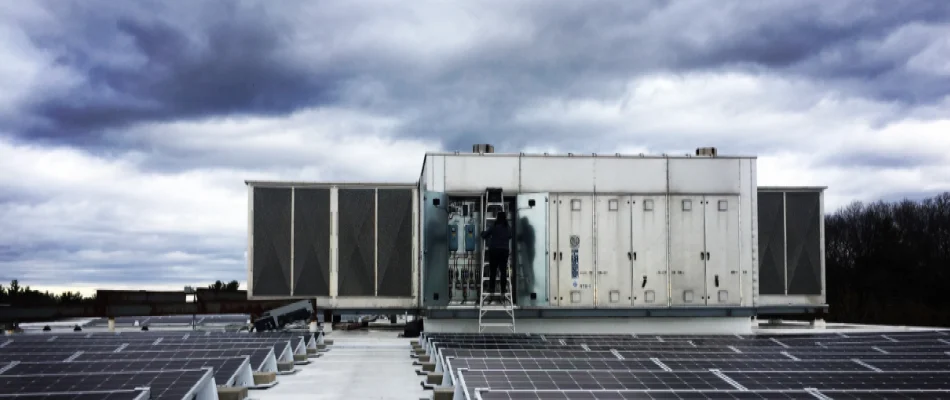
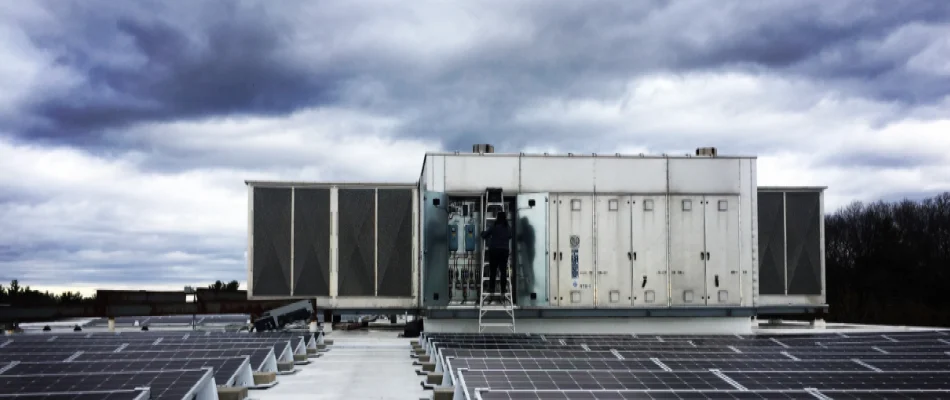
Recognizing the limitations of pure outdoor air flushing, ASHRAE (the American Society of Heating, Refrigerating and Air-Conditioning Engineers) and other governing engineering bodies updated their guidance. The focus shifted toward multi-layered IAQ defense strategies, prominently featuring upgraded filtration. Facility operators were urged to evaluate their existing air handling units (AHUs) and rooftop units (RTUs) to determine if they could accommodate higher-efficiency filters—specifically targeting the MERV 13 threshold, which quickly became the gold standard for commercial and educational spaces.
2022 to Present: The "New Normal" and Permanent Best Practices
Today, enhanced filtration is no longer viewed as a temporary emergency measure but as an integral pillar of modern building management. The post-pandemic era has codified these practices into standard operating procedures. Modern facility management software and building automation systems (BAS) now routinely monitor filter differential pressures to optimize replacement schedules dynamically, ensuring that energy efficiency is maintained without sacrificing occupant health.
Supporting Data: Understanding MERV Ratings and Particle Physics
To make intelligent decisions regarding HVAC filter upgrades, facility operators must first understand the fundamental science of particle sizing and how filtration efficiency is measured.
What is the Particle Size of the COVID-19 Virus?
The SARS-CoV-2 virus particle itself is remarkably small, measuring approximately 0.1 micrometers ($mu m$) in diameter. To the untrained eye, this suggests that capturing the virus requires ultra-high-efficiency particulate air (HEPA) filters capable of trapping sub-micron particles.
However, virologists and aerosol scientists point out that humans do not exhale naked, isolated viral particles. Instead, the virus is expelled encapsulated in respiratory droplets and droplet nuclei generated through breathing, talking, coughing, and sneezing. These respiratory droplets typically range from 1.0 to 3.0 micrometers ($mu m$) in size. This critical biological fact changes the engineering equation: filters do not necessarily need to capture a 0.1-micrometer particle directly to be effective against COVID-19; they must be exceptionally efficient at capturing particles in the 1.0 to 3.0 micrometer range.
What Do MERV Filter Ratings Mean?
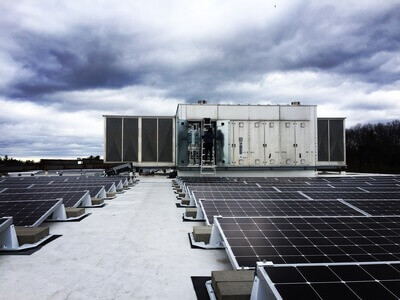
Established by ASHRAE Standard 52.2, the Minimum Efficiency Reporting Value (MERV) scale ranges from 1 to 16. The rating reflects a filter’s ability to capture particles between 0.3 and 10 micrometers in size. Higher MERV ratings indicate finer mesh densities and superior capture efficiencies across all targeted particle brackets.
| Filter Rating | Efficiency at Capturing COVID-Sized Particulates (1–3 Micrometers) | Operational Notes & Suitability |
|---|---|---|
| MERV 1 – 7 | Not Effective | Captures large dust, pollen, and lint. Inadequate for pathogen mitigation. Typical in residential or low-requirement spaces. |
| MERV 8 | 20% | Standard commercial baseline for basic dust and debris protection. Minimal viral mitigation. |
| MERV 9 | 35% | Moderate efficiency increase; still insufficient for advanced health-focused IAQ goals. |
| MERV 10 | 50% | Captures half of targeted particulates; common in light commercial retrofits. |
| MERV 11 | 65% | Offers solid intermediate protection, catching nearly two-thirds of relevant droplet nuclei. |
| MERV 12 | 80% | High intermediate performance; frequently utilized in modern commercial offices and retail spaces. |
| MERV 13 | 85% (Recommended) | The ASHRAE-recommended baseline for viral mitigation. Strikes an optimal balance between high capture efficiency and acceptable pressure drop. |
| MERV 14 | 90% | High-efficiency filtration suitable for denser occupancy zones and premium commercial real estate. |
| MERV 15 | 90% | Advanced filtration often deployed in outpatient healthcare facilities and specialized laboratories. |
| MERV 16 | 95% | Near-HEPA performance; utilized in inpatient healthcare settings, cleanrooms, and critical containment zones. |
(Note: Represents MERV ratings per ASHRAE 52.2-2012 testing standards.)
Official Responses and Engineering Guidelines
Industry authorities and professional engineering associations have established clear protocols to guide facility managers through the complexities of filtration upgrades.
The ASHRAE Epidemic Task Force Position
The ASHRAE Epidemic Task Force has consistently recommended that commercial building operators upgrade their central air filtration to MERV 13 or the highest MERV rating compatible with the existing equipment. This qualified recommendation is crucial: engineering bodies strongly caution against blindly installing a MERV 13 or MERV 14 filter into an older air handler designed only for MERV 8 media without first consulting an HVAC professional.
When a filter’s efficiency increases, its density increases as well. This creates a higher resistance to airflow, known as static pressure drop. If a system’s fan motors lack the static pressure capability to push air through a denser filter, total system airflow drops precipitously. This reduction in airflow can cause cooling coils to freeze, lead to thermal discomfort in tenant spaces, overwork fan motors, and inadvertently increase building energy consumption.
The Role of Building Automation Systems (BAS)
Modern building automation integrators advocate for the integration of smart sensors to monitor filter health. Differential pressure sensors installed across filter banks can measure the exact pressure drop in real time. Rather than relying on rigid, calendar-based replacement schedules—which often result in either throwing away clean filters too early or running clogged filters for months—BAS platforms can trigger automated maintenance alerts the moment a filter reaches its terminal pressure drop.
Implications for Facility Operations and Future Management
The long-term implications of elevated filtration standards extend far beyond the immediate context of COVID-19 mitigation. Facilities that have upgraded their HVAC infrastructure are reaping secondary benefits that profoundly impact building valuation, tenant retention, and operational efficiency.
1. Enhanced Overall Indoor Environmental Quality (IEQ)
While the initial impetus for upgrading to MERV 13 filters was viral mitigation, building occupants are experiencing dramatic reductions in other airborne contaminants. Fine particulate matter (PM2.5), wildfire smoke, urban smog, pollen, and mold spores are captured with significantly higher efficiency. This leads to a healthier indoor environment, lower rates of occupant allergic reactions, reduced absenteeism, and demonstrable boosts in cognitive function and workplace productivity.
2. Energy Consumption and Mechanical Lifecycle Management
Balancing filtration efficiency with energy consumption remains a core challenge for facility managers. Higher-MERV filters consume more fan energy because the motor must work harder to overcome the pressure drop. To mitigate this, forward-thinking operators are investing in:
- VFDs (Variable Frequency Drives): Allowing fans to dynamically adjust speed to maintain required airflow as filters accumulate particulate matter.
- Extended Surface Area Filters: Utilizing pleated filters with deeper pockets or V-bank configurations, which offer greater surface area, reducing face velocity and lowering pressure drops compared to standard flat filters of the same efficiency rating.
3. Financial and Reputational Value
In the post-pandemic commercial real estate market, indoor air quality has become a prime leasing differentiator. Prospective corporate tenants scrutinize a building’s HVAC specifications just as carefully as its location or rental rates. Buildings certified with high-tier filtration and transparent IAQ monitoring command higher occupancy rates and premium lease valuations.
Conclusion and Next Steps for Facility Operators
Navigating the intricacies of HVAC filtration requires a balanced approach that weighs public health imperatives against mechanical realities. While upgrading to a MERV 13 filter is the universally recommended benchmark for effective viral and particulate mitigation, facility managers must never bypass a comprehensive engineering assessment of their existing rooftop units and central air handlers.
If you have questions regarding the proper level of filtration for your specific HVAC system, equipment limitations, or how to integrate differential pressure monitoring into your building automation infrastructure, reach out to BAS (Building Automation Systems) today. Expert engineering support ensures that your facility achieves peak indoor air quality without sacrificing mechanical integrity or energy efficiency.