In the high-stakes environment of modern manufacturing, few utilities are as indispensable—or as frequently overlooked—as compressed air. It is the lifeblood of the factory floor, powering pneumatic tools, driving automated assembly lines, facilitating material handling, and ensuring precision in sectors ranging from food and beverage processing to heavy metal fabrication.
Yet, there is a fundamental paradox regarding compressed air: while it is treated as a basic utility akin to electricity or water, it is not "found" in nature. It must be manufactured. This energy-intensive process transforms atmospheric air into a high-pressure medium, a transformation that carries significant costs if not managed with precision. When an industrial compressed air system operates optimally, it is virtually invisible; when it fails, the entire production chain grinds to a halt.
Main Facts: The Anatomy of a System
A compressed air system is not merely a compressor housed in the corner of a facility. It is an integrated, interconnected network designed to generate, treat, store, and distribute energy. The fundamental workflow—Atmospheric Intake → Compression → Treatment → Storage → Distribution → Point of Use—is a sophisticated engineering challenge.
The primary components of this system include:
- The Compressor: The heart of the system, responsible for reducing air volume to increase pressure.
- Air Receivers (Storage): Vital buffers that stabilize pressure and reduce the frequency of compressor cycling.
- Air Treatment: Dryers, filters, and drains that remove moisture, oil, and particulates that could damage downstream equipment.
- Distribution Networks: The piping, valves, and regulators that deliver the air to its destination.
- Controls & Monitoring: The intelligence layer that ensures the system responds dynamically to fluctuating plant demands.
The efficacy of these systems is measured by two critical, often misunderstood metrics: Flow (measured in cubic feet per minute, or CFM) and Pressure (measured in pounds per square inch gauge, or PSIG). Achieving the perfect equilibrium between these two is the hallmark of a high-performance facility.
Chronology: The Lifecycle of Compressed Air
To understand the complexity of the process, one must track the air from intake to end-use.
- The Intake Phase: Ambient air is drawn into the system. This stage is highly sensitive to environmental factors; air that is hot, dirty, or humid at the intake will require significantly more treatment downstream.
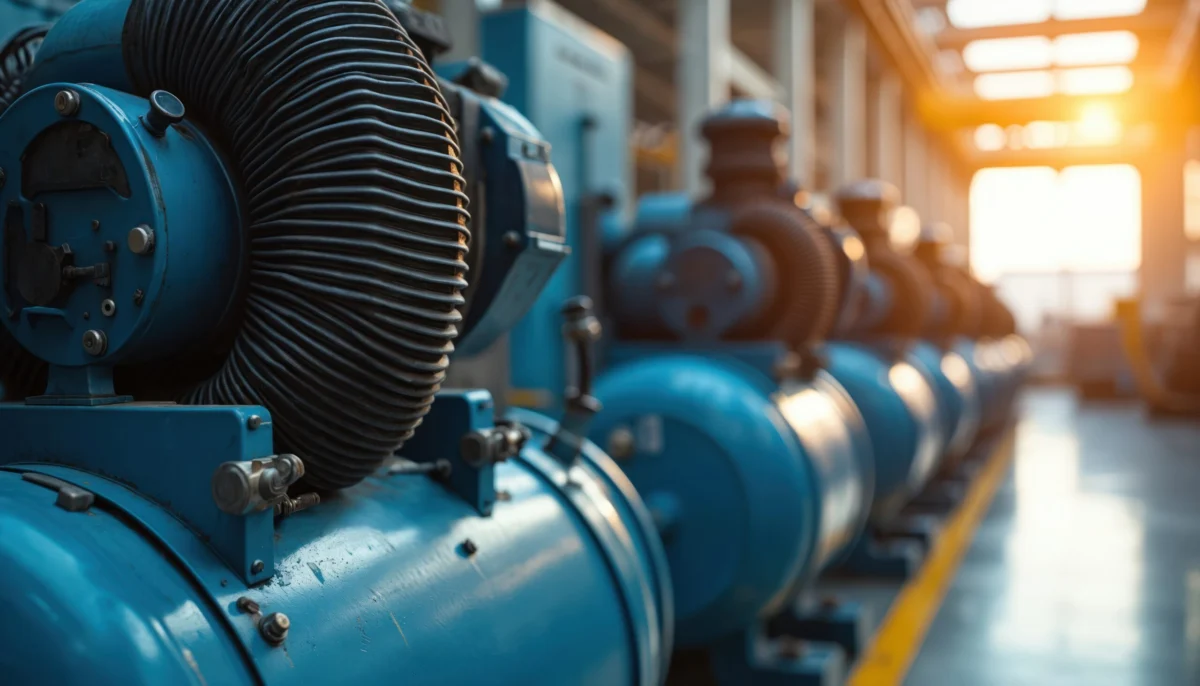
- The Compression Phase: Through various technologies—rotary screw, reciprocating, or centrifugal—the air is pressurized. This process generates significant heat as a byproduct of thermodynamics.
- The Treatment Phase: Raw compressed air is hot and saturated with moisture. Before entering the distribution network, the air must pass through aftercoolers, dryers, and multi-stage filtration to reach the required purity level, often dictated by ISO 8573-1 standards.
- The Distribution Phase: Air is routed through a network of pipes. This is where most efficiency is lost; friction from undersized piping, unnecessary bends, and the "silent killer"—leaks—can cripple the system’s energy performance.
- The Application Phase: The air reaches the pneumatic equipment. If the pressure is too low, the tools perform poorly; if it is too high, energy is wasted and equipment experiences accelerated wear.
Supporting Data and Technical Considerations
Selecting the correct compressor technology is not a "one-size-fits-all" endeavor. It requires an audit of the facility’s demand profile.
- Rotary Screw Compressors: Ideal for facilities requiring a continuous, steady supply of air. They offer high reliability and are available in fixed-speed or variable-speed drive (VSD) configurations.
- Reciprocating Compressors: Best suited for intermittent, low-demand, or high-pressure applications where a continuous run is not necessary.
- Centrifugal Compressors: Reserved for large-scale operations requiring high volumes and steady, high-pressure output.
The decision between fixed-speed and variable-speed drives is often where the most significant operational savings are found. A fixed-speed compressor operates at a set motor speed, often resulting in "blow-off" or frequent cycling during low-demand periods. Conversely, a VSD compressor adjusts its motor speed to match actual plant demand, which can lead to substantial energy savings in facilities with fluctuating production schedules.
Official Industry Perspectives on Efficiency
Industry experts consistently emphasize that "bigger is not better." Oversizing a compressor is a common, costly mistake that leads to inefficient part-load operation and high electricity bills.
The U.S. Department of Energy and leading industrial engineering firms suggest a "Systems Approach" to compressed air. Rather than replacing a compressor, facility managers should first investigate the Demand Side.
"The most efficient compressor is the one that doesn’t have to run because the system is leak-free and the demand is optimized," says one industry analyst. Official guidance highlights that leak detection programs can recover 20% to 30% of a facility’s compressed air output. Similarly, lowering the system pressure by just 2 PSI can often result in a 1% reduction in total energy consumption.
The Critical Role of Maintenance and Monitoring
Modern digital monitoring tools have changed the landscape of compressed air management. Previously, a drop in pressure was only noticed when a production machine stalled. Today, sensors track flow, temperature, and dew point in real-time, sending alerts before a total failure occurs.
Maintenance is not merely about changing oil. It involves:
- Filter Maintenance: Clogged filters create pressure drops, forcing the compressor to work harder to deliver the same amount of air.
- Drain Management: Inefficient drains can allow moisture to accumulate, leading to rust in the distribution pipes and contamination of end products.
- Leak Audits: Regular ultrasonic leak detection is the single most effective maintenance activity a plant can perform.
Implications for Future Industrial Growth
As industries shift toward Industry 4.0 and smart manufacturing, the compressed air system must evolve from a static utility to a connected, data-driven asset.
Sustainability and ESG: Compressed air is often the single largest consumer of electricity in a factory. Improving its efficiency is the most direct path to reducing a company’s carbon footprint and energy overhead.
Scalability: When designing for the future, engineers must account for growth. However, this should not be done by installing massive excess capacity. Instead, a modular approach—using multiple, smaller compressors that can be brought online as demand grows—offers greater flexibility and energy efficiency than a single, oversized unit.
Quality Standards: As regulations in food, beverage, and pharmaceutical industries tighten, the requirement for "oil-free" or "food-grade" air becomes more stringent. The design of the air treatment chain is now as important as the compressor itself.
Conclusion: Achieving the "Invisible" Utility
The ultimate goal of any industrial facility manager is to ensure that the compressed air system is so reliable that it never enters the conversation. When the equipment is properly sized, the leaks are patched, the treatment is calibrated to the specific needs of the process, and the distribution network is optimized, the system operates as a quiet, efficient, and reliable backbone of production.
Investing in a compressed air system is a long-term commitment. It requires moving beyond the initial capital expenditure mindset to one of total cost of ownership (TCO). By balancing current production needs with future expansion, and by viewing the system as a holistic network rather than a collection of parts, manufacturers can ensure that their most important utility remains, as it should be, entirely out of sight and out of mind.