LONDON — Mergers, acquisitions, and divestitures (M&A) remain among the most daunting undertakings in the corporate sphere. While executive boards and chief financial officers often dominate the headlines during mega-deals—focusing on market share, stock valuation, and high-level strategic alignment—the operational reality of bringing two corporate giants together frequently lands squarely on the shoulders of the Chief Procurement Officer (CPO).
As corporate consolidation accelerates across global markets, procurement’s role in realizing post-merger value has evolved from a back-office administrative function to a critical driver of deal success. Yet, the path to integration is fraught with risk. Without early, disciplined intervention, promised synergies can evaporate, culturally mismatched supply chains can fracture, and top-tier talent can walk out the door.
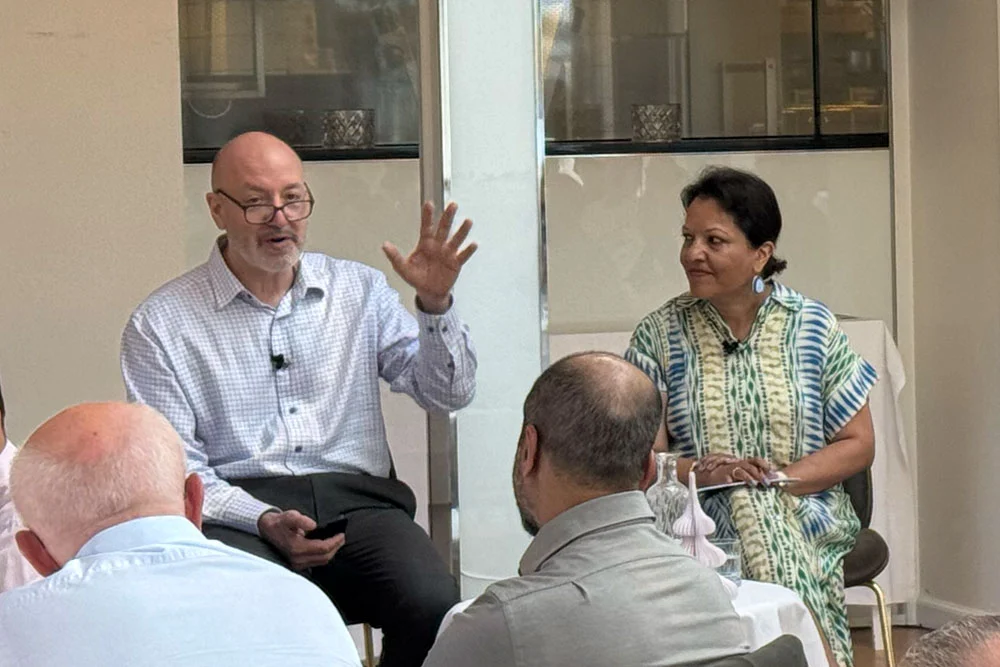
To shed light on these high-stakes transitions, the global CPO community recently convened to dissect the complex mechanics of procurement-led integration. Drawing from firsthand experiences—most notably insights from Chandranath Chakraborty, former Asia-Pacific procurement head at The Walt Disney Company—industry leaders have established a vital framework. For any CPO about to embark on a complex M&A journey, the consensus is clear: success begins by answering three foundational questions.
Main Facts: The Procurement Imperative in Mega-Deals
At the core of the recent CPO community discussions is a stark reality: M&A deals frequently fail to deliver their anticipated financial returns. Industry studies consistently show that a significant percentage of mergers destroy shareholder value rather than create it. While integration failures are often attributed to clashing corporate cultures or poor strategic fit, procurement breakdowns play a disproportionately large role in these shortfalls.
The stakes were vividly highlighted by Chakraborty, who shared lessons from his frontline involvement in Disney’s monumental $71.3 billion acquisition of 21st Century Fox—a transaction originally targeted to unlock approximately $2 billion in cost synergies. In deals of this magnitude, procurement teams are expected to extract massive savings through supplier rationalization, contract harmonization, and economies of scale.
However, Chakraborty and other CPOs pointed out that procurement is too often brought into the deal lifecycle too late. When CPOs are treated as implementers of a pre-determined financial target rather than strategic architects of the integration, the stage is set for operational friction.
The primary takeaways center on three critical pillars of M&A integration:
- Synergy Validation: Uncovering where savings genuinely reside before locking in unrealistic financial targets.
- Operating Model and Structure: Designing a unified procurement organization that harmonizes distinct corporate cultures and supply bases without succumbing to internal politics.
- Human Capital Management: Retaining top-tier procurement talent during times of profound organizational uncertainty.
Chronology: How the CPO Community Unpacked M&A Best Practices
The conversation surrounding procurement’s evolving role in M&A has unfolded over a series of intensive community forums, reflecting a growing urgency among supply chain leaders facing unprecedented market consolidation.
Phase One: The Initial Debate (Early This Year)
Earlier this year, a large assembly of the CPO community gathered to debate the fundamental role procurement must play during corporate restructuring. The room was divided into three distinct cohorts: those who had recently navigated an M&A ordeal, those currently caught in the crucible of integration, and those who—often unbeknownst to them at the time—were about to embark on one.
The sentiment during this initial meeting was frank and introspective. Attendees shared horror stories of misaligned timelines, redundant supplier databases, and cultural friction between merging entities. It became glaringly obvious that while finance and legal teams had well-worn playbooks for mergers, procurement integration was often improvised on the fly. The community recognized an urgent need for standardization, leading to a deeper, more structured exploration of the topic.
Phase Two: The Disney-Fox Case Study (Last Week)
Building on the momentum of the earlier discussions, the CPO community reconvened to examine a real-world masterclass in mega-deal integration. Chandranath Chakraborty took center stage to unpack the intricate procurement dynamics behind The Walt Disney Company’s acquisition of 21st Century Fox.
Chakraborty moved past the glossy PR narratives of the multi-billion-dollar deal to discuss the gritty, tactical realities of merging two global media powerhouses. By breaking down the $2 billion synergy target into manageable, operational components, he provided a masterclass in how procurement leadership must operate under extreme pressure. Rather than offering a generic checklist, Chakraborty framed the integration around three profound questions that every CPO must answer before signing off on a merger strategy.
Supporting Data and Frameworks: The Anatomy of M&A Failure and Success
To understand why Chakraborty’s three questions are so vital, one must examine the empirical data surrounding M&A failures. According to various economic and management studies, between 70% and 90% of mergers fail to achieve their stated financial goals.
In procurement-heavy industries, the roots of these failures can typically be traced back to three systemic flaws, which align precisely with the challenges Chakraborty outlined during his presentation:
1. The Synergy Trap: Chasing Phantoms
In the rush to satisfy Wall Street and appease shareholders, executive leadership teams routinely establish aggressive cost-reduction targets—such as the $2 billion goal in the Disney-Fox transaction—long before a comprehensive, bottom-up analysis of the combined spend data has been conducted.
When savings targets are set arbitrarily, procurement teams are forced into a box. Instead of optimizing the supply base to create long-term value, teams spend disproportionate time and energy chasing a static financial "goal" that may bear little resemblance to reality. This mismatch leads to suboptimal decisions—such as canceling high-value vendor contracts prematurely or forcing unfavorable terms on critical suppliers—ultimately eroding enterprise value rather than building it.
2. Cultural and Structural Clashes
Merging two distinct corporate entities means integrating two entirely different operating models, supply bases, geographical footprints, and technological infrastructures. A procurement organization is only as strong as its processes and people, but the integration process is frequently hijacked by internal corporate politics.
In many integrations, the loudest, most established internal voices win out simply because of their organizational weight or tenure, not because they are advocating for the most elegant or efficient solution. This political maneuvering can result in fragmented systems, duplicated efforts, and a protracted transition period that drains organizational energy.
3. The Talent Exodus
M&A announcements inevitably trigger anxiety among employees regarding job security, reporting lines, and corporate culture. In specialized fields like procurement and supply chain management—where talent is scarce and highly sought after—uncertainty is toxic.
Data shows that high-performing employees are often the first to leave an organization undergoing turbulent restructuring if they lack clarity about their future. When top-tier procurement professionals exit mid-merger, institutional knowledge is lost, supplier relationships are destabilized, and synergy realization grinds to a halt.
Official Perspectives and Expert Insights
The insights shared by Chakraborty resonate deeply with broader industry observations regarding the changing mandate of the modern CPO. Procurement leaders are no longer viewed merely as tactical cost-cutters; they are strategic orchestrators of corporate resilience.
Industry observers note that successful M&A integration requires CPOs to act as diplomatic bridges between merging executive boards and the operational realities of the supply chain. When asked about the cultural hurdles of integration, veteran supply chain executives emphasize that processes and software are easy to merge compared to human habits and corporate values.
"You can rewrite a procurement policy overnight, but changing how two distinct organizational tribes negotiate, collaborate, and respect vendor partnerships takes deliberate, empathetic leadership," noted one senior supply chain strategist following the CPO community briefing.
Furthermore, procurement authorities stress the importance of early engagement. When a CPO is brought into the M&A deal room during the due diligence phase—rather than post-announcement—they can evaluate supplier contracts for hidden liabilities, unearth genuine cost-saving opportunities, and flag potential supply chain bottlenecks before they threaten the transaction’s financial viability.
Implications for Future M&A and the Modern CPO
As global markets face ongoing economic volatility, geopolitical shifts, and technological disruption, the pace of M&A activity is expected to remain robust. For CPOs, this means that navigating complex mergers and divestitures will shift from being an occasional high-stress project to an expected core competency.
The framework offered by Chakraborty and the broader CPO community provides a vital roadmap for navigating these turbulent waters. By confronting the three core questions before diving into integration, CPOs can shift their posture from reactive firefighting to proactive value creation:
- Interrogate the Synergies First: CPOs must demand access to granular spend data early in the deal lifecycle. They must have the courage to push back against arbitrary financial targets and establish realistic, data-backed synergy models that protect long-term enterprise value.
- Design for Agility, Not Politics: Operating model design must be driven by objective evaluation of processes, technology, and footprint rather than internal corporate hierarchy or loudest-voice politics.
- Prioritize Human Capital Immediately: Retaining top procurement talent must be treated as a mission-critical priority. Clear communication, transparent career pathways, and empathetic leadership during the early days of an integration can prevent the devastating loss of institutional knowledge.
The Bottom Line
Three simple questions may sound deceptively basic, but they address the very core of what makes or breaks a multi-billion-dollar corporate merger. For CPOs embarking on complex M&A journeys in the months and years ahead, starting with these basics is not just recommended—it is the difference between transformative success and costly failure.
To receive weekly insights, expert analysis, and updates from the global Procurement Leaders community, sign up to the CPO Crunch newsletter using the link at the top of this page.