LONDON — In the modern corporate landscape, the Chief Procurement Officer (CPO) has evolved from a back-office cost-controller into a vital strategic linchpin. Tasked with navigating relentless geopolitical friction, supply chain fractures, inflationary pressures, and rapid technological disruption, today’s procurement leaders operate in a state of perpetual high alert.
Yet, as the pressures mount, a quiet crisis is unfolding at the very top of the hierarchy. According to a striking new pulse survey from Procurement Leaders’ Ovation, the vast majority of group-level CPOs are neglecting the most fundamental tool in their executive arsenal: their own personal development.
Far from being a peripheral issue, this widespread neglect of continuous learning poses an existential threat not only to individual careers but to the corporate resilience of the world’s largest enterprises. As industry experts and academic leaders warn, the habit of self-investment is no longer a luxury for the end of a long week; it is an absolute operational necessity.
Main Facts: The Deprivation of Executive Development
The headline findings of the Procurement Leaders’ Ovation pulse survey lay bare a sobering reality regarding how top-tier executives allocate their most precious resource: time.
When asked about the time dedicated exclusively to personal growth, upskilling, and intellectual exploration:
- One-third (approx. 33%) of responding group-level CPOs admitted to dedicating less than an hour a week to personal development.
- A staggering 45% reported spending less than two hours a week on their own growth.
When these brackets are aggregated, the data reveals that 75%—fully three-quarters—of C-level procurement executives at the world’s largest, most complex organizations spend less than 20 minutes a day on their personal learning and development.
In an era defined by exponential change, where artificial intelligence, shifting trade pacts, and sustainability mandates rewrite the rulebook almost daily, three out of four top procurement chiefs are attempting to pilot massive global supply chains using a static, unrefreshed mental toolkit.
Chronology: From Cost-Cutting to Crisis Management — The Evolution of the CPO Burden
To understand how procurement leadership arrived at this developmental bottleneck, it is necessary to examine how the role has evolved over the past two decades.
Phase 1: The Tactical Era (Early 2000s)
Historically, the procurement function was viewed through a purely transactional lens. CPOs were expected to secure goods at the lowest possible cost, manage supplier contracts efficiently, and keep production lines moving. The required skill set was largely administrative, legal, and quantitative. Professional development during this era was minimal, often limited to learning new enterprise resource planning (ERP) software or negotiating tactics.
Phase 2: The Strategic Shift (2008–2020)
The 2008 global financial crisis altered the trajectory of the profession. As organizations sought resilience alongside savings, CPOs were brought into the C-suite. Suddenly, risk management, supplier relationship management, and early-stage strategic planning became part of the mandate. The workload expanded significantly, yet executives could still carve out pockets of time for executive education or strategic reflection.
Phase 3: The Era of Permanent Disruption (2020–Present)
The COVID-19 pandemic, followed by subsequent geopolitical conflicts, energy crises, and climate-related disruptions, shattered traditional supply chains. The modern CPO’s working week became a relentless cycle of crisis management. Calendars filled to the brim with back-to-back crisis meetings, stakeholder alignments, and board interventions.
It is within this third phase that the current crisis of self-neglect was born. As the volume and velocity of daily disruptions skyrocketed, personal development was quietly pushed to the periphery of the executive agenda—replaced entirely by operational firefighting.
Supporting Data and Demographics: The Anatomy of a Busy Schedule
The modern CPO’s calendar is an obstacle course of competing demands. To dismiss the survey findings as simple negligence would be to ignore the immense structural pressures of the job.
Global business environments have never been more volatile. A single trade dispute in the South China Sea, a labor strike in a European port, or a cyberattack on a tier-two component supplier can instantly cascade into a boardroom crisis. For a CPO managing multi-billion-dollar budgets across dozens of jurisdictions, the working week is inherently demanding, draining, and protracted.
By Friday evening, the prospect of opening a textbook, engaging in an online course, or analyzing macroeconomic trends holds little allure compared to the immediate, restorative comfort of switching off entirely. Firing up the mental cylinders to absorb complex new capabilities after a grueling 60-hour week often loses out to a glass of wine and quiet seclusion.
Yet, this coping mechanism—while entirely human and understandable—creates a dangerous leadership deficit. By prioritizing short-term recovery over long-term capability building, executives are slowly eroding their strategic edge.
Official Responses and Expert Insights: "Learning to Learn"
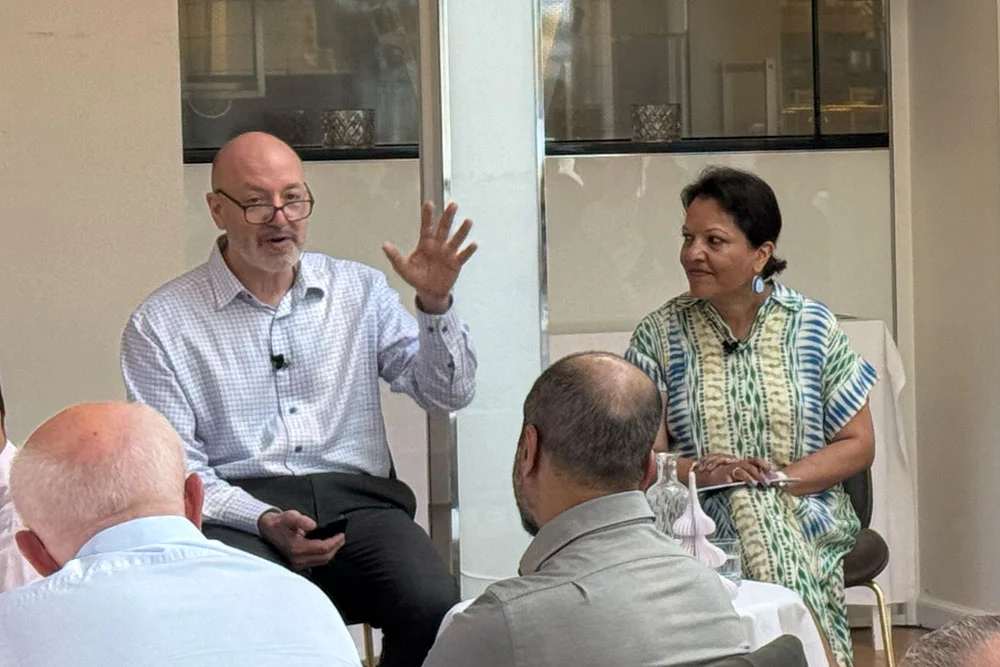
Addressing delegates at the Ovation event, Larry Kramer, president and vice-chancellor of the London School of Economics, offered a stark diagnosis of executive stagnation. According to Kramer, the single most critical habit that modern leaders must cultivate is not any specific technical skill, but rather “learning to learn.”
Kramer emphasized that true leadership agility requires mental elasticity—the capacity to rapidly absorb new methods, dismantle outdated mental models, and master unfamiliar disciplines.
However, for senior leaders who have spent decades climbing the corporate ladder and accumulating vast domain expertise, this intellectual flexibility does not always come naturally.
"Procurement chiefs must actively avoid the comfortable assumption that they already know everything they need to know," industry experts note. "Instead, they must build and maintain a constant, unyielding habit of acquiring new knowledge, continuously identifying, adapting to, and mastering entirely new domains."
The Diversity of Modern Learning Tactics
Despite the overall deficit in learning time, forward-thinking CPOs are redefining how professional development is integrated into a high-pressure lifestyle. The survey responses revealed a mosaic of innovative approaches, proving that effective self-investment does not require locking oneself in a classroom for a week.
- Leaning on Artificial Intelligence: One surveyed CPO shared how they utilize generative AI to supercharge extracurricular learning. "My preferred method is short bursts of learning—usually listening to podcasts or reading—and I increasingly lean on AI itself to go deeper, ask follow-up questions, and research new areas quickly," the executive explained. By treating AI as an interactive research assistant, leaders can extract distilled insights in minutes rather than hours.
- Peer Coaching and Mentorship: Other leaders bypass traditional coursework by engaging in reverse mentoring, coaching junior talent, or participating in high-level mastermind groups. Teaching others forces executives to articulate complex concepts, thereby solidifying their own understanding.
- Targeted Soft-Skills Training: Rather than focusing solely on hard technical metrics, many CPOs are taking formal courses centered on emotional intelligence, cross-cultural communication, and change management—skills vital for managing diverse, global teams through turbulent transformations.
Ultimately, respondents agreed that there is no singular “correct” blueprint for executive growth. What matters is the intentionality and consistency of the effort.
Implications: The High Cost of Stagnation
The implications of a procurement sector where three-quarters of leaders spend less than 20 minutes a day on self-improvement extend far beyond individual career plateaus. They strike at the heart of enterprise competitiveness.
1. Strategic Myopia
When leaders fail to invest time in learning, their strategic vision narrows. They default to familiar playbooks that may have worked during past crises but are entirely unsuited to modern, technology-driven disruptions. Innovation stalls, and the procurement function reverts from being a strategic growth engine to a reactive cost center.
2. Talent Attrition and Culture
Leadership sets the cultural tone of an organization. If a CPO openly or implicitly signals that personal development is secondary to endless operational grind, ambitious teams will absorb that message. High-performing procurement professionals crave environments that foster continuous learning; under stagnant leadership, top-tier talent will seek out organizations that prioritize growth and adaptability.
3. Technological Obsolescence
With artificial intelligence, machine learning, and advanced predictive analytics fundamentally reshaping supply chain management, leaders who fail to educate themselves on these tools will find themselves entirely dependent on subordinates for technological literacy. A CPO who cannot critically evaluate an AI proposal or understand the nuances of Scope 3 carbon accounting risks losing control over the strategic direction of their department.
Conclusion: Breaking the Cycle
The overarching message from the Procurement Leaders’ Ovation pulse survey is clear: the pressures of the job and the chaotic demands of an overflowing calendar can no longer be accepted as valid excuses for executive stagnation.
The worst thing a CPO can do is use the relentless pace of the global economy as a shield against self-investment. In an environment where the only constant is disruption, continuous learning is not an optional extracurricular activity—it is the core responsibility of the modern leader.
Until procurement chiefs reclaim those lost minutes and rebuild the daily habit of intellectual growth, they will remain perpetually one step behind the very crises they are paid to conquer.
To receive weekly insights from the Procurement Leaders community, sign up to the CPO Crunch newsletter.