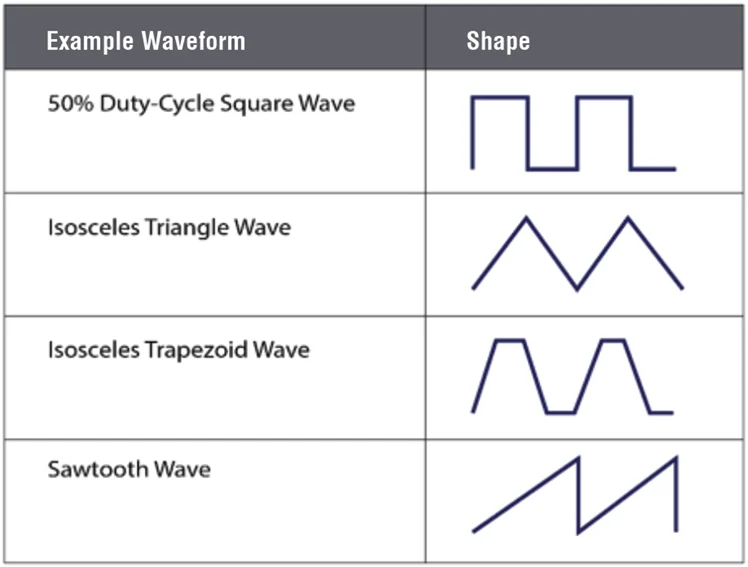
In the demanding world of industrial automation and structural testing, the ability to execute precise, repeatable, and complex motion profiles is the bedrock of engineering success. Delta Motion, a recognized leader in high-performance motion control, has officially announced the launch of its new "Trapezoid Waveform Command" for its RMC (Remote Motion Controller) series. This sophisticated software update provides machine builders and test engineers with an unprecedented level of control over motion profiles, enabling the seamless generation of trapezoidal, triangular, sawtooth, and square wave patterns for both position and force-based applications.
By integrating this capability directly into the motion controller, Delta Motion has effectively streamlined the development process, removing the need for cumbersome external programming or PLC-based waveform generators. This development represents a significant leap forward for industries engaged in rigorous durability, fatigue, and material testing.
Main Facts: A New Paradigm in Motion Control
The Trapezoid Waveform Command acts as a high-level software module within the RMC controller’s firmware, allowing users to define cyclic motion profiles with exacting precision. Unlike traditional methods that require the manual programming of individual motion segments—a process prone to timing jitter and synchronization errors—the new command generates these waveforms natively.
Core Capabilities
- Diverse Waveform Generation: Beyond standard sinusoidal curves, engineers can now generate sharp-edged profiles, including square waves with adjustable duty cycles and complex trapezoidal motions.
- Dynamic On-the-Fly Adjustments: A standout feature of this release is the ability to modify waveform parameters—such as amplitude, offset, phase, and shape—while the command is actively running. This allows operators to perform real-time adjustments to test conditions without halting the machinery, significantly increasing throughput and flexibility.
- Unified Control Architecture: The command is fully compatible with both position and pressure/force control loops. This unification ensures that engineers can utilize the exact same programming syntax regardless of whether they are testing the displacement of an actuator or the force exerted on a test specimen.
Chronology: From Customer Feedback to Engineering Reality
The genesis of the Trapezoid Waveform Command was not a top-down executive decision but rather a direct response to the evolving needs of Delta Motion’s global client base.
The Development Arc
- Market Observation (2023-2024): Delta Motion engineers observed a growing trend in the testing sector where users were spending excessive hours writing complex code in PLCs (Programmable Logic Controllers) to simulate cyclic load conditions. These custom workarounds were often inefficient, difficult to debug, and limited by the scan rates of the PLCs.
- Conceptualization (Early 2025): The RMC development team began drafting a "waveform-first" approach that would reside within the controller’s deterministic environment. The goal was to ensure that waveform generation would not be affected by network latency or varying PLC scan times.
- Beta Testing (Q1-Q2 2026): Throughout early 2026, select partners in the aerospace and automotive testing sectors piloted the new command. Feedback indicated that the ability to morph a triangle wave into a sawtooth wave over a set number of cycles provided a "game-changing" advantage for durability stress tests.
- Official Launch (Q3 2026): Following the successful pilot phase, the command was rolled out across the RMC75, RMC150, and RMC200 product lines, marking a new standard for Delta Motion’s software ecosystem.
Supporting Data: Why Determinism Matters
In high-frequency fatigue testing, the difference between a successful test and a failed specimen often comes down to the quality of the motion profile. External PLC control is often subject to "jitter"—variations in cycle time that can introduce noise into the motion profile, potentially leading to inaccurate test data.
Technical Advantages
- Deterministic Execution: By executing the waveform math within the RMC controller itself, Delta Motion ensures that the motion profile is updated at the controller’s high-speed servo loop rate. This eliminates dependency on fieldbus communication (such as EtherNet/IP or PROFINET) update rates.
- Adaptive Amplitude Control: For force-controlled applications—such as testing the durability of a suspension strut or a composite beam—the system utilizes an adaptive algorithm. As a material undergoes fatigue, its stiffness properties change. The RMC controller detects these deviations and automatically adjusts the output to maintain the target peak force, ensuring that the test remains valid throughout the entire duration of the endurance run.
- Programmable Morphing: The ability to transition between waveforms gradually over a set period or cycle count allows for sophisticated stress-testing scenarios. For example, a simulation can start with a gentle sine wave to warm up a component and gradually transition into a harsh square-wave profile to simulate peak load failures, all controlled via a single, seamless command.
Official Responses: The Philosophy of Practical Innovation
Steve Nylund, CEO of Delta Motion, emphasized that this update is a testament to the company’s commitment to solving real-world challenges.
"Delta’s controllers are increasingly valued for custom testing applications," Nylund stated during the product launch. "Customers often find the cost to be a fraction of other high-end, proprietary testing solutions, and they appreciate that our RMC controllers are much easier to adapt to special requirements. Many of our product enhancements come directly from customer feedback, and the Trapezoid Waveform Command is a perfect example of this—it is a practical, powerful feature that simplifies application development while maintaining the highest levels of precision."

The sentiment from the engineering department echoes this, with lead developers highlighting that the command structure was designed to be intuitive. Using Delta’s proprietary RMCTools software, engineers can configure these waveforms through a graphical interface, reducing the learning curve for new users while offering advanced scripting capabilities for power users.
Implications: The Future of Testing and Automation
The introduction of the Trapezoid Waveform Command has far-reaching implications for several key industrial sectors.
Impact on Material Science and Fatigue Testing
Traditionally, companies requiring precise cyclic testing had to invest in expensive, "black-box" testing machines that offered little in the way of controller transparency. Delta Motion’s approach flips this model. By providing an open-architecture controller that can handle complex waveforms, they are enabling universities, research labs, and smaller manufacturers to build "lab-grade" testing equipment at a significantly reduced price point.
Efficiency in Production Cycle Simulation
Beyond the laboratory, the command is set to improve production line efficiency. In manufacturing environments where products must undergo "burn-in" or "break-in" cycles, the ability to program a series of motions directly into the controller means that the manufacturing cell can operate independently of the main plant PLC. If the PLC goes down for a network update, the RMC controller continues to run its deterministic cycle, preventing production downtime and ensuring product quality.
The Shift Toward Modular Flexibility
The industry is moving away from rigid, single-purpose machinery. The Trapezoid Waveform Command supports this shift by allowing a single actuator to perform multiple roles. Today, an actuator might be running a sinusoidal fatigue test on a component; tomorrow, with a simple software parameter change via the RMC, it could be performing a square-wave durability simulation on a different part entirely. This modularity allows manufacturers to do more with less floor space and lower capital investment.
Technical Specifications and Compatibility
The Trapezoid Waveform Command is not a premium add-on but a native feature integrated into the standard firmware for the company’s core hardware portfolio.
- Supported Controllers: RMC75, RMC150, and RMC200.
- Programming Environment: All configuration, parameter setting, and monitoring are managed through RMCTools, Delta’s integrated software suite.
- Control Modes: Fully functional in both position and force/pressure control loops.
- Parameterization: Users can define amplitude, offset, frequency, rise time, high time, and fall time, offering near-infinite variety in wave geometry.
As industrial automation continues to gravitate toward more flexible, intelligent systems, Delta Motion’s latest update serves as a critical milestone. By placing sophisticated waveform generation into the hands of the end-user, they have not only lowered the barrier to entry for complex testing but have also provided the high-fidelity performance required by the most demanding engineering applications. For the machine builder, this means less time programming and more time innovating. For the test engineer, it means higher data integrity and more reliable results.