In the modern industrial landscape, hydraulic systems stand as the workhorses of manufacturing. From the precision-driven world of plastics processing to the rugged demands of heavy construction equipment and automated assembly lines, fluid power remains unmatched in its ability to deliver high power density, rugged reliability, and force density. However, as global industries pivot toward aggressive sustainability targets and stricter energy regulations, the traditional "power at any cost" design philosophy is undergoing a radical transformation.
Today, the industry is balancing the inherent performance benefits of hydraulics with a new mandate: energy efficiency. This evolution is not merely about upgrading individual components; it is a holistic redesign of how machines interact with their power sources.
The Core Challenge: Efficiency in Energy Transformation
At its most fundamental level, a hydraulic system is an energy converter. It takes mechanical energy from an electric motor or combustion engine, transforms it into fluid pressure and flow, and finally converts that into mechanical work at the actuator.
The inefficiency often cited in hydraulic systems is rarely a result of poor engineering; rather, it is a byproduct of the design requirements for reliability and safety. Engineers historically built systems with significant "design margins" to ensure that machines could withstand peak loads without failure. While this guaranteed durability, it often led to systems running at sub-optimal levels, consuming energy even when demand was low.
Modern industrial strategy is moving away from this static approach. The challenge now lies in dynamic optimization—creating systems that can provide the raw power required for heavy lifting while remaining as efficient as a low-power digital controller during idle or light-load periods.
Chronology of the Hydraulic Evolution
The journey toward energy-efficient hydraulics has unfolded in distinct stages:
- The Era of Fixed Displacement (Pre-2000s): The industry relied heavily on fixed-displacement pumps and constant-speed motors. Efficiency was largely ignored in favor of simplicity and low initial capital expenditure.
- The Introduction of Proportional Control (2000s): The shift toward electronic proportional valves allowed for better flow control, reducing wasted energy in throttling, though systems remained largely reactive.
- The Rise of VSD and Load-Sensing (2010s): The widespread adoption of Variable Speed Drives (VSDs) and load-sensing circuits marked a turning point, allowing the prime mover to adjust to the specific pressure and flow needs of the cycle.
- The Digital-Hydraulic Revolution (2020s–Present): We are currently in the age of "Electrohydraulics." The integration of high-speed sensors, AI-driven feedback loops, and sophisticated digital twins is allowing hydraulic systems to behave with the agility of electric servomotors.
Technological Pillars of Efficiency
The current wave of innovation is defined by three primary technological advancements that allow manufacturers to maintain performance while significantly lowering the energy footprint.
1. Variable Speed Drives (VSDs)
VSDs have become the standard for modern power units. By allowing the electric motor to fluctuate its speed based on the actual requirements of the hydraulic circuit, the system avoids the energy waste of a motor running at full capacity while the fluid is simply recirculated through a relief valve. This "on-demand" power delivery is one of the most effective ways to reduce electricity bills in high-duty-cycle environments.
2. Load-Sensing and Pressure Compensation
These systems represent a smarter way to manage flow. Rather than pumping fluid at a constant, high pressure, load-sensing valves measure the load on the actuator and request only the exact pressure and flow required to move it. This eliminates the "throttling losses" that were historically a major source of heat and energy waste in hydraulic valves.
3. Electrohydraulic Systems and Servopumps
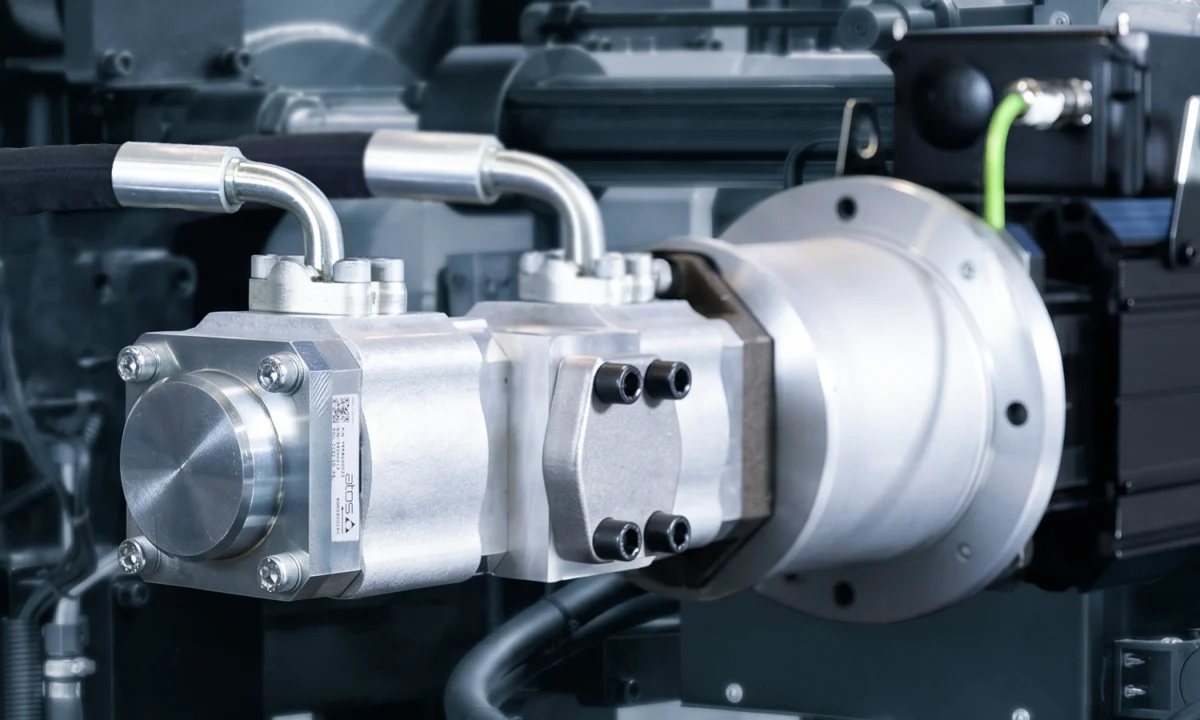
The cutting edge of the sector involves the direct integration of electronics into the hydraulic loop. Companies like Atos have pioneered advanced servopumps that act as the brain and muscle of the machine. By using high-bandwidth digital controllers, these systems provide real-time adjustments to pressure and flow, effectively turning a traditional hydraulic unit into a precision, energy-efficient tool that is fully compatible with Industry 4.0 standards.
Supporting Data: The Impact of Optimization
Studies on industrial energy consumption suggest that hydraulic systems often account for 20% to 40% of the total electricity consumption in manufacturing facilities. By transitioning from traditional fixed-displacement systems to modern, electrohydraulic configurations, facilities have reported:
- Energy Consumption Reductions: Between 30% and 60% depending on the duty cycle.
- Reduced Thermal Load: Lower energy waste translates to less heat generated in the fluid, which in turn reduces the need for energy-intensive oil cooling systems.
- Extended Component Life: By matching motor speed to load, components experience less stress and cavitation, leading to longer maintenance intervals.
These figures illustrate that the "green" choice is often the most economical choice over the lifecycle of the machine.
Official Perspectives and Industry Standards
Regulatory bodies in the European Union and North America are increasingly codifying energy efficiency into industrial mandates. Corporate strategy is no longer just about output; it is about "energy intensity per unit produced."
Industry leaders emphasize that the transition is not a "rip-and-replace" scenario. For many manufacturers, the path to efficiency is a hybrid approach. Retrofitting existing systems with modern electronic controls or upgrading to high-efficiency pumps can often yield a return on investment within 18 to 24 months.
"The goal is not to eliminate hydraulics, but to make them as intelligent as the systems they drive," notes industry analysts. The integration of AI and machine learning into these systems allows for "Predictive Energy Management." By analyzing historical data, the system can anticipate load requirements and adjust its output before the demand even hits the actuator, a feat that was physically impossible just a decade ago.
Implications for the Future of Manufacturing
The shift toward efficiency is creating a new hierarchy of manufacturing capability. Facilities that embrace intelligent hydraulic systems are finding themselves better positioned to manage rising energy costs and meet strict carbon-reporting requirements.
The Role of Fluids and Maintenance
Efficiency is not solely a matter of hardware. Advances in hydraulic fluid chemistry have created lubricants with superior viscosity stability across wide temperature ranges. This ensures that energy transfer is consistent, whether the machine has been running for ten minutes or ten hours. Coupled with digital condition monitoring—where sensors detect fluid degradation in real-time—maintenance is becoming proactive rather than reactive, preventing the friction-related energy losses that plague poorly maintained systems.
The Human Element
Perhaps the most significant challenge remains the "knowledge gap." The next generation of hydraulic solutions requires technicians and engineers who are as comfortable with software and PLC programming as they are with pumps and cylinders. Training programs are now emphasizing this interdisciplinary approach, ensuring that the workforce can handle the complex, data-rich environment of modern fluid power.
Conclusion: A Balanced Approach to Industrial Excellence
The narrative of hydraulics is shifting from one of "brute force" to "intelligent control." While other actuation technologies—such as electromechanical drives—have made strides in certain markets, hydraulics retain a unique advantage in applications where power density and environmental resilience are non-negotiable.
The future of the sector lies in a balanced, tripartite approach:
- Hardware Optimization: Using high-efficiency pumps and motors.
- Electronic Intelligence: Utilizing servopumps and AI-driven control loops.
- Lifecycle Management: Focusing on fluid health and predictive maintenance.
As industrial facilities continue to evolve, the integration of these technologies ensures that hydraulic power will remain a cornerstone of global manufacturing—smarter, cleaner, and more efficient than ever before. The path forward is clear: the most successful industries will be those that treat energy as a precious resource to be optimized, proving that even the oldest technologies can be reinvented for a sustainable future.