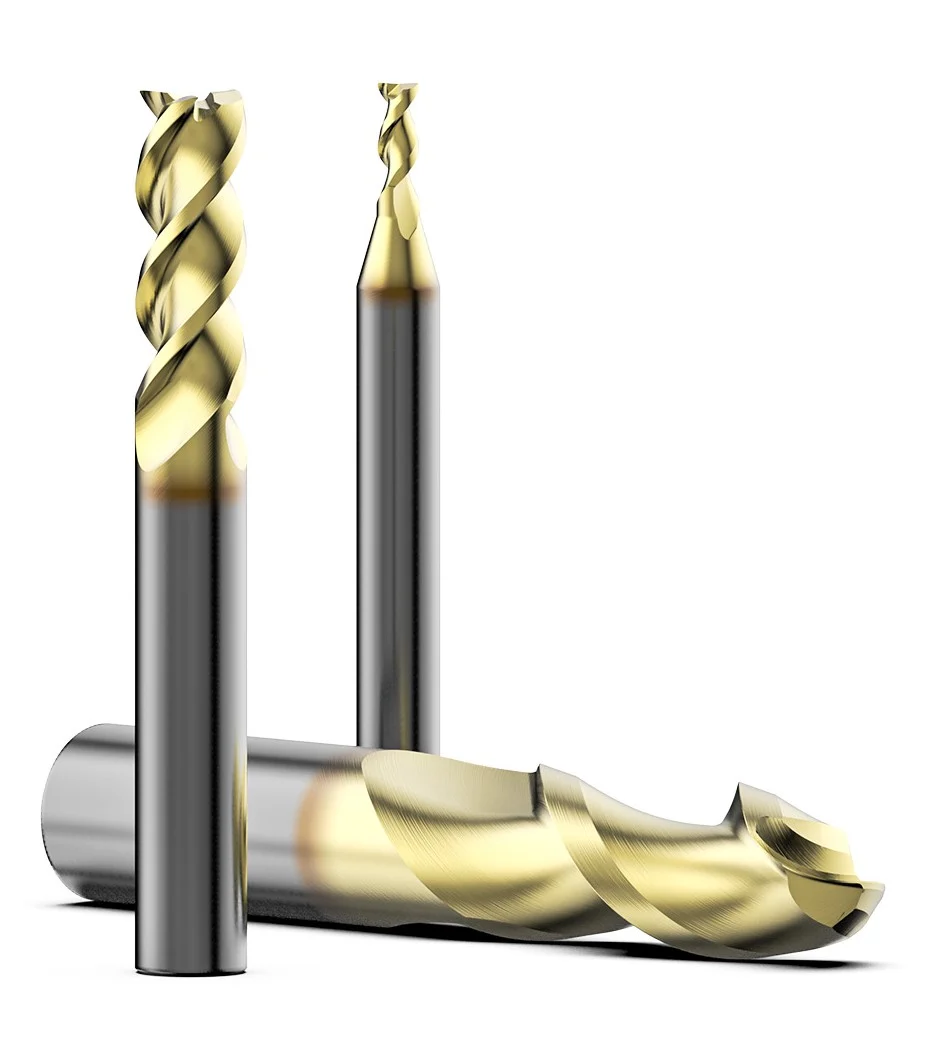
In the fast-paced world of precision manufacturing, the ability to balance high-speed throughput with energy efficiency is the new gold standard. Seco Tools, a global leader in metal cutting solutions, has officially unveiled its latest innovation: the Stabilizer series of end mills. Engineered specifically for aluminum and other nonferrous metals, this new product line—comprising the ST4531, ST4521, and ST4221 models—promises to redefine the operational economics of workshops ranging from small-scale job shops to high-volume automotive and aerospace production lines.
By focusing on reduced cutting forces and enhanced vibration dampening, Seco is addressing one of the industry’s most persistent challenges: the trade-off between aggressive material removal rates and the mechanical limitations of CNC machinery.
Main Facts: Engineering the Stabilizer Advantage
The core mission behind the Stabilizer series is to optimize the interaction between the cutting edge and the workpiece. When machining nonferrous materials like aluminum, which are often gummy or prone to work-hardening if handled incorrectly, heat and vibration are the primary enemies of surface finish and tool life.
The Technical Trio
The series introduces three primary variants, each calibrated for specific machining dynamics:
- ST4531: Optimized for high-performance profiling and complex geometry.
- ST4521: A versatile workhorse for general-purpose milling.
- ST4221: Engineered for stability in challenging slotting and plunging operations.
Key Performance Features
What sets these tools apart from traditional solid carbide end mills are three distinct design elements:
- Cylindrical Margin: This feature provides superior support during the cut, significantly reducing the propensity for tool deflection. By stabilizing the tool within the cut, Seco ensures that tolerances remain tight even during aggressive passes.
- Polished K-Land: The K-Land geometry is meticulously polished to minimize friction. In aluminum machining, friction is the precursor to Built-Up Edge (BUE), a condition where material welds to the cutting edge, destroying the finish. The polished surface ensures a clean, shearing action.
- Anti-Adhesion Coating: Seco has applied a specialized coating that prevents material adhesion. By preventing the aluminum from sticking to the tool, the Stabilizer series maintains its sharpness and geometry for significantly longer cycles, reducing the frequency of tool changes.
Chronology of Development: From Concept to Shop Floor
The development of the Stabilizer series was not a sudden pivot, but rather a response to a decade-long shift in manufacturing requirements.
Early 2023: The Research Phase
Seco’s R&D department initiated an intensive study into the power consumption metrics of modern CNC machines. The data revealed that many shops were operating at 70-80% of their spindle capacity, leaving little room for error or increased feed rates. The goal was established: develop a tool geometry that requires 20% less torque while maintaining the same metal removal rate (MRR).
Mid-2024: Prototype Testing
During the prototype phase, Seco engineers focused on chip evacuation. Nonferrous metals produce long, stringy chips that can clog flutes and lead to catastrophic tool breakage. The flutes of the Stabilizer series were redesigned using computational fluid dynamics (CFD) to ensure that even at high spindle speeds, chips are evacuated cleanly away from the cut zone.
Late 2025: Validation and Beta Trials
Before the public launch, the tools were deployed in several high-stakes environments, including an aerospace component facility in Germany and an automotive prototype shop in the United States. The trial results confirmed the design team’s hypothesis: by reducing cutting forces, the tools allowed older machines to handle jobs that previously required high-end, high-torque spindles.

October 2026: Official Global Launch
The Stabilizer series was released to the global market, marking a significant milestone in Seco’s 2026 product roadmap.
Supporting Data: Why 20% Matters
In the world of manufacturing, a 20% reduction in power consumption is not merely a "green" initiative—it is a direct impact on the bottom line.
Power Efficiency Metrics
Seco’s internal benchmarking indicates that the Stabilizer series allows manufacturers to:
- Reduce Energy Costs: In a facility with 50+ CNC machines, a 20% reduction in power draw per tool can equate to thousands of dollars in monthly utility savings.
- Extend Spindle Life: Lower cutting forces put less strain on spindle bearings and gearboxes, potentially extending the mean time between failures (MTBF) for expensive machine components.
- Expand Machine Utility: Shops with older or smaller-spindle machines can now perform tasks that were previously restricted to heavy-duty machining centers. This democratizes high-performance milling, allowing smaller shops to bid on aerospace and automotive contracts they were previously unequipped to handle.
Versatility in Application
The series is designed to handle a broad range of operations:
- Side Milling & Slotting: Maintaining consistent wall quality.
- Profiling & Plunging: Essential for complex 3D geometries.
- Ramping & Helical Interpolation: Crucial for modern 5-axis machining workflows.
The availability of these tools in square, radius, chamfer, and ballnose geometries means that a single series can handle the vast majority of nonferrous production needs, streamlining inventory management for procurement departments.
Official Responses and Industry Implications
The manufacturing community has received the announcement with cautious optimism, noting that as global energy prices fluctuate, tools that prioritize "efficiency by design" are likely to become the industry standard.
"The Stabilizer series represents a convergence of metallurgy and mechanical physics," noted a lead application engineer at Seco. "We didn’t just want a sharper tool; we wanted a smarter tool. By lowering the resistance during the cut, we’ve effectively widened the operating window for our customers, allowing them to push their machines harder without the fear of vibration or premature failure."
Implications for Aerospace and Automotive
In the aerospace sector, where aluminum alloys are ubiquitous, surface finish is not just an aesthetic requirement—it is a safety standard. The Stabilizer’s ability to limit chatter means fewer rejected parts and less manual rework, a major cost driver in high-precision engineering.
In the automotive sector, the push toward electric vehicle (EV) components—which often involve complex, thin-walled aluminum housings—makes the Stabilizer series particularly timely. As EV manufacturers look for ways to optimize their supply chains and reduce the carbon footprint of their production, energy-efficient tooling provides a tangible metric for sustainability reporting.

Future Outlook: A New Paradigm for Subtractive Manufacturing
As digital transformation continues to integrate with the shop floor, the hardware—the tools themselves—must keep pace. The Stabilizer series is designed to be compatible with modern CAD/CAM software suites, allowing for easy integration into digital twin simulations.
Manufacturers can now model the lower cutting forces of the Stabilizer tools in their virtual environments before committing to a physical run, ensuring that they maximize the efficiency gains promised by Seco.
The Path Forward
Seco Tools has signaled that the Stabilizer series is just the beginning of a broader initiative to optimize tool performance across all material segments. As the industry moves toward "Lights-Out" manufacturing and increased automation, the reliability of the tooling becomes the single most important factor in success.
By solving the vibration and power consumption issues inherent in nonferrous milling, Seco has provided a bridge between traditional machining and the high-efficiency future of the industry.
For engineers and shop managers looking to audit their current processes, the Stabilizer series offers a low-barrier, high-impact upgrade. Whether the objective is to extend the life of aging equipment or to squeeze more throughput out of a new high-speed machine, the metrics provided by Seco suggest that the ST4531, ST4521, and ST4221 are tools designed for the demands of the modern era.
For those interested in integrating these tools into their current production cycles, technical documentation, feed-and-speed charts, and compatibility guides are available through the official Seco Tools website.
In an era where every joule of energy and every micron of precision counts, Seco Tools has once again demonstrated that innovation is not just about the machine—it is about the critical point where the tool meets the metal.