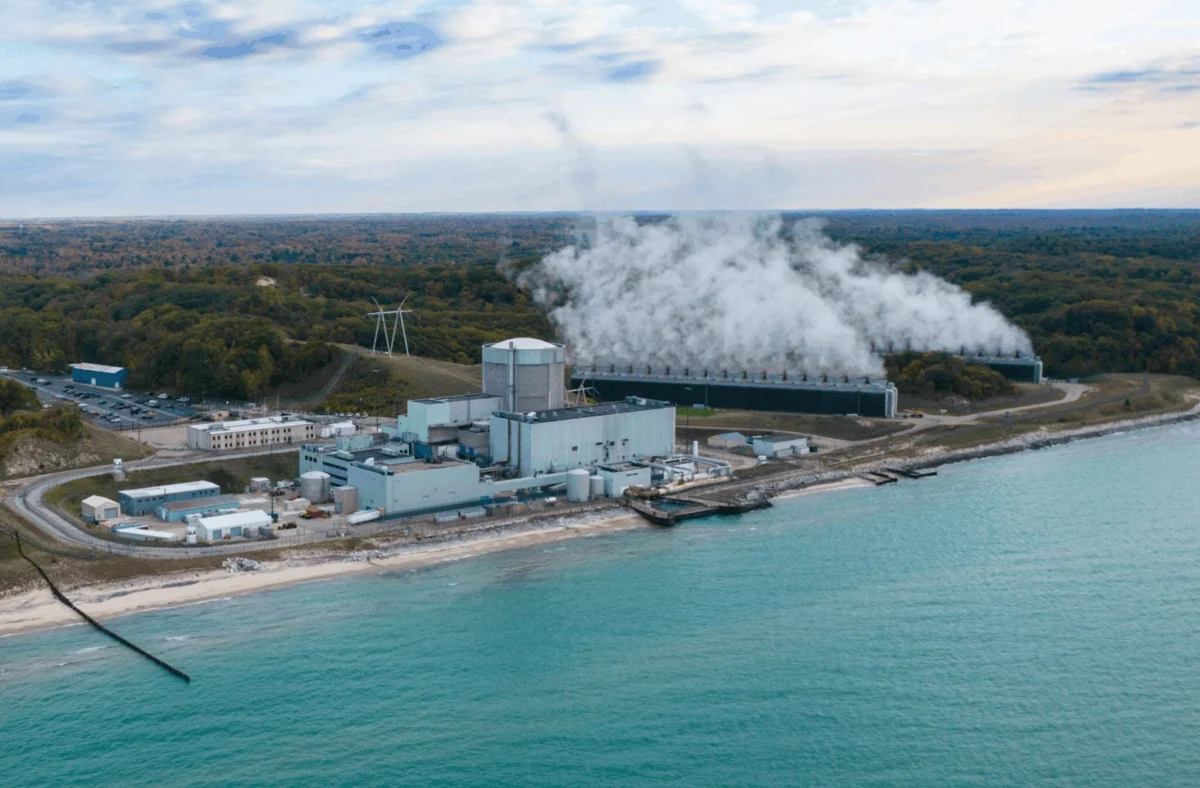
The race to power the next generation of artificial intelligence and cloud computing has arrived at an unlikely destination: the existing fleet of American nuclear power plants. In a strategic pivot that bypasses the decades-long timelines and astronomical costs associated with constructing new reactors from the ground up, the U.S. technology sector and the federal government have coalesced around a singular solution: "uprating."
By upgrading the turbines, steam generators, and control systems of plants already connected to the grid, utility giants are squeezing more carbon-free electricity out of the infrastructure that has served the nation for decades. This week, back-to-back announcements involving Constellation Energy, Vistra, Google, Meta, and the U.S. Department of Energy (DOE) have signaled a massive shift in how the grid will meet the surging, power-hungry demands of the digital age.
The Strategy: Squeezing More Juice from the Grid
The core of this movement is a technical process known as an "uprate." Unlike the construction of a new reactor—which faces regulatory hurdles, permitting delays, and multi-billion-dollar cost overruns—uprating is an efficiency play. By installing modern, high-efficiency equipment, operators can increase the power output of a nuclear unit significantly.
For the PJM Interconnection, the massive regional transmission organization that manages the flow of electricity across 13 states and the District of Columbia, this is a vital development. As data centers proliferate across the Mid-Atlantic and Midwest, PJM is facing a supply crunch. Rather than waiting ten or fifteen years for new generation, the grid is turning to the "low-hanging megawatts" already present in the existing nuclear fleet.
Chronology of a Nuclear Surge
The momentum behind this nuclear-tech synergy has been building throughout 2026, culminating in a flurry of activity this week.
Early 2026: The trend began to gain public traction when Vistra entered into a landmark 20-year Power Purchase Agreement (PPA) with Meta. The deal was designed to secure over 2,600 MW of nuclear energy to support Meta’s operations in the PJM region. This agreement included the promise of 433 MW of incremental capacity derived from planned uprates at Vistra’s nuclear facilities.
Monday, October 2026: The Department of Energy dropped a significant anchor in this narrative, announcing a conditional loan commitment of up to $4.2 billion for Vistra. This capital is earmarked for upgrading Vistra’s nuclear fleet, specifically targeting the Beaver Valley plant in Pennsylvania, as well as the Davis-Besse and Perry plants in Ohio.
Tuesday, October 2026: The momentum accelerated with a joint announcement from Google, Constellation Energy, and the DOE. The parties unveiled a 20-year PPA that will support 890 MW of new nuclear capacity through uprates at 11 reactors across six plants located in Illinois, New Jersey, and Pennsylvania. Constellation committed to investing over $4.3 billion to facilitate these upgrades.
Looking Ahead: The first wave of this new capacity is scheduled to hit the grid as early as 2028, with additional increments rolling out through 2034.
Supporting Data: The Breakdown of the Deals
The numbers associated with these deals reflect the sheer scale of the investment. When viewed in aggregate, these agreements represent a massive infusion of capital into the aging but reliable American nuclear infrastructure.
The Constellation-Google Deal
The agreement between Constellation and Google is twofold. While it involves a total of 3,590 MW of power, it is critical to distinguish between existing capacity and new "uprated" power:
- New Capacity: 890 MW gained through uprates.
- Existing Capacity: 2,700 MW secured through a 15-year PPA for already-operational units.
- Total Investment: Constellation is slated to invest $4.3 billion to achieve the 890 MW boost.
The Vistra-Meta Pipeline
Vistra’s portfolio, bolstered by the DOE’s $4.2 billion conditional loan, focuses on specific regional assets:
- Beaver Valley (Pennsylvania): A two-unit facility with a capacity of 1,872 MW.
- Davis-Besse (Ohio): A single-unit plant on Lake Erie with a capacity of 908 MW.
- Perry (Ohio): A single-unit plant near Cleveland with a capacity of 1,268 MW.
- Incremental Gain: 433 MW, which is fully dedicated to Meta’s data center operations.
These three plants combined represent a critical pillar of regional stability, providing over 4 GW of firm, baseload power. Beyond these specific upgrades, the DOE has indicated that its financing could potentially be leveraged for future uprates at Vistra’s Comanche Peak plant in Texas, suggesting a long-term roadmap for nuclear expansion across multiple states.
Official Responses and Corporate Strategy
The alignment between Big Tech and the nuclear industry is not merely a financial transaction; it is a strategic necessity for companies with aggressive net-zero climate goals.
"The fastest path to more nuclear power is getting more juice from the reactors already on the grid," stated an industry analyst familiar with the negotiations. For Google, this partnership is a core pillar of its broader strategy. By investing in these uprates and exploring reactor restarts, Google has now enabled more than 1.5 GW of new nuclear capacity to the U.S. grid.
Furthermore, Google’s contract includes "demand-response" provisions. This allows the tech giant to curtail its non-critical electricity consumption during periods of extreme grid stress. This feature is particularly attractive to grid operators like PJM, who are tasked with maintaining frequency and reliability as variable renewable sources like wind and solar continue to integrate into the grid.
The DOE’s involvement, characterized by billions in loan commitments, highlights a shift in federal energy policy. Rather than favoring a single energy source, the government is incentivizing the preservation and optimization of existing nuclear assets to serve as the backbone of the "clean" data economy.
Implications: A New Era for the Power Grid
The move to upgrade existing reactors carries profound implications for the U.S. energy landscape, the economy, and the global race for AI dominance.
1. The Death of the "Slow-Build" Narrative
For years, the nuclear industry was haunted by the narrative that nuclear energy was too slow to deploy to combat climate change. By shifting the focus to uprates, the industry has effectively changed the timeline from decades to years. These projects can be completed in a fraction of the time it takes to commission a new nuclear site, providing a rapid solution for a grid that is currently struggling to keep pace with the power demands of AI model training and data storage.
2. Economic Stability in "Nuclear Towns"
The plants being targeted for these upgrades—such as the Perry facility in Ohio and the Beaver Valley plant in Pennsylvania—are massive economic engines. Perry, for instance, supports more than 600 full-time, high-paying jobs in the North Perry area. By extending the life and increasing the output of these plants, these multi-billion-dollar investments ensure that these communities remain vibrant hubs of employment and economic activity for the next two decades.
3. Grid Reliability vs. Data Center Growth
The tension between the growth of data centers and grid reliability is the defining challenge of the 2020s. By securing firm, 24/7 power from nuclear uprates, tech giants are not just buying energy; they are buying certainty. As the PJM region continues to serve as the global epicenter for data center development, the availability of baseload nuclear power becomes a competitive advantage for the region, preventing the rolling blackouts or price volatility that could drive tech investment elsewhere.
4. Carbon-Free AI
Finally, the "greening" of the AI sector is now inextricably linked to nuclear power. As companies like Google and Meta face pressure from shareholders to reduce the carbon footprint of their massive compute clusters, they are moving away from fossil-fuel-heavy grid mixes. Nuclear energy provides the only scalable, high-density, carbon-free energy source that can run 24 hours a day, regardless of weather conditions.
Conclusion
The recent influx of billions of dollars into nuclear uprates represents a watershed moment for the U.S. energy sector. By prioritizing efficiency and the maximization of existing assets, the industry is creating a blueprint for how to bridge the gap between today’s power grid and the high-energy demands of the future. While new reactor technologies—such as Small Modular Reactors (SMRs)—remain on the horizon, the real-world, short-term answer to the energy crisis is already here, humming away in the reactor containment buildings of the American Midwest and Northeast. The nuclear renaissance has arrived, and it is powered by the very plants that have been keeping the lights on for the last forty years.