In an era where traditional advertising is increasingly met with viewer fatigue and ad-skipping behaviors, Bob’s Discount Furniture has emerged as a case study in the power of the "microdrama." By eschewing overt product-pushing in favor of long-form, entertainment-driven storytelling, the retailer has managed to bridge the gap between brand awareness and direct-response performance.
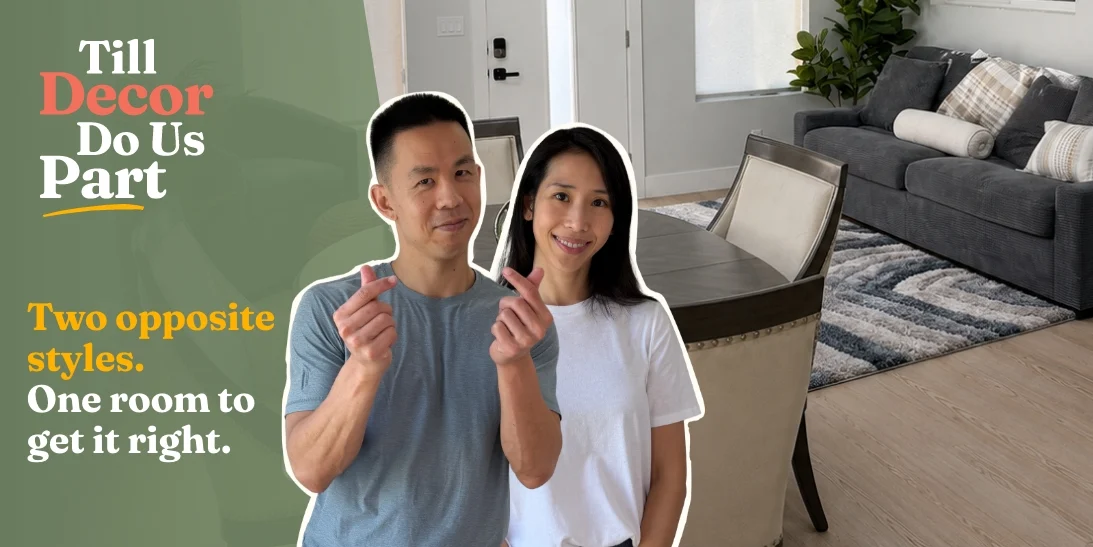
According to Chief Marketing Officer Steve Nesle, the brand’s foray into reality-style episodic content—dubbed “Till Decor Do Us Part”—was a calculated risk that has fundamentally altered the company’s approach to social media. With a massive influx in organic reach and millions of dollars in attributed sales, the brand is now doubling down on its strategy, transitioning from brand-produced content to a creator-led model that promises to redefine how furniture retailers interact with a mobile-first audience.
The Genesis of a Marketing Gamble
The journey began in July 2025, when Bob’s Discount Furniture launched a six-episode reality series. The premise was simple yet effective: leveraging the inherent drama and relatability of couples navigating the often-stressful process of furnishing a home.
For the marketing team, the decision to pivot toward nonbranded, entertainment-led content was initially nerve-wracking. CMO Steve Nesle candidly admits that the internal apprehension was palpable. “It was scary to launch a reality series,” Nesle noted. “We had a strong belief in our strategy, but I’m not afraid to admit that we were completely surprised by how well it performed.”
The "scary" leap quickly paid off. The series not only resonated with the target demographic but outperformed the retailer’s traditional "business-as-usual" social media content—which is characterized by high-frequency, product-centric posts—by roughly 50%. This success served as a proof-of-concept, validating the hypothesis that modern consumers are far more likely to engage with a narrative than a sales pitch.
Chronology of Success: From Season 1 to Season 2
The performance of “Till Decor Do Us Part” in 2025 was nothing short of a benchmark-setter. By the time the final episode aired, the series had accumulated:
- 152 million video views.
- 223 million total impressions.
- $9 million in attributed sales.
These figures were achieved despite a slightly higher production cost compared to the brand’s standard social media fare. However, the superior engagement and conversion metrics meant that the return on investment far outstripped the initial outlay.
Buoyed by these results, Bob’s wasted no time in greenlighting a second season. The rollout for Season 2 began on September 17, 2026, with a weekly release cadence scheduled through October 22. This rapid transition signals a move from experimental "one-off" content to a sustained, serialized programming strategy that keeps audiences returning to the brand’s digital channels week after week.
Supporting Data and Strategic Refinements
While the metrics from Season 1 were overwhelmingly positive, the marketing team at Bob’s recognized an opportunity for optimization. The most significant shift in the 2026 strategy is the evolution of the talent pool. While Season 1 utilized "real couples," Season 2 has pivoted specifically toward "content creator couples."
Nesle draws a vital distinction between the two: “Influencers are people who share their opinions. Content creators are people who are focused on creating entertainment.” By partnering with individuals who prioritize narrative structure, pacing, and visual storytelling, Bob’s is betting that the content will feel less like an advertisement and more like an organic piece of social media media.
This transition is not an abandonment of the influencer model. On the contrary, Nesle views it as a "magic" combination. "We’re not stepping away from influencers. They’re still a big part of our marketing ecosystem, but now we have the addition of creators. Creators and influencers working together is magic," he explained.
Furthermore, the brand has shifted the burden of production. In the first season, Bob’s Discount Furniture handled the filming and scripting. In the current season, the brand provides high-level guidelines and strategic parameters, but the actual production, scripting, and filming are left to the creator couples. This shift serves a dual purpose: it reduces the administrative burden on the brand’s internal team and ensures that the tone of each episode feels authentic to the specific creator’s established voice.
Official Perspectives: Innovation as a Fiscal Policy
At the heart of Bob’s success is a deliberate budgetary structure. Each year, the company carves out a specific portion of its marketing spend for "Innovation"—a fund dedicated to testing tactics that have never been used by the brand before.
This is not merely a "pet project" fund; it is a strategic necessity. By funding the microdrama series through the innovation budget, the company allowed itself the breathing room to fail. However, because the experiment was successful, it moved from a risky innovation to a core pillar of the marketing mix.
"We wanted to learn to what effect does partnering with a creator have on our brand, but more importantly, on organic reach, on free traffic," Nesle said. The decision to use content creators on such a large scale this year qualified the program for continued innovation funding, as it seeks to quantify how much "free" traffic can be generated by tapping into the creators’ own established, robust networks.
Implications: The Death of the "Hard Sell"
The implications of Bob’s strategy for the wider retail industry are significant. As consumers continue to migrate away from traditional television and toward mobile-first social platforms, the "interruption" model of advertising is losing its efficacy.
"Increasingly, advertising becomes a more challenging way to connect with audiences," Nesle observed. "We’re constantly looking for new ways to connect and resonate. Traditional advertising is certainly still a big part of our marketing ecosystem, but so too is creating content to meet people where they are, and increasingly, they’re on their phones."
By prioritizing the "entertainment-first" approach, Bob’s is effectively building a media house within a furniture retailer. This creates a brand moat; it is much harder for a competitor to replicate a popular, personality-driven series than it is to replicate a standard promotional discount campaign.
The goal for the remainder of the second season is ambitious: the brand expects to maintain or exceed the revenue metrics of the previous year while simultaneously driving significantly higher levels of organic, unpaid reach. As the final episodes of the second season approach in late October, the industry is watching closely.
If Bob’s can prove that the creator-led, serialized microdrama model is not just a trend but a sustainable acquisition channel, it may trigger a wider exodus of retail marketing budgets away from traditional platforms and into the hands of independent creators. For Bob’s Discount Furniture, the experiment has already proven that the most effective way to sell a couch is often to stop talking about the couch entirely, and instead, start telling a story that the audience actually wants to watch.