The engineering landscape is undergoing a tectonic shift. For the past two years, the industry has been obsessed with the potential of Artificial Intelligence—specifically, the promise of Generative AI to automate mundane tasks and provide rapid data synthesis. However, as of late 2026, the conversation has matured. The focus has moved away from speculative capability toward tangible, measurable output.
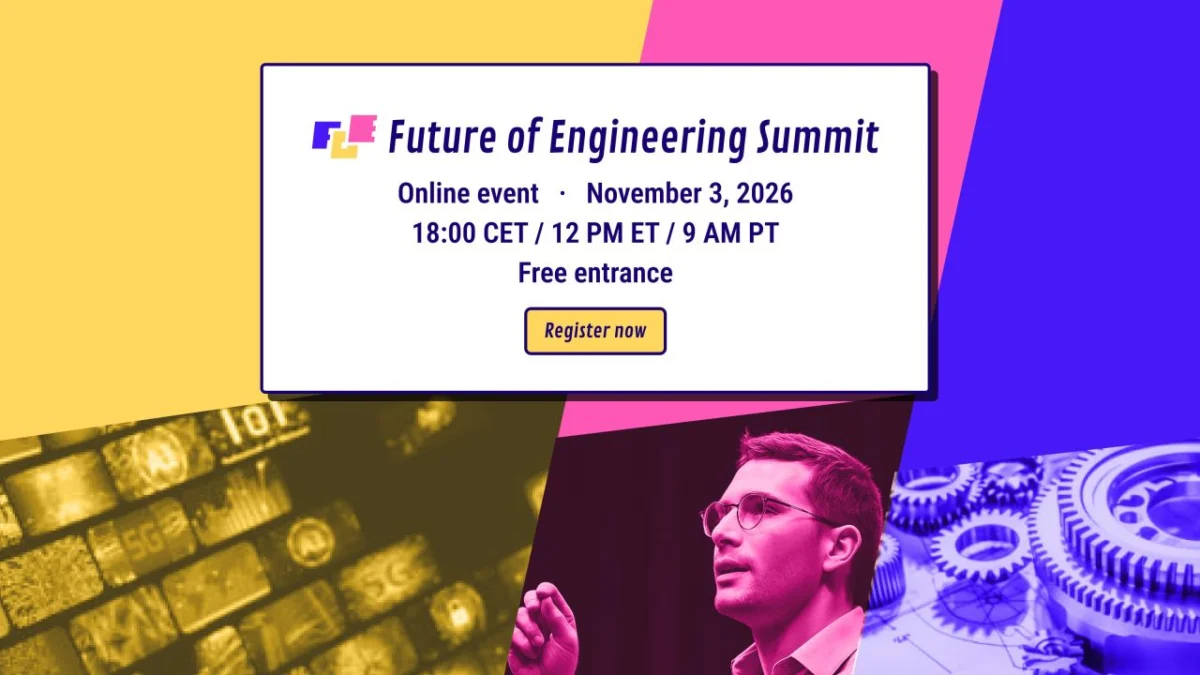
On November 3, 2026, the third edition of the Future of Engineering Summit will convene to address the most pressing question facing technical leadership today: How do we transition from experimental AI pilots to full-scale, agentic industrial deployment?
Moderated by Design World Editor-in-Chief Rachael Pasini, this year’s summit serves as a critical junction for engineering directors, VPs of technology, and digital transformation leads. As the industry moves beyond the "hype cycle," the summit aims to provide a definitive blueprint for integrating agentic AI into the core of the engineering workflow.
Main Facts: The Evolution of Agentic Engineering
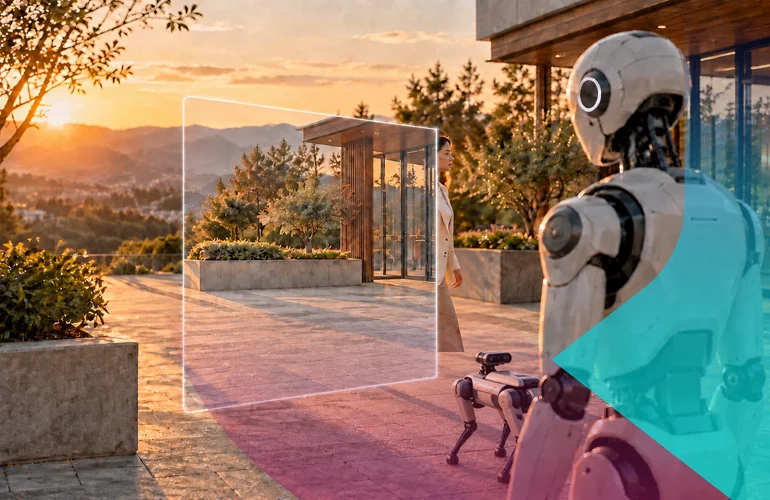
The 2026 summit is built around the central theme: “From Pilot to Rollout — What AI Agents Are Actually Delivering in Engineering.” Unlike traditional AI, which acts as a passive tool, "agentic" AI refers to systems capable of autonomous decision-making, goal-setting, and executing multi-step workflows with minimal human intervention.
Key pillars of the 2026 event include:
- Autonomous Workflows: Moving from chatbots that answer questions to agents that design, simulate, and iterate.
- The Scalability Gap: Identifying why so many AI projects stall at the Proof-of-Concept (PoC) phase.
- Governance and Reliability: Ensuring that agentic outputs meet the rigorous safety standards required in aerospace, automotive, and civil infrastructure.
- Human-in-the-Loop 2.0: Redefining the engineer’s role from “creator” to “orchestrator” of AI systems.
Registration for this virtual event is open to the public, with a specific emphasis on fostering a collaborative environment where industry leaders can share not just their successes, but the hard-learned lessons of failed implementations.
A Chronology of the AI Engineering Revolution
To understand the significance of the 2026 summit, one must look at the rapid maturation of the sector over the last 36 months:
- 2023: The Awareness Phase: The release of advanced LLMs triggered a surge in engineering interest. Companies began experimenting with AI for basic coding assistance and documentation management.
- 2024: The Pilot Explosion: The second edition of the Future of Engineering Summit highlighted the "Pilot Era." Engineering departments globally launched hundreds of experiments. While these projects proved technical viability, many struggled to provide a clear Return on Investment (ROI).
- 2025: The Integration Struggles: As organizations attempted to scale, they faced "Data Silos" and "System Fragility." The industry realized that AI agents were only as effective as the engineering data pipelines feeding them.
- 2026: The Era of Agentic Rollout: The current year marks a shift toward robust, production-ready agentic architectures. The focus is no longer on what AI can do, but how it integrates into existing PLM (Product Lifecycle Management) and CAD environments.
Supporting Data: The ROI of Autonomy
While many firms are cautious, the data suggests that the transition to agentic AI is becoming an economic necessity. Recent industry surveys indicate that companies that successfully integrated AI agents into their design cycles experienced:
- 30–40% Reduction in Iterative Design Time: By using autonomous agents to run multi-objective optimization, engineers can bypass weeks of manual simulation.
- Reduction in Error Rates: AI agents, when properly constrained by domain-specific physics engines, have shown a significant reduction in design errors related to standard compliance and material specifications.
- Cross-Functional Acceleration: Agentic systems have successfully bridged the gap between R&D and Manufacturing, allowing for real-time DFM (Design for Manufacturing) feedback.
However, the "failure rate" for non-integrated projects remains high. The 2026 summit will dive into the statistics of why some projects succeed while others fail, providing data-driven insights into the architectural requirements for successful deployment.
Official Perspectives: The Role of Leadership
Rachael Pasini, the guiding voice of the event, brings nearly two decades of technical expertise to the moderator’s chair. Her background—which bridges civil and environmental engineering with industrial systems—provides the precise perspective needed to navigate the complexity of the current market.
"The industry is tired of hearing about the potential of AI," Pasini noted in a recent preview of the summit. "Our attendees are practitioners. They have the budget and the mandate to digitize, but they are hitting walls regarding reliability and safety. This year, we are moving the needle. We are looking at the ‘how’—the actual implementation of agents that can handle complex, multi-stage engineering tasks without breaking the workflow."

The panel discussions are designed to feature leaders who have successfully navigated these hurdles. By bringing together VPs of engineering from diverse sectors—ranging from fluid power to additive manufacturing—the event aims to synthesize a cross-industry standard for agentic adoption.
Implications: The Future of the Engineering Profession
The implications of the 2026 summit extend far beyond the technical. As AI agents begin to take on the heavy lifting of routine design, the very definition of an engineer is changing.
1. The Shift to Orchestration
Engineers of the future will spend less time on manual CAD drafting and more time on "System Architecture." The ability to define the parameters, constraints, and objectives for an AI agent will become a core competency, potentially as essential as traditional mathematics.
2. The Standardization of Engineering Data
The move toward agentic AI is forcing a long-overdue cleanup of legacy data. Because agents require clean, structured input, organizations are being pushed to modernize their digital infrastructure. This "clean-up" phase is, in itself, a significant driver of organizational efficiency.
3. Safety and Ethical Constraints
As AI agents gain the ability to suggest or finalize designs, the legal and ethical responsibility remains a point of intense debate. The summit will address how to build "guardrails" into agentic workflows, ensuring that human oversight is not just an afterthought, but a foundational element of the system architecture.
4. Competitive Advantage
The gap between firms that leverage agentic AI and those that do not is expected to widen significantly by 2028. The 2026 summit acts as a rallying point for those aiming to be on the right side of this digital divide.
Conclusion: Bridging the Gap
The November 3, 2026, summit is more than a conference; it is a collaborative workshop aimed at securing the future of the engineering profession. By focusing on the "rollout," the event acknowledges that the era of experimentation is over.
Whether you are a digital transformation leader looking to justify your next budget request, or an engineering director trying to stabilize your team’s workflow amidst the noise of the AI revolution, this event provides the clarity required to move forward.
How to Participate:
The summit is free to attend, but registration is required. You are encouraged to invite your colleagues to ensure that the knowledge gained is shared across your entire engineering department.
- Date: November 3, 2026
- Registration Link: https://www.future-of-engineering-summit.com
- Format: Interactive Virtual Sessions, Expert Panels, and Live Q&A.
As we look toward 2027, one thing is certain: The engineering firms that succeed will be those that learn to treat AI not as a magic button, but as a sophisticated, reliable agent within their design ecosystem. The path to that reality begins at the Future of Engineering Summit.
Filed Under: AI Engineering Collective, NEWS • PROFILES • EDITORIALS