Main Facts
As the world continues to navigate the complexities of post-pandemic public health alongside traditional seasonal respiratory illnesses, the architecture, engineering, and construction (AEC) sectors are undergoing a paradigm shift. Indoor Air Quality (IAQ) is no longer viewed merely as a matter of thermal comfort and basic ventilation; it has emerged as a critical line of defense in human health and safety. At the forefront of this technological and operational evolution is Ultraviolet Germicidal Irradiation (UVGI).
Airborne pathogens, ranging from influenza and the common cold to severe variants like COVID-19, are capable of propagating efficiently through modern heating, ventilation, and air conditioning (HVAC) networks. When infected individuals expel microscopic droplets and aerosols into shared indoor spaces, central air handling systems can inadvertently act as distribution networks, circulating these infectious agents throughout entire buildings.
To combat this vector of transmission, building operators and facility managers are increasingly turning to UVGI systems. UVGI is a well-established, energy-efficient technology that utilizes short-wavelength ultraviolet (UV-C) light to neutralize microorganisms. By disrupting the DNA and RNA of viruses, bacteria, mold spores, and other organic pollutants, UVGI prevents these pathogens from replicating and rendering them harmless.
Crucially, leading global health and engineering authorities—including the Centers for Disease Control and Prevention (CDC) and the American Society of Heating, Refrigerating and Air-Conditioning Engineers (ASHRAE)—formally endorse UVGI. These institutions recognize it as an effective supplemental technology for minimizing the airborne spread of infectious diseases in commercial, educational, healthcare, and residential facilities.
Understanding the mechanics, applications, and strategic deployment of UVGI is essential for any organization striving to maintain healthy indoor environments, reduce absenteeism, and demonstrate a proactive commitment to occupant well-being.
Chronology of UV-C Technology: From Water Disinfection to HVAC Integration
The use of ultraviolet light for disinfection is not a recent innovation; its historical trajectory spans well over a century of scientific discovery, engineering refinement, and practical application. Tracing the chronology of UV technology reveals how a laboratory curiosity evolved into an indispensable component of modern building automation and disease control.
The Late 19th and Early 20th Centuries: Discovery and Early Adoption
- 1878: English scientists Arthur Downes and Thomas P. Blunt published groundbreaking research demonstrating that sunlight inhibits the growth of bacteria, laying the foundational theory for phototherapy and ultraviolet disinfection.
- 1901: Physicist Robert Williams Wood invented the Wood’s glass, which allowed the isolation of ultraviolet light. Shortly thereafter, the first mercury vapor lamps were developed, providing a reliable artificial source of UV radiation.
- 1910: The first large-scale UV water disinfection plant began operation in Marseille, France, proving that ultraviolet light could safely and effectively neutralize waterborne pathogens without the use of harsh chemicals.
The Mid-20th Century: Healthcare Applications and Tuberculosis Control
- 1930s–1940s: Dr. William F. Wells of the Harvard School of Public Health pioneered the study of airborne infection and demonstrated that UV light could successfully interrupt the transmission of airborne diseases, specifically targeting measles in school settings.
- 1950s–1960s: UVGI systems gained significant traction in healthcare facilities, particularly in tuberculosis (TB) wards and surgical suites. Hospitals recognized that upper-room UV fixtures could dramatically reduce the risk of nosocomial (hospital-acquired) infections among patients and medical staff.
The Late 20th Century: The HVAC and Energy Crisis Era
- 1970s–1980s: Following the global energy crises, building designs shifted toward tightly sealed envelopes to maximize energy conservation. While effective for thermal retention, these "tight" buildings drastically reduced the influx of fresh outdoor air, giving rise to "Sick Building Syndrome" (SBS). Microbial growth, mold, and bacteria began to proliferate within dark, damp HVAC cooling coils.
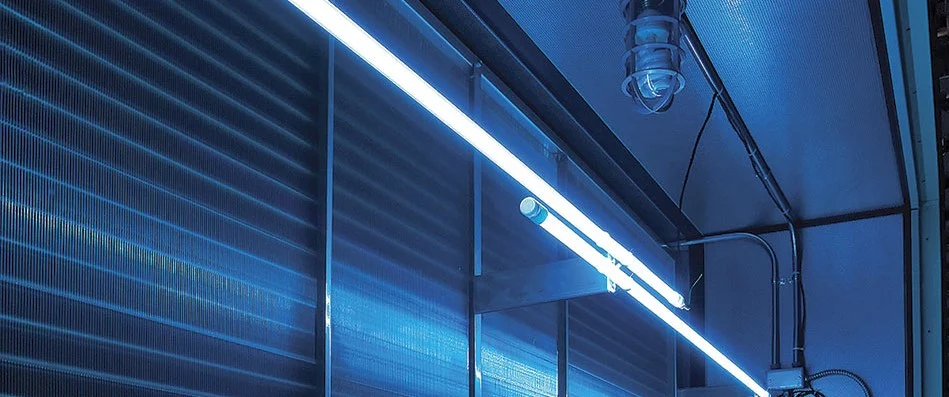
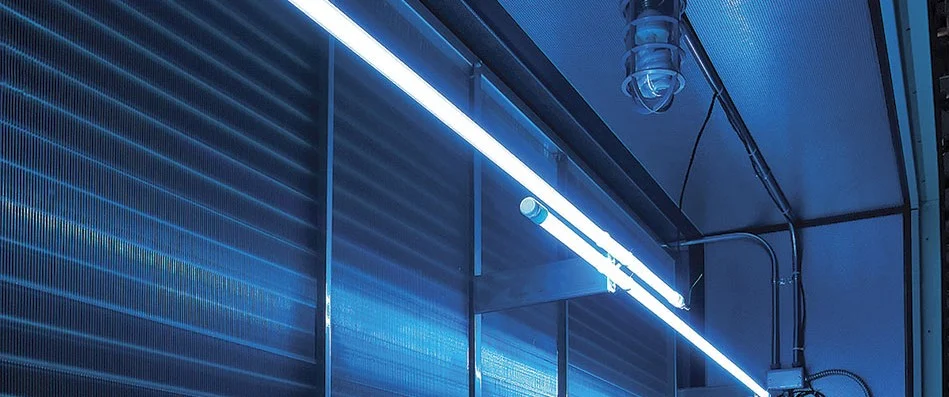
- 1990s: Engineers began integrating UV-C lamps directly into air handling units (AHUs) to keep cooling coils clean of biofilm, mold, and organic buildup. This innovation not only improved IAQ but also restored thermal transfer efficiency, yielding substantial energy savings.
The 21st Century: Pandemic Response and Intelligent Automation
- 2002–2003: The outbreak of Severe Acute Respiratory Syndrome (SARS-CoV-1) prompted renewed scientific interest in engineering controls for airborne pathogens within enclosed environments.
- 2020–2022: The emergence of the COVID-19 pandemic catalyzed an unprecedented surge in demand for advanced air purification systems. Global health organizations, including the CDC and ASHRAE, updated their technical guidelines to explicitly recommend UVGI as a frontline engineering control against SARS-CoV-2.
- Present Day: Modern UVGI systems are no longer isolated, standalone fixtures. They are increasingly integrated into smart building management systems (BMS), featuring real-time lamp monitoring, automated dimming based on occupancy or airflow rates, and predictive maintenance algorithms that ensure optimal germicidal dosage year-round.
Supporting Data and Technical Mechanics
To fully appreciate the value proposition of Ultraviolet Germicidal Irradiation, one must examine the underlying physics, microbiology, and operational data that govern its performance.
The Science of UV-C Disinfection
Electromagnetic radiation within the ultraviolet spectrum is categorized by wavelength: UVA (315–400 nm), UVB (280–315 nm), and UVC (100–280 nm). The germicidal band most effective for inactivating microorganisms lies specifically between 250 nm and 280 nm, with a peak germicidal effectiveness typically occurring around 254 nm—the exact wavelength emitted by standard low-pressure mercury germicidal lamps, as well as specialized UV-C LEDs.
When airborne or surface-bound pathogens are exposed to UV-C radiation, the photons penetrate the cell walls of microorganisms and are absorbed by their nucleic acids (DNA and RNA). This absorption triggers a photochemical reaction that fuses adjacent pyrimidine bases—most commonly forming thymine dimers.
Once these dimers are formed, the organism’s genetic material is structurally altered and rendered incapable of replication or transcription. Without the ability to reproduce, the pathogen is effectively neutralized, even if it remains physically intact within the airstream.
[UV-C Photon (254 nm)] ---> Penetrates Cell Wall ---> Absorbed by DNA/RNA ---> Forms Thymine Dimers ---> Halts Replication (Inactivated)Quantitative Performance and Dosage ($D$)
The effectiveness of a UVGI system is measured by the inactivation rate of target pathogens, which is directly proportional to the UV dose delivered. The UV dose ($D$), commonly expressed in microwatt-seconds per square centimeter ($mutextWcdottexts/cm^2$) or millijoules per square centimeter ($textmJ/cm^2$), is calculated using the following fundamental equation:
$$D = I times t$$
Where:
- $D$ = UV Dose
- $I$ = Intensity of the UV-C field ($mutextW/cm^2$)
- $t$ = Exposure time (seconds) of the microorganism within the radiation field
Different pathogens exhibit varying levels of susceptibility (the UV susceptibility constant, $k$) to UV-C radiation. For example:

- Bacteria (e.g., Legionella pneumophila, Escherichia coli) typically have fragile cell structures and are relatively easy to inactivate, requiring lower cumulative doses.
- Fungi and Mold Spores (e.g., Aspergillus niger) possess thicker cell walls and protective pigmentation, generally requiring higher UV doses for successful eradication.
- Viruses (e.g., Influenza, SARS-CoV-2) vary depending on their structural composition, but many single-stranded RNA viruses are highly susceptible to UV-C intervention when exposed to adequate dwell times within the HVAC ductwork.
Energy Efficiency and Operational Savings
Beyond biological inactivation, UVGI systems deliver quantifiable economic and thermodynamic benefits:
- Coil Cleanliness: Traditional HVAC cooling coils rapidly accumulate organic biofilms, dust, and microbial slime. This buildup acts as an insulating blanket, reducing heat transfer efficiency and forcing supply fans to work harder. Studies show that maintaining clean coils via continuous low-intensity UV-C irradiation can restore up to 10–15% of lost cooling capacity and reduce overall HVAC energy consumption by 5% to 20%.
- Reduced Chemical Use: By preventing mold and bacterial colonization on internal components, facility teams can significantly decrease the frequency and intensity of harsh chemical cleanings, lowering maintenance labor costs and minimizing the release of volatile organic compounds (VOCs) associated with cleaning agents.
Official Responses and Regulatory Guidance
The integration of UVGI into building codes and operational standards has been heavily shaped by authoritative pronouncements from leading public health and engineering bodies.
The Centers for Disease Control and Prevention (CDC)
Throughout the COVID-19 pandemic and in subsequent updates regarding respiratory illness mitigation, the CDC has consistently highlighted engineering controls as the primary line of defense against airborne transmission. The agency explicitly identifies Upper-Room UVGI and in-duct UVGI systems as highly effective supplementary strategies.
According to CDC guidance, UVGI works autonomously without requiring behavioral modifications from building occupants, making it one of the most reliable engineering safeguards available. The agency notes that when properly installed and maintained, upper-room systems can provide the equivalent of 10 to 20 air changes per hour (ACH) of clean air, far exceeding standard ventilation minimums set by traditional codes.
American Society of Heating, Refrigerating and Air-Conditioning Engineers (ASHRAE)
ASHRAE, the global authority on building services engineering, has incorporated rigorous standards and technical resources regarding UVGI into its publications, including the ASHRAE Handbook and specialized epidemic task force reports.
ASHRAE emphasizes that while increased outdoor air ventilation and high-efficiency filtration (such as MERV 13 filters or higher) are vital, they may not capture or neutralize all microscopic aerosolized particles. UVGI bridges this gap by providing continuous inactivation of pathogens that pass through filters or originate within the conditioned space itself. ASHRAE guidelines stress the importance of proper sizing, professional installation, and regular radiometer testing to ensure that UV-C output remains within design parameters over time.
Multiple Types of UVGI System Applications
Implementing UVGI requires a tailored approach. No single configuration suits every facility; rather, system designers must select the appropriate application based on the building’s layout, HVAC infrastructure, occupancy levels, and specific operational goals. There are four primary categories of UVGI system applications deployed in modern architecture:
1. In-Duct Disinfection Systems
- Mechanism: In-duct systems are installed directly inside the central air handling units (AHUs) or along supply/return ductwork. As air moves past the array of UV-C lamps, airborne pathogens are continuously irradiated.
- Primary Purpose: To disinfect air streams in real-time as they circulate through the building’s central mechanical network.
- Ideal Environments: Large commercial office towers, schools, airports, and multi-family residential complexes with centralized forced-air HVAC systems.
2. Coil Cleaning (Surface Disinfection) Systems
- Mechanism: Specialized, high-output UV-C lamps are mounted directly downstream of cooling coils and above drain pans, operating continuously or on scheduled cycles.
- Primary Purpose: To prevent and eradicate the formation of mold, mildew, bacteria, and organic biofilms on damp cooling coils and drain pans.
- Ideal Environments: Any facility utilizing central air conditioning, particularly humid climates where biological growth on evaporator coils is prolific. This application simultaneously improves IAQ and optimizes energy consumption.
3. Upper-Room (Upper-Air) Disinfection Systems
- Mechanism: These fixtures are mounted on walls or suspended from ceilings at a height typically above 7 feet. They project a controlled band of UV-C energy horizontally across the upper portion of a room. Natural thermal air currents (convection) lift room air upward, where it is disinfected by the UV field before circulating back down to the occupied zone. Louvers and shielding ensure that occupants below are not exposed to direct UV radiation.
- Primary Purpose: To provide rapid, localized disinfection in crowded or high-risk spaces without modifying the central HVAC ductwork.
- Ideal Environments: Healthcare waiting rooms, correctional facilities, homeless shelters, classrooms, cafeterias, and transit hubs.
4. Portable UV-C Air Cleaners
- Mechanism: Self-contained units that draw unconditioned room air through an internal chamber containing particulate filters and a shielded UV-C germicidal lamp array, discharging purified air back into the space.
- Primary Purpose: To offer flexible, immediate air purification in specific zones where permanent installation is impractical or where temporary surge mitigation is required.
- Ideal Environments: Conference rooms, temporary field hospitals, retail storefronts, and older historic buildings where retrofitting central ductwork is structurally prohibitive.
Implications for Facility Managers and Building Owners
The widespread adoption of UVGI carries profound implications for the future of property management, real estate valuation, and corporate risk mitigation.
1. Enhanced Tenant Health and Reduced Absenteeism
In commercial real estate, indoor environmental quality is increasingly tied to tenant retention and lease agreements. Buildings equipped with robust IAQ technologies such as UVGI offer a tangible health benefit, reducing the incidence of cold, flu, and allergy symptoms among office workers. Lower rates of illness translate directly into reduced corporate absenteeism and enhanced workforce productivity.
2. Future-Proofing Against Epidemics and Regulatory Shifts
As building codes evolve to incorporate stringent health-centric mandates, proactive facility owners who invest in UVGI today are future-proofing their assets. Integrating certified germicidal technologies positions properties to easily comply with upcoming municipal and federal IAQ standards, protecting property values and shielding ownership groups from regulatory liability.
3. ESG (Environmental, Social, and Governance) Metrics
Corporate sustainability initiatives heavily emphasize the "Social" pillar—specifically, the health, safety, and comfort of employees and visitors. Deploying energy-efficient UVGI systems demonstrates a verifiable commitment to corporate social responsibility. Furthermore, by reducing energy consumption through cleaner cooling coils, facilities actively lower their carbon footprint, supporting broader environmental governance goals.
Conclusion and Expert Support
The integration of Ultraviolet Germicidal Irradiation represents a scientifically proven, energy-efficient, and highly reliable strategy for transforming indoor air quality. By neutralizing dangerous pathogens at the microscopic level—backed by the explicit endorsements of the CDC and ASHRAE—UVGI safeguards human health while optimizing mechanical efficiency.
Whether your organization manages a sprawling commercial complex, a healthcare facility, an educational institution, or an industrial workplace, selecting and installing the correct UVGI application requires specialized engineering expertise.
If you or your team would like to learn more about how UVGI can be seamlessly integrated into your infrastructure, or if you need expert assistance in selecting and installing the optimal UVGI system for your facility, please reach out to us today. Let our experts help you breathe easier, operate more efficiently, and protect what matters most.