Main Facts
The global electric vehicle (EV) landscape is witnessing a paradigm shift defined by two converging macroeconomic trends: the inexorable descent of battery manufacturing costs and the parallel rise in fossil fuel prices. Yet, despite these favorable tailwinds, a final frontier remains for mass-market adoption. Automakers and consumers alike have long chased the elusive holy grail of energy storage: a battery technology that completely matches, or decisively beats, the operational parameters of the internal combustion engine (ICE).
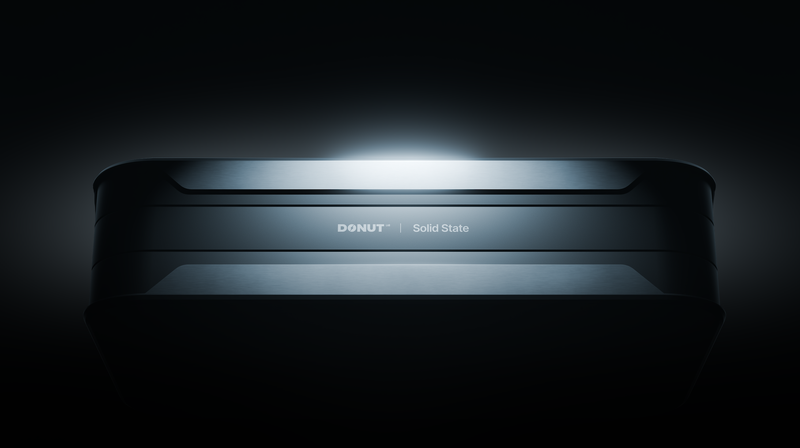
Enter Donut Lab. The Finnish clean-tech startup has captured the imagination—and intense scrutiny—of the global automotive industry with a revolutionary solid-state EV battery. Boasting a staggering energy density of 400 Wh/kg and a lightning-fast five-minute full-charge capability, the battery initially elicited a heavy dose of industry skepticism. Critics immediately dismissed the specifications as "too good to be true."
However, rather than retreating behind corporate non-disclosure agreements, Donut Lab has taken a radically transparent approach. Through rigorous, step-by-step validation reports conducted by the independent VTT Technical Research Centre of Finland, the startup is systematically dismantling skepticism. Most recently, the company published independent test results proving that its solid-state battery module retains 97% to 99% of its nominal capacity in extreme deep-freeze conditions down to -30°C (-22°F), entirely devoid of external thermal management systems, heaters, or specialized insulation.
This latest milestone follows hard on the heels of a spring 2026 validation test proving the battery functions reliably at a blistering 100°C (212°F)—the boiling point of water. Together, these extreme temperature benchmarks not only shatter long-held anti-EV myths regarding weather-induced range degradation, but they also deepen the central mystery surrounding Donut Lab: What, precisely, is inside this battery?
Chronology
To understand the magnitude of Donut Lab’s recent breakthroughs, it is essential to trace the startup’s rapid and calculated emergence onto the global stage.
- January 2026: Donut Lab formally unveils its proprietary solid-state EV battery at the Consumer Electronics Show (CES). Billed as the world’s first solid-state energy storage solution genuinely ready for Original Equipment Manufacturer (OEM) vehicle integration, the battery stuns attendees with its 400 Wh/kg density and five-minute charge time. Recognizing the immediate wave of industry skepticism, Donut Lab announces a strategic partnership with the VTT Technical Research Centre of Finland to independently evaluate and publish every phase of the battery’s performance metrics. The company launches a dedicated website, I Donut Believe, to host these exhaustive technical documents.
- March 2026: VTT releases a landmark independent report validating the battery’s functionality at 100°C. The test shocks electrochemists and battery analysts. The data reveals that when a pouch’s thin protective membrane breached during extreme thermal testing, there was a total absence of the catastrophic outgassing and violent thermal runaway fires typically associated with traditional liquid-electrolyte lithium-ion cells. This performance under high heat heavily complicates the prevailing theories that the battery relies on standard lithium formulations.
- September 2026: Speculation regarding the battery’s chemical composition hits a fever pitch. Early theories suggesting standard Nickel-Manganese-Cobalt (NMC) or modified liquid chemistries are thoroughly debunked by independent lab data and expert metallurgical analyses.
- Late Autumn 2026: Donut Lab releases its latest VTT-validated report focusing on extreme cold-weather endurance. Testing a 14-cell module in a -30°C temperature chamber for five consecutive hours without any thermal aids, VTT confirms that the battery maintains 97% of its ampere-hour capacity and charges and discharges with absolute normality.
Supporting Data
The validity of Donut Lab’s claims rests entirely on the empirical data gathered by the VTT Technical Research Centre of Finland. Far from relying on internal marketing hype, the startup’s technical benchmarks have been quantified through rigorous, reproducible laboratory methodologies.
- Energy Density: 400 Watt-hours per kilogram (Wh/kg), positioning it far ahead of standard commercial lithium-ion cells currently populating the passenger vehicle market.
- Charging Velocity: A complete 0% to 100% state-of-charge cycle executed in a mere five minutes.
- High-Temperature Threshold: Fully operational stability demonstrated at 100°C (212°F), surviving physical membrane breaches without outgassing, smoke, or fire ignition.
- Cold-Weather Resilience: Evaluated using a 14-cell module subjected to a continuous -30°C (-22°F) deep freeze for five hours. Following this deep-freeze soaking, the module retained 97% of its baseline ampere-hour capacity (measured against a standard reference at +25°C / +77°F).
- Thermal Independence: All cold-weather and high-temperature tests were conducted deliberately without internal or external heating elements, cooling loops, liquid thermal management systems, or specialized insulation jackets.
Official Responses
The transparency offensive launched by Donut Lab has forced industry executives, researchers, and company leadership to publicly address the paradigm-shifting nature of the technology.
Donut Lab’s Chief Technology Officer, Ville Piippo, has been vocal about the deliberate constraints placed upon the battery during testing to eliminate any experimental bias.
"We intentionally eliminated all the potential advantages a battery might normally have," Piippo stated in an official company release detailing the cold-weather trials. "Despite this, the battery remained unaffected by the conditions. A typical lithium-ion battery would struggle to provide power, even for a brief moment, in such cold temperatures."
Piippo further underscored the significance of abandoning auxiliary climate-control hardware:
"This validates our promise of 99% [overall architectural] capacity, which customers can expect from a fully insulated battery module without any heaters or tricks."
Independent observers have similarly shifted their tone from outright dismissal to cautious awe. Christopher Arcus, analyzing the high-temperature data for CleanTechnica, noted the profound safety implications of the VTT findings:
"Speculation that the Donut Lab battery is not real are diminishing as independent lab data shows 100° Celsius performance. Speculation that the battery may be lithium run into difficulty explaining how a battery can work at 100° Celsius. In the independent tests, the thin membrane surrounding the pouch breached. If the contents were a standard lithium-ion with liquid electrolyte, there would have been significant outgassing and the organic electrolyte would have caught fire."
Implications
The ramifications of Donut Lab’s technological milestones extend far beyond the borders of Finland, triggering ripples across the global automotive and energy storage supply chains.

1. Neutralizing the Cold-Weather EV Critique
For years, one of the most persistent arrows in the quiver of anti-EV commentators has been the undeniable drop-off in driving range and charging efficiency experienced by electric cars during severe winter months. While internal combustion engines also suffer marked fuel-efficiency penalties in sub-zero weather due to prolonged warm-up cycles and dense air resistance, the narrative has disproportionately damaged EV adoption in northern climates.
By proving that a solid-state battery can endure a five-hour deep freeze at -30°C and immediately deliver 97% capacity without pre-heating or parasitic energy drain, Donut Lab effectively renders the weather-related range anxiety argument obsolete.
2. Redefining Thermal Management Architecture
Traditional EV powertrains require complex, heavy, and expensive liquid thermal management systems (TMS) to circulate coolant, warm cells in the winter, and cool them during aggressive fast-charging or track driving. If Donut Lab’s chemistry can natively withstand extremes from -30°C to 100°C without degradation or thermal runaway, automotive engineers can strip out kilograms of peripheral hardware. This reduction in vehicle weight cascades into further efficiency gains, lower manufacturing costs, and freed-up interior cabin space.
3. The Great Chemical Mystery and Competitive Pressures
Despite the exhaustive public data dumps, the ultimate enigma remains: What chemical formulation drives this breakthrough? With traditional Nickel-Manganese-Cobalt (NMC) formulas ruled out by the extreme heat resilience, industry analysts are left guessing.
Meanwhile, legacy automakers are racing down alternative pathways. In the United States, automotive giants like General Motors are leaning into Lithium Manganese-Rich (LMR) formulas to bridge the gap between low-cost Lithium-Iron-Phosphate (LFP) batteries and high-density performance needs, recently designating facilities like the Spring Hill, Tennessee plant for LMR production. Concurrently, competitors like Ford are doubling down on localized, wholly-owned LFP production infrastructure to hit aggressive affordability targets, such as upcoming sub-$30,000 electric pickup programs.
Should Donut Lab successfully transition its solid-state chemistry from VTT-validated lab modules to mass-market commercial assembly lines, the entire multi-billion-dollar global battery strategy pursued by legacy OEMs could face sudden obsolescence. For now, the automotive world watches, waits, and checks the data reports streaming out of Finland—wondering how long a startup can keep its greatest secret while proving its impossible performance.