WAKEFIELD, MA — In the high-stakes world of biomedical and pharmacological research, experimental integrity often hinges on variables that go far beyond the compounds in a beaker or the genetic lineage of a specimen. Environmental factors—specifically ambient temperature, relative humidity, and air exchange rates—play a definitive, non-negotiable role in study outcomes. This is particularly true in vivarium environments, where murine (mouse) models are housed. Even minor fluctuations in climate can induce physiological stress in subjects, potentially compromising months of clinical observation and scientific data.
Addressing these exacting demands, Building Automation Systems (BAS) has successfully executed a comprehensive, turnkey design-build HVAC modernization project for an active, high-security murine research laboratory in Wakefield, Massachusetts. The complex intervention successfully resolved chronic environmental instability that had plagued the facility’s legacy infrastructure, deploying state-of-the-art mechanical systems and a sophisticated Johnson Controls building management platform.
Executed under extreme operational constraints—including the mandate for zero disruption to ongoing research protocols and precise coordination around live animal delivery schedules—the project was brought from initial engineering study to full operational commissioning in under six months. The overhaul not only safeguards the welfare of the research subjects and the validity of the studies, but also serves as an industry case study in executing critical infrastructure retrofits within delicate, occupied research spaces.
Main Facts: The Scope and Scale of the Wakefield Laboratory Overhaul
The Wakefield research facility project was not a simple equipment swap; it was an exhaustive infrastructure remediation. The client’s primary operational friction stemmed from the persistent inability of their legacy heating, ventilation, and air conditioning (HVAC) system to maintain tight, repeatable setpoints for temperature, relative humidity, and outside air ventilation. In an animal research setting, these parameters are heavily regulated by institutional guidelines and welfare standards, making reliable control an absolute necessity.
To diagnose and permanently correct these deficiencies, the project scope demanded a multi-disciplinary, turnkey approach. BAS, in collaboration with its sister firm Systems Design Group (SDG), executed a comprehensive project lifecycle that encompassed:
- An exhaustive preliminary engineering study and thermal load analysis.
- A facility-wide energy audit to identify efficiency opportunities.
- Full mechanical design and professional engineering (PE) drawings stamped for municipal permits.
- Strategic equipment selection tailored to vivarium-specific biological loads.
- Complete demolition of obsolete hardware and seamless installation of modern mechanical infrastructure.
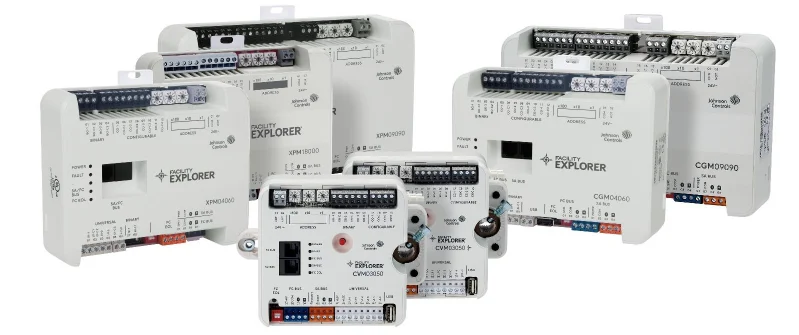
- Deployment, programming, and integration of a cutting-edge Johnson Controls building management system (BMS).
The entire undertaking was executed by in-house specialists—including BAS mechanical contractors, field electricians, certified technicians, and controls programmers—ensuring strict quality control and accountability from inception to handover.
Chronology: From Diagnostic Study to Seamless Commissioning
The timeline of the Wakefield laboratory project underscores the efficiency of the design-build delivery method, particularly when executed by tightly integrated partner firms.
Phase 1: Assessment and Engineering (Months 1–2)
The project commenced with a rigorous engineering evaluation conducted by Systems Design Group. The audit revealed that the laboratory’s legacy HVAC infrastructure—anchored by an 18-year-old packaged rooftop heating and cooling unit—was operating well past its design life cycle and lacked the modulating capacity required to handle changing seasonal latent and sensible loads. Concurrently, the stand-alone pneumatic and basic electronic controls were incapable of maintaining balanced directional airflow, leading to dangerous fluctuations in laboratory pressurization.
Phase 2: Design, Permitting, and Procurement (Month 3)
Following the completion of the feasibility study and energy audit, SDG drafted comprehensive mechanical and electrical design packages. These blueprints were subjected to rigorous internal peer review before being officially stamped and submitted for municipal building permits in Wakefield. Simultaneously, BAS procurement specialists secured long-lead items, including a custom-configured 20-ton packaged air handling unit and advanced Johnson Controls FX-series hardware, mitigating potential supply chain bottlenecks.
Phase 3: Strategic Construction and Phased Installation (Months 4–5)
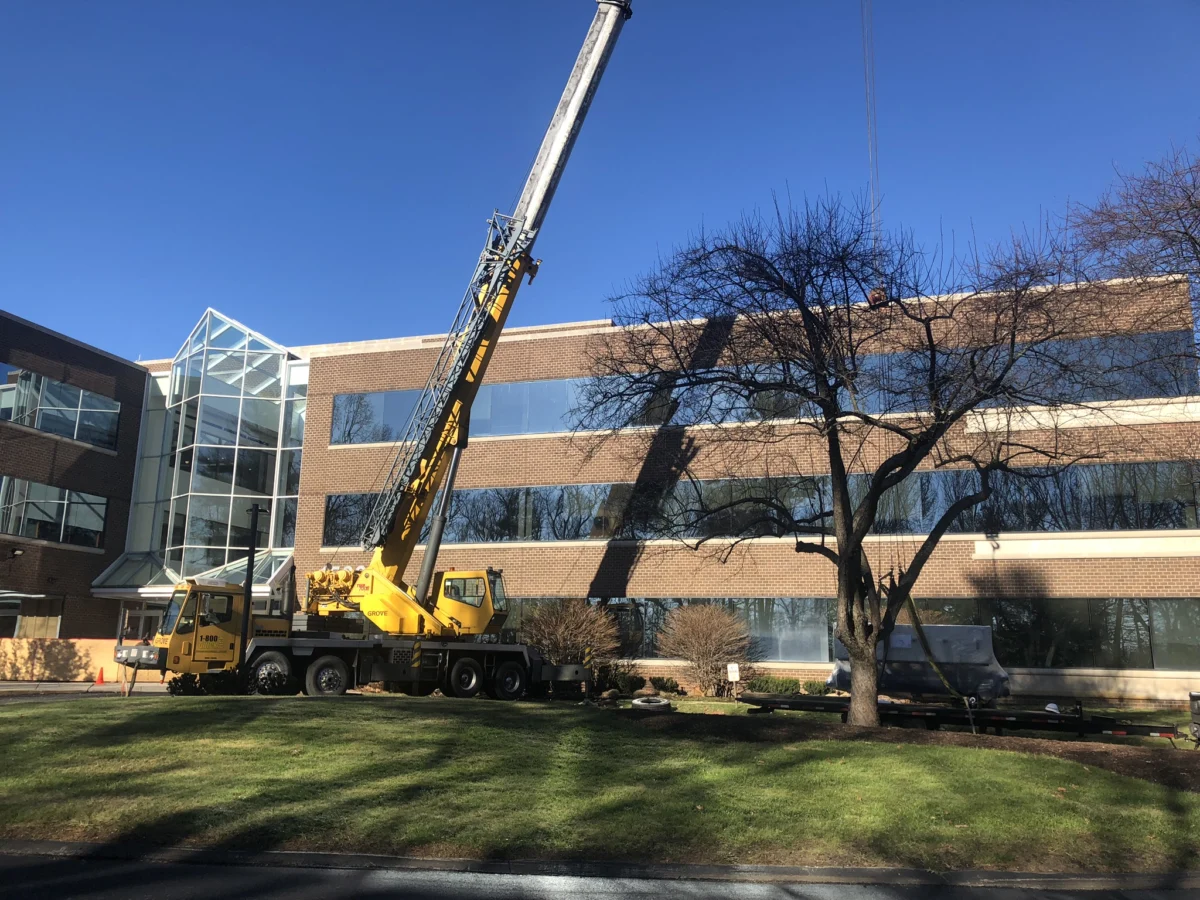
Construction scheduling was arguably the most delicate aspect of the entire undertaking. Because the facility housed active colonies of research mice, total system shutdowns were strictly prohibited. Furthermore, the project management team had to synchronize heavy construction milestones—such as crane lifts for rooftop equipment replacement and major ductwork modifications—around strict delivery calendars for new animal shipments.
By timing heavy construction phases during lulls between experimental cohorts, the contractor minimized laboratory downtime to near zero. Existing legacy infrastructure was systematically decommissioned and removed, making way for the new air handling apparatus and integrating seamlessly with retained duct heaters, humidifiers, and exhaust systems.
Phase 4: Commissioning and Handover (Month 6)
The final phase involved rigorous point-to-point commissioning, loop tuning, and performance verification of the Johnson Controls FX80 supervisory controller. System integration testing confirmed that the new mechanical architecture could dynamically track temperature and humidity targets under simulated peak summer and winter extreme loads. The project was officially signed off and handed over to facility managers precisely within the six-month window.
Supporting Data: Comparative Analysis of Legacy vs. Modernized Systems
To fully understand the magnitude of the improvement achieved at the Wakefield facility, it is instructive to examine the technical parameters of the legacy system versus the newly engineered installation.

| System Parameter | Legacy HVAC Infrastructure | Modernized BAS/SDG Installation |
|---|---|---|
| Primary Equipment | 18-year-old packaged rooftop heating and cooling unit. | 20-ton packaged Air Handling Unit (AHU) with staged gas heat and direct expansion (DX) cooling. |
| Air Delivery Model | Constant volume system prone to airflow stratification and poor turndown. | Variable and precisely modulated air delivery paired with dedicated electric duct heaters for discharge temperature control. |
| Zone Reheat & Control | Stand-alone local thermostats controlling basic duct reheat coils per lab zone. | Integrated multi-stage heating, cooling, and humidification sequencing tied to centralized feedback loops. |
| Exhaust & Pressurization | 4 independent exhaust fans for fume hoods and grilles; chronic lab pressure instability. | Optimized utilization of existing 4 exhaust fans paired with real-time pressure monitoring and dynamic tracking. |
| Humidification | Stand-alone duct humidifier operating independently of thermal loads. | Intelligent moisture addition via retained duct humidifier, modulated by real-time space sensor feedback. |
| BMS / Supervisory Control | Fragmented, stand-alone pneumatic/electronic controls with no remote visibility. | Johnson Controls FX-series architecture governed by an FX80 supervisory controller for remote trending and alarms. |
Engineering Innovations in Mechanical Selection
A key technical hurdle in vivarium design is the management of outside air (OA) ventilation rates, which must remain high to dilute animal odors, dander, and metabolic byproducts (such as ammonia). The newly selected 20-ton packaged AHU was specifically engineered to accommodate high volumes of outside air while maintaining strict supply air temperatures.
Because standard direct-expansion (DX) cooling and gas heating configurations can struggle to fine-tune discharge air when encountering volatile New England weather, BAS engineers incorporated an additional, precision-controlled stage of electric duct heating. This secondary thermal layer acts as a fine-tuning mechanism, ensuring that air delivered to the sensitive laboratory zones is neither over-cooled nor under-conditioned, regardless of ambient outdoor swings.
Furthermore, the integration strategy demonstrated high economic and environmental stewardship by selectively retaining viable legacy assets. Rather than completely stripping the facility down to the bare studs, the design team successfully retained four primary exhaust fans, five localized duct heaters, and the existing duct humidifier, integrating them seamlessly into the new control network to minimize capital expenditure and material waste.
Official Responses and Stakeholder Perspectives
The success of the Wakefield project highlights the efficacy of collaborative, design-build execution in specialized industrial and institutional construction.
Speaking on the operational challenges of the site, a senior project manager for Building Automation Systems emphasized the human and scientific stakes involved in the retrofit. "When you are working in a space dedicated to live animal research, margin for error is effectively zero," noted the project lead. "An HVAC failure isn’t just an economic nuisance resulting in high energy bills; it is a variable that can invalidate months, or even years, of peer-reviewed scientific inquiry. Our primary mandate was to build a bulletproof, highly responsive environmental envelope that protects the test subjects while giving the facility’s administrative and research staff total, intuitive command over their spaces."
Representatives from Systems Design Group echoed these sentiments, pointing to the structural advantages of keeping engineering and installation under a unified operational umbrella. "Traditional delivery models often create friction between the engineering consulting firm and the mechanical contractor," an SDG spokesperson explained. "By combining forces, our teams eliminated the traditional ‘finger-pointing’ dynamic. Design drawings were engineered with constructability in mind from day one, and our in-house engineering stamp meant we could navigate municipal permitting hurdles without the delays typical of third-party handoffs."
Client representatives at the research facility expressed profound relief following the commissioning phase. Laboratory managers, who previously had to manually log and troubleshoot erratic temperature swings using outdated stand-alone thermostats, now operate with complete digital transparency.
Implications: The Future of Critical Environment Automation
The successful completion of the Wakefield murine laboratory project holds significant implications for the broader building automation and critical environment sectors. As biomedical research grows increasingly sophisticated, the tolerance for environmental variance in animal and human clinical spaces is tightening.
1. The Rise of Intuitive, Centralized Supervision
The deployment of the Johnson Controls FX80 supervisory controller at the Wakefield facility illustrates a broader industry shift toward centralized, cloud-accessible building management systems. Modern lab managers are no longer tethered to mechanical rooms or localized wall thermostats. Through real-time data streaming, trend analysis, and automated alarm protocols, facility operators can identify microscopic deviations in static pressure or relative humidity before those deviations cascade into biological stress events for research subjects.
2. Validating the Design-Build Model for Occupied Facilities
Executing complex HVAC retrofits in active, sensitive environments proves that the design-build methodology is superior to traditional design-bid-build approaches for mission-critical facilities. By collapsing engineering, auditing, procurement, and mechanical installation into a single synchronized workflow, project owners can slash total project durations—in this case, achieving full commissioning in under six months—while radically reducing the risk of operational downtime.
3. Energy Efficiency Meets Biological Stewardship
There is often a perceived conflict between maintaining the exceptionally high outside air change rates required in vivariums and meeting modern corporate or institutional energy-efficiency mandates. The Wakefield project demonstrates that intelligent, sequenced control programs can bridge this gap. By modulating staged heating, DX cooling, and humidification in tight synchronization with real-time space sensor feedback, the facility achieves optimal biological conditions without wasting thermal energy.
Conclusion
As the Wakefield research facility enters its post-retrofit operational era, the completed installation stands as a testament to precision engineering and meticulous project management. By replacing aging, fragmented infrastructure with an integrated, intelligent Johnson Controls architecture, Building Automation Systems has ensured that the facility’s vital research can proceed uninterrupted, anchored by a stable, reliable, and scientifically sound indoor climate.