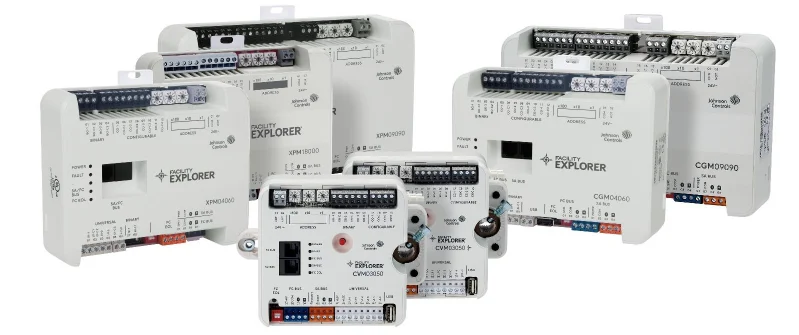
MILWAUKEE — In a comprehensive product rollout, Johnson Controls has announced a sweeping expansion of its building automation ecosystem. Aimed at addressing the evolving demands of modern commercial real estate, data centers, educational campuses, and industrial facilities, the late-January release introduces cutting-edge hardware, intelligent plug-load management tools, hybrid supervisory controllers, and advanced environmental sensors.
This strategic update underscores Johnson Controls’ ongoing commitment to driving sustainability, enhancing interoperability, and streamlining installation workflows for building management professionals worldwide. By bridging the gap between granular field-level data and high-level enterprise supervision, the new portfolio empowers facility managers to optimize energy consumption, reduce carbon footprints, and maintain healthier indoor environments with unprecedented precision.
Main Facts: A Comprehensive Look at the New Portfolio
The latest product rollout from Johnson Controls impacts nearly every layer of the Building Management System (BMS) architecture—from the room and equipment level up to plant-wide supervision and cloud-integrated energy management.
At the core of the announcement are five major additions and enhancements:
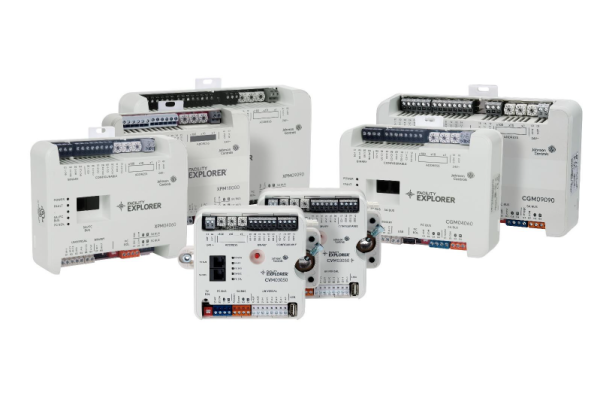
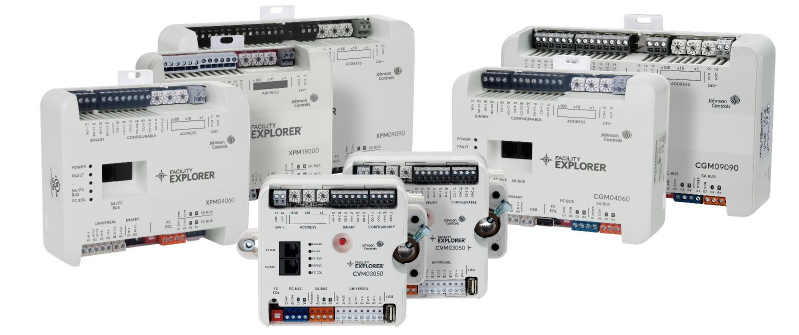
- Next-Generation Equipment Controllers: Expansion of the hardware family to include a new general-purpose application equipment controller, a specialized Variable Air Volume (VAV) box controller with position feedback, and three robust expansion I/O modules. Additionally, CGM and CVM controllers now feature an integral real-time clock.
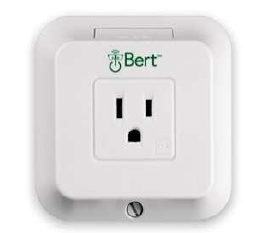
- BERT Plug Load Management: Introduction of smart plugs and inline circuit controllers designed to monitor, automate, and curtail energy waste from individual electrical plug loads.
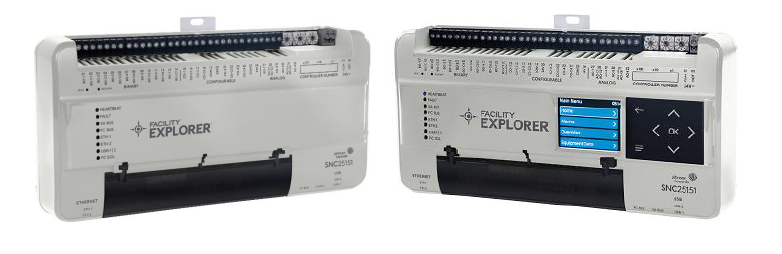
- Next-Generation Supervisory Plant Controller (SNC) Series: A brand-new line of hybrid controllers combining supervisory and equipment-level control into a single, unified hardware and software platform, fully supporting BACnet® Protocol Revision 18.
- HE-6900 Duct Probe RH and Temperature Sensor: Plenum-rated, highly accurate humidity and temperature sensors engineered specifically for HVAC ductwork.
- GS3000 Gas Detection Sensor Series: Cost-effective indoor and outdoor gas sensors for monitoring carbon monoxide (CO) and nitrogen dioxide (NO2), safeguarding occupant health in enclosed areas.
Chronology: The Evolution of the Release
The late-January product launch represents the culmination of a multi-year engineering push by Johnson Controls to modernize its Facility Explorer ecosystem.
- Phase 1: Research and Development (Early to Mid-2023): Responding to industry shifts toward hybrid work environments and aggressive corporate net-zero carbon targets, Johnson Controls engineers focused heavily on edge-computing capabilities and standalone resiliency. This led to the development of the integral real-time clock for field controllers and the conceptualization of unified hybrid supervisory controllers.
- Phase 2: Interoperability and Testing (Late 2023): As cybersecurity threats and smart-building integration demands grew, the company prioritized compliance with the latest communication standards. The integration of BACnet® Protocol Revision 18 into the SNC series underwent rigorous beta testing to ensure seamless integration with third-party automation networks.
- Phase 3: Official Market Launch (Late January): Johnson Controls officially released the complete lineup to its global network of authorized distributors, system integrators, and building automation partners, accompanied by comprehensive documentation and configuration toolsets.
Supporting Data & Technological Deep Dive
To fully appreciate the scope of this release, industry analysts and building engineers must examine the specific technological advancements embedded within each product category.
1. Next-Generation Controllers and Standalone Resilience
The expansion of the equipment controller family brings added flexibility to system designers. The inclusion of a dedicated VAV box controller with position feedback ensures tighter airflow regulation, which is critical for maintaining thermal comfort and indoor air quality (IAQ).
Perhaps the most impactful operational enhancement is the integral real-time clock (RTC) now standard on CGM and CVM controllers. Previously, controllers often relied on continuous network synchronization to maintain schedules. With the built-in time clock:
- Controllers can autonomously monitor and execute complex schedules, calendars, and trend logs.
- Devices can operate as fully functional standalone units for extended periods during network outages or offline maintenance windows of the Facility Explorer system.
- Facility teams experience enhanced system reliability and zero data loss during communication interruptions.
2. Tackling Phantom Loads with BERT Technology
While HVAC and lighting systems traditionally receive the lion’s share of energy management attention, "plug loads"—the power consumed by office equipment, vending machines, micro-kitchen appliances, and peripheral electronics—often account for up to 30% to 40% of a commercial building’s total electricity consumption. Much of this energy is wasted overnight or during weekends when devices sit idle.
The BERT (Building Energy Reduction Technology) Plug Load Management system directly addresses this inefficiency:
- Smart Plugs and Inline Controllers: These devices monitor and control electrical plug loads at the individual circuit or device level.
- Wi-Fi Connectivity and Automation: Each plug features an integrated controller with Wi-Fi capability, allowing operators to make or break electrical circuits on command. Automation logic can be driven by schedules, occupancy detection sensors, or customized BMS algorithms.
- Real-Time Metering: The controllers continuously measure electrical current and power flow, offering granular data feeds that integrate smoothly into existing BMS frameworks to verify energy savings and calculate carbon reductions.
3. Unified Architecture: The SNC Supervisory Series
Historically, building automation architectures required separate hardware for equipment-level control and supervisory network management. The FX Supervisory Plant Controller (SNC) series shatters this paradigm by introducing a hybrid architecture that merges both functions into a single hardware and software package.
Key technical specifications of the SNC series include:
- Dual-Duty Performance: Acts as the central nervous system for Facility Explorer architectures, providing network management and control coordination across one or more equipment controller networks while simultaneously executing local control sequences.
- BACnet Revision 18 Support: Delivers superior interoperability, allowing building operators to seamlessly integrate multi-vendor equipment and leverage advanced diagnostic features.
- Flexible Networking and Expansion: Equipped with onboard inputs and outputs, Ethernet ports supporting daisy-chain IP topologies, and an SA bus connection capability. This enables project engineers to cost-effectively scale their I/O count without purchasing redundant controllers.
4. Precision Sensing: HE-6900 and GS3000 Series
Accurate environmental data forms the foundation of any intelligent control strategy. The new sensor offerings provide high-fidelity inputs that protect building infrastructure and occupants alike:
- HE-6900 Duct Probe: Housed in a durable, easy-to-install plastic enclosure, this sensor measures relative humidity across a full 0% to 100% RH spectrum. Offered in strict $pm$2% RH and $pm$3% RH accuracy tiers with various temperature sensor options, the HE-6900 is UL 2043 certified, qualifying it safely for installation within environmental air plenums.
- GS3000 Gas Detection Series: Designed for both indoor and outdoor deployments, this sensor family continuously monitors carbon monoxide (CO) and nitrogen dioxide (NO2) levels. By providing early warnings of toxic gas accumulation—particularly in enclosed parking structures, loading docks, and mechanical rooms—the GS3000 ensures compliance with safety codes while optimizing ventilation energy usage.
Official Responses and Industry Perspectives
Although specific executive soundbites varied across regional distribution networks, industry insiders and product specialists have widely praised the release for its pragmatic approach to contemporary building challenges.
"Facility managers today are caught between conflicting mandates: they must drastically reduce carbon emissions and operational expenditures while simultaneously improving occupant health and building flexibility," noted an industry automation consultant familiar with the Facility Explorer lineup. "By focusing on edge resilience, plug-load visibility, and hybrid controllers that reduce hardware footprint, Johnson Controls has delivered a toolset that directly addresses the economic realities of running modern real estate."
Furthermore, systems integrators have expressed enthusiasm for the inclusion of BACnet Protocol Revision 18 on the SNC supervisory controllers. In an era where proprietary systems are increasingly rejected in favor of open-protocol ecosystems, enhanced third-party interoperability significantly reduces engineering hours during the commissioning phase.
Implications for the Building Automation Industry
The introduction of these advanced hardware and software solutions carries profound implications for building owners, engineering firms, and system integrators across the globe.
1. Accelerated Decarbonization Pathways
With commercial real estate facing stringent regulatory penalties for carbon emissions (such as New York’s Local Law 97 or equivalent global building performance standards), property owners can no longer afford to ignore unregulated electrical consumption. The integration of BERT plug-load management into standard BMS workflows provides an accessible, verifiable lever to trim stubborn electrical loads, directly translating to lower utility bills and reduced Scope 2 and Scope 3 greenhouse gas emissions.
2. Reduced Capital and Installation Expenditures
The hybrid design of the SNC supervisory series, combined with expandable I/O modules on the next-generation controllers, redefines project economics. By consolidating supervisory and equipment control into fewer physical boxes, manufacturers are helping contractors cut down on panel space, wiring complexity, and labor-intensive installation hours. This reduction in total installed cost makes high-end building automation viable for a wider range of mid-market commercial and institutional facilities.
3. Elevated Occupant Safety and Indoor Environmental Quality (IEQ)
Post-pandemic expectations for indoor spaces emphasize transparency and active management of air quality and environmental safety. The combination of high-accuracy duct sensors (HE-6900), precise VAV position feedback, and reliable gas detection (GS3000) ensures that building management systems can dynamically react to real-time occupancy and environmental hazards, fostering healthier, more productive indoor spaces.
Conclusion
Johnson Controls’ late-January product introduction represents a holistic leap forward for the Facility Explorer ecosystem. By uniting edge-level resilience, granular plug-load visibility, hybrid supervisory power, and high-precision environmental sensing into a cohesive offering, the company continues to shape the future of smart buildings.
Building automation professionals and facility operators interested in exploring how these next-generation controllers, sensors, and energy management tools can be integrated into upcoming or existing retrofit projects are encouraged to reach out to certified building automation specialists for detailed engineering consultations and product availability.