In a landmark shift for international development finance, the World Bank Group (WBG) has announced a fivefold increase in its support for the metals and minerals sector, earmarking $19 billion to be deployed between fiscal 2026 and 2030. This ambitious commitment represents more than a mere capital infusion; it signals a strategic evolution that elevates critical minerals from a peripheral policy concern to a core pillar of global development. By integrating sovereign financing, private capital mobilization, and political-risk insurance, the Bank is attempting to catalyze a new era of industrialization in resource-rich nations.
The initiative, unveiled on October 16, 2026, at the Annual Meetings in Bangkok, aims to test a critical hypothesis: can multilateral development banks (MDBs) effectively de-risk large-scale mining and processing projects without compromising the stringent environmental, social, and governance (ESG) standards that define modern, responsible investment?
The Mechanics of the $19 Billion Commitment
The $19 billion target is a composite figure, combining the World Bank’s own public-sector lending with the massive mobilization of private capital. The strategy leverages the distinct strengths of the Group’s constituent arms:
- The World Bank (IBRD/IDA): Provides the policy advice, technical assistance, and sovereign finance necessary to establish stable regulatory environments.
- The International Finance Corporation (IFC): Acts as the direct investment arm, taking equity positions or providing debt to projects, thereby signaling confidence to other commercial lenders.
- The Multilateral Investment Guarantee Agency (MIGA): Offers critical political-risk insurance, protecting investors against expropriation, breach of contract, or civil unrest—barriers that have historically deterred capital from emerging markets.
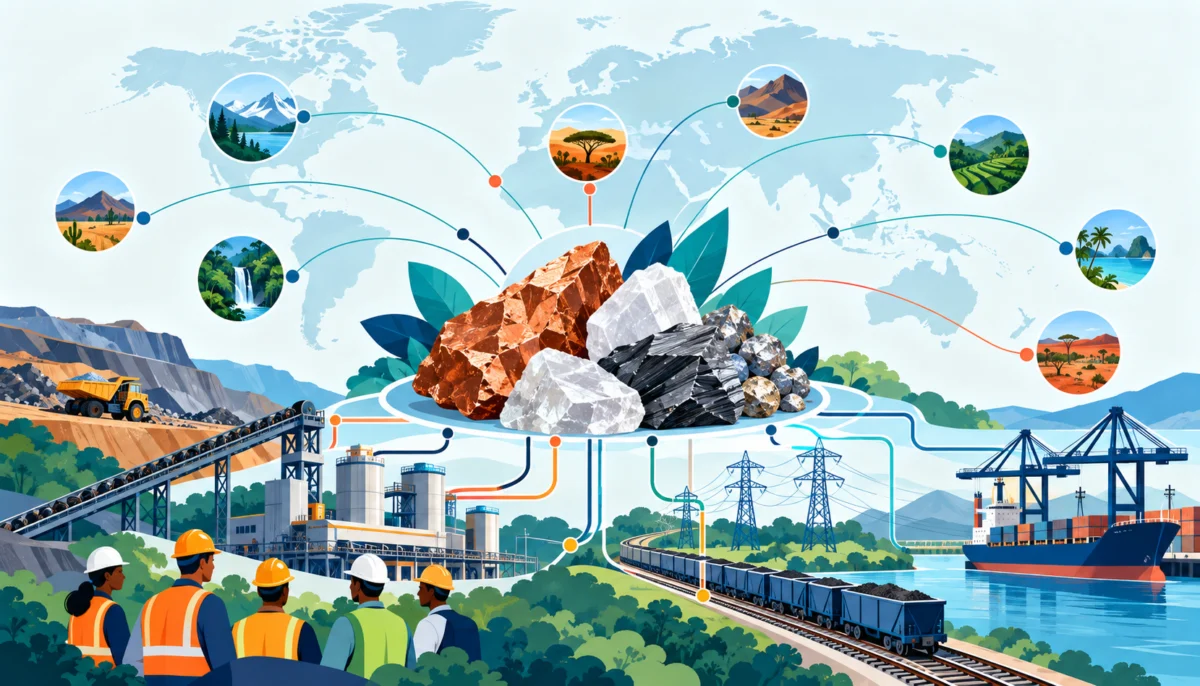
This multi-pronged approach is designed to match the capital structure to the specific needs of the project. Whether the requirement is for a power plant to support a remote mine, a railway line for ore transport, or an advanced refining facility, the WBG’s toolkit is intended to lower the cost of capital and extend the duration of project financing.
Chronology: From Strategy to Execution
The path to this $19 billion expansion has been paved by a series of strategic milestones throughout 2026:
- April 2026: Six of the world’s leading multilateral development banks issued a joint statement pledging to coordinate efforts in critical minerals. They agreed to share diagnostic data and align project preparation to avoid the "silo effect" that has plagued previous development efforts.
- June 2026: The World Bank and Japan launched the "RISE+" facility, a $20 million precursor fund designed to help developing nations prepare the infrastructure—and the policy framework—necessary to attract private investment.
- September 2026: The WBG reported a record-breaking year for private capital mobilization, hitting $112 billion. This success provided the institutional confidence required to announce the much larger $19 billion mining-specific package.
- October 16, 2026: During the Annual Meetings in Bangkok, WBG President Ajay Banga formally announced the country-level compacts with Argentina, Bolivia, Egypt, India, Kazakhstan, Malawi, Mauritania, and Zambia.
Country Compacts: A Targeted Development Approach
The core of this initiative lies in the "Country Compacts." These are not blanket loans, but bespoke agreements that identify specific reforms and infrastructure requirements tailored to each nation’s unique geology and industrial goals.
Regional Highlights:
- India: Seeking to mobilize $5 billion by 2031, India’s partnership focuses on the creation of "rare-earth corridors," advanced manufacturing, and a robust recycling ecosystem.
- Kazakhstan: With a goal to mobilize $20 billion, the focus is on systemic reform, improved geological mapping, and moving up the value chain from raw extraction to metal processing.
- Zambia: Central to its plan is an ambitious production target—three million metric tons of copper annually by 2031—while simultaneously building domestic capacity to refine and manufacture finished products.
- Egypt: Aims for a 6% contribution of minerals to its GDP by 2030, with a focus on diversifying exports to reach $9.8 billion annually by 2040.
- Argentina & Bolivia: Both nations are focusing on the "lithium triangle" dynamics, prioritizing institutional coordination, logistics, and the development of value chains that benefit local populations rather than just foreign shareholders.
Supporting Data and Economic Rationale
The economic case for this intervention is built on the "value-add" principle. Historically, developing nations have been relegated to the bottom of the mineral supply chain, exporting raw, unrefined ore. This leaves them vulnerable to commodity price volatility and denies them the higher-margin jobs associated with refining and manufacturing.
The World Bank’s research suggests that by connecting mining projects to energy infrastructure and local workforce development, host countries can significantly widen their tax base. Furthermore, the global demand for energy transition minerals—copper for grids, lithium for batteries, and rare earths for electronics—creates a unique window of opportunity. The WBG’s involvement is intended to ensure that this demand translates into long-term economic resilience rather than a "resource curse."
Official Responses and Strategic Implications
President Ajay Banga has framed the initiative within a broader "jobs strategy." In his remarks at the plenary, he noted that the Group has already identified 20 countries as ripe for cooperation. "The goal is not just to dig holes in the ground," he implied, "but to build local industries that retain value at home."
The implications for the private sector are profound. By utilizing MIGA guarantees and IFC risk-sharing, institutional investors—such as pension funds and sovereign wealth funds—may finally have a pathway to enter markets previously deemed "too risky." However, the strategy also carries risks. If governments are forced to subsidize domestic processing without competitive power or logistics, they risk creating "white elephant" projects that struggle to compete in the global market.
Challenges and Risks: A Critical Assessment
Despite the optimism, analysts are watching several key metrics. The WBG’s initiative is not a guarantee of success. Success will depend on factors beyond financing:
- Permitting and Governance: Even with financing, projects can be stalled by bureaucratic gridlock, opaque permitting, or corruption. The compacts mandate transparency, but implementation remains the responsibility of national governments.
- Fiscal Sustainability: There is a real danger that countries may over-leverage their balance sheets. Guarantees and state-equity stakes must be carefully managed to avoid triggering sovereign debt crises if commodity prices plummet.
- Community Consent: Mining has historically been a flashpoint for social conflict. The compacts emphasize environmental and social oversight, but the real test will be whether these protections survive the transition from the boardroom to the mine site.
- Market Volatility: While demand for minerals is currently high, the industry is notoriously cyclical. Projects must be able to withstand price dips, which requires disciplined capital structures and, in some cases, long-term offtake agreements.
The Path Forward: What to Watch
As this program moves from the announcement phase into the deployment phase, stakeholders should track three specific indicators:
- Financial Close vs. Announcements: The $19 billion figure is a target for total mobilization. The true success of the program will be measured by the number of projects that reach "financial close," a point where private capital is fully committed and construction begins.
- Infrastructure Synergy: Monitor the progress of power and transport links. Mining projects in remote regions are only as viable as the infrastructure that supports them.
- Local Value Creation: The ultimate metric of success is the growth of local employment and the expansion of the local supply chain. Are these countries actually producing more refined metal, or are they still exporting raw material?
The World Bank’s shift toward a proactive, financed development program marks a departure from its traditional role as a passive lender. By placing itself at the center of the global minerals value chain, the Group is taking a calculated risk. If successful, the $19 billion program could transform the economic trajectory of dozens of emerging economies. If it fails to maintain underwriting standards or falls prey to political interference, it risks repeating the errors of past development initiatives. For now, the world is watching to see if the Bank can successfully balance the urgent need for mineral supply security with the equally urgent need for sustainable, locally-led economic growth.