NASHVILLE — As the aviation industry gathers for the annual Cargo Facts Symposium, a pressing and increasingly anxious conversation is dominating the halls: What comes after the Boeing 767 freighter?
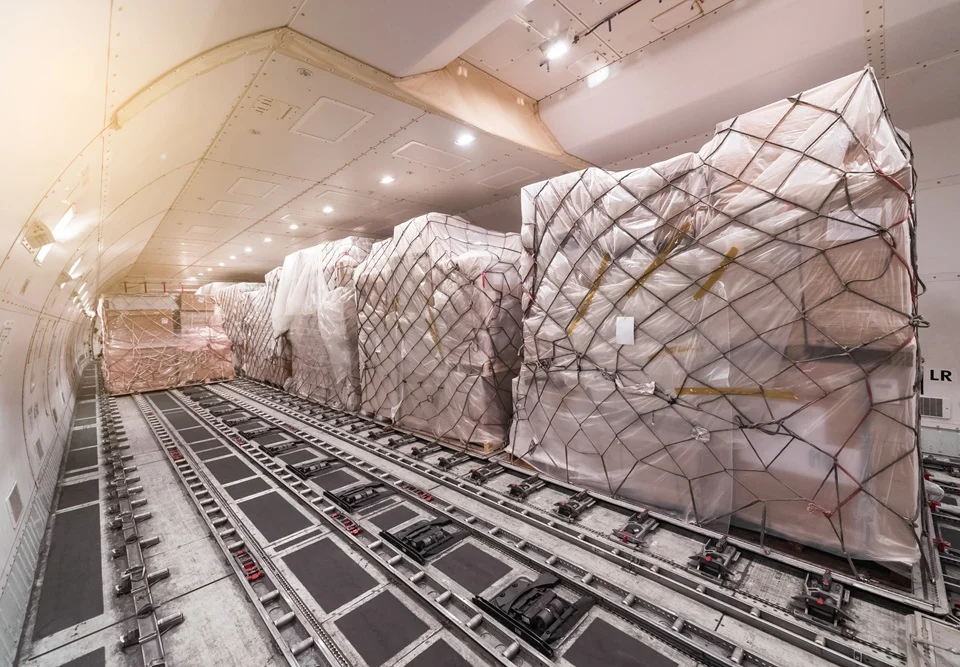
For decades, the midsize cargo aircraft has formed the backbone of global supply chains, efficiently bridging the gap between regional feeder networks and intercontinental heavyweight routes. At the heart of this segment is the Boeing 767 Freighter (767F), a dependable twin-engine workhorse capable of hauling a roughly 50-tonne payload—roughly half the capacity of the largest widebody freighters.
However, time is running out for the venerable jet. With Boeing’s production backlog dwindling and a definitive end to 767F assembly scheduled for 2027, air cargo executives are sounding the alarm. Major carriers, lessors, and conversion specialists are urging manufacturers like Boeing and Airbus, alongside third-party engineering houses, to fast-track a viable next-generation midsize replacement.
Industry leaders warn that without a clear successor on the horizon, the midsize cargo market faces a looming operational cliff as the second half of the 2030s approaches.
Main Facts: The Looming Midsize Capacity Gap
The core issue facing the air cargo sector is a stark lack of a one-to-one, new-generation widebody replacement.
- The 767F Sunset: Boeing is winding down production of the 767F, with the final aircraft expected to roll off the line in 2027. While conversion shops have successfully turned passenger 767s into freighters for years, these airframes cannot sustain operations indefinitely.
- Manufacturer Focus: Both major OEMs have largely concentrated their widebody freighter efforts on the ultra-large end of the market. Boeing is developing the delayed 777-8F, while Airbus is pressing forward with the A350F, targeting certification in the second half of 2027.
- The 787 Dreamliner as the Logical Successor: Across the industry, the Boeing 787 is viewed as the most natural foundation for a next-generation midsize freighter—either as a factory-built model or via a passenger-to-freighter (P2F) conversion program. Some interest also exists for an Airbus A330neo cargo variant, but the Dreamliner commands the lion’s share of attention.
- The Technical Hurdle: Unlike older aluminum aircraft, the 787 features an advanced composite fuselage and complex core technologies. Modifying it requires deep OEM collaboration, massive capital investment, and specialized engineering to avoid exorbitant development costs.
Chronology: How the Midsize Freighter Dilemma Unfolded
The current urgency in the cargo market is the result of years of shifting manufacturing priorities, post-pandemic demand spikes, and environmental regulations targeting emissions.
- Early 2000s to 2010s: The Boeing 767 freighter establishes dominance in the midsize market. Its payload-range profile makes it the go-to aircraft for medium-haul, medium-demand routes operated by companies like FedEx, UPS, and LATAM.
- Late 2010s to 2020: Environmental pressures and stricter fuel-efficiency standards drive airlines to look for modern-engine replacements, but OEMs prioritize passenger widebodies and larger freight variants.
- 2021–2023: Global supply chain crunches during the COVID-19 pandemic drive unprecedented demand for air cargo capacity. Conversion lines for older aircraft run at maximum capacity, but the clock ticks louder for midsize airframes.
- October 2024: Boeing announces further timeline adjustments, confirming that production of the 767F will definitively conclude in 2027, while the 777-8F is pushed out to 2028.
- October 22 (Cargo Facts Symposium, Nashville): Executives from LATAM Cargo, Air Transport Services Group (ATSG), and various conversion firms openly criticize the manufacturers for lagging behind, pushing the 787 conversion concept into the spotlight.
- Present Day: The debate intensifies. While conversion specialists like Israel Aerospace Industries (IAI) and Kansas Modification Center (KMC) express eagerness to tackle the 787, structural realities—such as soaring demand for passenger 787s and a lack of feedstock aircraft—keep the dream of a 787 freighter on the drawing board.
Supporting Data: Fleet Reliance and Economics
To understand why air cargo executives are nervous, one must look at the sheer reliance on the 767F platform within global fleets.
- 50 Tonnes: The standard payload capacity of a 767 freighter. This metric sits precisely in the "sweet spot" for regional and trans-oceanic routes that do not generate enough volume to justify deploying a Boeing 777 or Airbus A350.
- 20 Airframes: The baseline number of 767Fs operated by LATAM Cargo Group alone, with an additional nine passenger aircraft potentially slated for future conversion.
- Hundreds of Millions of Dollars: Estimated development costs for engineering a composite-fuselage conversion program. According to industry experts, modifying a 787 without OEM partnership could easily cross this financial threshold due to carbon-fiber stringers and complex internal architectures.
- 2027 and Beyond: The critical threshold where 767 production ends, and the timeframe by which executives state these midsize aircraft will struggle to remain economically viable against tightening emissions and maintenance standards.
Official Responses: What Manufacturers and Executives Are Saying
The dialogue between operators and manufacturers highlights a growing friction between airline needs and OEM production constraints.
Airline Operators Demand Action
LATAM Cargo Group Chief Executive Andres Bianchi did not mince words during the Nashville symposium, expressing the collective anxiety of fleet operators.
"Hopefully, Airbus or Boeing come up with something that we can fly, because we’re starting to get nervous about what comes next," Bianchi stated. "They should have started already… I think both of them are late."
Bianchi emphasized that while existing converted 767Fs are working hard today, they simply "cannot carry us into the second half of the 2030s."
Conversion Specialists Eye the 787
The conversion sector is practically chomping at the bit to begin work on Boeing’s flagship composite liner, though they caution that it cannot be done alone.
Greg Mays, Chief Executive of Air Transport Services Group (ATSG), cut straight to the chase:
"The right answer will be for [Boeing] to build a passenger-freighter conversion of the 787. I’d cut a hole in one today," he said, referring to the physical cutting of a main-deck cargo door.
Yaacov Berkovitz, Vice-President at Israel Aerospace Industries (IAI), echoed these sentiments on LinkedIn and in Nashville, noting:
"The Boeing 787 is the next chapter in passenger-to-freighter conversions. This is a more-complex conversion. It has to be done with the OEM."
Jim Gibbs, CEO of Kansas Modification Center (KMC), expanded on the technical and financial realities of modifying a composite aircraft:
"You have external loads based on carbon fibres, and carbon-fiber stringers. You have common core-technology. There’s a bunch of stuff in there that could easily cost hundreds of millions of dollars. If you had an OEM partner on the deal, it could actually cut the conversion timeframe and cost in half."
Boeing’s Stance
When pressed for comment, Boeing pointed to a previously issued corporate statement acknowledging the potential of its widebody lineup:
"As we look ahead to future medium-widebody freighter options, the 787 is a natural place for us to look. We continue to evaluate our options in this space and are listening to our customers."
Implications: The Road Ahead for Global Logistics
The inability to immediately replace the 767 freighter fleet carries profound implications for the global air cargo ecosystem:
- Higher Operational Costs: As existing 767 airframes age, maintenance costs will inevitably rise. Without a modern-engine midsize alternative, operators will face squeezed profit margins on medium-haul routes.
- Capacity Bottlenecks: If midsize options disappear, airlines may be forced to upgauge to larger widebody aircraft (like the 777F or A350F) for routes that cannot economically support them, leading to lower load factors and inefficient fuel burn.
- The Passenger Market Conflict: Even if the desire for a 787 freighter is palpable, market dynamics stand in the way. Passenger demand for the 787 remains exceptionally high, meaning airlines are currently unwilling to part with their passenger-configured Dreamliners to supply conversion feedstock to the cargo market.
- An Opening for Competitors: If Boeing and Airbus drag their feet too long in addressing the midsize gap, alternative players or innovative engineering consortia may find ways to force open the market, though the technical barriers to entry for composite aircraft remain formidable.
For now, the air cargo industry finds itself in a waiting game. The writing is on the wall for the Boeing 767 freighter, but until manufacturers commit heavy resources to a 787-based solution or an equivalent midsize modern freighter, executives will have to keep nursing their legacy fleets—crossing their fingers that a replacement arrives before the clock runs out in the 2030s.