




Main Facts
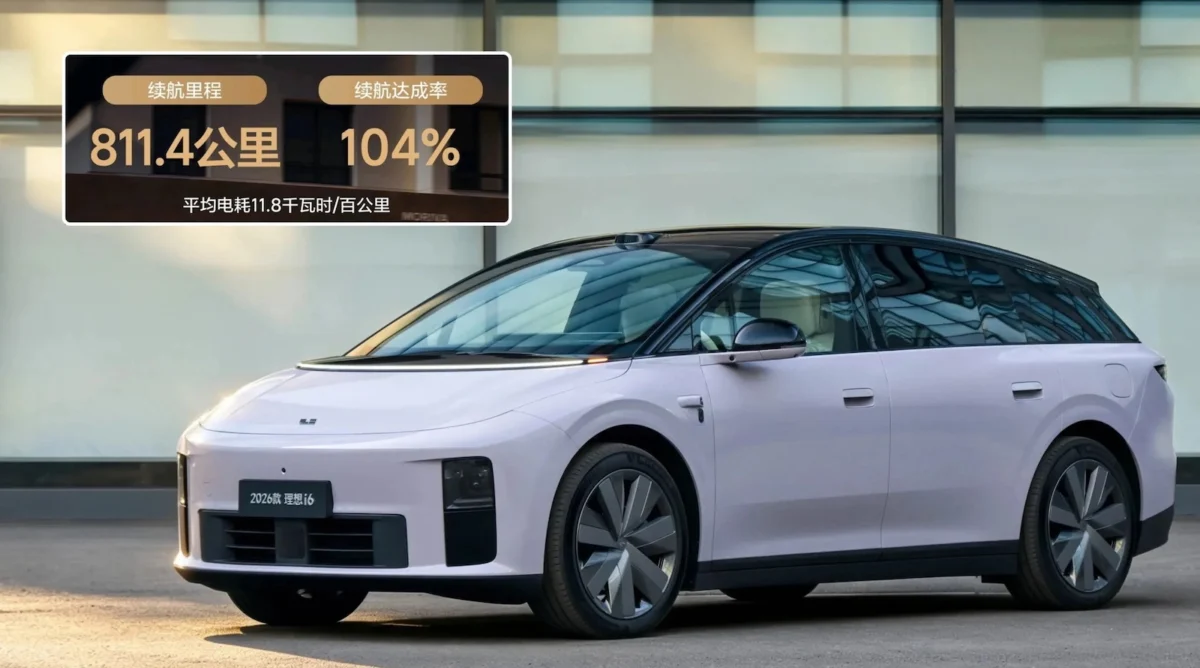
Li Auto is making waves in the global electric vehicle landscape with the introduction of its striking new i6 model. Boasting a futuristic aesthetic reminiscent of classic science fiction and The Jetsons, the i6 adopts a Multipurpose Vehicle (MPV) stance that currently dominates the Chinese automotive market while remaining distinctively ahead of its global peers. Beyond its polarizing, aerodynamic design, the i6 delivers impressive hardware specs, boasting a 96 kWh battery pack and a baseline CLTC-rated range of 780 kilometers (485 miles).
In a strategic shift away from industry giant CATL, Li Auto has opted for in-house designed battery packs manufactured in collaboration with partners CALB and Sunwoda. This pivot has yielded immediate architectural benefits, including space efficiency that allows the i6 to pack an additional 3 kWh of cells. Combined with cutting-edge Silicon Carbide (SiC) power modules featuring optimized current paths to reduce operational losses, the vehicle achieves remarkable efficiency gains—including an added 30 km of winter driving range.
Furthermore, Li Auto is betting heavily on safety with its new 5C-capable "Lian Shan" battery packs. Mirroring high-stakes manufacturer guarantees like Xiaomi’s Dragonscale batteries, Li Auto is offering an unprecedented pledge: if a Lian Shan pack self-ignites or combusts during a collision, the company will replace the vehicle with a brand-new car free of charge.
Chronology of the Real-World Endurance Test
To prove the real-world viability and efficiency of the i6, Li Auto recently conducted an exhaustive, transparent livestreamed endurance test. Rather than executing a closed-course, ultra-conservative "hypermiler" run designed strictly for vanity metrics, the automaker opted for a realistic, grueling evaluation under everyday driving conditions.
- Location and Setting: The test took place around Lake Tai (Taihu) in the scenic Yangtze Delta region, a setting that mimics mixed-use urban and ring-road environments.
- Payload and Environment: The i6 was loaded down to simulate a genuine family road trip. It carried four adult occupants, standard luggage, and an additional 50 kilograms of gear. Ambient temperatures hovered between 13°C and 20°C, and the vehicle’s air conditioning remained active throughout the entirety of the test.
- The Drive: Spanning an impressive 18 hours, the vehicle navigated city and regional conditions with speed limits ranging strictly between 40 km/h and 80 km/h.
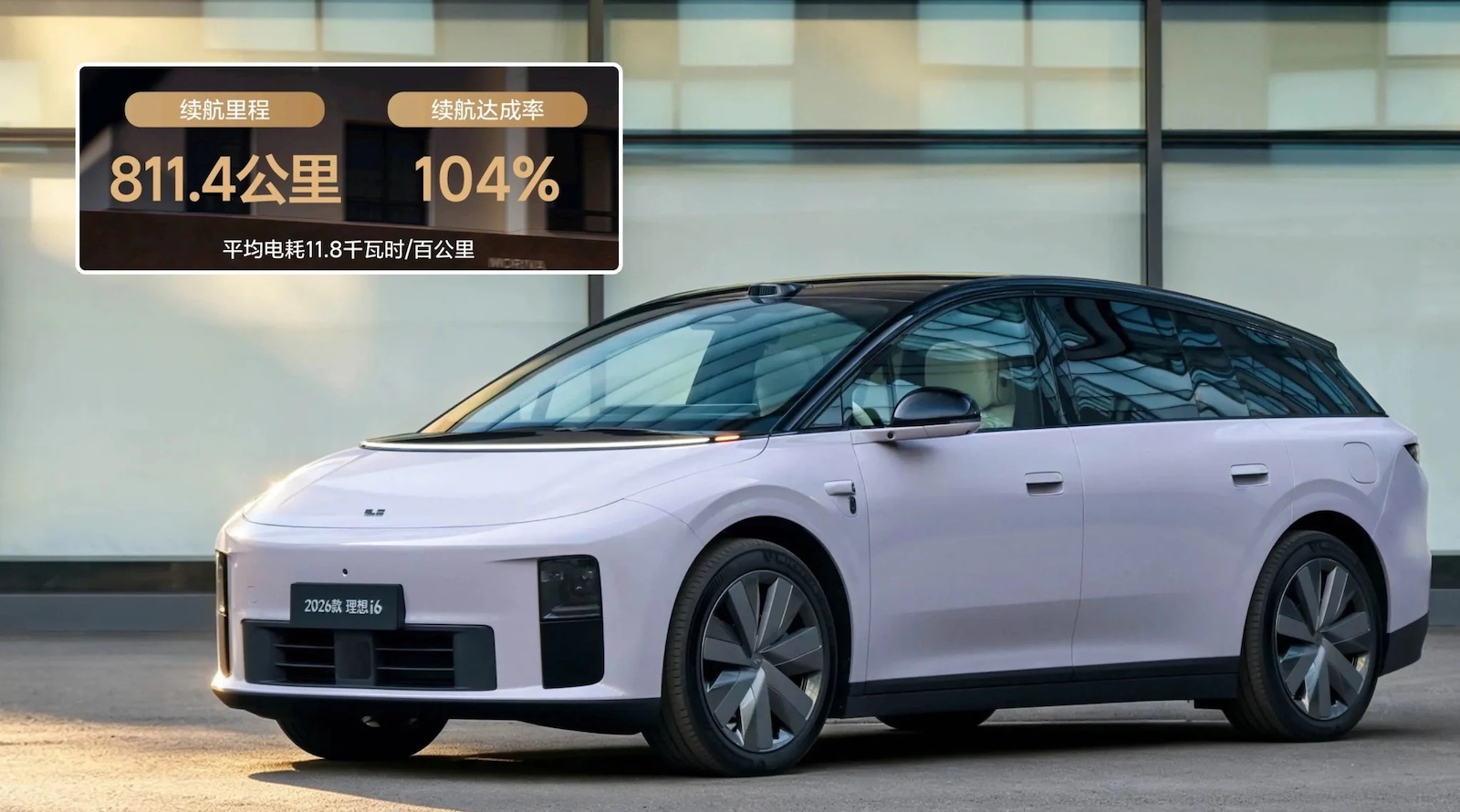
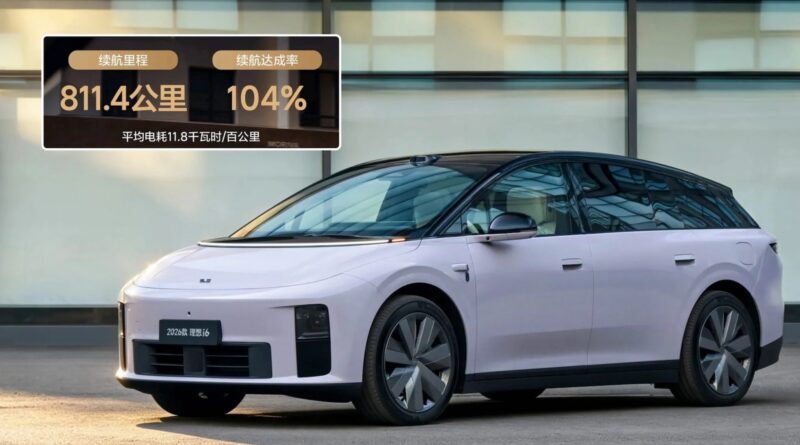
- The Milestone: While the official CLTC rating stands at 780 km, the i6 shattered expectations by traveling 811 kilometers (504 miles) before the battery indicator hit 0%.
- The Finish: Notably, testers did not push the vehicle past the 0% mark to drain its deep emergency buffer reserves; the test was purposefully concluded the moment the digital dashboard registered zero remaining charge.
Supporting Data and Technical Breakdown
The numbers behind the Li Auto i6 highlight a masterclass in modern EV engineering and thermal management.
| Metric / Specification | Detail |
|---|---|
| Battery Capacity | 96 kWh (In-house design, manufactured by CALB and Sunwoda) |
| Official CLTC Range | 780 km (485 miles) |
| Livestreamed Test Range | 811 km (504 miles) at 0% display readout |
| Energy Consumption | 11.8 kWh / 100 km |
| Test Conditions | 4 passengers + luggage + 50 kg gear, A/C active, 13°C–20°C ambient temp |
| Charging Capability | 5C fast-charging architecture via the Lian Shan battery platform |
| Winter Efficiency Boost | +30 km range attributed to redesigned SiC power module current paths |
The energy consumption rate of just 11.8 kWh per 100 km is a testament to the vehicle’s aerodynamic profile and drivetrain efficiency. By shedding reliance on a single mega-supplier like CATL, Li Auto has gained the agility to fine-tune module dimensions, extracting maximum energy density without compromising structural integrity or cabin space.
Official Responses and Industry Insights
Automotive analysts and regional media outlets have quickly dissected the significance of Li Auto’s latest engineering moves. According to the prominent Chinese automotive outlet Dian Dong Che Zhu Ren, the strategic transition in battery packaging is what ultimately unlocked the extra 3 kWh of usable cell capacity, proving that vertical integration and supplier diversification can pay massive dividends.
Reporting on the vehicle’s thermal and power efficiency, CarNewsChina highlighted the impact of Li Auto’s proprietary SiC power modules: "Li Auto’s latest SiC power modules feature revised current paths that reduce operational losses and add 30 km of winter driving range." This specific upgrade directly targets one of the EV industry’s most persistent Achilles’ heels—range degradation in cold weather.
Regarding the newly minted Lian Shan battery packs, industry insiders note that the technology is expected to cascade across Li Auto’s broader existing vehicle lineup. By attaching a zero-combustion guarantee—promising a brand-new vehicle in the rare event of a thermal runaway caused by a collision—Li Auto is signaling immense confidence in its battery management systems, cell chemistry, and structural pack safety.

Broader Implications for the Global EV Market
The debut and subsequent real-world validation of the Li Auto i6 carry profound implications for the global automotive sector, particularly as Chinese EV manufacturers continue to push the boundaries of price, performance, and packaging.
1. Raising the Bar for Consumer Trust
Range anxiety and battery safety remain the two primary psychological barriers for prospective EV adopters worldwide. By backing up the Lian Shan battery with a replacement vehicle guarantee, Li Auto is effectively absorbing consumer risk. If other global automakers hope to compete with the aggressive pace of Chinese EV innovation, they may be forced to match these high-stakes safety warranties.
2. The Evolution of Form Factor
While Western markets have been slow to embrace unconventional MPV styling, the success and popularity of these designs in Asia point toward a future where interior utility and aerodynamics triumph over traditional, boxy SUV silhouettes. The i6 proves that futuristic aesthetics do not have to come at the expense of coefficient drag or operational efficiency.

3. Supply Chain Agility
Li Auto’s pivot away from a sole-source dependency on CATL toward a hybrid manufacturing model with CALB and Sunwoda demonstrates a masterclass in supply chain resilience. By custom-tailoring their own battery architecture to fit specialized chassis constraints, automakers can squeeze out micro-efficiencies—such as an extra 3 kWh of capacity or improved winter performance—that separate market leaders from legacy followers.
Ultimately, the Li Auto i6 is much more than a quirky futuristic vehicle for the Chinese market; it is a rolling showcase of what happens when advanced power electronics, innovative thermal management, and relentless real-world testing converge. As the i6 prepares for broader deployment, competitors across the globe will undoubtedly be taking notes.