





In a landmark deal that highlights the deepening tension between the insatiable energy demands of the artificial intelligence boom and corporate sustainability mandates, Black Hills Corp. has unveiled plans for a massive power infrastructure project in Cheyenne, Wyoming. The initiative, designed specifically to serve a planned Google data center, centers on a $1.8 billion expansion of natural gas-fired generation, supplemented by a complex, privately managed microgrid.
While the project promises significant economic returns for the South Dakota-based utility, it has ignited a fierce debate among energy experts, environmental advocates, and technology leaders regarding the path forward for the carbon-neutral energy transition.
Main Facts: A Gigawatt-Scale Infrastructure Solution
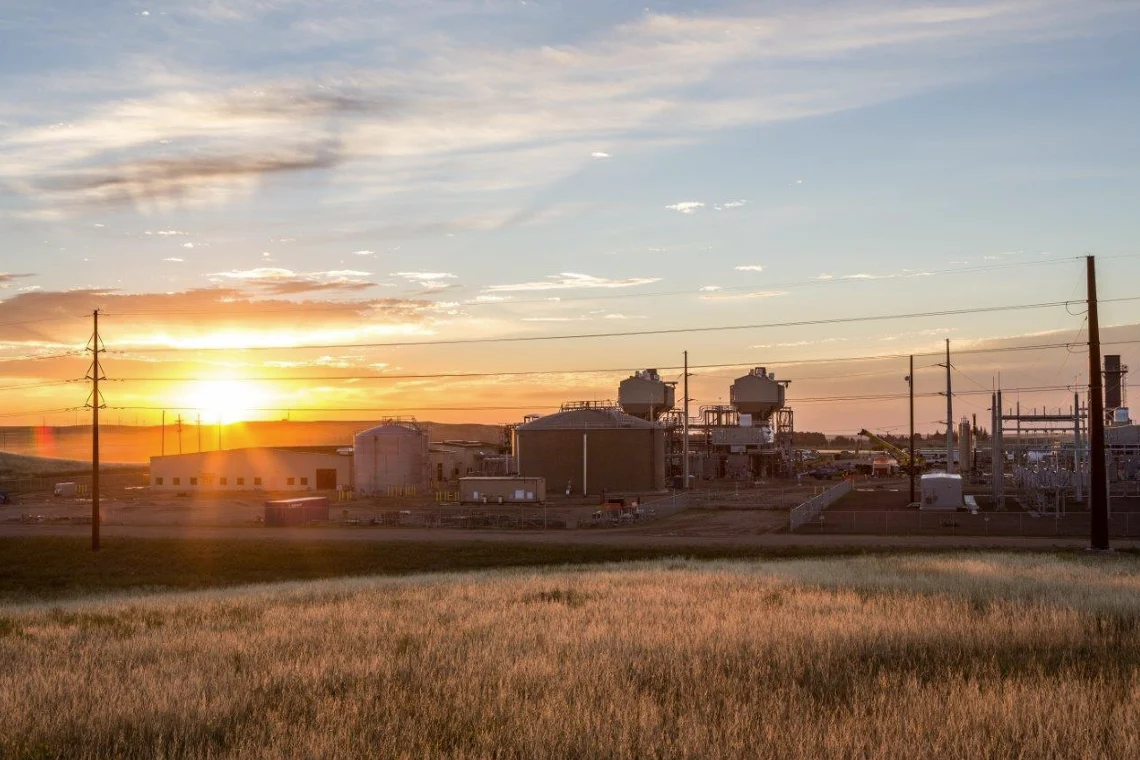
The proposed project is a sprawling undertaking that involves a total resource mix of approximately 2.7 gigawatts (GW). At the heart of this deployment is the expansion of Black Hills Corp.’s existing Cheyenne Prairie Generating Station. Between 2027 and 2029, the company plans to bring 564 MW of new natural gas-fired generation online.
Crucially, this new capacity will be owned by a non-regulated Black Hills affiliate, effectively insulating the utility’s primary Wyoming customer base from the direct ownership risks associated with the plant. Beyond the gas-fired units, the project incorporates 2.1 GW of third-party resources—largely consisting of turbines and fuel cells—which will operate through a proprietary, privately managed microgrid.
Under the terms of the agreement, Black Hills will not own these third-party resources. Instead, the utility will act as the orchestrator of the system, collecting a "microgrid management fee" for coordinating grid operations, dispatch services, and market purchases. This arrangement allows the project to leverage Wyoming’s Large Power Contract Service tariff, providing a tailored regulatory pathway for massive, concentrated power loads.
Chronology: Building the Path to 2029
The timeline for this project is aggressive, reflecting the urgency with which hyperscalers like Google are pursuing data center development to stay competitive in the generative AI race.
- Pre-2026: Initial planning and engineering phases for the Cheyenne Prairie expansion.
- Late 2026: Official announcement of the $1.8 billion partnership, including the disclosure of Google’s $399 million advance payment for long-lead equipment.
- 2027: Expected commencement of utility returns via microgrid management fees. By July 2027, Black Hills anticipates full reimbursement of the $399 million equipment advance.
- 2027–2029: Construction phase for the 564 MW natural gas-fired units at the Cheyenne Prairie site.
- 2030: Projected target year for the data center to reach full operational status, with Black Hills forecasting roughly $150 million in net income from the project.
- 2048: The long-term horizon for the project’s financial impact, with the utility projecting $2.4 billion in unlevered free cash flow over the next two decades.
Supporting Data: Economic and Operational Scope
The project’s financial structure is designed to be self-sustaining while protecting the utility’s core ratepayers. Black Hills Corp. has implemented strict contractual protections to guard against the risks inherent in such large-scale energy projects. These include clauses specifically addressing "stranded assets"—what happens to the infrastructure if the data center ceases operations—as well as provisions for early termination and unexpected cost overruns.

From an operational standpoint, the 2.7 GW capacity mix is calculated to ensure high reliability. The mix accounts for necessary reserve margins, ensuring that even during periods of peak demand or intermittent supply, the data center—and the broader Cheyenne grid—remains stable.
The reliance on a microgrid model is particularly notable. By decoupling the generation assets from traditional utility rate-basing and placing them into a privately managed framework, the parties have created a "sandbox" for high-load consumption. Black Hills has already secured the necessary air quality permits for the Cheyenne Prairie expansion, though they continue to navigate secondary siting and transmission approvals.
Official Responses and the "Clean Energy" Paradox
The announcement has elicited a polarized response from the energy industry. For Black Hills Corp., the project is a clear win. Executives have framed the agreement as a way to bolster local energy infrastructure while securing significant long-term cash flow. For Google, the deal represents a pragmatic, if controversial, solution to the power-density problem.
Google, which has publicly pledged to achieve 24/7 carbon-free energy (CFE) by 2030, finds itself in a precarious position. The company argues that the speed required to deploy data centers often forces a reliance on existing, reliable technologies like natural gas to ensure that the lights—and the servers—stay on.
However, the deal has drawn sharp rebukes from independent analysts. Jesse Jenkins, a professor at Princeton University and co-founder of Firma Power, has been one of the most vocal critics. Jenkins argues that the reliance on new natural gas infrastructure represents a regression in the fight against climate change.
"Data center developers should be tapping into the massive backlog of wind, solar, and battery storage projects currently waiting for grid interconnection," Jenkins noted. He contrasted the Wyoming deal with a separate agreement Google made with Constellation Energy to add 890 MW of nuclear capacity through reactor uprates. Jenkins praised the nuclear deal as a "gold standard" for sustainable power, while criticizing the Wyoming project as a missed opportunity to prioritize clean-energy-first procurement strategies.
Implications: The Future of Data Center Power
The Cheyenne project serves as a microcosm of a broader, systemic challenge facing the American grid. As artificial intelligence and cloud computing demand more electricity, the "one-size-fits-all" approach to grid planning is failing.

1. The Reliability vs. Emissions Trade-off
The industry is currently caught in a conflict between the need for firm, dispatchable power (often provided by gas or nuclear) and the goal of decarbonization. Because wind and solar are inherently intermittent, utilities are finding it difficult to promise the "five-nines" (99.999%) reliability required by data centers using renewables alone, particularly without massive investments in long-duration energy storage.
2. The Rise of Private Microgrids
The use of a microgrid management fee suggests a future where large consumers do not simply "buy power" from a utility; they become partners in grid management. By paying for their own infrastructure and assuming the financial risk, tech companies are effectively becoming quasi-utilities. This shift could lead to a fragmented grid where large, private networks operate alongside, but independently of, the public power supply.
3. Regulatory and Ratepayer Protection
Regulators in Wyoming and across the U.S. are watching the Black Hills deal closely. The precedent set by the "non-regulated affiliate" structure and the specific contractual protections against stranded assets will likely become the blueprint for future utility-tech partnerships. If successful, it could provide a template for other regions to handle the "data center rush" without placing the financial burden on residential ratepayers.
4. The Path to 2030
As the 2030 deadline for many corporate carbon-neutral goals approaches, the pressure on companies like Google to justify their energy choices will only intensify. The Wyoming deal demonstrates that while the demand for power is growing at an exponential rate, the methods used to meet that demand are still under intense scrutiny. Whether this project is viewed as a necessary bridge to a more reliable future or a retreat from environmental promises will likely depend on how effectively the industry can scale alternative, non-fossil fuel technologies—like the nuclear uprates Jenkins champions—in the years to come.
Ultimately, the Cheyenne Prairie expansion is a reminder that in the race to build the next generation of AI infrastructure, the laws of thermodynamics and the limits of the existing grid remain the most formidable constraints. For now, Black Hills Corp. and Google are betting that natural gas, managed through a modern, private microgrid, is the most viable answer to that constraint. Whether that gamble pays off—not just in dollars, but in the court of public opinion—remains to be seen.