





MEXICO CITY / WASHINGTON — In an escalation of long-standing grievances over rampant highway crime, heavy-handed regulation, and mounting financial pressures, Mexican trucking companies launched an indefinite nationwide strike on Monday. Organized by the National Chamber of Freight Transportation (CANACAR) alongside a coalition of allied freight associations, the action has triggered widespread demonstrations, slow-roll protests, and blockades across major logistical hubs, critical commercial corridors, and crucial U.S.-Mexico border crossings.
The coordinated work stoppage threatens to paralyze vital North American supply chains. The strike directly targets key manufacturing and logistics centers—including Monterrey, Tijuana, Nuevo Laredo, Reynosa, and the national capital, Mexico City. Industry leaders state that the action is a desperate bid to force federal authorities to address a crisis of violence, corruption, and economic suffocation that they argue has made the profession nearly untenable.
While the Mexican government has scrambled to initiate last-minute dialogue and stave off economic paralysis, CANACAR leadership has pressed forward with the demonstrations. As truck convoys park along strategic highways and logistical choke points, manufacturers, distributors, and logistics managers on both sides of the border are bracing for immediate disruptions, soaring shipping costs, and severe inventory bottlenecks.
1. Main Facts of the Strike
The nationwide shutdown is not a localized labor dispute, but a systemic revolt by commercial transport operators against compounding threats to their physical safety and economic viability.
Core Grievances Driving the Protest
- Rampant Highway Insecurity and Cargo Theft: Trucking operators face an epidemic of hijackings, armed robberies, and violence along Mexico’s federal highway network. Organized crime syndicates routinely target freight carriers hauling high-value electronics, automotive components, and consumer goods.
- Extortion and Corruption: Drivers and fleet operators report systemic extortion by local, state, and federal law enforcement officials, alongside predatory practices by municipal towing and impound monopolies.
- Deteriorating Infrastructure and Operating Costs: Escalating fuel prices, expensive maintenance caused by poorly maintained roadways, and surging insurance premiums have severely compressed profit margins.
- Proposed Fiscal Penalties: The final catalyst for the strike is the inclusion of controversial measures in Mexico’s proposed 2027 fiscal package. The government plans to reduce or eliminate eligibility for vital tax credits that offset highway toll expenses—a move carriers argue will deliver a fatal blow to already struggling small and medium-sized fleets.
Strategic Impact Zones
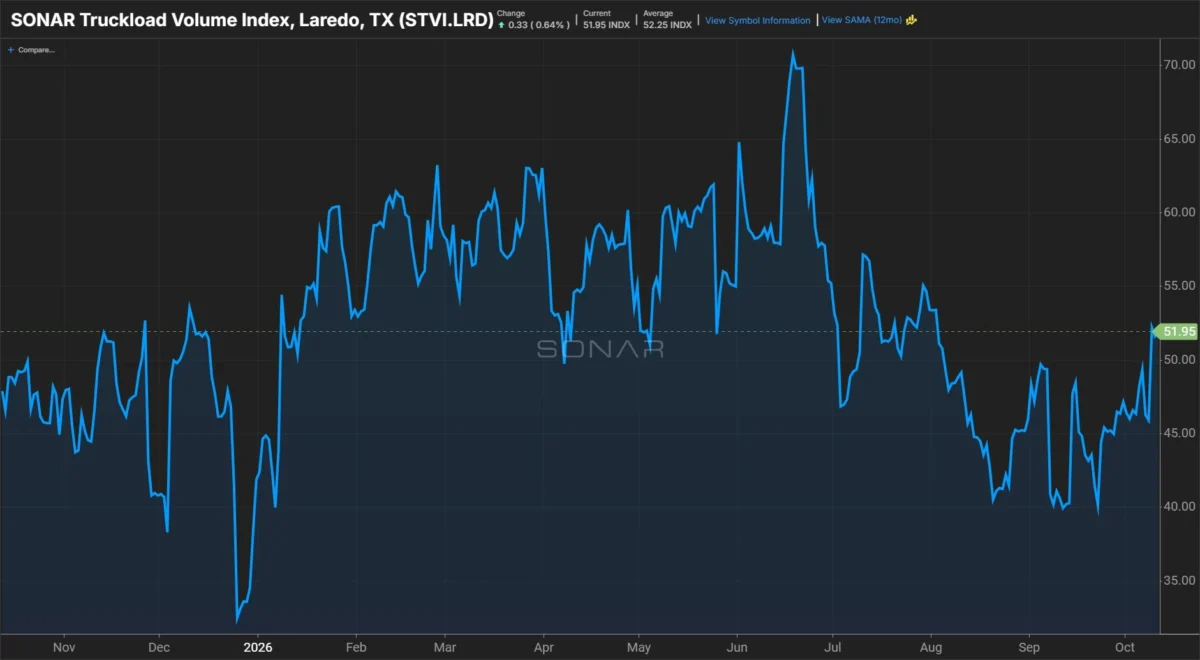
The demonstrations are heavily concentrated in regions essential to international trade. Nuevo Laredo—situated directly across the border from Laredo, Texas, the single largest inland port of entry in the United States—is a primary focal point. Disruptions in this corridor threaten billions of dollars in bilateral trade that moves via the World Trade Bridge and the Colombia-Solidarity Bridge. Similarly, key hubs in Tijuana, Reynosa, and Monterrey act as lifelines for the maquiladora manufacturing sector, moving components back and forth across the border under just-in-time inventory models.
2. Chronology of Events
The road to the nationwide strike was paved by years of mounting frustration, culminating in a rapid escalation of tensions between transport unions and the federal government over the past week.
- Late 2024 – 2025 (The Boiling Point): Throughout the preceding months, CANACAR and independent driver associations document a steady surge in highway violence. Multiple high-profile murders of truck drivers by highway bandits make national headlines, prompting localized walkouts and regional protests in states like Guanajuato, Puebla, and Veracruz.
- Early 2026 (Fiscal Alarm): The Mexican Ministry of Finance releases preliminary outlines of the upcoming 2027 fiscal package. Transport associations discover provisions aimed at tightening or repealing tax deductions related to highway tolls. Industry groups label the policy an unfair tax grab that ignores the perilous realities of driving Mexico’s toll roads.
- Mid-2026 (Ultimatums Issued): Following failed consultations with transport regulators, CANACAR leadership warns that patience has worn thin. Citing the government’s failure to secure federal highways or curb systemic extortion, transport organizations formally vote to authorize a nationwide mobilization.
- The Weekend Prior to the Strike: Federal officials attempt to defuse the brewing crisis. Representatives from the Interior Ministry hold emergency closed-door meetings with select transportation unions, offering vague promises of enhanced security deployments and continued dialogue.
- Monday Morning (The Strike Begins): Despite government appeals, CANACAR maintains its strike call. At dawn on Monday, hundreds of commercial trucks initiate coordinated slow-roll protests, parking along federal highways, outside major logistics parks, and near border customs facilities. The indefinite nationwide strike is officially underway.
3. Supporting Data and Economic Context
To understand the gravity of the current strike, one must examine the sheer volume of commerce that flows daily across the southern border of the United States and along Mexico’s internal trade routes.
- Bilateral Trade Volume: The U.S. and Mexico exchange nearly $800 billion in goods annually. A vast majority of this trade—spanning automotive assembly, aerospace equipment, fresh agriculture, and consumer technology—relies exclusively on rubber-tire transport across international bridges.
- The Laredo Gateway: Laredo, Texas, handles over 50% of all land-based trade between the United States and Mexico. On an average day, thousands of commercial trucks pass through this single customs district. An extended blockade in Nuevo Laredo immediately creates multi-mile backlogs that ripple across North American distribution networks.
- The Cost of Insecurity: According to independent transport data and insurance reports, cargo theft in Mexico has risen by double digits year-over-year. Beyond the loss of merchandise, carriers absorb hundreds of millions of dollars in secondary costs, including satellite tracking systems, armed security escorts, specialized insurance riders, and ransom payments.
- Fleet Demographics: Mexico’s trucking industry is characterized by extreme fragmentation. While large corporate fleets manage thousands of units, the vast majority of Mexican trucking companies are small owner-operators or micro-fleets operating five trucks or fewer. For these independent operators, the elimination of toll tax credits and the constant threat of having an entire truck stolen represent existential threats.
4. Official Responses and Government Countermeasures
The Mexican federal government has adopted a two-pronged strategy: appealing for public calm while attempting to divide the unified front presented by transport coalitions.
The Interior Ministry’s Position
Mexico’s Interior Ministry issued formal statements on Monday urging CANACAR leadership to step back from the brink and return to the negotiating table. Government officials emphasized that several other independent transportation unions and regional associations had agreed to bypass strikes in favor of structured working groups.
"The door to dialogue remains open, but blockades that harm the national economy and interfere with the daily lives of Mexican citizens are not the solution," a ministry spokesperson stated. The government highlighted existing security initiatives, such as the Guardia Nacional highway patrol patrols and intelligence-sharing task forces designed to combat highway banditry, insisting that progress is being made.
The Industry’s Rebuke
CANACAR and participating organizations rejected the government’s overtures as insufficient and lacking concrete timelines. Transport leaders argue that previous promises of highway security have yielded few tangible results on the ground, where drivers continue to face cartel-style ambushes on major federal routes like Highway 57 (the NAFTA Highway) and the Puebla-Veracruz corridor.
"Our drivers are being killed, our trucks are being stolen in broad daylight, and we are being taxed into bankruptcy," said a regional CANACAR representative during a press briefing. "Talks without immediate, enforceable action are no longer acceptable."
5. Strategic Implications for Supply Chains and Businesses
An extended trucking strike in Mexico carries immediate, severe ramifications for North American business operations. Because modern manufacturing relies heavily on just-in-time (JIT) inventory management, any interruption in the flow of components can halt production lines hundreds of miles away within hours.
Impact on U.S. Manufacturers and Importers
- Automotive Industry Vulnerability: The North American automotive supply chain is deeply integrated. An engine component manufactured in central Mexico may cross the border multiple times before a finished vehicle rolls off an assembly line in Michigan, Texas, or Ontario. Disruptions at Nuevo Laredo or Monterrey threaten to starve U.S. and Canadian auto plants of vital parts.
- Agricultural and Perishable Supply Chains: Fresh produce, meat, and consumer goods moving north from Mexican agricultural heartlands face spoilage risks if trapped in multi-day border delays. Importers of fruits and vegetables are already scrambling to reroute shipments or secure alternative cold-storage solutions.
- Surging Freight Rates: As capacity dries up due to parked trucks and stalled convoys, spot market freight rates for cross-border shipping are projected to spike dramatically. Shippers willing to pay premium rates will compete for the limited capacity operating outside the strike zones.
Long-Term Outlook
As Monday evening approached, the duration of the protests remained entirely unclear. Much will depend on the resolve of independent owner-operators and whether the federal government can offer substantive concessions—particularly regarding fiscal relief and militarized highway protection—that satisfy an increasingly desperate transport sector.
For logistics managers, supply chain planners, and corporate executives across North America, the message is unequivocal: contingency plans must be activated immediately. Monitoring border wait times, diversifying transport routes where possible, and communicating transparently with end customers will be essential to weathering what threatens to be one of the most disruptive labor actions in modern Mexican transportation history.