




The global experiential marketing landscape is currently undergoing a structural shift, moving away from high-intensity, late-night sensory overload toward a more refined, deliberate aesthetic: the "Aperitivo Culture." Derived from the centuries-old Italian ritual of pre-dinner social gathering, this trend has transcended its Mediterranean roots to become the dominant framework for brand activations worldwide.
From the sun-drenched festival grounds of Coachella to the bustling streets of the Meatpacking District, global brands are leveraging the aperitivo—a light, low-ABV social ritual centered on "the slow hour"—to foster deeper consumer connections. This trend is not merely a branding pivot; it is a strategic response to evolving consumer behaviors, characterized by a preference for early-evening social habits, the demand for "Instagrammable" aesthetic minimalism, and a broader cultural shift toward moderation and intentional living.
The Anatomy of a Trend: Why Aperitivo Now?
The resurgence of aperitivo culture in experiential marketing is no accident. It is fueled by a confluence of macroeconomic and social factors that have fundamentally altered how consumers engage with brands.
1. The Moderation Movement
As Gen Z and Millennial demographics increasingly prioritize health and wellness, alcohol consumption patterns have shifted toward "mindful drinking." Aperitivo-style drinks, which typically feature lower alcohol volumes and are served with light bites, align perfectly with this trend. Brands are finding that consumers are more willing to engage with a brand for three hours in the late afternoon than they are in a high-energy, late-night nightclub environment.
2. The Quest for "Slow" Rituals
In an age of digital saturation, the "slow-living" movement has emerged as an antidote to the "always-on" economy. The aperitivo represents a sanctioned, deliberate pause in the day. Experiential designers are now tasked with creating "third spaces" that facilitate this intentionality, offering consumers a reprieve from the fast-paced nature of modern life.
3. The Aesthetic of Shareability
Aperitivo culture is inherently photogenic. The visual language of the trend—vibrant hues, curated charcuterie, elegant glassware, and golden-hour lighting—is tailor-made for social media platforms like Instagram and TikTok. By creating "polished, share-worthy footprints," brands are essentially crowdsourcing their own marketing, as attendees act as content creators within these meticulously designed environments.
Chronology of the Trend: A Global Expansion
The infiltration of aperitivo into the mainstream experiential market has been rapid and multi-faceted.
- Early 2026: The trend gained significant momentum as major beverage conglomerates began pivoting their spring and summer experiential budgets toward "day-club" and "piazza-style" activations rather than traditional nightlife sponsorships.
- April 2026 (Coachella): Aperol redefined the festival lounge, moving away from the chaotic energy of typical music festival activations toward a, "Be the Moment" campaign. The Aperol Day Club focused on repeat engagement rather than high-volume foot traffic, establishing a template for luxury festival experiences.
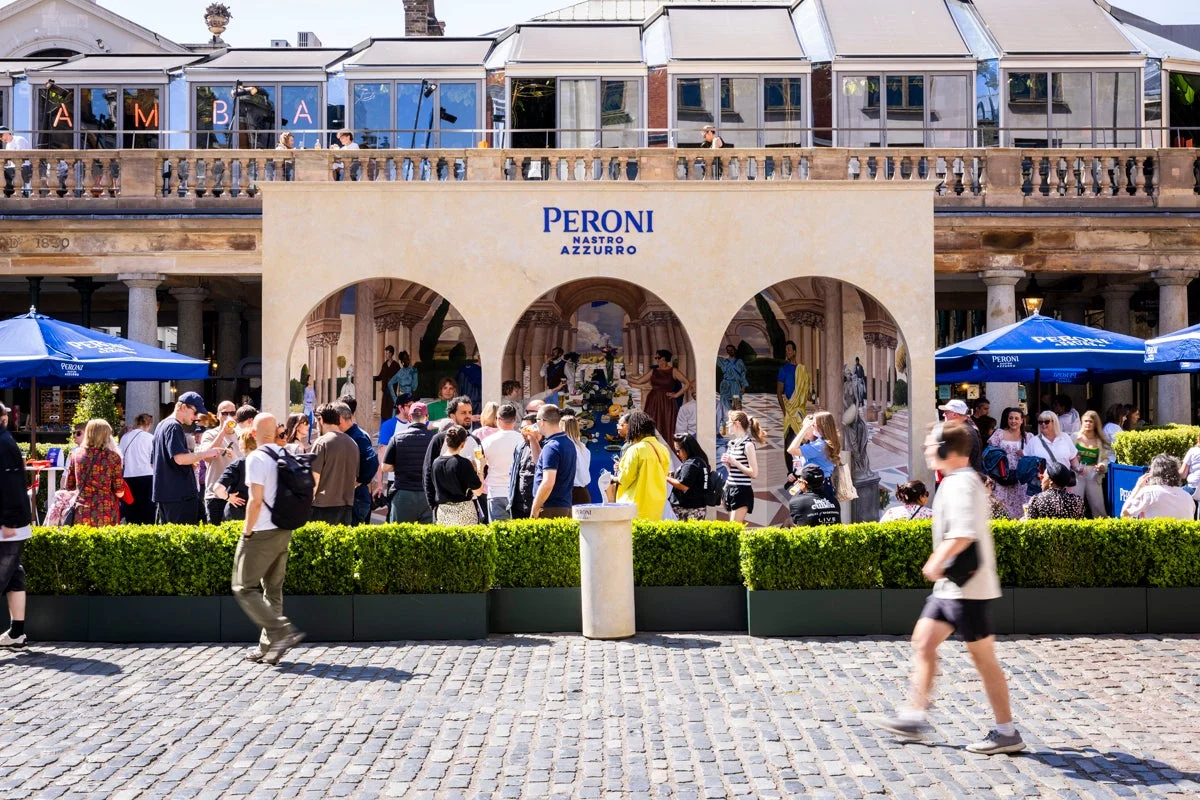
- May 2026: Peroni launched "Il Fresco di Peroni" in London’s Covent Garden. This activation signaled the transition of the trend into the realm of art and optical illusion, merging the cultural heritage of the Italian Renaissance with modern, interactive beer sampling.
- Mid-2026: The Sarti brand debut in the U.S. cemented the trend as a serious commercial play. With massive investments in New York and San Diego, the brand proved that aperitivo-themed marketing could scale from niche pop-ups to major national product launches.
Strategic Case Studies: Brands in the Piazza
Sarti: The Power of Lifestyle Integration
When Campari Group launched Sarti in the United States, they bypassed the traditional "tasting booth" model. Instead, they opted for an immersive experience that integrated the brand into the consumer’s lifestyle. By placing oversized pink luggage trunks in urban settings and hosting events that included charm bars and apparel customization, Sarti didn’t just sell a drink; they sold a brand identity.
As one Campari experiential manager noted, the goal was to create a space that felt like a natural extension of the Italian habit of connecting. The activation focused on community-building—live podcasts, DJ sets, and tactile creative workshops—ensuring the brand was associated with the memory of a social encounter, not just a product sample.
Peroni: The Art of the Optical Illusion
Peroni’s "Il Fresco di Peroni" installation in London is a masterclass in leveraging public space for experiential impact. By commissioning a 3D hand-painted mural that allowed consumers to visually "step into" an Italian painting, the brand created an immediate, high-value social media moment.
The strategy was supported by consumer research indicating that UK shoppers were increasingly moving away from late-night, heavy drinking toward early-evening "fresco" moments. The installation allowed the brand to capture the consumer during this transitionary window, offering a "half pint of la dolce vita" that served as a refreshing alternative to the standard bar environment.

Pringles: The Aperihouse at Milan Design Week
Perhaps the most unexpected entrant into the space was Pringles. By participating in Milan Design Week with the "Pringles Aperihouse," the brand demonstrated that aperitivo is a behavior, not just a beverage category.
By focusing on the "Aperitivo Hour" (5 p.m. to 9 p.m.), Pringles transformed a snack brand into a social conduit. Attendees were encouraged to pair specific flavors with classic aperitifs, successfully shifting the brand’s positioning from a "movie night snack" to an "elevated social appetizer."
Aperol: The Gold Standard
Aperol remains the architect of the modern aperitivo activation. Their presence at Coachella 2026 was a strategic triumph. Rather than creating a single, static photo opportunity, the Aperol Day Club was designed for the "repeat visitor." By offering a revolving door of activities and high-quality programming, they incentivized attendees to return to the space multiple times throughout the weekend, deepening the association between the brand and the festival experience.
Official Perspectives: The Industry View
Industry leaders are unanimous: the shift toward aperitivo culture is a long-term evolution of consumer preferences. Marketing experts suggest that the "experience-first" approach is the only way to cut through the noise of digital advertising.
"The consumer of 2026 is hyper-aware of being sold to," says one experiential design lead. "When you provide a space that feels like a genuine social ritual—where the primary goal is conversation and a light, enjoyable drink—you bypass the consumer’s defensive barriers. We are seeing a move from ‘transactional marketing’ to ‘relational marketing.’ The aperitivo is the perfect vehicle for that."
Furthermore, the data supports the transition. Internal brand metrics from these activations show that "dwell time"—the amount of time an attendee spends in a brand footprint—has increased by an average of 40% compared to traditional, high-energy activations.
Implications for the Future of Experiential
What does this mean for the future of brand activations? Several implications are clear:
- The Death of the "One-Off" Pop-Up: The success of the Sarti and Aperol activations shows that brands must commit to a sustained "day-club" or "piazza" presence. Short, single-day pop-ups are losing their effectiveness compared to spaces that allow for repeat visitation.
- The Rise of Low-ABV and "Mocktail" Integration: As the trend matures, brands will need to be increasingly inclusive. Expect to see "aperitivo" activations that prioritize high-end non-alcoholic options, ensuring that the "slow-living" ethos remains accessible to all demographics.
- Aesthetic Cohesion: The bar for visual design has been raised. Brands can no longer rely on banners and branded cups. The environment must be an architectural or artistic installation that feels native to the urban landscape.
- Localized Cultural Nuance: While the "Italian" origin is the anchor, brands must adapt the ritual to local contexts. Whether it’s the "British" shift to early evening social hours or the "American" desire for interactive brand customization, the successful aperitivo activation is one that translates a foreign ritual into local habit.
Conclusion
The "Aperitivo Culture" is more than a fleeting aesthetic trend; it is a profound realization by marketers that the most valuable commodity in the 21st century is the consumer’s time. By trading the high-octane, noisy strategies of the past for the deliberate, social, and slow-paced rituals of the Italian piazza, brands are finding a way to stay relevant in a health-conscious, experience-driven market.
As we look toward the remainder of the decade, the brands that succeed will be those that can successfully host the "third space"—the place where, at the end of a long day, the only thing on the agenda is a spritz, a conversation, and the grace of a slow, golden hour.
The Trend of the Week is coproduced with the support of Pinnacle, a leader in high-impact, immersive experiential solutions.