Main Facts: The Clean Energy Transformation Sweeping Across the U.S.
The United States energy landscape is undergoing a monumental paradigm shift, driven by unprecedented investments in utility-scale solar and advanced battery energy storage systems. Far from being a niche alternative, renewable energy has proven its capacity to serve as the structural backbone of the modern American electrical grid. Recent analytical data underscores a profound economic and operational truth: clean energy technologies are not only vital for long-term climate goals, but they are also immediate deflationary forces in energy markets, directly slashing consumer electricity bills during periods of peak demand.
While political discourse surrounding energy policy often devolves into partisan stalemates, the reality on the ground paints a different picture. America’s two largest states by population and energy consumption—Texas and California—have aggressively embraced solar and storage buildouts. The strategy has yielded massive dividends. During the sweltering summer months of 2026, both states successfully navigated record-breaking electrical demand without the catastrophic brownouts or skyrocketing spot prices that historically plagued their grids.
Beyond these two coastal and southern giants, a wave of multi-million dollar corporate credit facilities, massive virtual power plant (VPP) expansions, regional transmission enhancements, and innovative agrivoltaic community solar projects are sweeping the nation. From the PJM Interconnection territory to the rolling plains of Iowa and the agricultural heartland of Illinois, the clean energy economy is maturing into a robust, highly resilient industrial ecosystem.
Chronology of Progress: A Rapid Scaling of Renewables
The rapid deployment of solar and storage infrastructure across the United States did not happen overnight; it represents the culmination of targeted legislative frameworks, plunging hardware costs, and aggressive private-sector deployment strategies spanning several years.
The 2021 Baseline
Back in 2021, both the Electric Reliability Council of Texas (ERCOT) and the California Independent System Operator (CAISO) faced severe strains on their respective grids. While renewable energy was steadily gaining market share, battery storage was still in a nascent commercial stage, and solar generation footprints were a fraction of their current sizes. Wholesale electricity prices during peak summer months remained heavily tethered to volatile fossil fuel markets, particularly natural gas.
The 2021–2026 Acceleration Phase
Between 2021 and 2026, the velocity of deployment broke historical records:
Texas (ERCOT): Solar generation experienced an astronomical growth rate of 421%. Simultaneously, battery storage capacity expanded by more than 26-fold, providing a crucial buffer against sudden drops in wind generation or spikes in air conditioning loads.
California (CAISO): Solar generation increased by 90%, while battery storage capacity grew nearly sevenfold, cementing the state’s position as a global leader in diurnal load-shifting.
The Summer of 2026 Milestone
By the summer of 2026, the fruits of this heavy infrastructure buildout were fully realized. Despite managing significantly higher overall energy consumption compared to the 2021 baseline, both ERCOT and CAISO operated at vastly reduced wholesale electricity prices after accounting for inflation. This milestone serves as a historical inflection point, proving that rapid decarbonization and grid reliability are entirely compatible objectives.
Supporting Data: Quantifying the Multi-Billion-Dollar Savings
The financial metrics released in a comprehensive analysis by the Solar Energy Industries Association (SEIA) illustrate the profound macroeconomic advantages of transitioning to solar and storage. The data highlights a stark divergence between traditional energy market assumptions and the deflationary realities of modern renewable deployment.
State-by-State Financial Impact (June–August 2026 vs. June–August 2021)
Texas: Consumers and businesses saved an estimated $3.55 billion in energy costs over the three-month summer window. This occurred even as ERCOT utilized 30.1% more power than during the same period in 2021. Despite this massive surge in demand, average wholesale electricity prices dropped by 42% when adjusted for inflation.
California: Californians saved approximately $2.5 billion over the same summer timeframe. CAISO managed a 2.5% increase in power consumption while enjoying an average wholesale electricity price that was 40% lower after inflation calculations.
Corporate and Infrastructure Capital Inflows
The broader market is aggressively capitalizing on this momentum through historic financial transactions:
Volt-Google VPP Expansion: Voltus and Google expanded their partnership to build a massive 1 gigawatt (GW) virtual power plant within the PJM territory, scaling up from an initial 100 MW agreement signed earlier in the year.
Pivot Energy Financing: Independent power producer Pivot Energy secured a bilateral $500 million corporate credit facility from Nuveen Energy Infrastructure Capital. The three-year facility aims to scale Pivot’s portfolio toward over 1 GW of solar and more than 700 megawatt-hours (MWh) of storage by the end of 2029.
MISO Transmission Investment: The Midcontinent Independent System Operator (MISO) selected a consortium featuring Ameren Transmission Company of Illinois, GridLiance Heartland, and Dairyland Power Cooperative to develop the $1.23 billion East Adair – Minnesota/Iowa State Line – Arbor Hill – York Avenue (EASL) transmission project.
CleanChoice Energy Funding: CleanChoice Energy closed an $85 million term loan facility with Aiga Capital Partners to fuel its evolution from a retail clean energy supplier into a major utility-scale generation asset owner.
Official Responses and Industry Perspectives
Industry leaders, policymakers, and energy executives have expressed profound optimism regarding the trajectory of the clean energy sector, emphasizing that the economic arguments for renewables have permanently settled the debate.
Tim Pawlenty, CEO of the Solar Energy Industries Association (SEIA), highlighted the bipartisan appeal of affordable energy:
"As the midterm elections approach, delivering affordable, reliable power is a priority that transcends party lines, and Texas and California are proof that the growth of solar and storage is driving down prices. The clean energy naysayers may try to tell you that renewables are more expensive than their fossil fuel alternatives, but results speak louder than words."
Dana Guernsey, CEO of Voltus, emphasized the symbiotic relationship between surging tech-sector power demands and consumer benefits:
"This significant expansion of our work with Google translates data center growth into direct economic benefits for businesses and homes. Through this partnership, we are proud to bring much-needed clean capacity online, at gigawatt scale."
Tom Hunt, CEO of Pivot Energy, characterized his company’s recent half-billion-dollar financing milestone as a turning point:
"This is the most transformational financing in Pivot’s history. It reflects how far we’ve come, from an early-stage developer to an established IPP that owns and operates the assets we build… We see this as the start of a long-term partnership and a key to unlock our bold growth trajectory."
Brent Ridge, president and CEO of Dairyland Power Cooperative, underscored the critical necessity of regional transmission hardening:
"A strong transmission system is essential to delivering the reliable electricity our communities depend on today while preparing for the needs of tomorrow. This project will strengthen the regional grid, improve resiliency, and create greater flexibility to accommodate future energy resources and economic growth."
Broader Implications: A Resilient, Decentralized Electric Future
The convergence of utility-scale generation, virtual power plants, and localized agrivoltaics points toward a deeply integrated, highly resilient electrical grid of the future.
Solving the Data Center Energy Crunch
With the explosive growth of artificial intelligence and cloud computing, hyper-scale data centers have placed unprecedented strain on regional grids, particularly within the PJM and ERCOT footprints. Programs like Voltus’s "Bring Your Own Capacity" (BYOC) initiative demonstrate how large industrial loads can be transformed from grid liabilities into active stabilization assets. By aggregating commercial and residential flexible loads—such as smart thermostats, localized battery storage systems, and industrial operational adjustments—virtual power plants can dynamically shave peak demand without requiring the construction of carbon-intensive peaking plants.
Transmission Backbone Modernization
Renewable energy resources are frequently sited in rural areas characterized by high solar irradiance or strong wind resources, necessitating massive transmission upgrades. MISO’s advancement of the 765-kV EASL project—featuring a 187-mile transmission line and extensive substation infrastructure—demonstrates that grid operators are proactively investing in high-capacity corridors. These investments are vital to preventing transmission bottlenecks, minimizing curtailment, and ensuring that cheap, clean electrons can flow seamlessly to urban load centers.
Agrivoltaics and Community Integration
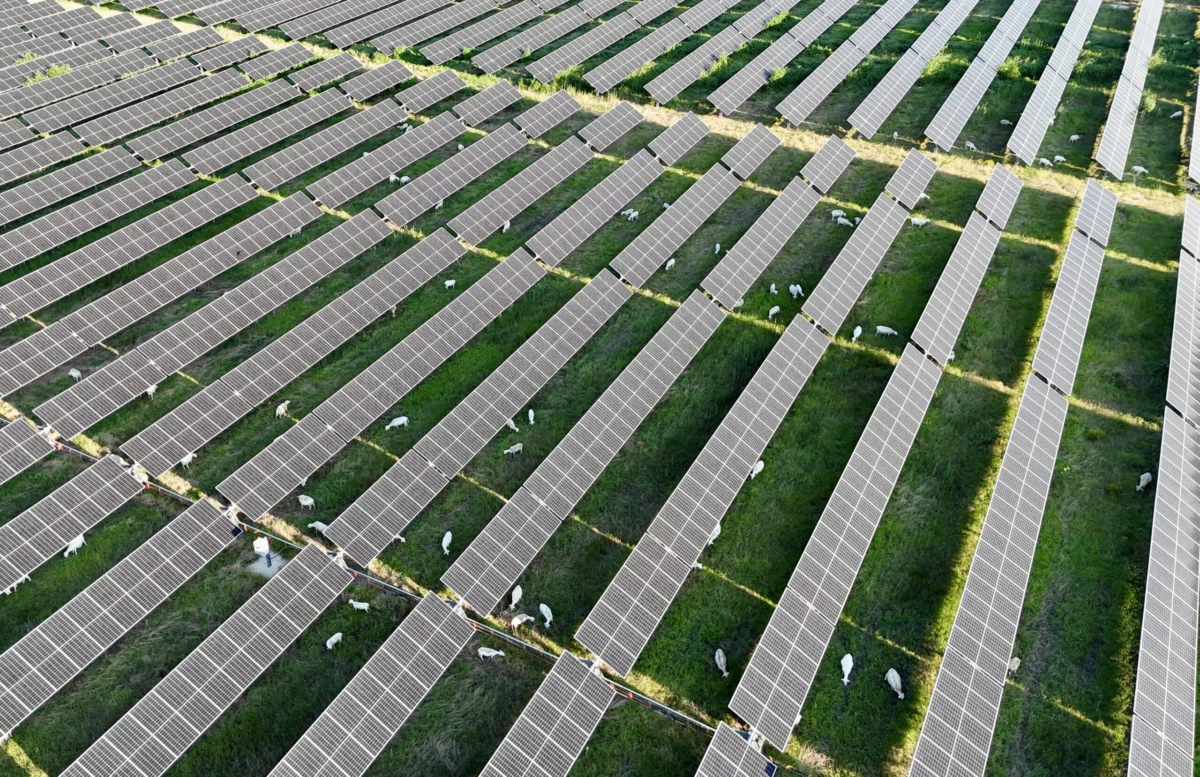
The clean energy transition is also finding innovative ways to harmonize with local agriculture and land stewardship. Projects like the 3.5 MWac community solar installation in Sandwich, Illinois—developed by TurningPoint Energy and financed by Generate Capital—prove that solar farms can serve dual purposes. By incorporating bifacial solar modules, single-axis tracking, and agrivoltaic practices such as sheep grazing and native pollinator plantings, these facilities manage vegetation naturally while enhancing local biodiversity.
Ultimately, the data from Texas, California, and emerging regional markets establishes an undeniable truth: the rapid deployment of solar and storage infrastructure is no longer an environmental experiment. It is a proven, economically superior engine of industrial growth, consumer savings, and grid reliability that is successfully powering America’s electrical future.