





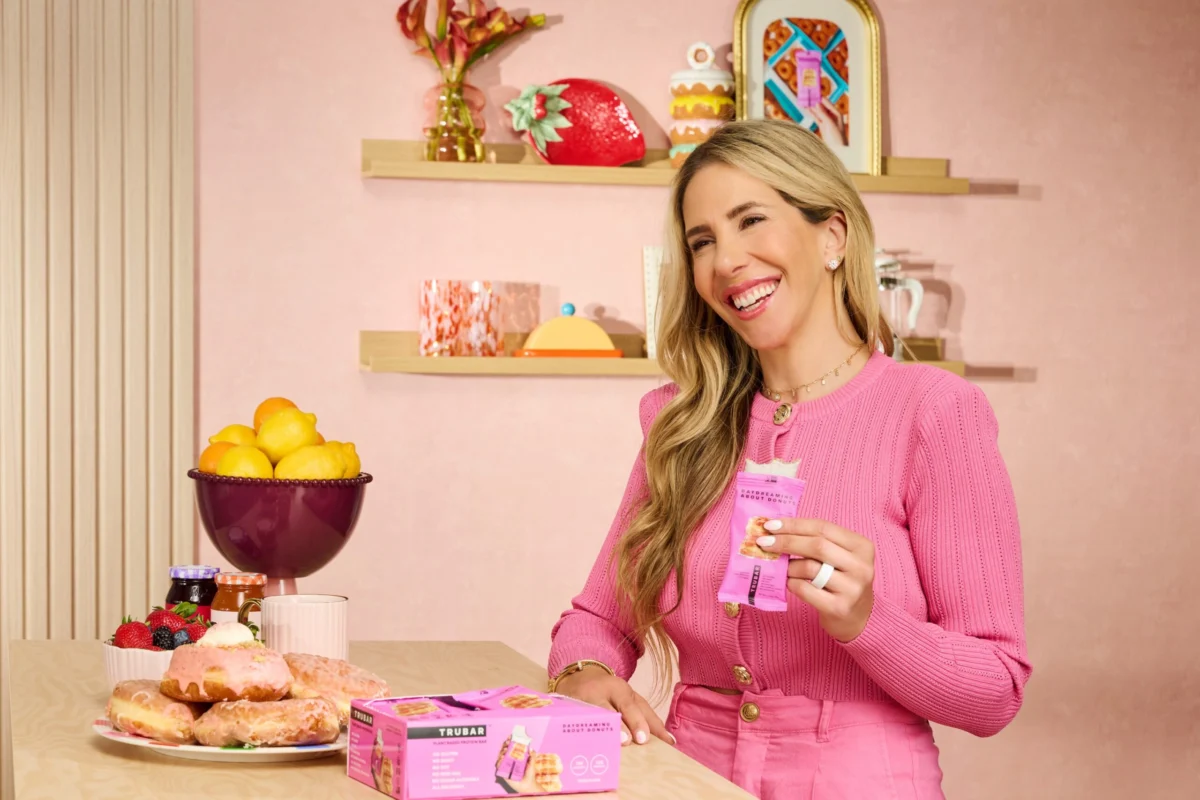
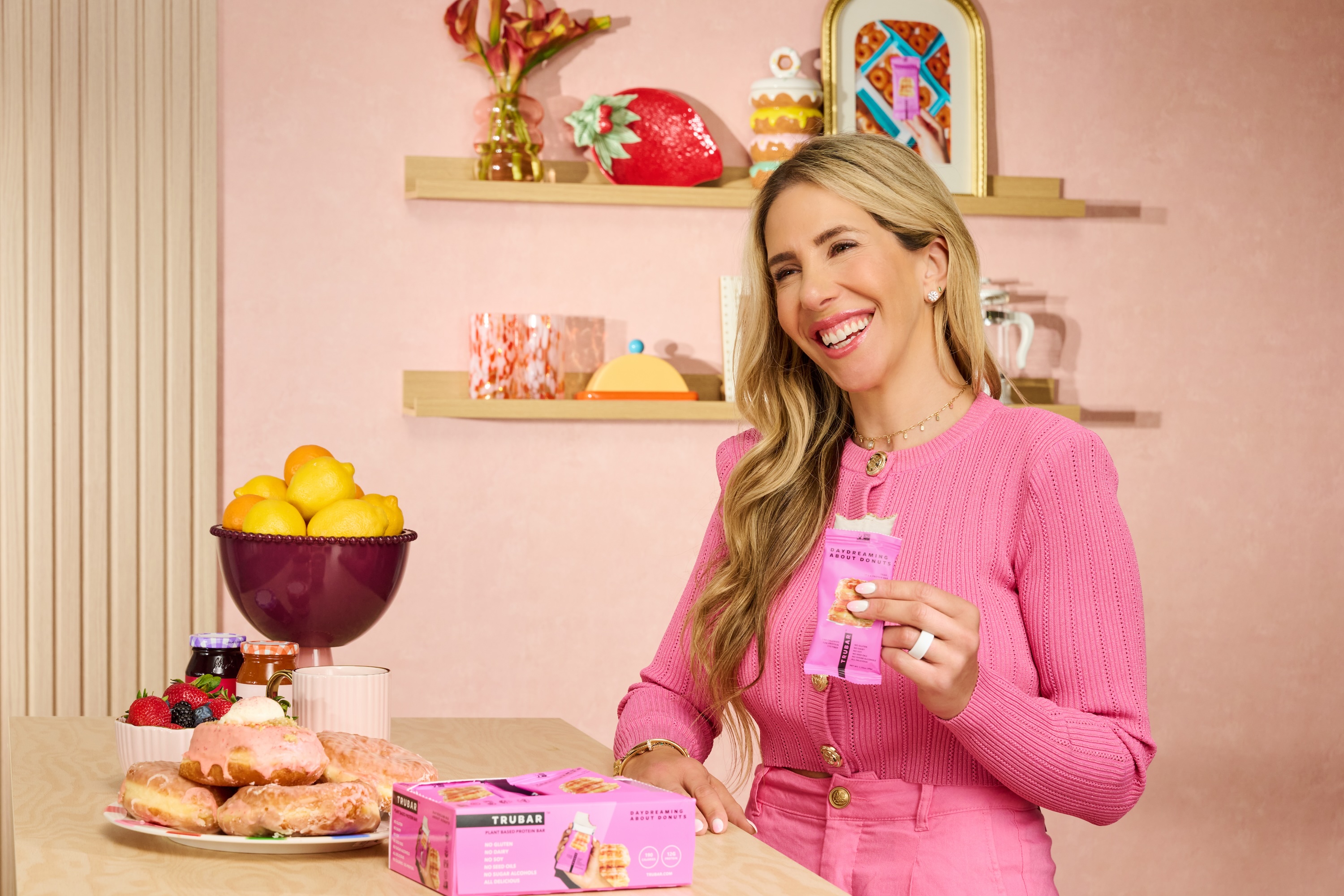
In the competitive, hyper-saturated world of functional foods, success is rarely a straight line. It is a messy, iterative process of trial and error, often fueled by personal epiphanies and the stubborn refusal to quit. For Erica Groussman, the founder and CEO of Trubar, the journey began not in a boardroom, but in a moment of physical discomfort during a family trip to Disney. Today, that singular moment of frustration has evolved into a $173 million acquisition, with her products gracing the shelves of 32,000 retail locations across the United States.
Trubar’s ascent—marked by a $100 million gross revenue year in 2025 and nearly 46 million bars shipped in 2026—serves as a masterclass in modern entrepreneurship. It is a story of grit, the importance of "scrappy" distribution, and the realization that the most effective leader is often the one willing to grab a pack of stickers and fix a labeling error personally.
The Genesis: An Epiphany in the Snack Aisle
Before becoming a powerhouse in the “better-for-you” snack industry, Groussman’s background was firmly rooted in film finance and real estate. However, her true education in business began much earlier, thanks to a childhood newspaper route that instilled a foundational work ethic.
The turning point for her career occurred while she was a stay-at-home mother to two young children. During a trip to Disney, she consumed a popular protein bar that promised health benefits but delivered an unpleasant physical experience. The resulting bloating and discomfort served as her "aha!" moment. She realized that while the market was flooded with functional snacks, there was a glaring gap for a product that could bridge the divide between health-conscious ingredients and the indulgent, dessert-like experience consumers actually craved.
Groussman’s mission was clear: she wanted to create a bar that didn’t sacrifice taste for nutrition. She didn’t want to provide just another chalky, dense block of protein; she wanted a treat. She began a rigorous, sensory-driven development phase, partnering with a food scientist to obsess over textures, flavor profiles, and, crucially, the dreaded "aftertaste" that plagues many sugar-free or protein-heavy snacks.
A Chronology of Growth: From Counters to Costco
The "Wooden Tray" Phase (2018–2019)
Trubar officially launched in 2018. Lacking a massive marketing budget, Groussman relied on the simplest, most effective sales tactic: proximity. She purchased a wooden tray from Bed Bath & Beyond, loaded it with early samples like "Daydreaming About Donuts" and "Oh Oh Cookie Dough," and began walking into local delis, juice bars, and salons. Her pitch was simple: "Put these on your counter and see if they sell."
The model worked. Because the bars sold out, business owners became repeat customers. This grassroots validation gave her the data she needed to prove that the product had legs.
The Near-Collapse (2020)
No success story is without its "dark night of the soul." Seeking to scale, Groussman brought in an external operator to manage the business. It was a costly mistake. The individual’s spending rapidly outpaced the company’s modest revenue, resulting in a staggering $7 million in debt. With her husband suggesting she walk away and liquidate the company, Groussman faced an existential choice. She chose to fight, realizing that the brand was an extension of her own identity.
The Institutional Shift (2021–2024)
To save the company and facilitate growth without taking on further personal debt, Trubar was acquired by a publicly traded holding company in 2021. The experience was, in her words, frustrating. She found herself in a portfolio that included failing businesses, forcing her to watch as Trubar’s profits were siphoned off to support other sinking ships.
However, this period also solidified her position. By 2024, as the other entities in the holding company folded, Groussman emerged as the CEO of the entire publicly traded group, which was subsequently rebranded to focus entirely on the Trubar brand.
The $173 Million Exit (2026)
In early 2026, the Turkish snack giant Eti Gida acquired Trubar for $173 million. Unlike many acquisitions where the founder is ushered out, Groussman retained her role as CEO, ensuring the brand’s culture and vision remained intact as it entered a new phase of global expansion.
Supporting Data: By the Numbers
The metrics behind Trubar’s success highlight the efficacy of Groussman’s hands-on approach:
- Retail Reach: The brand is now present in 32,000 retail locations across the U.S., a massive increase from the original "counter-top" strategy.
- Fiscal Performance: In 2025, the company reported a gross revenue of approximately $100 million.
- Production Volume: In 2026, the company successfully shipped nearly 46 million protein bars.
- Team Dynamics: Despite the massive scale, the company maintains a lean, agile team of roughly 28 employees, fostering a culture of rapid decision-making and accountability.
The "Mama Bear" Leadership Philosophy
Groussman’s management style is defined by a lack of ego. She rejects the notion of the "executive as a remote figurehead." Instead, she practices a philosophy of active, on-the-ground management.
When a shipment for Walmart was delayed, she didn’t just wait for logistics reports; she spent her time cold-calling packaging suppliers until she found a solution that could meet the two-week deadline. When a labeling error occurred, she didn’t wait for a corporate directive; she and her team bought stickers from a local Staples and fixed the issue themselves.
This "solve first, diagnose later" mindset is what she considers her greatest asset. She believes that many founders are paralyzed by the need for perfect processes, which often leads to stagnation. For Groussman, "80% and moving" is better than "100% and stuck."
Implications: The Future of Functional Snacking
The acquisition by Eti Gida provides Trubar with the infrastructure to move beyond the North American market. With the recent launch of "Trubar Kids" and the high-protein "Trubar Pro" line, the company is demonstrating a clear strategy for category expansion.
The implications for the broader CPG (Consumer Packaged Goods) sector are significant. Trubar’s success proves that:
- Direct-to-Consumer (DTC) isn’t the only path: While digital marketing is powerful, physical retail presence—even in small, local shops—remains a potent tool for brand validation.
- Product-Market Fit is visceral: The best products are those that solve a tangible, personal problem (like post-snack discomfort) rather than just filling a market niche.
- Resilience is a skill: Surviving a $7 million debt crisis and a difficult acquisition structure requires more than just a good product; it requires the fortitude to weather administrative chaos while staying focused on the product itself.
As Trubar enters its next chapter under international ownership, Groussman remains the heartbeat of the company. When asked about her future, her answer is simple and revealing: "I’m not done. It’s my baby."
In an era where many founders look for the quickest exit, Groussman’s trajectory suggests that the most successful businesses are built by those who view their company not as a commodity to be sold, but as a living project that requires constant, hands-on attention. Whether it’s fixing a typo on a box or negotiating a multi-million dollar merger, her approach remains the same: show up, solve the problem, and keep moving.