




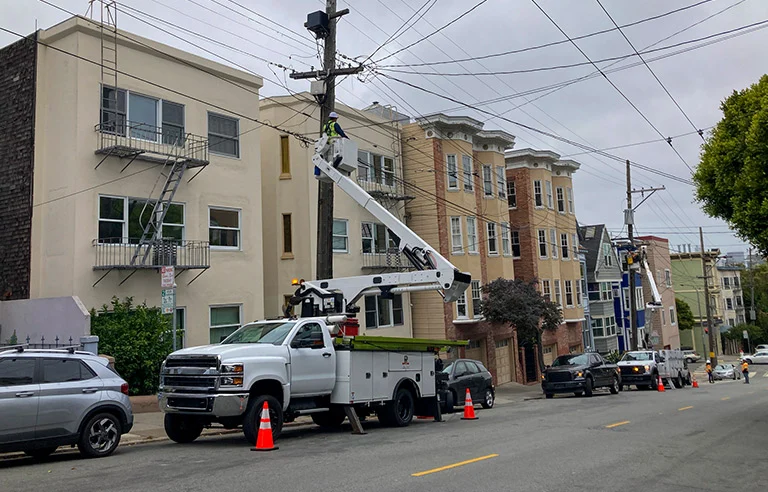
SACRAMENTO, CA — In a move designed to curb a disturbing trend of rising violence against essential personnel, California has officially enacted new legislation that elevates the legal stakes for assaulting utility workers. Governor Gavin Newsom signed Senate Bill 1330 into law on September 27, marking a pivotal moment in the state’s effort to secure the safety of those responsible for maintaining the critical infrastructure upon which millions of Californians rely.
Under the new statute, individuals who commit assault against utility workers performing their official duties now face significantly harsher consequences. The law establishes a penalty of up to one year in county jail and/or a fine reaching $2,000. By codifying these protections, the state government is signaling that the physical safety of linemen, technicians, and repair crews is a matter of public interest and necessity.
The Genesis of S.B. 1330: A Response to Escalating Threats
The legislative journey of S.B. 1330 was propelled by a series of alarming events that shook the utility sector throughout 2024. While the bill was crafted with a long-term view toward worker safety, the immediate impetus was a pair of targeted shootings involving utility employees earlier this year. These incidents, which occurred while workers were performing routine maintenance, served as a grim reminder that the men and women who keep the lights on in California are increasingly operating in hostile environments.
Senator Jesse Arreguín (D-Oakland), the bill’s primary sponsor and Chair of the Senate Public Safety Committee, introduced the measure as a direct intervention against what he described as an "unprecedented surge" in workplace violence. For Arreguín, the bill was not merely a criminal justice reform, but a fundamental acknowledgment of the societal role these workers play.
"Utility workers provide an essential service to Californians, helping keep our lights on and deliver the critical services our communities rely on every day," Senator Arreguín stated following the signing. "S.B. 1330 recognizes the importance of their work and the risks they face, providing necessary protections at a critical time when there has been an unprecedented surge in assaults on utility workers."
Chronology of a Growing Crisis
The escalation of violence against utility workers did not emerge in a vacuum. Industry experts and union leaders point to a slow, steady increase in confrontations that began during the pandemic and has only intensified in recent months.
- Early 2024: Major utility companies in California began reporting an uptick in verbal harassment and physical intimidation of field crews.
- Mid-2024: The situation turned lethal. Two separate shooting incidents involving utility employees occurred, prompting a state-wide outcry from labor unions and utility providers alike.
- Summer 2024: Senator Arreguín introduces S.B. 1330, citing data showing over 450 reported incidents of threats or violence against utility workers since the start of the year.
- September 2024: The bill moves through the Senate and Assembly with bipartisan support, reflecting the urgency of the issue.
- September 27, 2024: Governor Newsom signs S.B. 1330 into law, codifying new protections into the California penal code.
The chronology underscores a shift in the nature of public interaction with utility workers. What was once a job defined by physical hazards like high-voltage electricity and heights has increasingly become defined by the threat of human violence.
Supporting Data: By the Numbers
The statistics provided by California’s major utility providers are stark. Since the beginning of 2024, more than 450 individual incidents of violence or threats have been documented. This data, presented during the legislative hearings, paints a picture of a workforce under siege.
The 450 incidents include:
- Verbal Assaults: Threats to life and safety, often directed at workers performing routine meter reading or grid repairs.
- Physical Confrontations: Instances of physical battery, obstruction of work, and interference with equipment.
- Armed Threats: A subset of the 450 incidents involved the presence of firearms or other weapons, escalating the threat level to life-threatening.
Industry analysts suggest that these numbers may represent only a fraction of the total occurrences, as many minor verbal altercations go unreported by workers who have become desensitized to the hostility they face in the field. The introduction of S.B. 1330 serves to create a more formal reporting mechanism, potentially leading to more accurate data collection in the future.
Official Responses and Stakeholder Advocacy
The passage of S.B. 1330 was bolstered by a powerful coalition of labor organizations, most notably the California State Association of Electrical Workers and the Coalition of California Utility Employees. These groups lobbied heavily for the bill, arguing that current laws were insufficient to deter attackers.
The Voice of the Union
The International Brotherhood of Electrical Workers (IBEW) Local 1245 played a central role in the advocacy process. By sharing firsthand accounts from their members, union leadership was able to bring a human element to the legislative chambers. These stories detailed the reality of being cursed at, blocked, and physically intimidated while trying to restore power during outages or perform essential grid upgrades.
Bob Dean, Business Manager for IBEW 1245, emphasized the absurdity of the current climate. "Utility workers perform dangerous work every day to keep California’s communities powered and safe," Dean remarked. "Being attacked on the job should never be one of those risks."
The Legislative Perspective
Senator Arreguín’s office emphasized that the bill provides a "necessary safeguard." By categorizing the assault of a utility worker as a specific offense with defined penalties, the state is creating a deterrent effect. The legislative intent is clear: to ensure that those who provide the infrastructure for modern life are treated with the respect and security they deserve.
The Broader Implications of S.B. 1330
The enactment of this law carries several significant implications for California’s utility sector, its workforce, and the broader legal landscape.
1. Deterrence and Legal Precedent
The primary goal of S.B. 1330 is deterrence. By imposing a $2,000 fine and the potential for a year in jail, the law creates a tangible consequence for individuals who view utility workers as targets for frustration or anger. This establishes a legal precedent that recognizes utility work as a "protected profession" under California law, similar to protections afforded to emergency responders, law enforcement, and teachers.
2. Operational Impact on Utility Companies
Utility companies, such as PG&E, Southern California Edison, and San Diego Gas & Electric, will likely need to adjust their internal safety protocols. With the new law in place, these companies are expected to encourage more robust reporting of incidents. If a worker is assaulted, the incident now carries the weight of a state-sanctioned criminal investigation. This may lead to companies providing better security for crews working in high-risk areas or implementing new de-escalation training programs for field staff.
3. Cultural Shifts in Community Relations
Perhaps the most challenging implication is the shift in public perception. Utility workers are often the "face" of the utility company, and when customers are frustrated by high rates or power outages, that frustration is frequently vented onto the nearest technician. The law forces a societal conversation about accountability. It sends a message to the public that while frustration with utility services is valid, physical or verbal abuse of the workers providing those services is a criminal act that will not be tolerated.
4. Future Legislative Expansion?
Could this lead to more aggressive worker protections in other sectors? Labor advocates are already watching to see if the success of S.B. 1330 will serve as a template for other industries. If the data shows a significant drop in assaults on utility workers over the next two years, it is highly likely that other groups—such as public transit operators or healthcare support staff—will lobby for similar legislation to safeguard their employees.
Conclusion: A Safer Future for Essential Workers
The signing of S.B. 1330 is more than a legislative formality; it is a vital step toward restoring the dignity and safety of one of California’s most essential workforces. By acknowledging the risks inherent in the job and refusing to accept violence as a "cost of doing business," California has set a standard for other states to follow.
As the law takes effect, the true measure of its success will be found in the field. For the thousands of utility workers who climb poles, dig trenches, and monitor high-voltage lines under the California sun, the hope is that this new legislation will ensure that at the end of every shift, they return home safely to their families, free from the shadow of violence. The mandate is clear: the people who keep the state moving deserve the full protection of the law.